STERISHEALTHCARE
Products
08042755542
91918824471531
Chat with us


Chat with us on WhatsApp
×
This is your website preview.
Currently it only shows your basic business info. Start adding relevant business details such as description, images and products or services to gain your customers attention by using Boost 360 android app / iOS App / web portal.
Home
 typical monthly cost
 typical monthly cost
Items tagged with 'typical monthly cost'
{
"products": [
{
"_id": "6661a57d8da3a81d5c6a17dd",
"fptag": "STERISHEALTHCARE",
"merchantname": null,
"customwidgets": null,
"externalsourceid": null,
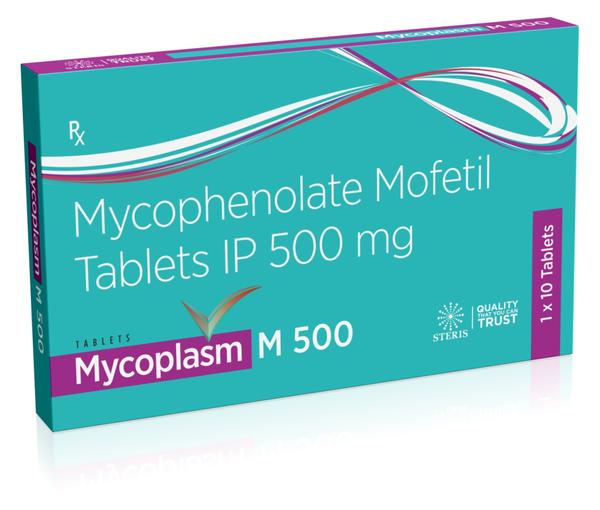
"name": "Mycophenolate mofetil 500mg",
"description": "MYCOPLASM M 500\nMycophenolate mofetil (500mg)\nMycoplasm M 500 is a medication containing Mycophenolate Mofetil in a 500mg dose. Mycophenolate Mofetil is an immunosuppressive drug used to prevent rejection in organ transplantation, particularly kidney, heart, and liver transplants. It works by inhibiting the proliferation of T and B lymphocytes, which are involved in the immune response that leads to rejection.\n\nThis medication is typically prescribed in combination with other immunosuppressants as part of a comprehensive transplant treatment regimen. It is important to take Mycoplasm M 500 exactly as prescribed by your healthcare provider to ensure optimal therapeutic outcomes and to minimize the risk of rejection or other complications.\n\nCommon side effects of Mycophenolate Mofetil may include gastrointestinal disturbances such as nausea, vomiting, diarrhea, and abdominal pain. It can also increase the risk of infections due to its immunosuppressive effects. Patients should be monitored regularly by their healthcare provider while taking this medication to assess for any potential adverse effects and to adjust the dosage as needed.\n\nMycoplasm M 500 should not be used in pregnant women or those planning to become pregnant without consulting a healthcare professional, as it can cause harm to the developing fetus. Additionally, it may interact with other medications, so it is important to inform your doctor about all the medications you are currently taking before starting Mycoplasm M 500 therapy.For further information:\nEmail: info@sterispharma.com / contact@sterispharma.com\nCall/WhatsApp: 7877551268, 7849827488\nORDER Now: \n\n\n\n\nMycophenolate mofetil 500 mg stands as a cornerstone in modern immunosuppressive therapy, primarily designed to prevent organ transplant rejection in kidney, heart, and liver recipients. As a prodrug, it rapidly converts to its active form, mycophenolic acid (MPA), which selectively targets the proliferation of T and B lymphocytes—key players in immune responses that can attack transplanted organs. This medication, available in convenient 500 mg tablets, offers reliable protection against acute rejection episodes, making it an essential component in post-transplant regimens worldwide.\n\nProduct Uses\nMycophenolate mofetil 500 mg finds its primary application in solid organ transplantation, where it helps maintain long-term graft survival. For kidney transplant patients, it is typically administered alongside corticosteroids and calcineurin inhibitors like cyclosporine or tacrolimus to suppress the immune system's overreaction to the new organ. In heart and liver transplants, it plays a similar role, reducing the incidence of rejection by inhibiting antibody production and cell-mediated immunity.\n\nBeyond transplants, healthcare providers increasingly use mycophenolate mofetil 500 mg for various autoimmune conditions. It effectively manages lupus nephritis by curbing inflammation in the kidneys, showing superior efficacy over traditional therapies in preserving renal function. Rheumatoid arthritis patients benefit from its ability to dampen joint inflammation, while those with dermatomyositis or scleroderma experience reduced skin and muscle involvement. Off-label, it treats inflammatory bowel diseases like Crohn's disease and even certain skin disorders such as pemphigus vulgaris, where immune-mediated blistering threatens quality of life.\n\nKey Benefits\nThe therapeutic advantages of mycophenolate mofetil 500 mg extend far beyond basic immunosuppression, offering patients enhanced outcomes and improved daily living.\n\nSuperior Graft Protection: Clinical data highlight reduced acute rejection rates by up to 50% when combined with standard regimens, leading to better long-term organ function and survival.\n\nSelective Lymphocyte Targeting: By depleting guanosine nucleotides in T and B cells via inosine monophosphate dehydrogenase (IMPDH) inhibition, it spares other cell types, minimizing broad toxicity seen with older immunosuppressants.\n\nAnti-Inflammatory Effects: MPA inhibits adhesion molecule glycosylation, preventing lymphocyte recruitment to inflamed sites, which alleviates symptoms in autoimmune flares.\n\nOral Convenience: The 500 mg formulation allows flexible dosing—typically 1 gram twice daily—without the need for injections, improving patient adherence.\n\nVersatility Across Conditions: Proven efficacy in lupus, vasculitis, and myositis expands its utility, often allowing steroid dose reduction and fewer relapses.\n\nCardiovascular and Anticancer Potential: Emerging evidence suggests it delays graft atherosclerosis by reducing lipid oxidation and may hinder tumor progression in certain malignancies due to its impact on nucleotide synthesis.\n\nThese benefits translate to fewer hospital readmissions, better quality of life, and cost savings in long-term care for transplant and autoimmune patients.\n\nSide Effects\nWhile mycophenolate mofetil 500 mg provides robust immunosuppression, it carries risks typical of this drug class, necessitating vigilant monitoring.\n\nCommon side effects affect the gastrointestinal tract most prominently, with nausea, vomiting, diarrhea, and abdominal pain occurring in over 30% of users. These often improve with dose adjustments or enteric-coated alternatives, but hydration and antiemetics help manage them effectively.\n\nHematologic issues like leukopenia, anemia, and thrombocytopenia arise due to bone marrow suppression, requiring regular complete blood counts—weekly initially, then monthly. Infections pose a significant threat, as suppressed immunity increases susceptibility to viral (e.g., CMV), bacterial, and fungal pathogens; prophylactic antivirals are standard.\n\nLess frequent but notable effects include hypertension, tremor, insomnia, and elevated liver enzymes. Women face heightened risks of congenital malformations if used during pregnancy, mandating effective contraception and pregnancy testing. Rare severe reactions encompass progressive multifocal leukoencephalopathy (PML) from JC virus reactivation and hypersensitivity syndromes.\n\nDosage and Administration Notes\nStandard dosing for renal transplants involves 1 gram (two 500 mg tablets) twice daily, starting within 72 hours post-surgery, with adjustments for renal impairment. Hepatic transplant patients may require higher initial doses due to metabolism differences. Always take on an empty stomach with water to optimize absorption, avoiding antacids that bind MPA.\n\nPrecautions and Interactions\nPatients must avoid live vaccines, report fevers promptly, and undergo TB screening pre-treatment. Drug interactions with azathioprine, cholestyramine, or rifampin can alter levels, so pharmacists review regimens closely. Regular monitoring of MPA blood levels ensures therapeutic efficacy without toxicity.\n\nConclusion\nMycophenolate mofetil 500 mg emerges as a transformative immunosuppressive agent, safeguarding transplanted organs and taming autoimmune storms with its precise mechanism of lymphocyte suppression and anti-inflammatory prowess. By delivering key benefits like reduced rejection, versatile applications, and manageable administration, it empowers patients to reclaim normalcy post-transplant or amid chronic illness. Despite potential side effects, proactive monitoring and personalized dosing mitigate risks, underscoring its value in contemporary medicine. For those navigating transplant recovery or autoimmune challenges, this medication offers hope and stability, backed by decades of clinical validation.\n\n",
"price": 775.0,
"discountamount": 256.0,
"currencycode": "INR",
"priority": 1000000,
"isfreeshipmentavailable": false,
"shipmentduration": 7,
"_keywords": [
"part",
"Call",
"harm",
"risk",
"Email",
"heart",
"ORDER",
"nausea",
"kidney",
"dosage",
"doctor",
"vomiting",
"WhatsApp",
"Patients",
"diarrhea",
"rejection",
"infections",
"500mg dose",
"combination",
"information",
"sterisonline",
"proliferation",
"B lymphocytes",
"abdominal pain",
"pregnant women",
"immune response",
"developing fetus",
"other medications",
"liver transplants",
"other complications",
"healthcare provider",
"Common side effects",
"organ transplantation",
"Mycophenolate mofetil",
"immunosuppressive drug",
"Mycoplasm M 500 therapy",
"healthcare professional",
"other immunosuppressants",
"immunosuppressive effects",
"potential adverse effects",
"optimal therapeutic outcomes",
"gastrointestinal disturbances",
"comprehensive transplant treatment regimen"
],
"isarchived": false,
"isavailable": true,
"applicationid": null,
"productindex": 1472,
"imageuri": "https://productimages.withfloats.com/actual/6661a57fdd39d2ccddbc3bb9.jpg",
"tileimageuri": "https://productimages.withfloats.com/tile/6661a57fdd39d2ccddbc3bb9.jpg",
"images": null,
"totalqueries": 0,
"gpid": null,
"groupproductid": null,
"createdon": "2024-06-06T12:03:09.216Z",
"updatedon": "2026-03-12T08:00:39.14Z",
"buyonlinelink": null,
"producturl": "http://WWW.STERISINDIA.COM/products/mycophenolate-mofetil-500mg/1472",
"availableunits": -1.0,
"iscodavailable": false,
"isprepaidonlineavailable": false,
"maxcodorders": 0,
"maxprepaidonlineorders": 0,
"uniquepaymenturl": null,
"brandname": "MYCOPLASM M 500",
"category": "NEPHROLOGYRANGE",
"tags": [
"MYCOPLASM M 500",
"Mycophenolate mofetil (500mg)",
"Mycophenolate mofetil 500 mg tablet",
"Mycophenolate mofetil 500 mg price",
"Mycophenolate mofetil 500 mg dosage",
"Mycophenolate mofetil uses",
"Mycophenolate mofetil side effects",
"mycophenolate mofetil 500mg tablet uses",
"mycophenolate mofetil 500mg dosage for kidney transplant",
"mycophenolate mofetil 500mg for autoimmune disease"
],
"variants": false,
"keyspecification": null,
"otherspecifications": null,
"pickupaddressreferenceid": "",
"paymenttype": "UniquePaymentUrl",
"producttype": "products",
"hsncode": null,
"gstslab": 0.001,
"isnotforsale": false
},
{
"_id": "6abe4471401ae1a1106d67d9",
"fptag": "STERISHEALTHCARE",
"merchantname": null,
"customwidgets": null,
"externalsourceid": null,
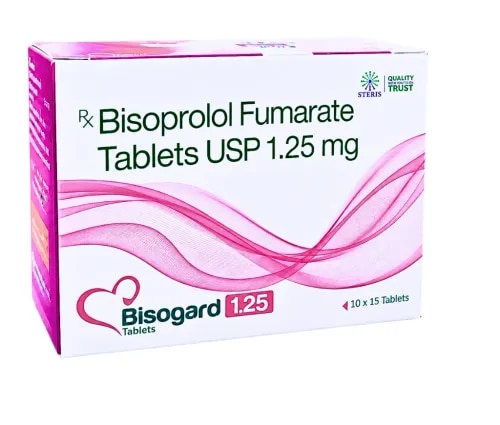
"name": "Bisoprolol 1.25mg",
"description": "Bisoprolol 1.25mg is the smallest tablet strength of bisoprolol, a heart-selective beta-1 blocker. Doctors usually prescribe it to start treatment or to build up the dose gradually in people with high blood pressure, chronic stable heart failure, or fast heart rhythms. It suits older adults, people with mild heart failure, and anyone who reacts strongly to beta-blockers. The medicine slows the heartbeat and eases the force of each contraction, so the heart works less hard. BISOGARD 1.25 from Steris Healthcare Pvt. Ltd. comes in a strip pack of 15 tablets. It is a Schedule H medicine, so it must only be started, changed, or stopped on a doctor's advice.\n\nProduct Snapshot\n\nBrand: BISOGARD 1.25\nManufacturer/Marketer: Steris Healthcare Pvt. Ltd., a WHO-GMP and ISO-certified pharmaceutical company in India\nActive ingredient: Bisoprolol Fumarate 1.25mg\nForm: Tablet\nPack size: 15 tablets\nDrug class: Cardioselective beta-1 blocker\nLegal status: Schedule H (valid prescription required)\nAvailability: Through Steris Healthcare's authorized pharmacies and its B2B PCD franchise network across India\nWhat Is Bisoprolol 1.25mg?\n\nIf your doctor has just prescribed bisoprolol 1.25mg, you have been given the lowest dose on purpose. Bisoprolol is a cardioselective beta-1 blocker, meaning it acts mostly on receptors in the heart and has much less effect on the lungs and blood vessels. This is a major reason it is preferred over older, non-selective beta-blockers, especially for people who also have a mild breathing problem.\n\nThe 1.25mg tablet is not a “light” medicine for mild illness. It is a carefully chosen entry point. In heart failure, a weakened heart can struggle if its rate or pressure drops too quickly, so cardiologists follow a “start low, go slow” approach. Treatment begins at 1.25mg, the response is watched for one to two weeks, and the dose is raised step by step (commonly 2.5mg, 3.75mg, 5mg, 7.5mg, and up to 10mg) as the heart adapts. That is why BISOGARD 1.25 is often the first tablet a newly diagnosed heart failure patient takes.\n\nWhat Is Bisoprolol 1.25mg Used For?\n\nDoctors commonly prescribe this strength for:\n\nChronic heart failure (HFrEF): as the first step of dose titration in patients with a reduced ejection fraction, alongside ACE inhibitors/ARBs and diuretics\nHigh blood pressure: especially in older adults, people with low body weight, and those who are sensitive to blood-pressure-lowering drugs\nStable angina: to reduce the heart's oxygen demand and relieve chest discomfort\nAfter a heart attack: in selected patients, under a cardiologist's care\nHeart rate control in some arrhythmias: sometimes used off-label at a low dose to gently bring down a fast heart rate\n\nAt 1.25mg, bisoprolol is seldom meant as the long-term sole treatment for high blood pressure in an otherwise healthy adult. It is usually the first rung of a titration ladder, or a steady maintenance dose for patients who are unusually beta-blocker sensitive (older age, low body weight, or borderline low pressure or pulse).\n\nHow Does Bisoprolol Work?\n\nBisoprolol selectively blocks beta-1 adrenergic receptors, which are packed mainly into heart muscle. This leads to several effects:\n\nSlower heart rate: the heart has more time to fill and rest between beats\nGentler contractions: the heart muscle needs less oxygen and energy\nLess renin from the kidneys: this helps blood pressure fall gradually over time\nLower overall cardiac workload: a real advantage for a heart that already struggles to pump well, as in heart failure\nKey Benefits of BISOGARD 1.25\nA gentle starting dose, well suited to careful titration in frail or elderly patients\nHeart-focused action, with less effect on the lungs and peripheral blood vessels than non-selective beta-blockers\nOnce-daily dosing, which makes it easier to stay on treatment\nA guideline-recommended beta-blocker for HFrEF with well-established outcomes data [Reviewer note: insert specific outcome statistics/trial citation pending medical sign-off]\nMade by Steris Healthcare Pvt. Ltd. under WHO-GMP and ISO-certified standards\nDosage Guidance\nUsual starting dose (heart failure): 1.25mg once a day, preferably in the morning\nDose increases: typically every 1–2 weeks (2.5mg, 3.75mg, 5mg, 7.5mg, up to a maximum of 10mg daily), depending on how well you tolerate it and on your pulse and blood pressure\nHigh blood pressure (sensitive patients): 1.25mg to 5mg once daily, as set by your doctor\nHow to take it: at the same time every day, with or without food, swallowed whole with water\nIf you miss a dose: take it when you remember, unless the next dose is almost due. Never take a double dose.\nNever stop suddenly: abrupt withdrawal can cause a rebound rise in heart rate, blood pressure, or chest pain. The dose must be reduced gradually under medical supervision.\nIs It Better to Take Bisoprolol in the Morning or at Night?\n\nMost doctors advise a morning dose. Bisoprolol lowers pulse and blood pressure, and taking it early matches its action to your daytime activity. A night-time dose could add to the body's natural overnight dip in blood pressure and raise the chance of dizziness when getting up in the dark. Some people who feel tired during the day are told by their doctor to switch to the evening. Do not change your dosing time without your doctor's approval.\n\nSide Effects of Bisoprolol 1.25mg\n\nCommon side effects\n\nTiredness or fatigue\nDizziness or light-headedness, especially on standing quickly\nCold hands or feet\nSlow pulse (bradycardia)\nHeadache\nMild stomach upset (nausea, loose stools)\nDisturbed sleep\n\nSerious side effects (get medical help promptly)\n\nVery slow heartbeat or fainting\nIncreasing breathlessness or swollen legs/ankles, which may mean heart failure is worsening\nAllergic reaction: rash, swelling of the face or throat, trouble breathing\nCold, numb, or bluish fingers and toes\nWheezing or new breathing difficulty, particularly in people with asthma or COPD\nMood changes, low mood, or confusion\nWhat Are the Bad Side Effects of Bisoprolol?\n\nThe effects that need urgent attention are a dangerously slow pulse, fainting, signs of worsening heart failure (swelling, breathlessness), severe allergic reactions, and airway tightening in people with lung disease. These are uncommon at the 1.25mg dose, but anyone who notices them should seek medical help right away. [Reviewer note: specific incidence rates pending clinical/medical sign-off]\n\nSubstitutes & Comparable Beta-Blockers\nMolecule\tSelectivity\tTypical Use Case\nBisoprolol\tHighly cardioselective\tHeart failure titration, hypertension\nMetoprolol Succinate ER\tCardioselective\tHypertension, angina, heart failure\nAtenolol\tCardioselective (older agent)\tHypertension\nCarvedilol\tNon-selective with alpha-blocking action\tHeart failure (adds vasodilation)\nPropranolol\tNon-selective\tMigraine prevention, anxiety-related fast heartbeat, essential tremor\nPrecautions & Who Should Avoid Bisoprolol\nNot suitable for people with severe bradycardia, certain forms of heart block (unless a pacemaker is fitted), unstable or acutely decompensated heart failure, or severe uncontrolled asthma\nUse carefully in diabetes, because beta-blockers can hide the warning signs of low blood sugar\nTake care in peripheral vascular disease, as cold extremities or leg pain on walking may worsen\nNever stop it abruptly; always taper under a doctor's guidance\nTell your doctor about every medicine you use, especially other blood-pressure drugs, calcium channel blockers, and certain antiarrhythmics\nIn pregnancy and breastfeeding, use only if your doctor advises it after weighing benefits and risks\nIs Bisoprolol Safe for Kidneys?\n\nThe body clears bisoprolol through both the liver and the kidneys in roughly equal measure. It is generally considered safe for people with normal or mildly reduced kidney function. When kidney impairment is significant, drug levels in the blood can rise, so your doctor may lower the dose or monitor you more closely. Always tell your prescriber about any kidney disease before starting.\n\nIs Bisoprolol a High-Risk Medication?\n\nBisoprolol is not a narrow therapeutic index drug like tacrolimus or warfarin, where small dose differences matter greatly. Even so, it needs supervised use because it directly affects heart rate and blood pressure. The main dangers are stopping it suddenly, which can set off rebound cardiac events, and using it with certain existing rhythm disorders. Taken as prescribed and checked regularly, it has a long and reassuring safety record.\n\nDoes 1.25mg Bisoprolol Lower Blood Pressure?\n\nYes. Even the smallest dose measurably reduces heart rate and blood pressure by lightening the heart's workload and reducing renin-driven narrowing of blood vessels. At this strength the effect on blood pressure is fairly mild, which is exactly why it is a safe place to begin, especially for older adults or people starting heart failure treatment. The dose is then raised gradually to reach full benefit.\n\nFrequently Asked Questions\n\n1. What is 1.25 mg of bisoprolol used for?\nMainly as a low starting dose when building up treatment for chronic heart failure, and for high blood pressure in people who are very sensitive to beta-blockers, such as older adults.\n\n2. What are the bad side effects of bisoprolol?\nThe more serious ones are a very slow pulse, fainting, worsening heart failure signs (swelling, breathlessness), severe allergy, and breathing trouble in people with lung conditions.\n\n3. What are the common side effects of bisoprolol fumarate 1.25 mg tablets?\nTiredness, dizziness, cold hands and feet, mild headache, and a slightly slower pulse.\n\n4. Is it better to take bisoprolol in the morning or at night?\nMorning is usually preferred so its effect fits daytime activity, though your doctor may suggest evenings in some cases.\n\n5. What is the cost of bisoprolol?\nPrice depends on strength, pack size, and brand. Use the “Check Price” option above for current BISOGARD 1.25 pricing from Steris Healthcare.\n\n6. Does 1.25 mg bisoprolol lower blood pressure?\nYes, though only modestly at this dose. The dose is often stepped up over time.\n\n7. Is bisoprolol safe for kidneys?\nGenerally yes for normal or mildly reduced kidney function. People with significant kidney impairment need dose adjustment and monitoring.\n\n8. Is bisoprolol a high-risk medication?\nIt is not a narrow therapeutic index drug, but it must never be stopped suddenly and should be used under medical supervision because of its direct effect on the heart.\n\n9. Can I take bisoprolol 1.25mg for the rest of my life?\nMany people with chronic heart failure or hypertension do take bisoprolol long term, but the dose usually rises as tolerated. Your doctor should review it regularly.\n\n10. What happens if I miss a dose of bisoprolol?\nTake it when you remember, unless the next dose is nearly due. In that case skip the missed one. Never take two together.\n\n11. Can bisoprolol 1.25mg cause weight gain?\nIt is not commonly reported at this dose. Fluid retention linked to heart failure itself should be reported to your doctor.\n\n12. Is bisoprolol safe for diabetic patients?\nIt can be used, with care, because beta-blockers may hide warning signs of low blood sugar such as a racing heartbeat.\n\n13. Can I stop taking bisoprolol suddenly if I feel fine?\nNo. Stopping abruptly can cause a rebound rise in heart rate, blood pressure, or chest pain. Reduce the dose gradually under medical guidance.\n\n14. Does bisoprolol interact with other blood pressure medicines?\nYes. Combining it with other drugs that lower heart rate or pressure (such as calcium channel blockers) can cause a very low pulse or pressure. Tell your doctor about all your medicines.\n\n15. Is BISOGARD 1.25 available without a prescription?\nNo. Bisoprolol is a Schedule H medicine in India and needs a valid prescription.\n\n16. How long does it take for bisoprolol 1.25mg to start working?\nSome effect on heart rate appears within hours, but the full benefit for blood pressure or heart failure symptoms builds over several weeks of regular use.\n\n17. Can pregnant women take bisoprolol?\nOnly if clearly necessary and prescribed by a doctor, as it may affect the baby's heart rate and growth.",
"price": 39.0,
"discountamount": 12.0,
"currencycode": "INR",
"priority": 1000000,
"isfreeshipmentavailable": false,
"shipmentduration": 1,
"_keywords": null,
"isarchived": false,
"isavailable": true,
"applicationid": null,
"productindex": 2501,
"imageuri": "https://productimages.withfloats.com/actual/6abe4474c205678e0b16a23a.png",
"tileimageuri": "https://productimages.withfloats.com/tile/6abe4474c205678e0b16a23a.png",
"images": null,
"totalqueries": 0,
"gpid": null,
"groupproductid": null,
"createdon": "2026-10-01T11:30:57.88Z",
"updatedon": "2026-10-01T11:30:57.88Z",
"buyonlinelink": null,
"producturl": "http://WWW.STERISINDIA.COM//bisoprolol-1-25mg/2501",
"availableunits": -1.0,
"iscodavailable": false,
"isprepaidonlineavailable": false,
"maxcodorders": 0,
"maxprepaidonlineorders": 0,
"uniquepaymenturl": null,
"brandname": "Bisogard 1.25",
"category": "CARDIOLOGYRANGE",
"tags": [],
"variants": false,
"keyspecification": null,
"otherspecifications": null,
"pickupaddressreferenceid": null,
"paymenttype": "UniquePaymentUrl",
"producttype": "products",
"hsncode": null,
"gstslab": 0.0,
"isnotforsale": false
},
{
"_id": "6a5df061d66a990c450a1aea",
"fptag": "STERISHEALTHCARE",
"merchantname": null,
"customwidgets": null,
"externalsourceid": null,
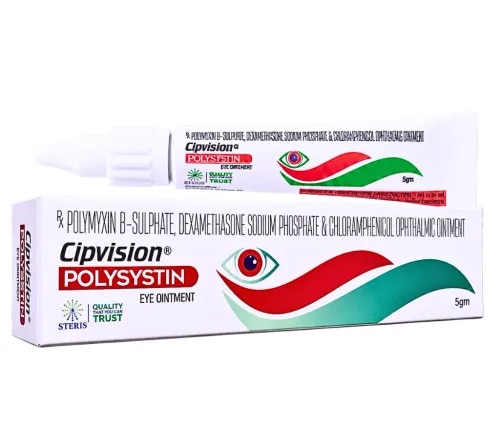
"name": "Polymyxin B Sulphate,Dexamethasone Sodium Phosphate & Chloramphenicol Ophthalmic Ointment",
"description": "CIPVISION POLYSYSTIN is a prescription-only ophthalmic ointment from Steris Healthcare Pvt. Ltd., formulated with a dual-antibiotic and corticosteroid combination — Polymyxin B Sulphate, Chloramphenicol, and Dexamethasone Sodium Phosphate. It is designed for bacterial eye infections that come with visible inflammation, pairing antibacterial action with relief from swelling and irritation, always under an ophthalmologist's care.\n\nBacterial eye infections often bring a cluster of uncomfortable symptoms: redness, puffiness, stinging, discharge, watering, and general soreness. When inflammation sets in alongside the infection, the eye can feel even more sensitive. CIPVISION POLYSYSTIN is built to tackle both fronts at once — clearing susceptible bacteria while calming the inflammatory response for a more comfortable recovery.\n\nThis ointment is meant strictly for bacterial eye conditions confirmed by a qualified doctor. It should not be used for viral, fungal, or unresolved parasitic infections, since the steroid component can make these conditions worse.\n\nComposition\n\nEach application of the ophthalmic ointment delivers:\n\nPolymyxin B Sulphate\nDexamethasone Sodium Phosphate\nChloramphenicol\nWhat Is CIPVISION POLYSYSTIN Used For?\n\nDoctors may prescribe this ointment for:\n\nBacterial conjunctivitis (commonly called pink eye)\nBlepharitis, or bacterial infection of the eyelids\nBlepharoconjunctivitis\nBacterial infections accompanied by noticeable inflammation\nInflammation risk following certain eye procedures, where a bacterial infection is a concern (as directed by the treating doctor)\nOther bacterial eye infections identified by an ophthalmologist as responsive to this combination\n\nA proper eye exam and clear diagnosis should always come before starting this medicine.\n\nHow Does CIPVISION POLYSYSTIN Work?\n\nThe formulation brings together two antibiotics and one corticosteroid, each playing a distinct role in resolving bacterial eye infections with inflammation.\n\nPolymyxin B Sulphate breaks down the outer protective membrane of susceptible bacteria, causing the bacterial cells to die off. It's especially effective against a range of Gram-negative organisms.\n\nChloramphenicol works differently — it blocks bacterial protein synthesis, stopping bacteria from multiplying further. This broad-spectrum antibiotic covers many of the Gram-positive and Gram-negative bacteria typically responsible for eye infections.\n\nDexamethasone Sodium Phosphate is the corticosteroid in the mix. It dials down the body's inflammatory response, easing redness, swelling, irritation, and general discomfort wherever bacterial infection has triggered inflammation.\n\nCombined, these three ingredients fight the underlying bacterial cause while simultaneously easing the inflammation it produces — supporting a smoother, more comfortable recovery.\n\nBenefits of CIPVISION POLYSYSTIN Eye Ointment\n\nUsed correctly and under medical supervision, this ointment may help to:\n\nClear susceptible bacterial eye infections\nBring down redness and swelling\nEase irritation and general discomfort\nKeep bacterial growth in check\nSpeed healing of inflamed eye tissue\nAid recovery after certain ophthalmic procedures, when prescribed\nDeliver medication directly to the affected eye for targeted, localized relief\nHow to Apply CIPVISION POLYSYSTIN Eye Ointment\n\nFollow these steps for correct application:\n\nWash your hands thoroughly before starting.\nTilt your head slightly backward.\nGently pull the lower eyelid down to form a small pocket.\nSqueeze a thin line of ointment into that pocket.\nKeep the tube tip away from your eye, eyelid, or any other surface.\nClose your eyes softly and keep them shut for one to two minutes.\nWash your hands again once done.\n\nAlways use the ointment exactly as your doctor prescribes, and finish the entire course even if symptoms improve early.\n\nDosage\n\nUse CIPVISION POLYSYSTIN Eye Ointment strictly according to your ophthalmologist's instructions. Because it contains a corticosteroid, do not extend use beyond the prescribed period or discontinue it early without medical advice.\n\nPossible Side Effects\n\nAs with any medicine, some people may notice side effects while using CIPVISION POLYSYSTIN, though not everyone will.\n\nCommonly reported effects:\n\nBrief blurring of vision\nMild stinging or burning sensation\nEye irritation\nWatery eyes\nSlight itching\nShort-lived discomfort\n\nSeek medical help right away if you notice:\n\nIntense eye pain\nSudden or significant vision changes\nSwelling around the face or eyelids\nTrouble breathing\nSigns of a severe allergic reaction\nRedness that persists or worsens over time\nPrecautions and Warnings\n\nBefore starting this ointment, let your doctor know if you:\n\nHave a known allergy to Polymyxin B, Chloramphenicol, Dexamethasone, or any related ingredient\nHave glaucoma or elevated eye pressure\nHave a viral eye condition such as herpes simplex keratitis\nHave a fungal or tubercular eye infection\nWear contact lenses\nAre pregnant or nursing\nAre currently using any other eye medications\n\nExtended or improper use of corticosteroid-based eye treatments can raise the risk of higher eye pressure, slower wound healing, cataract formation, or new infections taking hold. Stick to the exact duration your ophthalmologist prescribes.\n\nStorage Instructions\nStore at temperatures below 25°C.\nKeep away from heat, direct light, and moisture.\nClose the tube tightly after each use.\nStore out of children's reach.\nDiscard after the expiry date printed on the pack.\nWhy Choose CIPVISION POLYSYSTIN from Steris Healthcare Pvt. Ltd.?\n\nManufactured under strict quality control by Steris Healthcare Pvt. Ltd., CIPVISION POLYSYSTIN Eye Ointment brings together Polymyxin B Sulphate, Chloramphenicol, and Dexamethasone Sodium Phosphate to offer focused antibacterial action alongside anti-inflammatory support for appropriately diagnosed bacterial eye infections.\n\nUnder an ophthalmologist's guidance, this ointment helps ease infection-related symptoms, reduce inflammation, and support a smoother recovery — all backed by consistent, high-quality pharmaceutical manufacturing.\n\nDisclaimer: CIPVISION POLYSYSTIN Eye Ointment is a prescription medicine intended for use only under the supervision of a qualified healthcare professional. It is meant for susceptible bacterial eye infections with associated inflammation and should not be used for viral, fungal, or other non-bacterial eye conditions unless an ophthalmologist specifically advises otherwise.\n\nFrequently Asked Questions (FAQs)\n\nWhat is CIPVISION POLYSYSTIN Eye Ointment used for? It treats susceptible bacterial eye infections that come with inflammation, under an ophthalmologist's supervision.\n\nHow does CIPVISION POLYSYSTIN work? It pairs two antibiotics to eliminate susceptible bacteria with a corticosteroid that calms inflammation, redness, and swelling.\n\nCan CIPVISION POLYSYSTIN treat viral eye infections? No — it has no effect against viral, fungal, or parasitic eye infections and is meant strictly for bacterial infections, as prescribed.\n\nCan I stop applying it once my eyes feel better? No. Finish the full course your doctor prescribes to lower the chances of the infection returning or bacteria becoming resistant.\n\nIs it safe to wear contact lenses during treatment? It's generally best to avoid lenses while an active eye infection is present. Check with your ophthalmologist about when it's safe to resume wearing them.\n\nIs brief blurry vision after application something to worry about? Not usually. A short spell of blurred vision right after applying the ointment is common and typically clears up within a few minutes.\n",
"price": 135.0,
"discountamount": 40.0,
"currencycode": "INR",
"priority": 1000000,
"isfreeshipmentavailable": false,
"shipmentduration": 1,
"_keywords": null,
"isarchived": false,
"isavailable": true,
"applicationid": null,
"productindex": 2476,
"imageuri": "https://productimages.withfloats.com/actual/6a5df064ce4f2e40a81a29a3.png",
"tileimageuri": "https://productimages.withfloats.com/tile/6a5df064ce4f2e40a81a29a3.png",
"images": null,
"totalqueries": 0,
"gpid": null,
"groupproductid": null,
"createdon": "2026-07-20T09:54:41.109Z",
"updatedon": "2026-07-20T09:54:41.109Z",
"buyonlinelink": null,
"producturl": "http://WWW.STERISINDIA.COM//polymyxin-b-sulphate-dexamethasone-sodium-phosphate-chloramphenicol-ophthalmic-ointment/2476",
"availableunits": -1.0,
"iscodavailable": false,
"isprepaidonlineavailable": false,
"maxcodorders": 0,
"maxprepaidonlineorders": 0,
"uniquepaymenturl": null,
"brandname": "CIPVISION POLYSYSTIN",
"category": "Opthalmology Range",
"tags": [],
"variants": false,
"keyspecification": null,
"otherspecifications": null,
"pickupaddressreferenceid": null,
"paymenttype": "UniquePaymentUrl",
"producttype": "products",
"hsncode": null,
"gstslab": 0.0,
"isnotforsale": false
},
{
"_id": "6a50b1ae8f6638fa60654b85",
"fptag": "STERISHEALTHCARE",
"merchantname": null,
"customwidgets": null,
"externalsourceid": null,
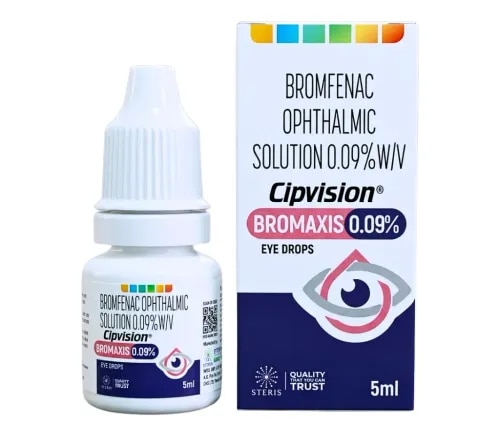
"name": "Bromfenac Ophthalmic Solution 0.09% w/v",
"description": "Bromfenac ophthalmic solution 0.09% w/v is a prescription non-steroidal anti-inflammatory drug (NSAID) eye drop used primarily to treat pain and inflammation following cataract surgery and to reduce the risk of post-operative cystoid macular edema. Unlike corticosteroid eye drops, bromfenac is not a steroid — it works by inhibiting the cyclooxygenase (COX) enzyme, blocking the production of prostaglandins that drive inflammation, redness, and pain. A key advantage of bromfenac is its once-daily dosing, compared to the multiple daily doses required by many other topical NSAIDs and steroids, which improves ease of use during post-surgical recovery. Common side effects include mild burning or stinging on instillation and temporary blurred vision, while rare but serious risks include corneal complications with prolonged or inappropriate use. It is a Schedule H prescription-only medicine in India.\n\nWhat Is Bromfenac Ophthalmic Solution 0.09% w/v?\nBromfenac ophthalmic solution 0.09% w/v is a topical non-steroidal anti-inflammatory drug (NSAID) formulated for use in the eye. It is most commonly prescribed to manage inflammation and pain following ocular surgery, particularly cataract surgery, and is also used to help reduce the risk of post-operative cystoid macular edema, a swelling of the central retina that can occur after intraocular procedures.\nAs an NSAID, bromfenac differs fundamentally from corticosteroid eye drops. It does not carry the risk of raising intraocular pressure (IOP) that steroids do, making it a valuable option — often used alongside or instead of a steroid — in the post-surgical care protocol, depending on the surgeon's assessment.\nOne of bromfenac's most notable practical advantages is its once-daily dosing schedule, which sets it apart from several other ophthalmic NSAIDs that require two to four applications per day. This simplified regimen can improve patient adherence during the post-operative recovery period.\n\nHow Does Bromfenac Work? (Mechanism of Action)\n\nTissue injury response – Ocular surgery and inflammation trigger the release of arachidonic acid from damaged cell membranes.\nCyclooxygenase (COX) enzyme activity – The COX-1 and COX-2 enzymes convert arachidonic acid into prostaglandins, which are key mediators of inflammation, pain, and vascular permeability.\nCOX inhibition by bromfenac – Bromfenac inhibits both COX-1 and COX-2 enzymes, blocking the prostaglandin synthesis pathway.\nReduced inflammation and pain – With prostaglandin production suppressed, inflammation, redness, and post-surgical discomfort are reduced.\nProtection against macular edema – By limiting prostaglandin-driven vascular permeability, bromfenac also helps lower the risk of fluid accumulation in the macula following surgery.\n\n\nClinical Indications\nIndicationDetailsPost-operative inflammationPrimary use following cataract surgeryPost-operative pain managementReduces surgical site discomfort during recoveryPrevention of post-operative cystoid macular edemaUsed prophylactically around the time of cataract surgeryAdjunct to steroid therapySometimes used alongside corticosteroid drops for comprehensive post-surgical control\n\nDosage & Administration\nParameterRecommendationStandard doseOne drop in the operated eye, once dailyTimingOften started shortly before surgery and continued through the recovery period, as directedDurationTypically a defined post-operative course as prescribed by your ophthalmic surgeonContact lensesAvoid wearing contact lenses during the immediate post-operative period unless advised otherwiseMissed doseApply as soon as remembered; do not double the next doseCombination useMay be prescribed alongside antibiotic and/or steroid eye drops as part of a full post-surgical regimen — space applications as directed\nNote: Always follow your surgeon's specific pre- and post-operative dosing schedule, as timing around the surgery date is clinically important.\n\nKey Benefits\n\nEffectively reduces post-surgical pain and inflammation without the IOP-related risks of steroids\nOnce-daily dosing improves convenience and adherence compared to multi-dose NSAID or steroid regimens\nHelps lower the risk of post-operative cystoid macular edema, a potentially vision-affecting complication\nCan be used alongside steroid and antibiotic eye drops as part of a comprehensive post-surgical protocol\nGenerally does not raise intraocular pressure, unlike corticosteroid alternatives\nSupports a smoother, more comfortable post-operative recovery experience\n\n\nPrecautions\n\nUse strictly as directed by your ophthalmic surgeon, particularly regarding timing before and after surgery\nUse with caution in patients with known bleeding disorders or those taking medications that increase bleeding tendency, as NSAIDs can affect clotting\nRare but serious corneal complications (including delayed healing or, very rarely, corneal thinning) have been reported with prolonged or inappropriate NSAID use — report any unusual eye pain or vision change immediately\nNot recommended for patients with known hypersensitivity to bromfenac or other NSAIDs\nCaution advised in patients with complicated ocular surgeries, pre-existing corneal disease, or dry eye, as these may increase sensitivity to corneal side effects\nAvoid contact lens wear during the treatment period unless specifically advised by your doctor\nInform your doctor of all other eye medications and systemic drugs, especially blood thinners\n\n\nSide Effects\nCommon (Usually Mild and Temporary)\n\nMild burning or stinging sensation on instillation\nTemporary blurred vision\nEye redness\nEye discomfort or itching\n\nLess Common / Serious (Consult Your Doctor Promptly)\n\nPersistent or worsening eye pain\nDelayed corneal healing\nRare corneal complications, including corneal thinning or perforation with prolonged/inappropriate use\nIncreased risk of bleeding at the ocular surface in susceptible individuals\nSigns of an allergic reaction (swelling, itching, rash)\n\nDiscontinue and contact your ophthalmologist immediately if any serious or persistent symptom develops.\n\nComparison: Bromfenac vs. Other Post-Surgical Anti-Inflammatory Options\nTreatmentClassDosing FrequencyKey ConsiderationBromfenac ophthalmic solution 0.09%NSAIDOnce dailyConvenient dosing; no IOP risk; rare corneal risk with prolonged usePrednisolone acetateCorticosteroidMultiple times dailyEffective anti-inflammatory; carries IOP and cataract risk with prolonged useKetorolac ophthalmic solutionNSAIDMultiple times dailySimilar NSAID mechanism; more frequent dosing than bromfenacNepafenac ophthalmic suspensionNSAID (prodrug)1–3 times daily depending on formulationAlternative NSAID option; dosing varies by strength\n\nKey Statistics (Placeholder — Pending Clinical Reviewer Verification)\nMetricValueReported reduction in post-operative cystoid macular edema incidence with prophylactic NSAID use[Placeholder – insert verified clinical trial statistic]Typical duration of post-cataract-surgery bromfenac therapy[Placeholder – insert verified reference range]Reported rate of corneal adverse events with appropriate short-course use[Placeholder – insert epidemiological reference]\nAll statistics above are placeholders and must be verified and populated by a qualified clinical reviewer prior to publication.\n\nExpert Insight\n\n[Placeholder — Expert quote pending. To be added only after review and approval by a licensed ophthalmologist/medical reviewer associated with Steris Healthcare. Do not fabricate or publish without sign-off.]\n\n\nPrice of Bromfenac Ophthalmic Solution 0.09% w/v\nThe price of bromfenac ophthalmic solution 0.09% w/v varies depending on brand, pack size, and region. For current pricing, availability, and prescription verification, please consult your ophthalmologist or an authorized pharmacy.\nPrescription only – consult your doctor.\n\nConclusion\nBromfenac ophthalmic solution 0.09% w/v has become a widely used part of modern post-cataract-surgery care, offering effective pain and inflammation control along with a meaningful reduction in the risk of post-operative cystoid macular edema — all with the convenience of once-daily dosing. As an NSAID rather than a steroid, it avoids the intraocular pressure concerns associated with corticosteroid therapy, though it carries its own specific precautions, particularly around rare corneal complications with prolonged or inappropriate use. Used exactly as directed by your ophthalmic surgeon, within the prescribed post-operative window, bromfenac supports a smoother, more comfortable surgical recovery.\n\nFrequently Asked Questions\n\n1. What is bromfenac ophthalmic solution 0.09% used for?\nIt is used to treat pain and inflammation following cataract surgery and to help reduce the risk of post-operative cystoid macular edema, a swelling of the central retina that can occur after eye surgery.\n\n2. Is bromfenac a steroid?\nNo. Bromfenac is a non-steroidal anti-inflammatory drug (NSAID). It works by inhibiting the cyclooxygenase (COX) enzyme rather than acting through the steroid pathway, and it does not carry the intraocular pressure risks associated with corticosteroids.\n\n3. How often should bromfenac eye drops be used?\nBromfenac ophthalmic solution 0.09% is typically used once daily in the operated eye, making it more convenient than many other post-surgical eye drops that require multiple daily doses.\n\n4. How long is bromfenac used after cataract surgery?\nThe duration is determined by your ophthalmic surgeon based on your individual recovery, often continuing through a defined post-operative period as part of your overall surgical care protocol.\n\n5. Can bromfenac be used with steroid eye drops?\nYes, bromfenac is often prescribed alongside corticosteroid and/or antibiotic eye drops as part of a comprehensive post-surgical regimen, with applications spaced as directed by your doctor.\n\n6. What are the side effects of bromfenac eye drops?\nCommon side effects include mild burning or stinging upon application, temporary blurred vision, and eye redness. Rare but serious effects can include delayed corneal healing or corneal complications with prolonged or inappropriate use.\n\n7. Does bromfenac raise eye pressure?\nNo, as an NSAID, bromfenac does not typically raise intraocular pressure the way corticosteroid eye drops can, which is one of its key advantages in post-surgical care.\n\n8. Can bromfenac cause corneal problems?\nRare but serious corneal complications, including delayed healing or corneal thinning, have been reported with prolonged or inappropriate NSAID use. Any unusual eye pain or vision change should be reported to your doctor immediately.\n\n9. Is bromfenac safe for people on blood thinners?\nNSAIDs like bromfenac can affect bleeding tendency, so patients on blood-thinning medications or with known bleeding disorders should inform their doctor before starting treatment.\n10. Can contact lenses be worn while using bromfenac?\nIt is generally advised to avoid wearing contact lenses during the post-operative treatment period unless your ophthalmologist specifically advises otherwise.\n11. What happens if I miss a dose of bromfenac?\nApply the missed dose as soon as you remember, unless it is nearly time for your next scheduled dose, in which case skip the missed dose. Do not double up doses.\n12. How is bromfenac different from ketorolac eye drops?\nBoth are NSAIDs with a similar mechanism of action, but bromfenac typically requires only once-daily dosing, while ketorolac usually requires multiple applications per day.\n13. Can bromfenac prevent macular edema after cataract surgery?\nBromfenac is commonly used prophylactically around the time of cataract surgery to help reduce the risk of post-operative cystoid macular edema, a recognized complication of intraocular surgery.\n\n14. Is bromfenac safe for long-term use?\nBromfenac is generally prescribed for a defined post-operative course rather than continuous long-term use, and prolonged or unsupervised use should be avoided due to rare corneal risks.\n\n15. Who should not use bromfenac eye drops?\nPatients with known hypersensitivity to bromfenac or other NSAIDs, or those with certain pre-existing corneal or bleeding conditions, should use bromfenac only under close medical supervision, if at all.\n\n16. Does bromfenac cause blurred vision?\nTemporary blurred vision can occur immediately after instillation in some patients and usually resolves quickly. Persistent blurred vision should be reported to your doctor.\n\n17. Can bromfenac be used before cataract surgery as well as after?\nYes, bromfenac is often started shortly before surgery and continued through the post-operative recovery period, following the specific schedule set by your ophthalmic surgeon.\n",
"price": 195.0,
"discountamount": 136.0,
"currencycode": "INR",
"priority": 1000000,
"isfreeshipmentavailable": false,
"shipmentduration": 1,
"_keywords": null,
"isarchived": false,
"isavailable": true,
"applicationid": null,
"productindex": 2472,
"imageuri": "https://productimages.withfloats.com/actual/6a50b1b32d7a16f0f95be110.png",
"tileimageuri": "https://productimages.withfloats.com/tile/6a50b1b32d7a16f0f95be110.png",
"images": null,
"totalqueries": 0,
"gpid": null,
"groupproductid": null,
"createdon": "2026-07-10T08:47:42.715Z",
"updatedon": "2026-07-10T08:47:42.715Z",
"buyonlinelink": null,
"producturl": "http://WWW.STERISINDIA.COM//bromfenac-ophthalmic-solution-0-09-w-v/2472",
"availableunits": -1.0,
"iscodavailable": false,
"isprepaidonlineavailable": false,
"maxcodorders": 0,
"maxprepaidonlineorders": 0,
"uniquepaymenturl": null,
"brandname": "CIPVISION BROMAXIS 0.09%",
"category": "Opthalmology Range",
"tags": [
"Bromfenac Ophthalmic Solution 0.09% w/v",
"bromfenac ophthalmic solution 0.09%"
],
"variants": false,
"keyspecification": null,
"otherspecifications": null,
"pickupaddressreferenceid": null,
"paymenttype": "UniquePaymentUrl",
"producttype": "products",
"hsncode": null,
"gstslab": 0.0,
"isnotforsale": false
},
{
"_id": "6a50a78a75263abd944f583a",
"fptag": "STERISHEALTHCARE",
"merchantname": null,
"customwidgets": null,
"externalsourceid": null,
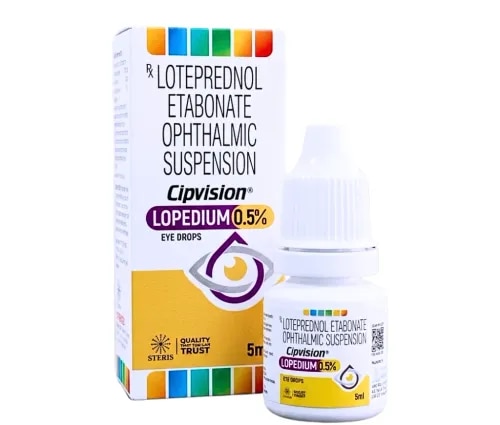
"name": "Loteprednol Etabonate Ophthalmic Suspension",
"description": "Loteprednol etabonate ophthalmic suspension is a prescription corticosteroid eye drop used to treat steroid-responsive inflammatory conditions of the eye, including post-surgical inflammation, allergic conjunctivitis, and certain forms of anterior uveitis. What sets loteprednol apart from older ophthalmic steroids is its “ester-based” chemical structure, which is designed to break down into inactive components after acting on eye tissue — giving it a comparatively lower risk of raising intraocular pressure (IOP) than traditional steroids like prednisolone or dexamethasone, while still delivering effective anti-inflammatory action. The typical dose is one to two drops in the affected eye, four times daily, or as directed, usually for a short, defined course rather than indefinite use. Common side effects include burning, stinging, and blurred vision, while prolonged or unsupervised use can still carry steroid-related risks such as elevated eye pressure. It is a Schedule H prescription-only medicine in India.\n\nWhat Is Loteprednol Etabonate Ophthalmic Suspension?\nLoteprednol etabonate ophthalmic suspension is a topical corticosteroid formulated specifically for use in the eye. It belongs to a category sometimes referred to as “site-specific” or “soft” steroids — a design approach where the drug is engineered to be highly active at the site of application (the eye) but rapidly metabolized into inactive by-products once it has acted, reducing the potential for the cumulative steroid-related side effects seen with older ophthalmic corticosteroids.\nThis suspension is commonly prescribed for:\n\nManaging inflammation following eye surgery, such as cataract surgery\nTreating allergic conjunctivitis, including seasonal allergic conjunctivitis\nCertain anterior segment inflammatory conditions, such as uveitis, under specialist supervision\nGiant papillary conjunctivitis and other steroid-responsive ocular surface conditions\n\nBecause of its comparatively favorable IOP profile, loteprednol is often considered by ophthalmologists for patients who need effective anti-inflammatory therapy but may be at higher risk from more potent steroids — though it is important to note that no ophthalmic steroid is entirely free of IOP-related risk, and monitoring remains necessary.\n\nHow Does Loteprednol Etabonate Work? (Mechanism of Action)\n\nCorticosteroid receptor binding – Loteprednol etabonate binds to glucocorticoid receptors within ocular tissue, initiating anti-inflammatory gene expression changes.\nSuppression of inflammatory mediators – This binding reduces the production of key inflammatory substances, including prostaglandins and cytokines, that drive redness, swelling, and discomfort.\nReduced vascular permeability – By calming the inflammatory cascade, the drug helps reduce leakage of fluid and inflammatory cells into ocular tissue, easing swelling.\nEster-based metabolism – Unlike ketone-based steroids, loteprednol's ester structure allows ocular esterases to break it down into inactive metabolites after it exerts its effect, which is thought to underlie its comparatively lower propensity to raise intraocular pressure.\nLocalized anti-inflammatory effect – The net result is effective control of ocular surface and anterior segment inflammation with a more favorable safety profile than some older steroid formulations, when used for the intended short duration.\n\n\nClinical Indications\nIndicationDetailsPost-operative ocular inflammationCommon after cataract and other intraocular surgeriesAllergic conjunctivitisIncluding seasonal allergic conjunctivitisGiant papillary conjunctivitisOften associated with contact lens wearAnterior uveitisUnder specialist supervisionOther steroid-responsive inflammatory conditions of the palpebral and bulbar conjunctiva, cornea, and anterior segmentAs directed by an ophthalmologist\nNot indicated for: viral (e.g., herpes simplex), fungal, or mycobacterial eye infections, where corticosteroid use can worsen the underlying condition.\n\nDosage & Administration\nParameterRecommendationStandard dose1–2 drops in the affected eye(s), typically 4 times dailyPost-surgical regimenOften started at higher frequency and tapered per surgeon's protocolShake before useYes — this is a suspension; shake well before each applicationDurationShort, defined course as prescribed; not intended for indefinite useTaperingGradual reduction recommended rather than abrupt discontinuation after extended useContact lensesRemove before instillation; reinsert only per your doctor's adviceMissed doseApply as soon as remembered; do not double the next dose\nImportant: Even with its comparatively favorable safety profile, loteprednol should be used strictly for the duration prescribed. Extended, unsupervised use is not recommended.\n\nKey Benefits\n\nEffective anti-inflammatory action for a range of steroid-responsive ocular conditions\nEster-based design associated with a comparatively lower risk of raising intraocular pressure than some older ophthalmic steroids\nUseful for patients needing steroid therapy who may be more sensitive to IOP elevation, under appropriate monitoring\nSuitable for both post-surgical inflammation control and allergic conjunctivitis management\nAvailable in a suspension formulation designed for good ocular surface contact\nOften used as part of a short, defined treatment course, reducing exposure duration compared to continuous long-term steroid regimens\n\n\nPrecautions\n\nUse strictly under ophthalmologist supervision — this is not an over-the-counter product\nNot suitable for viral, fungal, or mycobacterial eye infections\nEven with its favorable profile, prolonged use can still raise intraocular pressure in susceptible individuals — periodic IOP monitoring is recommended\nExtended use may increase the risk of cataract formation, as with other ophthalmic steroids\nMay mask signs of infection or delay wound healing if used inappropriately\nInform your doctor of any history of glaucoma, herpes eye infection, or corneal thinning before starting\nShake the suspension well before each use for accurate dosing\nAvoid touching the dropper tip to the eye or any surface\n\n\nSide Effects\nCommon (Usually Mild and Temporary)\n\nBurning or stinging sensation on instillation\nBlurred vision immediately after application\nEye discomfort or a foreign-body sensation\nMild eye redness\n\nLess Common / Serious (Consult Your Doctor Promptly)\n\nElevated intraocular pressure (comparatively less frequent than with older steroids, but still possible)\nDelayed wound healing\nSigns of secondary or masked ocular infection\nCataract progression with prolonged use\nAllergic reaction (eyelid swelling, itching, rash)\n\nDiscontinue and consult your ophthalmologist promptly if any serious symptom develops.\n\nComparison: Loteprednol vs. Other Ophthalmic Corticosteroids\nTreatmentClassIOP Risk ProfileBest Suited ForLoteprednol etabonate suspensionEster-based (“soft”) corticosteroidComparatively lowerPatients needing effective anti-inflammatory action with reduced IOP concernPrednisolone acetateKetone-based corticosteroidHigher with prolonged useRobust anti-inflammatory action; requires closer IOP monitoringDexamethasoneKetone-based corticosteroidHigher, potent effectSevere inflammatory conditions; typically shorter coursesFluorometholoneKetone-based corticosteroidModerateMild to moderate inflammation with somewhat reduced IOP risk\n\nKey Statistics (Placeholder — Pending Clinical Reviewer Verification)\nMetricValueReported incidence of clinically significant IOP elevation with short-course loteprednol use[Placeholder – insert verified clinical trial statistic]Comparative IOP-elevation rate vs. prednisolone acetate in controlled studies[Placeholder – insert verified reference]Typical duration of post-operative loteprednol therapy[Placeholder – insert reference range]\nAll statistics above are placeholders and must be verified and populated by a qualified clinical reviewer prior to publication.\n\nExpert Insight\n\n[Placeholder — Expert quote pending. To be added only after review and approval by a licensed ophthalmologist/medical reviewer associated with Steris Healthcare. Do not fabricate or publish without sign-off.]\n\n\nPrice of Loteprednol Etabonate Ophthalmic Suspension\nThe price of loteprednol etabonate ophthalmic suspension varies depending on brand, pack size, and region. For current pricing, availability, and prescription verification, please consult your ophthalmologist or an authorized pharmacy.\nPrescription only – consult your doctor.\n\nConclusion\nLoteprednol etabonate ophthalmic suspension offers a valuable option for managing steroid-responsive ocular inflammation — from post-surgical recovery to allergic conjunctivitis — with a design intended to reduce the intraocular pressure risks historically associated with ophthalmic corticosteroids. While its ester-based structure gives it a comparatively favorable safety profile, it remains a steroid, and prolonged or unsupervised use can still carry risks such as elevated eye pressure, cataract progression, and delayed healing. For this reason, loteprednol should always be used for the specific duration prescribed, with appropriate tapering and regular ophthalmic follow-up, rather than as a long-term, self-managed therapy.\n\nFrequently Asked Questions\n\n1. What is loteprednol etabonate ophthalmic suspension used for?\nIt is used to treat steroid-responsive eye inflammation, including inflammation after eye surgery, allergic conjunctivitis, and certain anterior segment inflammatory conditions such as uveitis, under an ophthalmologist's guidance.\n\n2. Is loteprednol a steroid?\nYes, loteprednol etabonate is a corticosteroid. It is specifically designed with an ester-based structure intended to reduce the risk of raising intraocular pressure compared to some older ophthalmic steroids, though it still requires medical supervision.\n\n3. How long can I use loteprednol eye drops?\nLoteprednol is typically prescribed for a short, defined course as determined by your ophthalmologist, often with a tapering schedule. It is not intended for indefinite, unsupervised long-term use.\n\n4. Does loteprednol raise eye pressure?\nLoteprednol has a comparatively lower risk of raising intraocular pressure than some older ophthalmic steroids due to its ester-based design, but it can still cause elevated eye pressure in susceptible individuals, especially with prolonged use, so periodic monitoring is recommended.\n\n5. Can loteprednol cause cataracts?\nProlonged use of any ophthalmic corticosteroid, including loteprednol, can increase the risk of cataract formation, particularly posterior subcapsular cataracts, which is why short, supervised courses are recommended.\n\n6. How is loteprednol different from prednisolone acetate?\nLoteprednol has an ester-based chemical structure designed to break down into inactive components after acting on the eye, which is associated with a lower risk of raising intraocular pressure compared to prednisolone acetate, a ketone-based steroid with a higher IOP-elevation potential.\n\n7. Can loteprednol be used for allergic conjunctivitis?\nYes, loteprednol etabonate ophthalmic suspension is commonly used to manage allergic conjunctivitis, including seasonal allergic conjunctivitis, especially when symptoms are significant or not controlled by other treatments.\n\n8. Is loteprednol safe after cataract surgery?\nYes, loteprednol is frequently prescribed to manage post-operative inflammation following cataract surgery, typically as part of a tapering regimen directed by the operating ophthalmologist.\n\n9. Can loteprednol be used for viral eye infections?\nNo, loteprednol and other corticosteroids are not appropriate for viral eye infections such as herpes simplex keratitis, as steroids can worsen these conditions if used inappropriately.\n\n10. What are the common side effects of loteprednol eye drops?\nCommon side effects include burning or stinging upon application, temporary blurred vision, mild eye redness, and eye discomfort. These are usually mild and resolve quickly.\n11. Does loteprednol need to be shaken before use?\nYes, since it is a suspension, the bottle should be shaken well before each use to ensure the medication is evenly distributed.\n\n12. Can loteprednol be stopped suddenly?\nStopping abruptly, especially after extended use, is generally not recommended. A gradual tapering schedule, as advised by your ophthalmologist, helps prevent rebound inflammation.\n\n13. Is loteprednol safe for long-term daily use?\nNo, loteprednol is generally intended for short, supervised courses rather than continuous long-term daily use, due to steroid-related risks with prolonged exposure.\n\n14. Can contact lenses be worn while using loteprednol?\nIt's generally recommended to remove contact lenses before applying loteprednol and reinsert them only after the interval advised by your doctor.\n\n15. Who should avoid using loteprednol eye drops?\nPatients with active untreated viral, fungal, or mycobacterial eye infections, or known hypersensitivity to the medication, should avoid loteprednol unless specifically directed otherwise by their ophthalmologist.\n\n16. Can loteprednol be used in children?\nUse in children should only occur under the direct guidance and prescription of a pediatric ophthalmologist, based on individual clinical assessment.\n17. Does loteprednol cause blurred vision?\nTemporary blurred vision can occur immediately after instillation in some patients and usually resolves quickly. Persistent blurred vision should be reported to your doctor.",
"price": 150.0,
"discountamount": 45.0,
"currencycode": "INR",
"priority": 1000000,
"isfreeshipmentavailable": false,
"shipmentduration": 1,
"_keywords": null,
"isarchived": false,
"isavailable": true,
"applicationid": null,
"productindex": 2471,
"imageuri": "https://productimages.withfloats.com/actual/6a50a78cd95cad00a915a6d8.png",
"tileimageuri": "https://productimages.withfloats.com/tile/6a50a78cd95cad00a915a6d8.png",
"images": null,
"totalqueries": 0,
"gpid": null,
"groupproductid": null,
"createdon": "2026-07-10T08:04:26.663Z",
"updatedon": "2026-07-10T08:04:26.663Z",
"buyonlinelink": null,
"producturl": "http://WWW.STERISINDIA.COM//loteprednol-etabonate-ophthalmic-suspension/2471",
"availableunits": -1.0,
"iscodavailable": false,
"isprepaidonlineavailable": false,
"maxcodorders": 0,
"maxprepaidonlineorders": 0,
"uniquepaymenturl": null,
"brandname": "CIPVISION LOPEDIUM 0.5%",
"category": "Opthalmology Range",
"tags": [
"Loteprednol Etabonate Ophthalmic Suspension",
"loteprednol etabonate ophthalmic suspension uses",
"loteprednol etabonate ophthalmic suspension uses in hindi",
"loteprednol etabonate ophthalmic suspension in hindi",
"loteprednol etabonate ophthalmic suspension eye drops uses",
"loteprednol etabonate ophthalmic suspension eye drops",
"loteprednol etabonate ophthalmic suspension use"
],
"variants": false,
"keyspecification": null,
"otherspecifications": null,
"pickupaddressreferenceid": null,
"paymenttype": "UniquePaymentUrl",
"producttype": "products",
"hsncode": null,
"gstslab": 0.0,
"isnotforsale": false
},
{
"_id": "6a509bf6f44be736283180cf",
"fptag": "STERISHEALTHCARE",
"merchantname": null,
"customwidgets": null,
"externalsourceid": null,
"name": "gatifloxacin & prednisolone acetate ophthalmic suspension",
"description": "Gatifloxacin and prednisolone acetate ophthalmic suspension is a prescription combination eye medicine that pairs a fourth-generation fluoroquinolone antibiotic (gatifloxacin) with a corticosteroid (prednisolone acetate) in a single formulation. It is used to treat steroid-responsive ocular inflammation where there is also a risk of, or existing, bacterial eye infection — most commonly after cataract or other ocular surgery, and in certain inflammatory eye conditions requiring both anti-infective and anti-inflammatory action together. Gatifloxacin fights the bacteria, while prednisolone acetate reduces inflammation, redness, and swelling. This combination is not the same as a plain antibiotic drop — because it contains a steroid, it requires closer monitoring, a defined tapering schedule, and should never be self-prescribed or used beyond the duration your ophthalmologist recommends. It is a Schedule H prescription-only medicine in India, commonly marketed under brand names such as Gatiquin P.\n\nWhat Is Gatifloxacin and Prednisolone Acetate Ophthalmic Suspension?\nGatifloxacin and prednisolone acetate ophthalmic suspension is a fixed-dose combination eye drop that brings together two distinct classes of medication in one bottle:\n\nGatifloxacin — a fourth-generation fluoroquinolone antibiotic effective against a broad range of gram-positive and gram-negative bacteria commonly implicated in ocular infections.\nPrednisolone acetate — a corticosteroid that suppresses inflammation, swelling, and associated redness or discomfort in the eye.\n\nThis combination is typically prescribed when a clinician determines that an eye condition involves both active or potential bacterial infection and significant inflammation — a situation where using either drug alone would be insufficient. The most frequent use case is post-operative care following ocular surgery, such as cataract extraction, where inflammation control speeds recovery while the antibiotic component guards against surgical-site infection.\nA commonly recognized branded version of this combination in the Indian market is Gatiquin P, and patients often search specifically for this brand name alongside the generic combination name.\n\nHow Does This Combination Work? (Mechanism of Action)\n\nAntibacterial action (Gatifloxacin) – Gatifloxacin inhibits bacterial DNA gyrase and topoisomerase IV, enzymes bacteria need to replicate their DNA, resulting in bactericidal activity against susceptible organisms.\nAnti-inflammatory action (Prednisolone acetate) – Prednisolone acetate suppresses the inflammatory cascade by inhibiting phospholipase A2 and reducing the release of inflammatory mediators, which decreases swelling, redness, and discomfort.\nCombined surgical/inflammatory coverage – Together, the two components address both the infective and inflammatory components of a single ocular condition, which is particularly useful in the immediate post-surgical period when both risks are elevated simultaneously.\nLocalized ocular delivery – As a topical suspension, the combination acts directly at the site of application, minimizing systemic absorption compared to oral antibiotics or steroids.\n\n\nClinical Indications\nIndicationDetailsPost-operative inflammation with infection riskMost common use — following cataract surgery or other intraocular proceduresSteroid-responsive inflammatory ocular conditionsWhere a bacterial infection is present or risk is significantChronic anterior uveitis with secondary infection riskUsed under specialist supervisionBlepharoconjunctivitis with inflammatory componentWhen combined anti-infective and anti-inflammatory action is clinically indicated\nNot indicated for: viral eye infections (e.g., herpes simplex keratitis), fungal eye infections, mycobacterial infections, or uncomplicated bacterial conjunctivitis without an inflammatory component — a steroid is not appropriate in these settings.\n\nDosage & Administration\nParameterRecommendationStandard dose1–2 drops in the affected eye, typically 4 times daily, or as directedPost-surgical regimenOften started with a higher frequency and gradually tapered per surgeon's protocolShake before useYes — this is a suspension; shake well before each applicationDurationDetermined by your ophthalmologist; steroid-containing drops are not for indefinite useTaperingMust be tapered gradually rather than stopped abruptly, especially after prolonged useContact lensesAvoid wearing contact lenses during treatment unless your doctor advises otherwiseMissed doseApply as soon as remembered; do not double the next dose\nImportant: Never extend use beyond the prescribed duration or restart the medication without consulting your ophthalmologist, as prolonged steroid exposure carries specific ocular risks (see Precautions below).\n\nKey Benefits\n\nProvides dual-action therapy — infection control and inflammation control — in a single formulation\nReduces the need for two separate eye drop regimens after surgery, simplifying the treatment schedule\nSpeeds resolution of post-surgical redness, swelling, and discomfort while covering infection risk\nBroad-spectrum antibacterial coverage from a fourth-generation fluoroquinolone\nCommonly trusted and prescribed by ophthalmic surgeons as part of standard post-operative protocols\nAvailable in a suspension formulation designed for effective ocular surface contact time\n\n\nPrecautions\n\nUse strictly under ophthalmologist supervision — this is not an over-the-counter product\nNot suitable for viral, fungal, or mycobacterial eye infections\nLong-term or unsupervised steroid use can raise intraocular pressure (IOP) and increase glaucoma risk\nProlonged use may increase the risk of posterior subcapsular cataract formation\nSteroid component may mask signs of a worsening infection or delay wound healing if misused\nRegular monitoring of intraocular pressure is recommended with extended use\nInform your doctor of any history of glaucoma, herpes eye infection, or corneal thinning before starting\nShake the suspension well before each use for accurate dosing\nAvoid touching the dropper tip to the eye or any surface\n\n\nSide Effects\nCommon (Usually Mild and Temporary)\n\nTransient burning or stinging on instillation\nBlurred vision immediately after application\nEye discomfort or foreign-body sensation\nMild eye redness\n\nLess Common / Serious (Consult Your Doctor Promptly)\n\nIncreased intraocular pressure / glaucoma symptoms (eye pain, halos around lights)\nDelayed wound healing at a surgical site\nSecondary or masked ocular infection\nSigns of cataract progression with prolonged use\nCorneal or scleral thinning (rare, with extended steroid exposure)\nAllergic reaction (eyelid swelling, itching, rash)\n\nDiscontinue and consult your ophthalmologist immediately if any serious symptom develops.\n\nComparison: Combination vs. Standalone Therapies\nTreatmentCompositionBest Suited ForKey ConsiderationGatifloxacin + Prednisolone acetate suspensionAntibiotic + steroidPost-surgical care; infection + inflammation togetherRequires tapering; steroid monitoring neededGatifloxacin eye drops (alone)Antibiotic onlyUncomplicated bacterial conjunctivitis/keratitisNo steroid-related risk, but no anti-inflammatory actionPrednisolone acetate eye drops (alone)Steroid onlyNon-infectious inflammatory conditions (e.g., uveitis)Not appropriate if active infection is presentPlain lubricant/antibiotic-only regimensVariesMild post-op cases without significant inflammationMay be insufficient for higher-risk surgical cases\n\nKey Statistics (Placeholder — Pending Clinical Reviewer Verification)\nMetricValueReported post-operative infection rate reduction with prophylactic use[Placeholder – insert verified clinical trial statistic]Typical duration of post-cataract-surgery combination therapy[Placeholder – insert verified reference range]Incidence of steroid-induced IOP elevation with short-course use[Placeholder – insert epidemiological reference]\nAll statistics above are placeholders and must be verified and populated by a qualified clinical reviewer prior to publication.\n\nExpert Insight\n\n[Placeholder — Expert quote pending. To be added only after review and approval by a licensed ophthalmologist/medical reviewer associated with Steris Healthcare. Do not fabricate or publish without sign-off.]\n\n\nPrice of Gatifloxacin and Prednisolone Acetate Ophthalmic Suspension\nThe price of this combination suspension varies depending on brand, pack size, and region. For current pricing, availability, and prescription verification, please consult your ophthalmologist or an authorized pharmacy.\nPrescription only – consult your doctor.\n\nConclusion\nGatifloxacin and prednisolone acetate ophthalmic suspension serves an important clinical role wherever bacterial infection risk and ocular inflammation occur together — most notably in the sensitive period following eye surgery. By combining a potent fourth-generation antibiotic with a well-established corticosteroid, this formulation streamlines post-operative and steroid-responsive inflammatory care into a single, clinician-directed regimen. Because the steroid component carries specific long-term risks — including elevated eye pressure, cataract progression, and delayed healing if misused — this medication should always be used exactly as prescribed, for the duration recommended, and with appropriate tapering and follow-up. Patients should never self-adjust dosing or extend use without their ophthalmologist's explicit guidance.\n\nFrequently Asked Questions\n\n1. What is Gatifloxacin and prednisolone acetate ophthalmic suspension used for?\nIt is used to treat eye conditions that involve both inflammation and a risk of bacterial infection — most commonly after eye surgery such as cataract surgery, where it reduces post-operative swelling and redness while protecting against infection.\n\n2. Is Gatifloxacin eye drops safe for children?\nGatifloxacin eye drops are generally considered usable in children for appropriate bacterial eye infections under a pediatric ophthalmologist's guidance. However, the gatifloxacin-prednisolone combination includes a steroid, which requires closer specialist supervision in children due to potential effects on eye pressure and healing, so it should only be used if specifically prescribed for a child.\n\n3. What is Gatifloxacin and prednisolone acetate ophthalmic suspension (Gatiquin P) used for?\nGatiquin P is a branded formulation of gatifloxacin and prednisolone acetate ophthalmic suspension. It is used for the same core purpose — managing post-surgical or steroid-responsive ocular inflammation where there is also a bacterial infection risk, most often following cataract or other intraocular surgery.\n\n4. Is prednisolone acetate safe for eyes?\nPrednisolone acetate is a corticosteroid that is generally safe for eyes when used exactly as prescribed and for the recommended duration under an ophthalmologist's supervision. However, unsupervised or prolonged use can raise intraocular pressure, increase glaucoma risk, contribute to cataract formation, and delay wound healing, so it should never be used without medical guidance or beyond the prescribed course.\n\n5. How is this eye drop different from regular antibiotic eye drops?\nRegular antibiotic eye drops only target bacteria, while this combination also contains a steroid to control inflammation. This dual action is useful specifically when both infection risk and significant inflammation are present, such as after eye surgery.\n\n6. How long should I use gatifloxacin and prednisolone acetate suspension?\nDuration is determined by your ophthalmologist based on your specific condition, often following a tapering schedule after surgery. It should not be used longer than prescribed, and stopping should be discussed with your doctor rather than done abruptly.\n\n7. Can this eye drop increase eye pressure?\nYes, because it contains a steroid, prolonged or unsupervised use can raise intraocular pressure. Regular monitoring is recommended, especially with extended use or in patients with a history of glaucoma.\n\n8. Can I use this suspension for a common bacterial eye infection without inflammation?\nThis combination is generally reserved for cases where both infection risk and notable inflammation are present, such as post-surgical care. For uncomplicated bacterial conjunctivitis without significant inflammation, your doctor may prescribe an antibiotic-only formulation instead.\n\n9. Do I need to shake the bottle before use?\nYes. This is a suspension, so the bottle should be shaken well before each use to ensure even distribution of both active ingredients.\n10. Can this eye drop be used for viral or fungal eye infections?\nNo. This combination is not appropriate for viral, fungal, or mycobacterial eye infections, since it contains a steroid that can worsen these conditions if used inappropriately.\n\n11. What are the signs I should stop using this eye drop and see my doctor?\nIncreasing eye pain, blurred vision that doesn't improve, halos around lights, worsening redness, or signs of an allergic reaction warrant immediate medical attention.\n\n12. Can this eye drop be used after cataract surgery?\nYes, this combination is commonly prescribed after cataract surgery to manage post-operative inflammation while covering the risk of surgical-site infection during the healing period.\n\n13. Does this medication require a prescription?\nYes, gatifloxacin and prednisolone acetate ophthalmic suspension is a prescription-only (Schedule H) medicine and should only be used under an ophthalmologist's direction.\n14. Can contact lenses be worn during treatment?\nIt is generally advised to avoid wearing contact lenses while using this medication unless your ophthalmologist specifically advises otherwise, particularly during the post-surgical period.\n\n15. What happens if I stop this eye drop too early?\nStopping too early, especially without proper tapering, may lead to a rebound of inflammation or leave a lingering infection insufficiently treated. Always follow your doctor's full course and tapering instructions.\n\n16. Is this eye drop safe for long-term daily use?\nNo — because it contains a steroid, it is intended for short-term, supervised use rather than long-term daily use. Extended use significantly raises the risk of elevated eye pressure and cataract.\n\n17. Can this suspension be used in both eyes at once?\nIt can be used in both eyes if both are affected and your doctor has prescribed it for bilateral use; otherwise, apply only to the eye(s) specifically directed by your ophthalmologist.\n",
"price": 155.0,
"discountamount": 47.0,
"currencycode": "INR",
"priority": 1000000,
"isfreeshipmentavailable": false,
"shipmentduration": 1,
"_keywords": null,
"isarchived": false,
"isavailable": true,
"applicationid": null,
"productindex": 2469,
"imageuri": "https://productimages.withfloats.com/actual/6a509bf79c2198e9ddf06962.png",
"tileimageuri": "https://productimages.withfloats.com/tile/6a509bf79c2198e9ddf06962.png",
"images": null,
"totalqueries": 0,
"gpid": null,
"groupproductid": null,
"createdon": "2026-07-10T07:15:02.084Z",
"updatedon": "2026-07-10T07:15:02.084Z",
"buyonlinelink": null,
"producturl": "http://WWW.STERISINDIA.COM//gatifloxacin-prednisolone-acetate-ophthalmic-suspension/2469",
"availableunits": -1.0,
"iscodavailable": false,
"isprepaidonlineavailable": false,
"maxcodorders": 0,
"maxprepaidonlineorders": 0,
"uniquepaymenturl": null,
"brandname": "CIPVISION GATIPRED",
"category": "Opthalmology Range",
"tags": [
"gatifloxacin & prednisolone acetate ophthalmic suspension",
"gatifloxacin & prednisolone ophthalmic suspension"
],
"variants": false,
"keyspecification": null,
"otherspecifications": null,
"pickupaddressreferenceid": null,
"paymenttype": "UniquePaymentUrl",
"producttype": "products",
"hsncode": null,
"gstslab": 0.0,
"isnotforsale": false
},
{
"_id": "6a5092283075a19d4f2db6bd",
"fptag": "STERISHEALTHCARE",
"merchantname": null,
"customwidgets": null,
"externalsourceid": null,
"name": "Cyclosporine Eye Drops 0.05% w/v",
"description": "Cyclosporine eye drops 0.05% are a prescription ophthalmic emulsion used to treat chronic dry eye disease (keratoconjunctivitis sicca) caused by ocular surface inflammation. Unlike lubricating tear substitutes that only manage symptoms, cyclosporine works as a calcineurin-inhibitor immunomodulator that calms the underlying inflammation suppressing your eyes' natural tear production. It is not a steroid. The standard dose is one drop in each affected eye, twice daily, about 12 hours apart, and visible improvement in tear production typically takes 6–12 weeks, with full benefit sometimes taking up to 3–6 months of consistent use. Common side effects include temporary burning, stinging, redness, and watery eyes at the time of instillation. It is a Schedule H prescription-only medicine in India and should be used only under a qualified ophthalmologist's guidance.\n\nWhat Is Cyclosporine Eye Drops 0.05%?\nCyclosporine eye drops 0.05% (ophthalmic emulsion) is a prescription formulation designed to manage chronic dry eye disease, a condition in which the eyes fail to produce enough tears or produce tears of poor quality, often because of an underlying inflammatory process on the ocular surface and in the lacrimal (tear-producing) gland.\nThis formulation is commonly prescribed for patients whose dry eye is presumed to be due to ocular inflammation — for example, those with moderate to severe dry eye, keratoconjunctivitis sicca, or dry eye associated with conditions like Sjögren's syndrome, that has not responded adequately to artificial tears alone.\nCyclosporine belongs to a class of drugs called calcineurin inhibitors. It differs fundamentally from corticosteroid eye drops, which suppress inflammation broadly and carry risks like raised intraocular pressure and cataract formation with long-term use. Cyclosporine instead selectively dampens the T-cell-mediated inflammatory response that is thought to suppress tear gland function, allowing the eye's own tear-producing mechanism to gradually recover.\n\nHow Do Cyclosporine Eye Drops Work? (Mechanism of Action)\n\nInflammation on the ocular surface – In chronic dry eye, T-lymphocytes infiltrate the conjunctiva and lacrimal gland, triggering a self-perpetuating inflammatory cycle.\nCalcineurin inhibition – Cyclosporine binds to a cellular protein (cyclophilin) and blocks calcineurin, an enzyme required to activate T-cells.\nReduced T-cell activation – With calcineurin blocked, T-cells cannot produce the inflammatory signals (such as interleukin-2) that damage the lacrimal gland and conjunctival tissue.\nRestoration of tear production – As local inflammation subsides over weeks to months, the lacrimal gland's ability to produce natural tears gradually improves.\nImproved tear film stability – With reduced inflammation and increased natural tear volume, patients typically notice less dryness, grittiness, and ocular surface damage over time.\n\nThis is why cyclosporine drops are described as disease-modifying for dry eye rather than purely symptomatic — they address a root inflammatory cause instead of simply lubricating the eye.\n\nClinical Indications\nIndicationDetailsChronic dry eye disease (keratoconjunctivitis sicca)Primary approved use; especially where tear production is suppressed due to ocular inflammationModerate to severe dry eye not controlled by artificial tearsSecond-line option when lubricants alone are insufficientDry eye associated with autoimmune conditionsE.g., Sjögren's syndrome-related dry eye, under specialist supervisionPost-refractive surgery dry eye (select cases)Sometimes used off-label under ophthalmologist guidance\n\nDosage & Administration\nParameterRecommendationStandard doseOne drop in each affected eye, twice dailyDosing intervalApproximately 12 hours apartContact lens useRemove lenses before instillation; wait at least 15 minutes before reinsertingOnset of noticeable effectUsually 6–12 weeksFull therapeutic benefitMay take up to 3–6 months of continuous useMissed doseContinue with next scheduled dose; do not double upDiscontinuationOnly under medical advice — symptoms may return if stopped prematurely\nNote: Cyclosporine eye drops are for long-term, continuous use as directed by your ophthalmologist. Improvement is gradual, not immediate, and consistent daily use is essential for benefit.\n\nKey Benefits\n\nTargets the underlying inflammatory cause of chronic dry eye rather than only masking symptoms\nCan increase natural tear production over sustained use\nGenerally well tolerated for long-term use, since it is not a steroid and does not carry steroid-related risks like elevated eye pressure or cataract with routine use\nMay reduce dependence on frequent artificial tear instillation over time\nSuitable for long-term maintenance therapy in chronic, relapsing dry eye disease\nCan improve comfort during visually demanding tasks (screen use, reading, driving) affected by chronic dryness\n\n\nPrecautions\n\nUse strictly as prescribed by an ophthalmologist; do not self-medicate\nNot intended for immediate relief of dry eye symptoms — artificial tears may be used concurrently for interim comfort as advised by your doctor\nShould not be used in the presence of an active ocular infection unless specifically directed by a physician\nInform your doctor if you are pregnant, breastfeeding, or have any known hypersensitivity to cyclosporine or emulsion components\nAvoid touching the dropper tip to the eye or any surface to prevent contamination\nIf wearing contact lenses, remove before application and reinsert only after 15 minutes\nDo not use expired or previously opened single-use vials, if applicable to your product format\nRegular ophthalmic follow-up is recommended to monitor treatment response\n\n\nSide Effects\nCommon (Usually Mild and Temporary)\n\nBurning or stinging sensation upon instillation\nEye redness\nWatery eyes (excessive tearing)\nEye discomfort or a feeling of something in the eye\nTemporary blurred vision immediately after application\n\nLess Common / Serious (Consult Your Doctor Promptly)\n\nPersistent or worsening eye pain\nSigns of eye infection (discharge, significant redness, swelling)\nVisual disturbance that does not resolve\nSigns of an allergic reaction (eyelid swelling, itching, rash)\n\nIf any serious or persistent symptom occurs, discontinue use and consult your ophthalmologist immediately.\n\nComparison: Cyclosporine Eye Drops vs. Other Dry Eye Treatments\nTreatmentMechanismOnset of ActionLong-Term Use ProfileCyclosporine 0.05% dropsCalcineurin inhibitor; reduces inflammation, restores natural tear productionWeeks to monthsGenerally suitable for continuous long-term useArtificial tears / lubricantsSymptomatic lubrication onlyImmediate, short-livedSafe but does not address inflammation; frequent reapplication neededCorticosteroid eye dropsBroad anti-inflammatory actionFast (days)Not recommended for long-term use due to risk of raised IOP, cataractLifitegrast ophthalmic solutionLFA-1 antagonist; blocks a different inflammatory pathwayWeeksAlternative option, mechanism differs from cyclosporine\n\nKey Statistics (Placeholder — Pending Clinical Reviewer Verification)\nMetricValueReported patients showing improved tear production at 6 months[Placeholder – insert verified clinical trial statistic]Prevalence of chronic dry eye disease in adults[Placeholder – insert epidemiological reference]Average time to symptomatic improvement[Placeholder – insert verified reference range]\nAll statistics above are placeholders and must be verified and populated by a qualified clinical reviewer prior to publication.\n\nExpert Insight\n\n[Placeholder — Expert quote pending. To be added only after review and approval by a licensed ophthalmologist/medical reviewer associated with Steris Healthcare. Do not fabricate or publish without sign-off.]\n\n\nPrice of Cyclosporine Eye Drops 0.05%\nThe price of cyclosporine eye drops 0.05% varies depending on pack size, brand, and region. For current pricing, availability, and prescription verification, please consult your ophthalmologist or authorized pharmacy.\nPrescription only – consult your doctor.\n\nConclusion\nCyclosporine eye drops 0.05% represent a meaningful shift in how chronic dry eye disease is managed — moving beyond temporary lubrication to address the underlying inflammatory process that suppresses natural tear production. For patients with moderate to severe dry eye that hasn't responded well to artificial tears alone, this calcineurin-inhibitor therapy offers a disease-modifying option that, with consistent long-term use, can meaningfully improve ocular comfort and tear film health. Because benefits build gradually over weeks to months, patience and adherence to the prescribed twice-daily regimen are essential. As with any prescription ophthalmic therapy, cyclosporine eye drops should only be used under the guidance of a qualified ophthalmologist, who can confirm suitability, monitor progress, and adjust care as needed.\n\nFrequently Asked Questions\n\n1. What are cyclosporine 0.05% eye drops used for?\nCyclosporine 0.05% eye drops are used to treat chronic dry eye disease caused by ocular surface inflammation. They help increase natural tear production in patients whose tear glands are suppressed due to inflammation, particularly when artificial tears alone aren't enough.\n\n2. How long can I use cyclosporine eye drops?\nCyclosporine eye drops are typically used long-term, as chronic dry eye is an ongoing condition. Many patients continue therapy for months to years under regular ophthalmologist supervision, since symptoms can return if the medication is stopped.\n\n3. Is Cyclomune a steroid?\nNo. Cyclomune (a brand of cyclosporine ophthalmic emulsion) is not a steroid. It is a calcineurin-inhibitor immunomodulator that works differently from steroid eye drops and does not carry the same risk of raised eye pressure or cataract associated with long-term steroid use.\n4. How quickly do cyclosporine eye drops start working?\nMost patients begin noticing improvement in tear production and dry eye symptoms within 6 to 12 weeks, though full benefit may take up to 3 to 6 months of consistent, twice-daily use.\n\n5. Can cyclosporine damage eyes?\nWhen used exactly as prescribed, cyclosporine eye drops are generally considered safe for long-term use. Temporary burning, stinging, or watering can occur at the time of instillation, but serious eye damage is uncommon. Any persistent pain, vision changes, or signs of infection should be reported to your ophthalmologist promptly.\n\n6. How much are cyclosporine 0.05% eye drops?\nPricing varies by brand, pack size, and region. Since this is a prescription-only medicine, please check current pricing with your prescribing doctor or a licensed pharmacy.\n\n7. Is cyclosporine a steroid?\nNo. Cyclosporine is a calcineurin inhibitor, a category of immunomodulating medication that is pharmacologically distinct from corticosteroids (steroids), even though both can reduce inflammation.\n\n8. Can I wear contact lenses while using cyclosporine eye drops?\nContact lenses should be removed before applying the drops and can typically be reinserted after about 15 minutes, unless your ophthalmologist gives different instructions.\n9. What happens if I stop using cyclosporine eye drops suddenly?\nStopping suddenly may cause dry eye symptoms to gradually return, since the underlying inflammation is no longer being managed. Always consult your doctor before discontinuing treatment.\n\n10. Can cyclosporine eye drops be used with artificial tears?\nYes, in many cases artificial tears can be used alongside cyclosporine drops for additional comfort, especially during the initial weeks before cyclosporine's full effect develops. Confirm timing and spacing with your doctor.\n\n11. Who should not use cyclosporine eye drops?\nPatients with known hypersensitivity to cyclosporine or its components, active untreated eye infections, or specific contraindications identified by their doctor should not use this medication without medical clearance.\n\n12. Are cyclosporine eye drops safe during pregnancy?\nUse during pregnancy or breastfeeding should only occur under medical supervision. Inform your doctor if you are pregnant, planning pregnancy, or breastfeeding before starting treatment.\n\n13. What is the difference between cyclosporine eye drops and lubricating eye drops?\nLubricating (artificial tear) drops provide temporary symptomatic relief by adding moisture to the eye, while cyclosporine drops target the underlying inflammation responsible for reduced natural tear production, offering a longer-term, disease-modifying approach.\n\n14. Can children use cyclosporine eye drops?\nUse in children should only be under the direct guidance and prescription of a pediatric ophthalmologist, based on individual clinical assessment.\n\n15. Do cyclosporine eye drops cause blurred vision?\nTemporary blurred vision can occur immediately after instillation in some patients. This usually resolves quickly. If blurred vision persists, consult your doctor.\n\n16. Can cyclosporine eye drops be used with other eye medications?\nOther eye medications, including other prescription drops, should only be combined with cyclosporine under your ophthalmologist's guidance, with appropriate spacing between different drops.\n\n17. Why do cyclosporine eye drops take so long to work?\nBecause cyclosporine works by gradually reducing chronic inflammation in the lacrimal gland and ocular surface rather than providing instant lubrication, visible improvement in natural tear production takes weeks to months rather than being immediate.",
"price": 495.0,
"discountamount": 149.0,
"currencycode": "INR",
"priority": 1000000,
"isfreeshipmentavailable": false,
"shipmentduration": 1,
"_keywords": null,
"isarchived": false,
"isavailable": true,
"applicationid": null,
"productindex": 2468,
"imageuri": "https://productimages.withfloats.com/actual/6a50922a464ced2a630398a1.png",
"tileimageuri": "https://productimages.withfloats.com/tile/6a50922a464ced2a630398a1.png",
"images": null,
"totalqueries": 0,
"gpid": null,
"groupproductid": null,
"createdon": "2026-07-10T06:33:12.096Z",
"updatedon": "2026-07-10T06:33:12.096Z",
"buyonlinelink": null,
"producturl": "http://WWW.STERISINDIA.COM//cyclosporine-eye-drops-0-05-w-v/2468",
"availableunits": -1.0,
"iscodavailable": false,
"isprepaidonlineavailable": false,
"maxcodorders": 0,
"maxprepaidonlineorders": 0,
"uniquepaymenturl": null,
"brandname": "CIPVISION CYCLOPURE 0.5 mg",
"category": "Opthalmology Range",
"tags": [
"Cyclosporine Eye Drops 0.05% w/v",
"cyclosporine eye drops",
"cyclosporine eye drops uses",
"cyclosporine eye drops ip 0.05 w/v",
"cyclosporine eye drops price",
"cyclosporine eye drops uses in hindi",
"cyclosporine eye drops side effects",
"cyclosporine eye drops 0.05",
"cyclosporine eye drops brand name",
"cyclosporine eye drops india"
],
"variants": false,
"keyspecification": null,
"otherspecifications": null,
"pickupaddressreferenceid": null,
"paymenttype": "UniquePaymentUrl",
"producttype": "products",
"hsncode": null,
"gstslab": 0.0,
"isnotforsale": false
},
{
"_id": "6a460bf90c11f3c74a816c87",
"fptag": "STERISHEALTHCARE",
"merchantname": null,
"customwidgets": null,
"externalsourceid": null,
"name": "methylprednisolone sodium succinate for injection usp",
"description": "Methylprednisolone Sodium Succinate for Injection USP is a fast-acting corticosteroid administered intravenously or intramuscularly to control severe inflammation, allergic reactions, and autoimmune flare-ups. It works by rapidly suppressing the immune and inflammatory response and is used in hospital or clinical settings for acute conditions such as severe asthma attacks, anaphylaxis, autoimmune disease flares, and spinal cord injury protocols. It is a Schedule H prescription drug administered only under medical supervision.\n\nWhat Is Methylprednisolone Sodium Succinate for Injection USP?\n\nMethylprednisolone Sodium Succinate for Injection USP is a water-soluble, injectable corticosteroid used for rapid control of severe inflammatory, allergic, and autoimmune conditions. It is manufactured to United States Pharmacopeia (USP) standards and is typically administered by a healthcare professional via intravenous (IV) or intramuscular (IM) route when fast, high-potency anti-inflammatory or immunosuppressive action is required — situations where oral steroids act too slowly or oral intake isn't feasible.\n\nHow It Works\n\nMethylprednisolone sodium succinate is a synthetic glucocorticoid that acts rapidly once reconstituted and injected.\n\n\nBinds glucocorticoid receptors – enters cells and binds intracellular receptors that regulate inflammatory gene expression.\nSuppresses inflammatory mediators – reduces production of prostaglandins, leukotrienes, and cytokines responsible for swelling, redness, and pain.\nStabilizes cell membranes – reduces capillary permeability, limiting fluid leakage and tissue swelling at the site of inflammation.\nDampens immune overactivity – suppresses lymphocyte and macrophage activity, calming autoimmune or allergic overreactions.\nDelivers rapid systemic action – because it's water-soluble and given IV/IM, onset of anti-inflammatory effect is significantly faster than oral steroids.\n\n\nClinical Indications\n\nConditionWhy Methylprednisolone Injection Is UsedSevere Allergic Reactions / AnaphylaxisRapidly controls swelling, airway inflammation, and allergic cascadeAcute Asthma Exacerbation / COPD FlareReduces airway inflammation when inhalers alone are insufficientAutoimmune Disease Flares (Lupus, Rheumatoid Arthritis)High-dose pulse therapy to control acute flaresSpinal Cord Injury (acute, under specialist protocol)Used in specific clinical protocols to limit secondary inflammationSevere Dermatologic ReactionsControls widespread inflammatory skin reactionsPost-Transplant / Organ Rejection ManagementUsed as part of immunosuppressive regimens\n\nDosage & Administration\n\nParameterRecommendationTypical Adult Dose10–40 mg IV, may range up to 30 mg/kg in high-dose pulse therapy for specific conditionsRouteIntravenous (IV) injection/infusion or Intramuscular (IM) injectionFrequencyAs directed by the treating physician; often single dose or short tapering courseReconstitutionMust be reconstituted only with the accompanying diluent as per product insert, immediately before useAdministration SettingHospital, clinic, or under direct medical/nursing supervision onlyDurationShort-term acute use unless otherwise directed; long-term use requires specialist monitoring\n\nThis is a Schedule H prescription-only medicine. Dosage must be determined and administered by a qualified healthcare professional.\n\nPrecautions\n\n\nTo be administered only by or under the supervision of a healthcare professional.\nNot for self-administration or home use.\nInform the doctor of any active infections, as corticosteroids can mask symptoms and suppress immune response.\nUse with caution in patients with diabetes, hypertension, peptic ulcer disease, osteoporosis, or psychiatric history.\nAvoid live vaccines during treatment due to immunosuppressive effects.\nPregnant or breastfeeding patients should use only under strict medical guidance.\nAbrupt discontinuation after prolonged use should be avoided; tapering may be required as advised by the physician.\n\n\nPossible Side Effects\n\nMost side effects relate to the drug's systemic corticosteroid action and are monitored by the administering clinician:\n\n\nElevated blood sugar levels\nFluid retention, increased blood pressure\nMood changes, insomnia, or restlessness\nNausea or gastrointestinal discomfort\nIncreased susceptibility to infection\nInjection site reactions\n\n\nSerious side effects requiring immediate medical attention include severe allergic reaction, signs of infection (fever, chills), significant mood or behavioral changes, unusual swelling, or vision disturbances. Because this is administered in a clinical setting, the healthcare team monitors for these actively.\n\nComparison: Methylprednisolone vs. Other Injectable Corticosteroids\n\nDrugRelative PotencyCommon Use CaseRouteMethylprednisolone Sodium SuccinateHighAcute severe inflammation, autoimmune flaresIV/IMHydrocortisone Sodium SuccinateLowerAdrenal insufficiency, milder acute inflammationIV/IMDexamethasone Sodium PhosphateVery HighCerebral edema, severe allergic/inflammatory conditionsIV/IMBetamethasone Sodium PhosphateHighAllergic and inflammatory conditions, fetal lung maturityIV/IMTriamcinolone AcetonideModerate (depot)Localized/intra-articular inflammationIM/Intra-articular\n\nKey Statistics\n\nStatisticData PointSourceOnset of anti-inflammatory action after IV administrationWithin 1–2 hours for measurable effectClinical pharmacology references, USP monographUse in acute severe asthma protocolsRecommended as part of systemic corticosteroid therapy in emergency guidelinesGlobal Initiative for Asthma (GINA) guidelinesHospital use in anaphylaxis managementIncluded as an adjunct in anaphylaxis treatment protocols alongside epinephrineWorld Allergy Organization guidanceHigh-dose pulse therapy applicationUsed in select autoimmune flare protocols under specialist supervisionPublished rheumatology treatment guidelines\n\nExpert Insight\n\n[Insert verified physician or clinical pharmacologist commentary here — Claude has not fabricated a quote. Recommend sourcing a short, attributable statement from a Steris Healthcare medical advisor or a cited clinical guideline before publishing.]\n\nConclusion\n\nMethylprednisolone Sodium Succinate for Injection USP is a high-potency, fast-acting corticosteroid reserved for situations where rapid control of severe inflammation, allergic reaction, or autoimmune flare is essential. Administered only under clinical supervision, it plays a critical role in emergency and hospital-based treatment protocols — from anaphylaxis and acute asthma to autoimmune disease management. As a Schedule H medicine, it must never be self-administered; dosage, route, and duration should always be determined by a qualified physician based on the patient's condition. For pharmacopoeia-grade quality and reliable hospital supply, source this injection through a WHO-GMP certified manufacturer.\n\nPrescription only – consult your doctor.\n\n\nHigh-Ranking FAQs (Google Search & Voice Search Optimized)\n\n1. What is methylprednisolone sodium succinate injection used for?\nIt is used to rapidly control severe inflammation, allergic reactions, and autoimmune flare-ups, such as anaphylaxis, acute asthma attacks, and lupus or rheumatoid arthritis flares. It is administered under medical supervision in hospital or clinical settings.\n\n2. Is methylprednisolone injection a steroid?\nYes, it is a synthetic corticosteroid (glucocorticoid) that works by suppressing inflammatory and immune responses in the body, providing rapid relief in acute, severe conditions.\n\n3. How is methylprednisolone sodium succinate injection given?\nIt is given by a healthcare professional via intravenous (IV) or intramuscular (IM) injection, after being reconstituted with the correct diluent immediately before administration. It is not for self-injection or home use.\n\n4. How fast does methylprednisolone injection start working?\nBecause it is water-soluble and given directly into the bloodstream or muscle, measurable anti-inflammatory effects typically begin within one to two hours of administration.\n\n5. What are the side effects of methylprednisolone injection?\nCommon effects include elevated blood sugar, fluid retention, mood changes, and increased infection risk. These are monitored by the administering healthcare team, and serious reactions are managed promptly in a clinical setting.\n\n6. Is methylprednisolone sodium succinate injection available without a prescription?\nNo. It is a Schedule H prescription-only medicine that must be administered by or under the direct supervision of a qualified healthcare professional.\n\n7. What is the difference between methylprednisolone and dexamethasone injection?\nBoth are injectable corticosteroids, but dexamethasone has a longer duration of action and higher relative potency, while methylprednisolone is often preferred for acute pulse therapy and shorter-acting systemic control. The choice depends on the clinical scenario and physician judgment.\n\n8. Can methylprednisolone injection be used in pregnancy?\nIt may be used in pregnancy only when clearly necessary and under strict medical supervision, as the treating physician will weigh the benefits against potential risks for the specific condition being treated.",
"price": 47.0,
"discountamount": 19.0,
"currencycode": "INR",
"priority": 1000000,
"isfreeshipmentavailable": false,
"shipmentduration": 1,
"_keywords": null,
"isarchived": false,
"isavailable": true,
"applicationid": null,
"productindex": 2465,
"imageuri": "https://productimages.withfloats.com/actual/6a460bfb9f5529389b8b15b8.png",
"tileimageuri": "https://productimages.withfloats.com/tile/6a460bfb9f5529389b8b15b8.png",
"images": null,
"totalqueries": 0,
"gpid": null,
"groupproductid": null,
"createdon": "2026-07-02T06:58:01.631Z",
"updatedon": "2026-07-02T06:58:01.631Z",
"buyonlinelink": null,
"producturl": "http://WWW.STERISINDIA.COM//methylprednisolone-sodium-succinate-for-injection-usp/2465",
"availableunits": -1.0,
"iscodavailable": false,
"isprepaidonlineavailable": false,
"maxcodorders": 0,
"maxprepaidonlineorders": 0,
"uniquepaymenturl": null,
"brandname": "METHIDENOSOLE 40 INJ",
"category": "GENERAL RANGE",
"tags": [
"methylprednisolone sodium succinate injection uses",
"methylprednisolone sodium succinate injection uses in hindi",
"methylprednisolone sodium succinate",
"methylprednisolone sodium succinate injection",
"inj methylprednisolone sodium succinate",
"methylprednisolone sodium succinate uses in hindi",
"methylprednisolone sodium succinate for injection",
"methylprednisolone sodium succinate injection usp"
],
"variants": false,
"keyspecification": null,
"otherspecifications": null,
"pickupaddressreferenceid": null,
"paymenttype": "UniquePaymentUrl",
"producttype": "products",
"hsncode": null,
"gstslab": 0.0,
"isnotforsale": false
},
{
"_id": "69e8bb02806295e2dbefc5e3",
"fptag": "STERISHEALTHCARE",
"merchantname": null,
"customwidgets": null,
"externalsourceid": null,
"name": "risedronate sodium tablets ip 35 mg",
"description": "Risedronate Sodium Tablets IP 35 mg\n\nMaintaining strong and healthy bones becomes increasingly important with age, especially for individuals at risk of osteoporosis or bone loss. Risedronate Sodium Tablets IP 35 mg is a clinically proven medication widely prescribed to strengthen bones, reduce fracture risk, and improve overall skeletal health. If you are considering this treatment, this buyer-focused guide will help you understand everything—from how it works to its benefits, dosage, precautions, and what to check before purchasing.\n\nWhat are Risedronate Sodium Tablets IP 35 mg?\n\nRisedronate Sodium Tablets IP 35 mg contains risedronate sodium, a medication that belongs to a class called bisphosphonates. These drugs are specifically designed to prevent bone breakdown and increase bone density.\n\nIt is commonly used to treat and prevent the following:\n\nOsteoporosis in postmenopausal women\nOsteoporosis in men\nBone loss due to long-term steroid use\nPaget’s disease of bone\n\nThis once-weekly dosage (35 mg) is convenient and effective for long-term bone health management.\n\nHow Do Risedronate Sodium Tablets IP 35 mg Work?\n\nBones are constantly being renewed through a process called bone remodeling, where old bone is broken down and new bone is formed. In conditions like osteoporosis, bone breakdown occurs faster than formation, leading to weak and fragile bones.\n\nMechanism of Action:\nRisedronate inhibits osteoclasts (cells responsible for bone breakdown)\nSlows down bone loss\nHelps maintain or increase bone density\nReduces the risk of fractures, especially in the spine and hips\n\nBy restoring balance in bone remodeling, this medication strengthens bones over time.\n\nKey Benefits of Risedronate Sodium Tablets IP 35 mg\n1. Strengthens Bones\n\nHelps increase bone mineral density, making bones stronger and less prone to fractures.\n\n2. Reduces Fracture Risk\n\nSignificantly lowers the risk of spine, hip, and other bone fractures.\n\n3. Convenient Weekly Dosage\n\nThe 35 mg tablet is typically taken once a week, improving patient compliance.\n\n4. Effective for Long-Term Use\n\nSuitable for ongoing treatment under medical supervision.\n\n5. Proven Clinical Safety\n\nWidely used and trusted by healthcare professionals worldwide.\n\nWho Should Consider Buying Risedronate Sodium Tablets IP 35 mg?\n\nThis medication is suitable for:\n\nPostmenopausal women at risk of osteoporosis\nMen diagnosed with low bone density\nPatients on long-term corticosteroid therapy\nIndividuals with a history of fractures due to weak bones\nPatients diagnosed with Paget’s disease\n\nImportant: Always consult a healthcare professional before starting this medication.\n\nDosage and Administration\n\nProper usage is crucial to ensure effectiveness and reduce side effects.\n\nGeneral Guidelines:\nUsually taken once weekly (same day each week)\nTake the tablet first thing in the morning\nSwallow with a full glass of plain water (not juice or milk)\nTake on an empty stomach\nImportant Instructions:\nDo not lie down for at least 30 minutes after taking the tablet\nAvoid eating or drinking anything else for 30 minutes\nDo not crush or chew the tablet\n\nFollowing these instructions helps prevent irritation of the esophagus and improves absorption.\n\nPossible Side Effects\n\nLike all medications, Risedronate Sodium Tablets IP 35 mg may cause side effects.\n\nCommon Side Effects:\nStomach pain\nIndigestion\nNausea\nJoint or muscle pain\nLess Common but Serious Side Effects:\nDifficulty swallowing\nSevere chest pain\nJaw pain (rare, associated with osteonecrosis)\nUnusual thigh bone fractures (rare)\n\nIf you experience severe or persistent symptoms, seek medical attention immediately.\n\nPrecautions and Warnings\n\nBefore using this medication, consider the following:\n\nMedical Conditions:\nInform your doctor if you have esophageal disorders\nPatients with kidney problems should use caution\nLow calcium levels should be corrected before starting treatment\nPregnancy and Breastfeeding:\nNot recommended unless prescribed\nConsult your doctor for guidance\nDrug Interactions:\n\nRisedronate may interact with the following:\n\nCalcium supplements\nAntacids\nIron supplements\n\nThese should be taken at a different time of day to avoid interference with absorption.\n\nStorage Instructions\n\nTo maintain the quality of the medication:\n\nStore in a cool, dry place\nKeep away from moisture and sunlight\nMaintain temperature below 25°C\nKeep out of reach of children\nBuying Guide: What to Check Before Purchase\n\nWhen purchasing Risedronate Sodium Tablets IP 35 mg, ensure the following:\n\nIt is prescribed by a qualified doctor\nThe product is from a reputable pharmaceutical brand\nPackaging is intact and properly sealed\nExpiry date is valid\nPurchased from a licensed pharmacy\n\nBulk buyers and distributors should source from trusted suppliers to ensure consistent quality and authenticity.\n\nWhy Choose Risedronate Sodium Tablets IP 35 mg?\n\nThis medication stands out due to:\n\nProven effectiveness in improving bone health\nConvenient once-weekly dosing\nReduced risk of fractures\nLong-term safety when monitored\nCost-effective treatment option\n\nFor individuals seeking reliable osteoporosis management, this tablet offers a practical and effective solution.\n\nFrequently Asked Questions (FAQs)\n1. How long does it take to see results?\n\nBone improvement may take several months, but fracture risk reduction begins earlier.\n\n2. Can I take it daily?\n\nNo, the 35 mg dose is typically taken once weekly.\n\n3. Is it safe for long-term use?\n\nYes, under medical supervision with regular monitoring.\n\n4. Can I take it with food?\n\nNo, it should be taken on an empty stomach for proper absorption.\n\n5. Do I need supplements with this medication?\n\nDoctors often recommend calcium and vitamin D supplements alongside treatment.\n\nLifestyle Tips for Better Bone Health\n\nTo maximize the benefits of Risedronate Sodium Tablets IP 35 mg:\n\nMaintain a calcium-rich diet\nEnsure adequate vitamin D intake\nEngage in weight-bearing exercises\nAvoid smoking and excessive alcohol consumption\nGet regular bone density tests\nConclusion\n\nRisedronate Sodium Tablets IP 35 mg is a trusted and effective solution for managing osteoporosis and improving bone strength. With its proven ability to reduce fracture risk and enhance bone density, it plays a vital role in long-term skeletal health.\n\nFor best results, follow your doctor’s instructions carefully, maintain a healthy lifestyle, and ensure regular medical check-ups. Choosing the right treatment today can significantly improve your bone health and overall quality of life in the future.",
"price": 421.0,
"discountamount": 127.0,
"currencycode": "INR",
"priority": 1000000,
"isfreeshipmentavailable": false,
"shipmentduration": 1,
"_keywords": null,
"isarchived": false,
"isavailable": true,
"applicationid": null,
"productindex": 2387,
"imageuri": "https://productimages.withfloats.com/actual/69e8bb084671736d8a47c29c.png",
"tileimageuri": "https://productimages.withfloats.com/tile/69e8bb084671736d8a47c29c.png",
"images": null,
"totalqueries": 0,
"gpid": null,
"groupproductid": null,
"createdon": "2026-04-22T12:11:46.043Z",
"updatedon": "2026-04-23T06:25:36.613Z",
"buyonlinelink": null,
"producturl": "http://WWW.STERISINDIA.COM//risedronate-sodium-tablets-ip-35-mg/2387",
"availableunits": -1.0,
"iscodavailable": false,
"isprepaidonlineavailable": false,
"maxcodorders": 0,
"maxprepaidonlineorders": 0,
"uniquepaymenturl": null,
"brandname": "RISONDROS 35",
"category": "ORTHOLOGYRANG",
"tags": [
"risedronate sodium tablets ip 35 mg",
"risedronate sodium tablets ip 35 mg uses in hindi"
],
"variants": false,
"keyspecification": null,
"otherspecifications": null,
"pickupaddressreferenceid": null,
"paymenttype": "UniquePaymentUrl",
"producttype": "products",
"hsncode": null,
"gstslab": 0.0,
"isnotforsale": false
}
],
"hasmoreitems": false,
"isapirequest": false,
"totalresults": 27,
"query": null,
"floatingpoint": null
}