STERISHEALTHCARE
Products
08042755542
91918824471531
Chat with us


Chat with us on WhatsApp
×
This is your website preview.
Currently it only shows your basic business info. Start adding relevant business details such as description, images and products or services to gain your customers attention by using Boost 360 android app / iOS App / web portal.
Home
 temporary side effects
 temporary side effects
Items tagged with 'temporary side effects'
{
"products": [
{
"_id": "6666be6f3b4bb822140476f2",
"fptag": "STERISHEALTHCARE",
"merchantname": null,
"customwidgets": null,
"externalsourceid": null,
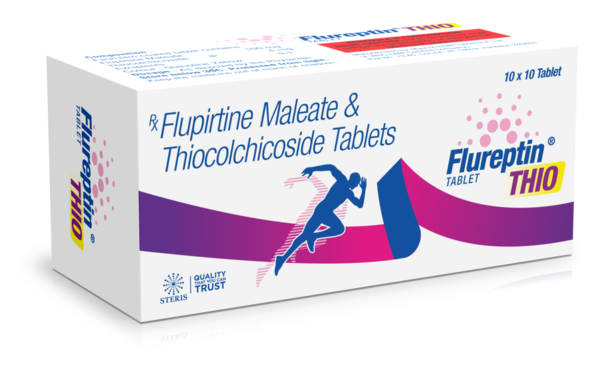
"name": "Flupirtine 100mg Thiocolchicoside 4mg",
"description": "\nMuscle pain, stiffness, and spasms can significantly affect daily activities, mobility, and overall quality of life. Conditions involving muscle tension and musculoskeletal pain often require medications that not only reduce pain but also relax tight muscles effectively. Flupirtine 100mg Thiocolchicoside 4mg is a widely prescribed combination medicine designed to provide fast and effective relief from muscle pain, muscle spasms, and associated discomfort.\n\nThis powerful combination works by targeting both pain and muscle stiffness simultaneously, making it highly beneficial for patients suffering from musculoskeletal conditions, back pain, neck pain, sports injuries, and muscular disorders.\n\nIf you are searching for a reliable treatment option for muscle spasms and pain relief, this detailed guide will help you understand the uses, benefits, dosage, mechanism of action, side effects, precautions, and overall effectiveness of Flupirtine 100mg Thiocolchicoside 4mg Tablets.\n\nWhat is Flupirtine 100mg Thiocolchicoside 4mg?\n\nFlupirtine 100mg Thiocolchicoside 4mg is a combination medication used for the treatment of:\n\nMuscle spasms\nMusculoskeletal pain\nAcute muscle stiffness\nNeck and back pain\nOrthopedic pain conditions\n\nThis medicine combines:\n\nFlupirtine Maleate 100mg\nThiocolchicoside 4mg\n\nTogether, these ingredients help relieve pain, reduce muscle tension, and improve mobility.\n\nComposition of Flupirtine 100mg Thiocolchicoside 4mg\n\nEach tablet contains:\n\nFlupirtine Maleate – 100mg\nThiocolchicoside – 4mg\n\nThis dual-action formula provides both analgesic and muscle relaxant effects.\n\nHow Does Flupirtine 100mg Thiocolchicoside 4mg Work?\n\nThe combination works through two different mechanisms to provide comprehensive relief.\n\nFlupirtine – Pain Relief Action\n\nFlupirtine is a non-opioid analgesic that works by:\n\nBlocking pain signals\nRelaxing muscles indirectly\nStabilizing nerve cell activity\nReducing pain sensitivity\n\nIt acts centrally in the nervous system without causing opioid-related dependency.\n\nThiocolchicoside – Muscle Relaxant Action\n\nThiocolchicoside is a muscle relaxant that:\n\nRelieves muscle stiffness\nReduces muscle spasms\nImproves muscle flexibility\nSupports mobility and comfort\n\nTogether, these ingredients provide rapid and effective relief from painful muscular conditions.\n\nUses of Flupirtine 100mg Thiocolchicoside 4mg Tablets\n\nThis medicine is commonly prescribed for various musculoskeletal and pain-related conditions.\n\n1. Muscle Spasm Relief\n\nIt effectively relaxes tight muscles and reduces involuntary muscle contractions.\n\n2. Back Pain Treatment\n\nHelpful in managing:\n\nLower back pain\nLumbar pain\nMuscle strain\n3. Neck Pain and Cervical Pain\n\nProvides relief from stiffness and neck muscle discomfort.\n\n4. Sports Injuries\n\nUsed in muscle injuries caused by:\n\nOverexertion\nSprains\nMuscle pulls\n5. Orthopedic Conditions\n\nSupports pain relief in musculoskeletal disorders affecting joints and muscles.\n\n6. Post-Traumatic Muscle Pain\n\nHelps reduce pain and muscle tension after injuries.\n\nBenefits of Flupirtine 100mg Thiocolchicoside 4mg\nFast Pain Relief\n\nThe medicine works quickly to reduce pain intensity and discomfort.\n\nEffective Muscle Relaxation\n\nThiocolchicoside helps loosen tight muscles and improves flexibility.\n\nImproved Mobility\n\nBy reducing stiffness and spasms, patients can move more comfortably.\n\nDual Action Formula\n\nCombines pain relief and muscle relaxation in one tablet.\n\nBetter Quality of Life\n\nHelps patients return to normal daily activities with reduced discomfort.\n\nNon-Opioid Pain Management\n\nFlupirtine offers pain relief without opioid dependency risks.\n\nWhy Doctors Prescribe Flupirtine 100mg Thiocolchicoside 4mg\n\nHealthcare professionals frequently prescribe this combination because it:\n\nTargets both pain and muscle spasms\nWorks rapidly\nImproves patient comfort\nReduces muscle stiffness effectively\nSupports rehabilitation and recovery\n\nIt is especially useful in acute painful muscular conditions.\n\nMechanism of Action\nFlupirtine Mechanism\n\nFlupirtine acts as:\n\nA selective neuronal potassium channel opener\nNMDA receptor antagonist indirectly\nCentral analgesic\n\nThis helps stabilize nerve activity and reduce pain perception.\n\nThiocolchicoside Mechanism\n\nThiocolchicoside acts on:\n\nGABA receptors\nGlycine receptors\n\nThis produces muscle-relaxing effects and reduces involuntary muscle contractions.\n\nDosage and Administration\nRecommended Dosage\n\nThe dosage should always be determined by a qualified healthcare professional.\n\nGeneral Guidelines\nUsually taken after meals\nSwallow whole with water\nFollow physician instructions carefully\nDo not exceed prescribed dosage\n\nDuration of treatment depends on the severity of the condition.\n\nWho Can Use Flupirtine 100mg Thiocolchicoside 4mg?\n\nThis medicine may be recommended for:\n\nAdults with muscle spasms\nPatients with musculoskeletal pain\nIndividuals with acute muscular stiffness\nPatients recovering from injuries\n\nAlways use under medical supervision.\n\nSide Effects of Flupirtine 100mg Thiocolchicoside 4mg\n\nLike all medicines, this combination may cause side effects in some individuals.\n\nCommon Side Effects\nDizziness\nDrowsiness\nWeakness\nNausea\nFatigue\nDry mouth\nStomach discomfort\n\nThese side effects are generally mild and temporary.\n\nSerious Side Effects\n\nSeek immediate medical attention if you experience:\n\nSevere allergic reactions\nDifficulty breathing\nLiver-related symptoms\nSevere dizziness\nYellowing of skin or eyes\nSevere weakness\n\nLong-term or improper use should be avoided without medical supervision.\n\nPrecautions and Warnings\nLiver Health Monitoring\n\nFlupirtine may affect liver function in some patients. Regular monitoring may be advised.\n\nAvoid Alcohol\n\nAlcohol may increase dizziness and drowsiness.\n\nPregnancy and Breastfeeding\n\nConsult your doctor before use during pregnancy or lactation.\n\nDriving and Machinery\n\nThis medicine may cause sleepiness or dizziness. Avoid driving if affected.\n\nInform Your Doctor About Other Medicines\n\nCertain medicines may interact with this combination.\n\nDrug Interactions\n\nFlupirtine 100mg Thiocolchicoside 4mg may interact with:\n\nSedatives\nPainkillers\nMuscle relaxants\nAlcohol\nLiver-affecting medications\n\nAlways inform your doctor about all medicines and supplements you use.\n\nStorage Instructions\n\nStore the tablets:\n\nIn a cool and dry place\nAway from moisture and direct sunlight\nBelow recommended room temperature\nKeep out of reach of children\n\nDo not use expired medication.\n\nLifestyle Tips for Faster Recovery\n\nTo improve recovery from muscle pain and spasms:\n\nMaintain proper posture\nPerform stretching exercises\nStay physically active\nAvoid heavy strain\nStay hydrated\nFollow physiotherapy advice if recommended\n\nCombining medication with healthy physical practices can improve outcomes significantly.\n\nFrequently Asked Questions (FAQs)\nWhat is Flupirtine 100mg Thiocolchicoside 4mg used for?\n\nIt is used for relieving muscle spasms, musculoskeletal pain, stiffness, and related discomfort.\n\nCan this medicine cause drowsiness?\n\nYes, some patients may experience dizziness or drowsiness.\n\nIs it safe for long-term use?\n\nIt should only be used for the duration recommended by your doctor.\n\nCan I take it for back pain?\n\nYes, it is commonly prescribed for back pain associated with muscle spasms.\n\nCan I consume alcohol while taking this medicine?\n\nNo, alcohol should be avoided as it may increase side effects.\n\nConclusion\n\nFlupirtine 100mg Thiocolchicoside 4mg Tablets provide effective and fast relief from muscle spasms, stiffness, and musculoskeletal pain. With its dual-action formula combining pain relief and muscle relaxation, this medicine helps improve comfort, mobility, and recovery in patients suffering from painful muscular conditions.\n\nWhether used for back pain, neck pain, sports injuries, or muscle stiffness, this combination offers comprehensive support for better movement and reduced discomfort. Always use this medicine under proper medical guidance to ensure safe and effective treatment outcomes.",
"price": 206.0,
"discountamount": 62.0,
"currencycode": "INR",
"priority": 1000000,
"isfreeshipmentavailable": false,
"shipmentduration": 7,
"_keywords": [
"BUY",
"risks",
"brain",
"EMAIL",
"water",
"glass",
"damage",
"product",
"muscles",
"patient",
"comfort",
"response",
"Oral Use",
"mobility",
"sedation",
"treatment",
"addiction",
"same time",
"Flupirtine",
"nerve pain",
"one tablet",
"conditions",
"formulation",
"information",
"Consistency",
"nerve cells",
"Introduction",
"exact dosage",
"sterisonline",
"sterispharma",
"inflammation",
"muscle spasms",
"CALL/WHATSAPP",
"effectiveness",
"muscle tissues",
"FLUREPTIN THIO",
"typical dosage",
"pain perception",
"Muscle Relaxant",
"Key Ingredients",
"pain management",
"neuropathic pain",
"specific neurons",
"Thiocolchicoside",
"muscle stiffness",
"effective relief",
"safer alternative",
"Muscle Relaxation",
"Non-Opioid Option",
"Recommended Dosage",
"opioid medications",
"healthcare provider",
"therapeutic effects",
"stable blood levels",
"overall pain relief",
"Non-Opioid Analgesic",
"musculoskeletal pain",
"Administration Dosage",
"Effective Pain Relief",
"central nervous system",
"combination medication",
"Neuroprotective Effects",
"Neuroprotective Benefits",
"musculoskeletal disorders",
"comprehensive pain relief",
"neuroprotective properties",
"Anti-Inflammatory Properties",
"other opioid-related side effects"
],
"isarchived": false,
"isavailable": true,
"applicationid": null,
"productindex": 1642,
"imageuri": "https://productimages.withfloats.com/actual/6666be714b514c761a28c8e1.png",
"tileimageuri": "https://productimages.withfloats.com/tile/6666be714b514c761a28c8e1.png",
"images": null,
"totalqueries": 0,
"gpid": null,
"groupproductid": null,
"createdon": "2024-06-10T08:50:55.586Z",
"updatedon": "2026-05-29T12:39:15.68Z",
"buyonlinelink": null,
"producturl": "http://WWW.STERISINDIA.COM/products/flupirtine-100mg-thiocolchicoside-4mg/1642",
"availableunits": -1.0,
"iscodavailable": false,
"isprepaidonlineavailable": false,
"maxcodorders": 0,
"maxprepaidonlineorders": 0,
"uniquepaymenturl": null,
"brandname": "FLUREPTIN THIO ",
"category": "ORTHOLOGYRANGE",
"tags": [
"FLUREPTIN THIO",
"Flupirtine (100mg)",
"Thiocolchicoside (4mg)",
"thiocolchicoside capsules ip 4 mg uses",
"thiocolchicoside side effects",
"thiocolchicoside tablet price",
"neuropathic pain.",
"pain relief.",
"It helps to relax muscles without causing sedation.",
"flupirtine thiocolchicoside",
"flupirtine thiocolchicoside tablet",
"Flupirtine Thiocolchicoside Tablets for Muscle Pain Relief",
"Buy Flupirtine Thiocolchicoside Tablets Online",
"Flupirtine 100mg Thiocolchicoside 4mg Tablets",
"Best Muscle Relaxant and Pain Relief Tablets",
"Muscle Spasm Relief Medicine Flupirtine Thiocolchicoside",
"Flupirtine Thiocolchicoside Tablets for Back Pain"
],
"variants": false,
"keyspecification": null,
"otherspecifications": null,
"pickupaddressreferenceid": "",
"paymenttype": "UniquePaymentUrl",
"producttype": "products",
"hsncode": null,
"gstslab": 0.001,
"isnotforsale": false
},
{
"_id": "6ad73c502f1fbe0284e2dcb5",
"fptag": "STERISHEALTHCARE",
"merchantname": null,
"customwidgets": null,
"externalsourceid": null,
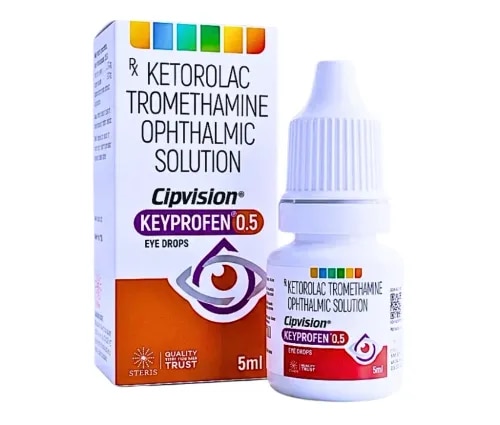
"name": "Ketorolac Tromethamine Ophthalmic Solution",
"description": "CIPVISION KEYPROFEN 0.5 is an ophthalmic formulation containing Ketorolac Tromethamine 0.5% w/v, a non-steroidal anti-inflammatory drug (NSAID) used in specific eye-care situations. It works by reducing the production of prostaglandins, chemical substances that contribute to pain and inflammation. This action may help manage certain inflammatory eye symptoms when the medicine is prescribed for an appropriate condition.\n\nCIPVISION KEYPROFEN 0.5 is intended for topical application to the eyes under the supervision of a qualified healthcare professional. Its suitability depends on the patient's symptoms, clinical diagnosis, and the approved product information.\n\nFor pharmacies, medical distributors, healthcare professionals, and pharmaceutical product catalogues, CIPVISION KEYPROFEN 0.5 represents an ophthalmic product containing a recognised anti-inflammatory ingredient. Appropriate product information helps users understand its intended role, administration requirements, and important precautions.\nComposition of CIPVISION KEYPROFEN 0.5\nThe stated active ingredient in CIPVISION KEYPROFEN 0.5 is:\n\nKetorolac Tromethamine 0.5% w/v: This medicine belongs to the NSAID class. It inhibits cyclooxygenase enzymes involved in the production of prostaglandins, helping reduce inflammatory activity and associated discomfort in suitable ophthalmic conditions.\n\nThe complete formulation, inactive ingredients, pack size, and approved therapeutic indications should be verified using the product packaging and official prescribing information.\nKey Features of CIPVISION KEYPROFEN 0.5 Eye Drops\nCIPVISION KEYPROFEN 0.5 has several important characteristics relevant to ophthalmic care:\n- NSAID-based formulation: Contains Ketorolac Tromethamine, a non-steroidal anti-inflammatory medicine.\n- Inflammation control: Helps manage inflammation in specific eye conditions when prescribed appropriately.\n- Prostaglandin reduction: Acts by inhibiting enzymes involved in the formation of inflammatory mediators.\n- Topical eye application: Designed for administration directly into the eye according to prescribed directions.\n- Clinically guided use: Requires an appropriate diagnosis and advice from an eye-care professional.\nThe potential role of this medicine depends on the underlying eye condition, the approved product indications, and the patient's individual health requirements.\nWhat Is CIPVISION KEYPROFEN 0.5 Used For?\nCIPVISION KEYPROFEN 0.5 may be prescribed for selected eye conditions in which reducing inflammation, itching, or pain is clinically appropriate. The precise indication should be confirmed from the approved product information.\n1. Management of Selected Inflammatory Eye Conditions\nInflammation of the eye may cause redness, irritation, watering, and discomfort. Ketorolac Tromethamine reduces the production of prostaglandins involved in the inflammatory response. An ophthalmologist can determine whether this medicine is suitable after assessing the cause of the symptoms.\n2. Relief of Certain Types of Eye Discomfort\nKetorolac Tromethamine ophthalmic preparations may help relieve ocular pain in approved clinical situations. Some formulations are also indicated for itching associated with seasonal allergic conjunctivitis. These uses depend on the specific product's approved labelling.\n\nPersistent eye pain, redness, or irritation should not be treated through self-medication because these symptoms can arise from infections, injuries, or other conditions requiring different treatment.\n3. Eye Care Following Certain Surgical Procedures\nSome Ketorolac Tromethamine ophthalmic products are used to manage pain and inflammation associated with eye surgery, including cataract procedures. Postoperative treatment must follow the ophthalmologist's instructions because the appropriate medicine, dosage, and duration depend on the procedure and the patient's recovery.\n\nAlways verify whether CIPVISION KEYPROFEN 0.5 is approved for the intended postoperative use before including a specific surgical indication in product information.\nHow Does CIPVISION KEYPROFEN 0.5 Work?\nKetorolac Tromethamine belongs to the non-steroidal anti-inflammatory drug category. Its action involves inhibiting cyclooxygenase (COX) enzymes, which help produce prostaglandins.\n\nProstaglandins participate in inflammatory processes and pain signalling. By reducing their production, Ketorolac Tromethamine can help control inflammation and associated discomfort in certain eye conditions.\n\nUnlike corticosteroids, Ketorolac Tromethamine is a non-steroidal anti-inflammatory medicine. However, it is not appropriate for every eye complaint. It does not treat all causes of eye redness or pain, and suspected infections may require a different treatment approach.\nPotential Benefits of CIPVISION KEYPROFEN 0.5\nWhen prescribed for an appropriate indication, CIPVISION KEYPROFEN 0.5 may offer the following benefits:\n- Anti-inflammatory action: Helps reduce inflammatory activity in selected ophthalmic conditions.\n- Management of eye pain: May relieve pain in specific clinical situations covered by the relevant product indication.\n- Non-steroidal treatment option: Provides an alternative mechanism to corticosteroid-based medicines for appropriate cases.\n- Local administration: Allows the active ingredient to be delivered directly to the eye.\n- Support for ophthalmic treatment: May be included in a treatment plan developed by an eye-care professional.\nThe response to treatment varies according to the diagnosis, severity of the condition, individual health factors, and adherence to the prescribed instructions. The product should not be considered a universal treatment for eye pain or inflammation.\nHow to Use CIPVISION KEYPROFEN 0.5 Eye Drops\nUse CIPVISION KEYPROFEN 0.5 only according to your ophthalmologist's instructions and the product leaflet.\n1. Clean your hands: Wash and dry your hands before handling the eye-drop bottle.\n2. Check the bottle: Confirm the product name, expiry date, and administration instructions before use.\n3. Prevent contamination: Keep the dropper tip away from your eyes, eyelids, fingers, and other surfaces.\n4. Follow the prescribed dosage: Use only the recommended number of drops and the prescribed frequency.\n5. Use other eye medicines carefully: Ask your healthcare professional how much time to leave between different ophthalmic preparations.\n6. Avoid prolonged use: Do not continue treatment longer than recommended, as extended NSAID use may increase the risk of eye complications.\n7. Follow storage instructions: Store the medicine as directed on its packaging and observe any instructions concerning use after opening.\n8. Do not share the bottle: Sharing eye drops can increase the risk of contamination.\n9. Attend follow-up appointments: Follow your ophthalmologist's advice, particularly when using the medicine after eye surgery.\nIf you miss a dose, follow the instructions in the product leaflet or consult your healthcare professional. Do not double the next dose to compensate for a missed application.\nPrecautions and Safety Information\nAlthough Ketorolac Tromethamine eye drops can be useful in appropriate clinical settings, they may cause side effects and require additional caution in certain patients.\nPossible Side Effects\nSome people may experience temporary burning, stinging, irritation, or discomfort after applying the drops. Ophthalmic NSAIDs can also delay healing and, in susceptible individuals, increase the risk of corneal complications. Rare cases of serious corneal damage have been reported.\n\nContact your ophthalmologist if symptoms persist or worsen. Seek urgent medical assessment if you experience severe eye pain, significant changes in vision, marked redness, or other serious symptoms.\nImportant Precautions\n- Corneal conditions: Tell your doctor if you have corneal disease, a damaged eye surface, or delayed healing.\n- Dry eyes: Inform your healthcare professional if you have severe dry eye symptoms or another condition affecting the eye surface.\n- Allergies: Disclose any previous allergic reaction to Ketorolac, aspirin, or other NSAIDs.\n- Bleeding risks: Discuss any bleeding disorder or medicine that may increase bleeding risk.\n- Eye surgery: Follow your surgeon's instructions, as postoperative use requires appropriate monitoring.\n- Pregnancy and breastfeeding: Consult your doctor before using the medicine during pregnancy or while breastfeeding.\n- Other medicines: Inform your healthcare professional about all medicines and eye preparations you currently use.\nCIPVISION KEYPROFEN 0.5 is intended for ophthalmic use only. Keep it out of children's reach and never use it beyond the labelled expiry date.\nWhy Consider CIPVISION KEYPROFEN 0.5 for Pharmaceutical Product Portfolios?\nCIPVISION KEYPROFEN 0.5 combines a distinct pharmaceutical brand identity with Ketorolac Tromethamine 0.5% ophthalmic solution. The formulation may be relevant to product catalogues serving pharmacies, medical distributors, and healthcare professionals involved in ophthalmic care.\n\nClear product information supports responsible pharmaceutical communication by explaining the active ingredient, its mechanism of action, appropriate clinical applications, and safety considerations.\n\nFor accurate product representation, always verify the approved strength, indications, contraindications, dosage, storage requirements, and instructions against the official packaging and prescribing information.\nConclusion\nCIPVISION KEYPROFEN 0.5 Eye Drops contains Ketorolac Tromethamine 0.5% w/v, a non-steroidal anti-inflammatory ingredient used in selected ophthalmic conditions. By inhibiting prostaglandin production, it helps manage inflammation and may relieve pain in specific approved clinical settings.\n\nCorrect administration, appropriate patient selection, and awareness of potential side effects are essential for responsible use. Consult a qualified eye-care professional for treatment guidance and refer to the approved product information for complete details.\nFrequently Asked Questions (FAQs)\n1. What is CIPVISION KEYPROFEN 0.5?\nCIPVISION KEYPROFEN 0.5 is an ophthalmic solution containing Ketorolac Tromethamine 0.5% w/v, according to the composition provided. It is intended for specific eye-care applications under professional guidance.\n2. What is CIPVISION KEYPROFEN 0.5 used for?\nKetorolac Tromethamine ophthalmic preparations may be prescribed for certain inflammatory eye conditions, itching associated with seasonal allergic conjunctivitis, or pain and inflammation following specific eye procedures. The approved uses of CIPVISION KEYPROFEN 0.5 must be confirmed from its official product information.\n3. How does Ketorolac Tromethamine work in the eyes?\nKetorolac Tromethamine inhibits cyclooxygenase enzymes involved in prostaglandin production. This helps reduce inflammatory activity and associated pain in appropriate ophthalmic conditions.\n4. Can CIPVISION KEYPROFEN 0.5 be used without a prescription?\nUse this medicine only under appropriate medical guidance. An eye-care professional should determine whether it is suitable, particularly because NSAID eye drops can affect healing and may cause complications in susceptible patients.\n5. What precautions should be taken while using CIPVISION KEYPROFEN 0.5?\nAvoid contaminating the dropper tip, follow the prescribed dosage, and do not use the drops for longer than recommended. Inform your doctor about corneal problems, allergies to NSAIDs, bleeding disorders, and other medicines you use.\n6. How should CIPVISION KEYPROFEN 0.5 be stored?\nFollow the storage instructions on the product packaging. Keep the container closed as directed, protect it from unsuitable storage conditions, and observe any instructions concerning disposal after opening.\n\n\n",
"price": 80.0,
"discountamount": 56.0,
"currencycode": "INR",
"priority": 1000000,
"isfreeshipmentavailable": false,
"shipmentduration": 1,
"_keywords": null,
"isarchived": false,
"isavailable": true,
"applicationid": null,
"productindex": 2503,
"imageuri": "https://productimages.withfloats.com/actual/6ad73c52dc6a6c6c9945f376.png",
"tileimageuri": "https://productimages.withfloats.com/tile/6ad73c52dc6a6c6c9945f376.png",
"images": null,
"totalqueries": 0,
"gpid": null,
"groupproductid": null,
"createdon": "2026-10-20T10:02:56.893Z",
"updatedon": "2026-10-20T10:02:56.893Z",
"buyonlinelink": null,
"producturl": "http://WWW.STERISINDIA.COM//ketorolac-tromethamine-ophthalmic-solution/2503",
"availableunits": -1.0,
"iscodavailable": false,
"isprepaidonlineavailable": false,
"maxcodorders": 0,
"maxprepaidonlineorders": 0,
"uniquepaymenturl": null,
"brandname": "CIPVISION KEYPROFEN 0.5",
"category": "Opthalmology Range",
"tags": [],
"variants": false,
"keyspecification": null,
"otherspecifications": null,
"pickupaddressreferenceid": null,
"paymenttype": "UniquePaymentUrl",
"producttype": "products",
"hsncode": null,
"gstslab": 0.0,
"isnotforsale": false
},
{
"_id": "6a685f3a5315456e18559082",
"fptag": "STERISHEALTHCARE",
"merchantname": null,
"customwidgets": null,
"externalsourceid": null,
"name": "Acebrophylline and Erdosteine Tablets",
"description": "Acebrophylline and Erdosteine Tablets are a clinically trusted combination used in the management of chronic respiratory disorders associated with excessive mucus production, airway inflammation, and breathing difficulties. This dual-action formulation combines the bronchodilator and anti-inflammatory properties of Acebrophylline with the mucolytic and antioxidant benefits of Erdosteine, making it an effective treatment option for patients suffering from chronic obstructive pulmonary disease (COPD), chronic bronchitis, bronchial asthma, and other mucus-related respiratory conditions.\n\nAt [Your Company Name], we manufacture and supply premium-quality Acebrophylline and Erdosteine Tablets that comply with WHO-GMP standards and international pharmaceutical quality guidelines. Our formulations are trusted by healthcare professionals, hospitals, distributors, and pharmaceutical companies seeking reliable respiratory medicines.\n\nComposition\nEach film-coated tablet typically contains:\n\nAcebrophylline – 200 mg\nErdosteine – 300 mg\nComposition can be customized based on customer requirements and regulatory approvals.\n\nHow Acebrophylline and Erdosteine Tablets Work\nThe combination provides comprehensive respiratory support through complementary mechanisms.\n\nAcebrophylline\nAcebrophylline acts as a bronchodilator and anti-inflammatory agent. It helps relax bronchial muscles, widens the airways, improves airflow, and reduces inflammation, making breathing easier for patients with chronic respiratory diseases.\n\nErdosteine\nErdosteine is a powerful mucolytic agent that reduces the thickness and stickiness of mucus. It facilitates easier expectoration, reduces coughing, and provides antioxidant protection against airway damage caused by inflammation.\n\nTogether, these ingredients improve lung function, reduce respiratory symptoms, and enhance patient comfort.\n\nKey Benefits of Acebrophylline and Erdosteine Tablets\nHelps improve breathing by relaxing bronchial muscles\nEffectively reduces thick mucus accumulation\nSupports easier mucus clearance from the lungs\nReduces chronic cough and chest congestion\nHelps manage COPD and chronic bronchitis symptoms\nProvides antioxidant protection to respiratory tissues\nImproves oxygen exchange and lung function\nEnhances quality of life in patients with chronic respiratory disorders\nSuitable for long-term respiratory disease management under medical supervision\nMedical Uses of Acebrophylline and Erdosteine Tablets\nHealthcare professionals commonly prescribe Acebrophylline and Erdosteine Tablets for:\n\nChronic Obstructive Pulmonary Disease (COPD)\nChronic Bronchitis\nBronchial Asthma\nRespiratory Tract Infections with Excessive Mucus\nChronic Productive Cough\nAirway Inflammation\nBronchiectasis\nSmoking-related Respiratory Conditions\nThese tablets should always be used under the supervision of a qualified healthcare professional.\n\nAdvantages of the Acebrophylline and Erdosteine Combination\nThe combination therapy offers several clinical advantages over single-drug treatment.\n\nDual Mechanism of Action\nIt simultaneously opens the airways while reducing mucus thickness, providing comprehensive respiratory relief.\n\nImproved Lung Function\nPatients experience better airflow and enhanced breathing comfort due to bronchodilation and mucus clearance.\n\nReduced Frequency of Exacerbations\nRegular use, as prescribed, may help decrease episodes of worsening respiratory symptoms in chronic lung diseases.\n\nBetter Patient Compliance\nA fixed-dose combination simplifies treatment by reducing the need for multiple medications.\n\nRecommended Dosage\nThe dosage of Acebrophylline and Erdosteine Tablets should be determined by a registered healthcare provider based on the patient's age, condition, and medical history.\n\nGeneral recommendations include:\n\nTake the tablet after meals with water.\nSwallow whole without crushing or chewing.\nFollow the prescribed duration of therapy.\nDo not exceed the recommended dose.\nPossible Side Effects\nLike all medicines, Acebrophylline and Erdosteine Tablets may cause side effects in some individuals.\n\nCommon side effects include:\n\nNausea\nStomach discomfort\nHeadache\nDizziness\nMild diarrhea\nDry mouth\nGastric irritation\nSeek immediate medical attention if severe allergic reactions, breathing difficulty, or persistent adverse effects occur.\n\nPrecautions\nBefore using Acebrophylline and Erdosteine Tablets, patients should inform their healthcare provider if they have:\n\nLiver disease\nKidney impairment\nGastric ulcer\nHeart disease\nPregnancy or breastfeeding\nKnown allergy to methylxanthines or Erdosteine\nAvoid self-medication and always follow professional medical advice.\n\nStorage Instructions\nStore below 25°C in a cool and dry place.\nProtect from direct sunlight and moisture.\nKeep out of reach of children.\nDo not use after the expiry date.\nWhy Choose Our Acebrophylline and Erdosteine Tablets?\nWe are committed to delivering pharmaceutical products that meet international quality standards.\n\nOur advantages include:\n\nWHO-GMP Certified Manufacturing\nISO Certified Production Facilities\nStringent Quality Control\nDCGI-Compliant Manufacturing\nCompetitive Pricing\nBulk Supply Capability\nThird-Party Manufacturing Services\nPrivate Label Packaging\nTimely Global Deliveries\nCustom Packaging Solutions\nWe serve pharmaceutical distributors, hospitals, government tenders, exporters, wholesalers, and healthcare institutions worldwide.\n\nFrequently Asked Questions (FAQs)\n1. What are Acebrophylline and Erdosteine Tablets used for?\nAcebrophylline and Erdosteine Tablets are primarily used to treat respiratory conditions such as COPD, chronic bronchitis, asthma, and other diseases associated with excessive mucus production and airway obstruction.\n\n2. How do Acebrophylline and Erdosteine Tablets work?\nAcebrophylline relaxes the bronchial muscles and reduces inflammation, while Erdosteine breaks down thick mucus, making it easier to remove from the lungs.\n\n3. Can Acebrophylline and Erdosteine Tablets treat chronic cough?\nYes. These tablets help relieve chronic productive cough by reducing mucus viscosity and improving airway clearance when prescribed by a healthcare professional.\n\n4. Are Acebrophylline and Erdosteine Tablets safe for long-term use?\nThey may be prescribed for long-term management of chronic respiratory diseases, but treatment duration should always be determined by a physician.\n\n5. Can these tablets be used for asthma?\nYes. Doctors may prescribe Acebrophylline and Erdosteine Tablets as part of asthma management when mucus accumulation and airway inflammation are significant.\n\n6. Do Acebrophylline and Erdosteine Tablets have side effects?\nMost side effects are mild and temporary, including nausea, headache, dizziness, stomach upset, and dry mouth. Serious reactions are uncommon but require immediate medical attention.\n\n7. Should Acebrophylline and Erdosteine Tablets be taken before or after food?\nThey are generally recommended after meals to reduce the risk of stomach irritation. Follow your doctor's advice regarding dosage and timing.\n\n8. Can smokers use Acebrophylline and Erdosteine Tablets?\nYes. Physicians often prescribe them to smokers suffering from chronic bronchitis, COPD, or mucus-related respiratory disorders.\n\n9. Are Acebrophylline and Erdosteine Tablets available for third-party manufacturing?\nYes. We offer third-party manufacturing, private labeling, customized packaging, and bulk pharmaceutical supply for domestic and international markets.\n\n10. Why buy Acebrophylline and Erdosteine Tablets from us?\nOur products are manufactured in WHO-GMP-certified facilities using premium-quality raw materials, strict quality control processes, competitive pricing, and reliable global distribution, making us a trusted pharmaceutical manufacturing partner.\n\nThis version is optimized for buyer intent, includes keyword-rich headings and FAQs designed for Google Search and voice search, and naturally targets the primary keyword “Acebrophylline and Erdosteine Tablets” throughout the content without excessive keyword stuffing.",
"price": 360.0,
"discountamount": 108.0,
"currencycode": "INR",
"priority": 1000000,
"isfreeshipmentavailable": false,
"shipmentduration": 1,
"_keywords": null,
"isarchived": false,
"isavailable": true,
"applicationid": null,
"productindex": 2487,
"imageuri": "https://productimages.withfloats.com/actual/6a685f3db435445dbdc3d469.png",
"tileimageuri": "https://productimages.withfloats.com/tile/6a685f3db435445dbdc3d469.png",
"images": null,
"totalqueries": 0,
"gpid": null,
"groupproductid": null,
"createdon": "2026-07-28T07:50:18.551Z",
"updatedon": "2026-07-28T07:50:18.551Z",
"buyonlinelink": null,
"producturl": "http://WWW.STERISINDIA.COM//acebrophylline-and-erdosteine-tablets/2487",
"availableunits": -1.0,
"iscodavailable": false,
"isprepaidonlineavailable": false,
"maxcodorders": 0,
"maxprepaidonlineorders": 0,
"uniquepaymenturl": null,
"brandname": "STERIPHYLLIN ERDO",
"category": "ASTHMA RANGE",
"tags": [],
"variants": false,
"keyspecification": null,
"otherspecifications": null,
"pickupaddressreferenceid": null,
"paymenttype": "UniquePaymentUrl",
"producttype": "products",
"hsncode": null,
"gstslab": 0.0,
"isnotforsale": false
},
{
"_id": "6a685b1d4a217a55d42919c1",
"fptag": "STERISHEALTHCARE",
"merchantname": null,
"customwidgets": null,
"externalsourceid": null,
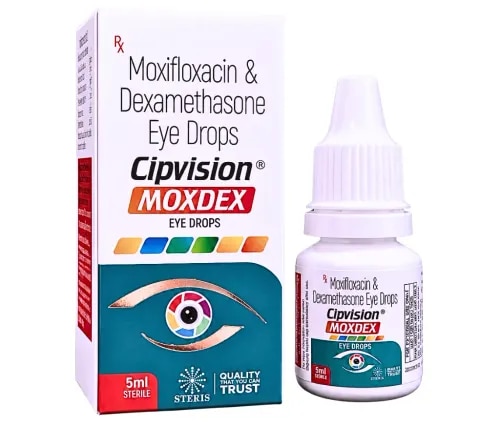
"name": "Moxifloxacin & Dexamethasone Eye Drops",
"description": "Buy Moxifloxacin & Dexamethasone Eye Drops Online at the Best Price\nMoxifloxacin & Dexamethasone Eye Drops are a prescription ophthalmic medication formulated to treat bacterial eye infections accompanied by inflammation. This dual-action eye drop combines Moxifloxacin, a broad-spectrum fluoroquinolone antibiotic, and Dexamethasone, a corticosteroid that helps reduce redness, swelling, pain, and irritation.\n\nIf you are experiencing symptoms such as red eyes, bacterial conjunctivitis, post-operative eye inflammation, or other bacterial eye conditions, Moxifloxacin & Dexamethasone Eye Drops offer effective treatment by eliminating infection while controlling inflammation.\n\nOrder genuine Moxifloxacin & Dexamethasone Eye Drops online from our trusted pharmacy with competitive pricing, secure payment options, and fast worldwide delivery.\n\nWhat Are Moxifloxacin & Dexamethasone Eye Drops?\nMoxifloxacin & Dexamethasone Eye Drops are a combination ophthalmic solution prescribed by eye specialists for treating bacterial infections of the eye where inflammation is also present.\n\nActive Ingredients\nMoxifloxacin: A fourth-generation fluoroquinolone antibiotic that stops bacterial growth by inhibiting DNA replication.\nDexamethasone: A potent corticosteroid that reduces inflammation, swelling, redness, itching, and discomfort.\nTogether, these ingredients provide comprehensive treatment by fighting bacteria while relieving inflammatory symptoms.\n\nUses of Moxifloxacin & Dexamethasone Eye Drops\nDoctors commonly prescribe these eye drops for:\n\nBacterial conjunctivitis (Pink Eye)\nBlepharitis\nKeratitis\nCorneal bacterial infections\nPost-operative eye inflammation\nEye infections after cataract surgery\nInflammatory bacterial eye conditions\nPrevention of infection following certain eye procedures\nNote: These eye drops are effective only against bacterial infections and should not be used for viral or fungal eye infections unless advised by an ophthalmologist.\n\nBenefits of Moxifloxacin & Dexamethasone Eye Drops\nChoosing this combination medication provides several advantages:\n\nTreats bacterial infection effectively\nReduces eye redness and swelling\nRelieves pain and irritation\nSpeeds recovery after eye surgery\nHelps prevent complications\nBroad-spectrum antibacterial coverage\nConvenient combination therapy in one bottle\nHow Moxifloxacin & Dexamethasone Eye Drops Work\nThis medication works through a dual mechanism.\n\nMoxifloxacin\nMoxifloxacin blocks bacterial enzymes called DNA gyrase and topoisomerase IV, preventing bacteria from multiplying and ultimately eliminating the infection.\n\nDexamethasone\nDexamethasone suppresses inflammatory chemicals produced by the body's immune response, reducing:\n\nSwelling\nRedness\nPain\nEye irritation\nWatering\nTogether, these ingredients provide faster symptom relief while addressing the underlying bacterial infection.\n\nHow to Use Moxifloxacin & Dexamethasone Eye Drops\nFor the best results:\n\nWash your hands thoroughly.\nShake the bottle if instructed.\nTilt your head back.\nPull down the lower eyelid.\nInstill the prescribed number of drops.\nClose your eye gently for 1–2 minutes.\nAvoid touching the dropper tip to any surface.\nAlways follow your eye doctor's prescribed dosage and complete the full treatment course.\n\nRecommended Dosage\nThe dosage depends on:\n\nSeverity of infection\nPatient's age\nMedical history\nDoctor's recommendation\nTypically, patients are advised to use 1–2 drops in the affected eye several times daily, but dosage varies according to individual treatment plans.\n\nNever stop using the medication early even if symptoms improve.\n\nPossible Side Effects\nLike all medications, Moxifloxacin & Dexamethasone Eye Drops may cause mild side effects.\n\nCommon side effects include:\n\nTemporary burning sensation\nEye irritation\nMild blurred vision\nWatery eyes\nDry eyes\nItching\nEye discomfort\nRare but serious side effects include:\n\nAllergic reactions\nIncreased eye pressure\nVision changes\nPersistent eye pain\nSecondary eye infections\nSeek immediate medical attention if severe reactions occur.\n\nPrecautions Before Using\nInform your doctor if you have:\n\nGlaucoma\nViral eye infections\nFungal eye disease\nEye injury\nAllergies to fluoroquinolone antibiotics\nPregnancy or breastfeeding\nAvoid wearing contact lenses during active eye infection unless your doctor approves.\n\nDo not share eye drops with others.\n\nStorage Instructions\nStore the eye drops:\n\nAt room temperature\nAway from direct sunlight\nKeep bottle tightly closed\nProtect from moisture\nKeep out of children's reach\nDiscard the bottle after the recommended period once opened.\n\nWhy Buy Moxifloxacin & Dexamethasone Eye Drops From Us?\nWhen purchasing from our online pharmacy, you receive:\n\nGenuine pharmaceutical products\nAffordable prices\nSecure online ordering\nWorldwide shipping\nSafe packaging\nReliable customer support\nFast order processing\nQuality assurance\nWe prioritize customer safety by supplying onlyThey are used to treat bacterial eye infections while reducing inflammation, redness, pain, and swelling caused by the infection authentic medications sourced from trusted manufacturers.\n\nFrequently Asked Questions (Google & Voice Search Optimized)\nWhat are Moxifloxacin & Dexamethasone Eye Drops used for?\nThey are used to treat bacterial eye infections while reducing inflammation, redness, pain, and swelling caused by the infection or after eye surgery.\n\nAre Moxifloxacin & Dexamethasone Eye Drops antibiotics?\nYes. Moxifloxacin is an antibiotic that kills bacteria, while Dexamethasone is a corticosteroid that reduces inflammation.\n\nHow long do Moxifloxacin & Dexamethasone Eye Drops take to work?\nMany patients notice symptom improvement within 24–48 hours, although the complete treatment course should always be finished as prescribed.\n\nCan I use Moxifloxacin & Dexamethasone Eye Drops for pink eye?\nYes, they are commonly prescribed for bacterial conjunctivitis (pink eye). They are not effective for viral or allergic conjunctivitis unless specifically recommended by a doctor.\n\nCan these eye drops treat viral eye infections?\nNo. They are intended for bacterial infections and should not be used for viral eye infections without medical supervision.\n\nIs a prescription required for Moxifloxacin & Dexamethasone Eye Drops?\nYes. These are prescription medications and should only be used under the guidance of a qualified healthcare professional.\n\nCan I wear contact lenses while using these eye drops?\nIt is generally recommended to avoid wearing contact lenses during treatment for an active bacterial eye infection unless your eye doctor advises otherwise.\n\nHow often should I use Moxifloxacin & Dexamethasone Eye Drops?\nFollow your doctor's prescribed schedule. The frequency depends on the severity of your eye infection.\n\nWhat should I do if I miss a dose?\nUse the missed dose as soon as you remember. If it is nearly time for the next scheduled dose, skip the missed one and continue your normal dosing schedule. Do not use a double dose.\n\nCan children use Moxifloxacin & Dexamethasone Eye Drops?\nThey may be prescribed for children in certain cases, but only under the supervision of a qualified healthcare provider.\n\nAre there any side effects?\nSome people experience temporary burning, mild irritation, blurred vision, or watery eyes. Serious side effects are uncommon but require prompt medical attention.\n\nCan I drive after using the eye drops?\nTemporary blurred vision may occur immediately after application. Wait until your vision clears before driving or operating machinery.\n\nHow should I store Moxifloxacin & Dexamethasone Eye Drops?\nStore them at room temperature, away from heat, moisture, and direct sunlight. Keep the bottle tightly closed when not in use.\n\nCan I stop using the eye drops when my eyes feel better?\nNo. Complete the entire prescribed course even if symptoms improve to help ensure the infection is fully treated and reduce the risk of recurrence.\n\nWhere can I buy genuine Moxifloxacin & Dexamethasone Eye Drops online?\nYou can purchase authentic Moxifloxacin & Dexamethasone Eye Drops from a reputable licensed online pharmacy that offers genuine products, secure payments, and reliable shipping. Always ensure a valid prescription is provided where required.\n\nSEO Meta Title (60 characters):\nMoxifloxacin & Dexamethasone Eye Drops | Buy Online\n\nSEO Meta Description (160 characters):\nBuy Moxifloxacin & Dexamethasone Eye Drops online for bacterial eye infections and inflammation. Genuine medicine, affordable price, fast worldwide delivery.\n\nSEO URL Slug:\n/moxifloxacin-dexamethasone-eye-drops\n\nPrimary Keyword:\nMoxifloxacin & Dexamethasone Eye Drops\n\nRelated SEO Keywords:\n\nBuy Moxifloxacin & Dexamethasone Eye Drops\nMoxifloxacin Eye Drops\nDexamethasone Eye Drops\nAntibiotic Eye Drops\nEye Infection Treatment\nEye Drops for Bacterial Conjunctivitis\nPrescription Eye Drops\nPost Eye Surgery Eye Drops\nMoxifloxacin Dexamethasone Ophthalmic Solution\nEye Drops for Eye Infection\n",
"price": 93.0,
"discountamount": 28.0,
"currencycode": "INR",
"priority": 1000000,
"isfreeshipmentavailable": false,
"shipmentduration": 1,
"_keywords": null,
"isarchived": false,
"isavailable": true,
"applicationid": null,
"productindex": 2486,
"imageuri": "https://productimages.withfloats.com/actual/6a685b1fc40233ec38db8d0d.png",
"tileimageuri": "https://productimages.withfloats.com/tile/6a685b1fc40233ec38db8d0d.png",
"images": null,
"totalqueries": 0,
"gpid": null,
"groupproductid": null,
"createdon": "2026-07-28T07:32:45.398Z",
"updatedon": "2026-07-28T08:54:07.586Z",
"buyonlinelink": null,
"producturl": "http://WWW.STERISINDIA.COM//moxifloxacin-dexamethasone-eye-drops/2486",
"availableunits": -1.0,
"iscodavailable": false,
"isprepaidonlineavailable": false,
"maxcodorders": 0,
"maxprepaidonlineorders": 0,
"uniquepaymenturl": null,
"brandname": "CIPVISION MOXDEX",
"category": "Opthalmology Range",
"tags": [],
"variants": false,
"keyspecification": null,
"otherspecifications": null,
"pickupaddressreferenceid": null,
"paymenttype": "UniquePaymentUrl",
"producttype": "products",
"hsncode": null,
"gstslab": 0.0,
"isnotforsale": false
},
{
"_id": "6a5f6b161d694a536c1e0e96",
"fptag": "STERISHEALTHCARE",
"merchantname": null,
"customwidgets": null,
"externalsourceid": null,
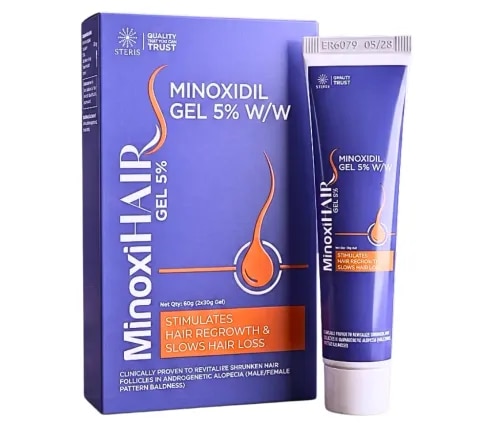
"name": "Minoxidil Gel 5% w/w",
"description": "Losing hair gradually is something almost everyone worries about at some point — and the reasons behind it are rarely simple. Genetics, hormonal shifts, chronic stress, poor nutrition, and even environmental exposure can all play a part in thinning hair over time. MINOXIHAIR GEL 5%, formulated with Minoxidil Gel 5% w/w, is a topical treatment designed to work directly at the source of the problem — the hair follicle itself — helping to slow further loss and support new growth with regular, medically guided use.\n\nProduced under strict pharmaceutical manufacturing standards, MINOXIHAIR GEL 5% is built as a lightweight, easy-to-apply gel that absorbs efficiently into the scalp, delivering its active ingredient exactly where it's needed. It is generally intended for adults dealing with androgenetic alopecia (the hereditary pattern of hair thinning), and like any active treatment, it should be used under a healthcare professional's guidance.\n\nWhat Exactly Is MINOXIHAIR GEL 5%?\n\nAt its core, MINOXIHAIR GEL 5% is a topical delivery system for Minoxidil — a compound with a long, well-documented history in hair-loss management. Rather than working through the bloodstream like an oral tablet, minoxidil applied this way acts locally: it improves circulation around hair follicles, helping keep the growth phase of the hair cycle active for longer and coaxing follicles that had gone quiet back into activity.\n\nBecause it's applied straight to the scalp rather than swallowed, many people find a topical option like this more appealing — it targets the problem area precisely, without the broader systemic exposure of an oral medicine.\n\nComposition\n\nEach gram of the gel delivers:\n\nMinoxidil 5% w/w\n\nThe exact amount used and how long treatment should continue is something a dermatologist or physician should determine based on the individual's specific hair-loss pattern.\n\nThe Science Behind How Minoxidil Works\n\nResearchers don't have a complete, settled explanation for every mechanism behind minoxidil's effect on hair, but decades of clinical use have pointed to several likely actions:\n\nImproves local blood flow around the hair follicles\nReactivates follicles that have become dormant\nLengthens the anagen (active growth) phase of each hair strand\nShortens the telogen (resting) phase that precedes shedding\nEncourages the growth of thicker, sturdier hair strands\nSlows the progression of ongoing thinning\nSupports a scalp environment more conducive to healthy hair growth\n\nWith regular use over several months, many people first notice less hair falling out, followed later by a gradual improvement in overall thickness and coverage.\n\nWhat Is MINOXIHAIR GEL 5% Used For?\n\nThis gel is generally recommended for a range of hair-thinning situations, including:\n\nMale pattern baldness (androgenetic alopecia)\nFemale-pattern thinning, when a physician determines it's appropriate\nThinning concentrated around the crown\nA receding hairline in candidates who are likely to respond\nHereditary hair loss caught in its early stages\nSupporting regrowth once thinning has already begun\nPreserving the hair density a person currently has\nGeneral improvement in scalp coverage\n\nHow well it works for any individual depends heavily on how long the hair loss has been going on, how the person's body responds to treatment, and — critically — how consistently the gel is applied.\n\nKey Benefits of Using MINOXIHAIR GEL 5%\n\nWhen used consistently and under professional supervision, this treatment may offer:\n\nEncourages New Hair Growth Helps “wake up” follicles that have stopped producing visible hair.\n\nCuts Down on Excess Shedding Reduces the abnormal hair fall that comes with androgenetic alopecia.\n\nBuilds Greater Hair Density Supports fuller, thicker-looking hair as treatment continues.\n\nSupports Healthier Follicles Improves the flow of oxygen and nutrients to the scalp's hair-producing structures.\n\nConvenient Gel Format Spreads smoothly and evenly, making daily use straightforward.\n\nFits Into a Long-Term Routine Designed to be part of an ongoing hair-management plan, guided by a professional.\n\nWho Might Benefit From This Treatment?\n\nMINOXIHAIR GEL 5% is typically considered for adults facing:\n\nHair loss with a genetic/hereditary basis\nHair thinning that's steadily progressing\nEarly indications of balding\nNoticeable thinning at the crown\nDiffuse thinning spread across the scalp\nHair loss specifically tied to androgenetic alopecia\n\nIt's worth stressing: a dermatologist visit before starting is the right first step, since not everyone's hair loss pattern will respond the same way to minoxidil.\n\nHow to Apply MINOXIHAIR GEL 5% Correctly\n\nGetting the technique right matters as much as the product itself:\n\nStart with a clean, fully dry scalp.\nApply only the amount your doctor has recommended to the affected area.\nSpread it gently using clean fingertips.\nWash your hands thoroughly right after applying.\nLet the gel air-dry naturally — don't rush this step.\nHold off on washing your scalp immediately afterward.\nStick to the schedule your doctor has laid out.\n\nUsing more than the recommended amount won't speed up or improve results — it simply increases the chance of irritation.\n\nWhat Kind of Timeline Should You Expect?\n\nHair regrowth with minoxidil is a slow, gradual process — patience is genuinely part of the treatment:\n\nWeeks 2–8: Some people notice shedding starting to slow down.\nMonths 3–4: Early, subtle signs of new growth may begin appearing.\nMonths 4–6: Hair often looks and feels noticeably thicker.\nMonths 6–12: The most visible cosmetic improvement typically shows up here, provided use has been consistent.\n\nEveryone's timeline looks a little different, but one thing stays constant across almost all users: skipping applications or stopping early tends to undo progress.\n\nPossible Side Effects\n\nAs with any active treatment, some people experience side effects.\n\nMore commonly seen:\n\nMild irritation of the scalp\nItchiness\nDryness\nRedness\nA brief uptick in shedding during the first few weeks (often mistaken for the treatment failing, when it's actually a normal transitional phase)\nA burning feeling where it's applied\n\nLess commonly seen:\n\nGrowth of unwanted hair on the face\nLightheadedness\nSwelling\nA noticeably faster heartbeat\nAllergic-type reactions\n\nAnyone experiencing a severe reaction should seek medical care right away rather than waiting it out.\n\nPrecautions to Keep in Mind\n\nTalk to your healthcare provider before starting if you:\n\nCurrently have a scalp infection or another skin condition\nHave a history of heart disease or low blood pressure\nAre pregnant or breastfeeding\nAre already using another topical product on your scalp\nHave a known sensitivity or allergy to minoxidil or any ingredient in the formulation\n\nKeep the gel away from your eyes, mouth, and any broken or irritated skin.\n\nStorage Instructions\nStore at temperatures below 25°C\nKeep it out of direct sunlight\nMake sure the container stays tightly sealed\nNever freeze it\nStore well out of children's reach\nWhy Consider MINOXIHAIR GEL 5%?\n\nMINOXIHAIR GEL 5% is built to deliver a dependable, pharmaceutical-grade form of topical minoxidil therapy. Manufacturing follows rigorous quality checks to keep the formulation consistent from batch to batch, so users can rely on the same performance every time. The gel base itself makes daily application simple, while still delivering the active ingredient exactly where it needs to go.\n\nPaired with good overall habits — balanced nutrition, manageable stress levels, and regular check-ins with your doctor — MINOXIHAIR GEL 5% can be a meaningful part of a long-term approach to keeping hair fuller and healthier.\n\nPrice | Use under medical guidance – consult your dermatologist.\n\nFrequently Asked Questions\n\n1. Is MINOXIHAIR GEL 5% used for hair regrowth? Yes. It's intended for androgenetic alopecia and works to stimulate regrowth when applied consistently under a doctor's supervision.\n\n2. How long before I notice a difference? Most people start seeing visible change somewhere between the 3- and 6-month mark, though this varies from person to person.\n\n3. Can women use this product? In some cases, yes — but only under the direction of a qualified healthcare provider who can confirm it's the right fit.\n\n4. Do I need to keep using it once my hair grows back? Generally, yes. Results from minoxidil tend to fade gradually if treatment stops, so continued use is usually necessary to maintain them — always follow your doctor's specific advice.\n\n5. Is it okay to use hair oil alongside this gel? Check with your dermatologist first, since other scalp products can interfere with how well the gel absorbs.\n\n6. Will this permanently cure baldness? No — it manages hereditary hair loss and supports regrowth, but it isn't a one-time cure. Ongoing use is typically what maintains the results.\n\n7. What happens during the first few weeks of use? Some people notice a temporary increase in shedding early on — this is usually a normal part of the hair cycle resetting, not a sign the treatment isn't working.\n\n8. Can I apply more than the recommended amount to speed up results? No — applying extra doesn't accelerate growth and mainly raises the risk of scalp irritation.\n\n9. Is a prescription needed for this gel? Since it contains an active pharmaceutical ingredient, it should be used under a dermatologist's or doctor's guidance rather than self-prescribed.\n\n10. What should I avoid while using this treatment? Avoid getting the gel in your eyes, mouth, or on broken skin, and avoid combining it with other scalp treatments without checking with your doctor first.",
"price": 720.0,
"discountamount": 216.0,
"currencycode": "INR",
"priority": 1000000,
"isfreeshipmentavailable": false,
"shipmentduration": 1,
"_keywords": null,
"isarchived": false,
"isavailable": true,
"applicationid": null,
"productindex": 2481,
"imageuri": "https://productimages.withfloats.com/actual/6a5f6b185c5af5a73198ab22.png",
"tileimageuri": "https://productimages.withfloats.com/tile/6a5f6b185c5af5a73198ab22.png",
"images": null,
"totalqueries": 0,
"gpid": null,
"groupproductid": null,
"createdon": "2026-07-21T12:50:30.696Z",
"updatedon": "2026-07-21T12:50:30.696Z",
"buyonlinelink": null,
"producturl": "http://WWW.STERISINDIA.COM//minoxidil-gel-5-w-w/2481",
"availableunits": -1.0,
"iscodavailable": false,
"isprepaidonlineavailable": false,
"maxcodorders": 0,
"maxprepaidonlineorders": 0,
"uniquepaymenturl": null,
"brandname": "MINOXIHAIR GEL 5%",
"category": "DERMATALOGY",
"tags": [],
"variants": false,
"keyspecification": null,
"otherspecifications": null,
"pickupaddressreferenceid": null,
"paymenttype": "UniquePaymentUrl",
"producttype": "products",
"hsncode": null,
"gstslab": 0.0,
"isnotforsale": false
},
{
"_id": "6a50b1ae8f6638fa60654b85",
"fptag": "STERISHEALTHCARE",
"merchantname": null,
"customwidgets": null,
"externalsourceid": null,
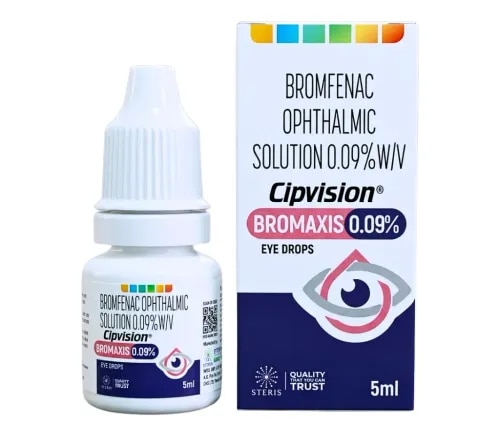
"name": "Bromfenac Ophthalmic Solution 0.09% w/v",
"description": "Bromfenac ophthalmic solution 0.09% w/v is a prescription non-steroidal anti-inflammatory drug (NSAID) eye drop used primarily to treat pain and inflammation following cataract surgery and to reduce the risk of post-operative cystoid macular edema. Unlike corticosteroid eye drops, bromfenac is not a steroid — it works by inhibiting the cyclooxygenase (COX) enzyme, blocking the production of prostaglandins that drive inflammation, redness, and pain. A key advantage of bromfenac is its once-daily dosing, compared to the multiple daily doses required by many other topical NSAIDs and steroids, which improves ease of use during post-surgical recovery. Common side effects include mild burning or stinging on instillation and temporary blurred vision, while rare but serious risks include corneal complications with prolonged or inappropriate use. It is a Schedule H prescription-only medicine in India.\n\nWhat Is Bromfenac Ophthalmic Solution 0.09% w/v?\nBromfenac ophthalmic solution 0.09% w/v is a topical non-steroidal anti-inflammatory drug (NSAID) formulated for use in the eye. It is most commonly prescribed to manage inflammation and pain following ocular surgery, particularly cataract surgery, and is also used to help reduce the risk of post-operative cystoid macular edema, a swelling of the central retina that can occur after intraocular procedures.\nAs an NSAID, bromfenac differs fundamentally from corticosteroid eye drops. It does not carry the risk of raising intraocular pressure (IOP) that steroids do, making it a valuable option — often used alongside or instead of a steroid — in the post-surgical care protocol, depending on the surgeon's assessment.\nOne of bromfenac's most notable practical advantages is its once-daily dosing schedule, which sets it apart from several other ophthalmic NSAIDs that require two to four applications per day. This simplified regimen can improve patient adherence during the post-operative recovery period.\n\nHow Does Bromfenac Work? (Mechanism of Action)\n\nTissue injury response – Ocular surgery and inflammation trigger the release of arachidonic acid from damaged cell membranes.\nCyclooxygenase (COX) enzyme activity – The COX-1 and COX-2 enzymes convert arachidonic acid into prostaglandins, which are key mediators of inflammation, pain, and vascular permeability.\nCOX inhibition by bromfenac – Bromfenac inhibits both COX-1 and COX-2 enzymes, blocking the prostaglandin synthesis pathway.\nReduced inflammation and pain – With prostaglandin production suppressed, inflammation, redness, and post-surgical discomfort are reduced.\nProtection against macular edema – By limiting prostaglandin-driven vascular permeability, bromfenac also helps lower the risk of fluid accumulation in the macula following surgery.\n\n\nClinical Indications\nIndicationDetailsPost-operative inflammationPrimary use following cataract surgeryPost-operative pain managementReduces surgical site discomfort during recoveryPrevention of post-operative cystoid macular edemaUsed prophylactically around the time of cataract surgeryAdjunct to steroid therapySometimes used alongside corticosteroid drops for comprehensive post-surgical control\n\nDosage & Administration\nParameterRecommendationStandard doseOne drop in the operated eye, once dailyTimingOften started shortly before surgery and continued through the recovery period, as directedDurationTypically a defined post-operative course as prescribed by your ophthalmic surgeonContact lensesAvoid wearing contact lenses during the immediate post-operative period unless advised otherwiseMissed doseApply as soon as remembered; do not double the next doseCombination useMay be prescribed alongside antibiotic and/or steroid eye drops as part of a full post-surgical regimen — space applications as directed\nNote: Always follow your surgeon's specific pre- and post-operative dosing schedule, as timing around the surgery date is clinically important.\n\nKey Benefits\n\nEffectively reduces post-surgical pain and inflammation without the IOP-related risks of steroids\nOnce-daily dosing improves convenience and adherence compared to multi-dose NSAID or steroid regimens\nHelps lower the risk of post-operative cystoid macular edema, a potentially vision-affecting complication\nCan be used alongside steroid and antibiotic eye drops as part of a comprehensive post-surgical protocol\nGenerally does not raise intraocular pressure, unlike corticosteroid alternatives\nSupports a smoother, more comfortable post-operative recovery experience\n\n\nPrecautions\n\nUse strictly as directed by your ophthalmic surgeon, particularly regarding timing before and after surgery\nUse with caution in patients with known bleeding disorders or those taking medications that increase bleeding tendency, as NSAIDs can affect clotting\nRare but serious corneal complications (including delayed healing or, very rarely, corneal thinning) have been reported with prolonged or inappropriate NSAID use — report any unusual eye pain or vision change immediately\nNot recommended for patients with known hypersensitivity to bromfenac or other NSAIDs\nCaution advised in patients with complicated ocular surgeries, pre-existing corneal disease, or dry eye, as these may increase sensitivity to corneal side effects\nAvoid contact lens wear during the treatment period unless specifically advised by your doctor\nInform your doctor of all other eye medications and systemic drugs, especially blood thinners\n\n\nSide Effects\nCommon (Usually Mild and Temporary)\n\nMild burning or stinging sensation on instillation\nTemporary blurred vision\nEye redness\nEye discomfort or itching\n\nLess Common / Serious (Consult Your Doctor Promptly)\n\nPersistent or worsening eye pain\nDelayed corneal healing\nRare corneal complications, including corneal thinning or perforation with prolonged/inappropriate use\nIncreased risk of bleeding at the ocular surface in susceptible individuals\nSigns of an allergic reaction (swelling, itching, rash)\n\nDiscontinue and contact your ophthalmologist immediately if any serious or persistent symptom develops.\n\nComparison: Bromfenac vs. Other Post-Surgical Anti-Inflammatory Options\nTreatmentClassDosing FrequencyKey ConsiderationBromfenac ophthalmic solution 0.09%NSAIDOnce dailyConvenient dosing; no IOP risk; rare corneal risk with prolonged usePrednisolone acetateCorticosteroidMultiple times dailyEffective anti-inflammatory; carries IOP and cataract risk with prolonged useKetorolac ophthalmic solutionNSAIDMultiple times dailySimilar NSAID mechanism; more frequent dosing than bromfenacNepafenac ophthalmic suspensionNSAID (prodrug)1–3 times daily depending on formulationAlternative NSAID option; dosing varies by strength\n\nKey Statistics (Placeholder — Pending Clinical Reviewer Verification)\nMetricValueReported reduction in post-operative cystoid macular edema incidence with prophylactic NSAID use[Placeholder – insert verified clinical trial statistic]Typical duration of post-cataract-surgery bromfenac therapy[Placeholder – insert verified reference range]Reported rate of corneal adverse events with appropriate short-course use[Placeholder – insert epidemiological reference]\nAll statistics above are placeholders and must be verified and populated by a qualified clinical reviewer prior to publication.\n\nExpert Insight\n\n[Placeholder — Expert quote pending. To be added only after review and approval by a licensed ophthalmologist/medical reviewer associated with Steris Healthcare. Do not fabricate or publish without sign-off.]\n\n\nPrice of Bromfenac Ophthalmic Solution 0.09% w/v\nThe price of bromfenac ophthalmic solution 0.09% w/v varies depending on brand, pack size, and region. For current pricing, availability, and prescription verification, please consult your ophthalmologist or an authorized pharmacy.\nPrescription only – consult your doctor.\n\nConclusion\nBromfenac ophthalmic solution 0.09% w/v has become a widely used part of modern post-cataract-surgery care, offering effective pain and inflammation control along with a meaningful reduction in the risk of post-operative cystoid macular edema — all with the convenience of once-daily dosing. As an NSAID rather than a steroid, it avoids the intraocular pressure concerns associated with corticosteroid therapy, though it carries its own specific precautions, particularly around rare corneal complications with prolonged or inappropriate use. Used exactly as directed by your ophthalmic surgeon, within the prescribed post-operative window, bromfenac supports a smoother, more comfortable surgical recovery.\n\nFrequently Asked Questions\n\n1. What is bromfenac ophthalmic solution 0.09% used for?\nIt is used to treat pain and inflammation following cataract surgery and to help reduce the risk of post-operative cystoid macular edema, a swelling of the central retina that can occur after eye surgery.\n\n2. Is bromfenac a steroid?\nNo. Bromfenac is a non-steroidal anti-inflammatory drug (NSAID). It works by inhibiting the cyclooxygenase (COX) enzyme rather than acting through the steroid pathway, and it does not carry the intraocular pressure risks associated with corticosteroids.\n\n3. How often should bromfenac eye drops be used?\nBromfenac ophthalmic solution 0.09% is typically used once daily in the operated eye, making it more convenient than many other post-surgical eye drops that require multiple daily doses.\n\n4. How long is bromfenac used after cataract surgery?\nThe duration is determined by your ophthalmic surgeon based on your individual recovery, often continuing through a defined post-operative period as part of your overall surgical care protocol.\n\n5. Can bromfenac be used with steroid eye drops?\nYes, bromfenac is often prescribed alongside corticosteroid and/or antibiotic eye drops as part of a comprehensive post-surgical regimen, with applications spaced as directed by your doctor.\n\n6. What are the side effects of bromfenac eye drops?\nCommon side effects include mild burning or stinging upon application, temporary blurred vision, and eye redness. Rare but serious effects can include delayed corneal healing or corneal complications with prolonged or inappropriate use.\n\n7. Does bromfenac raise eye pressure?\nNo, as an NSAID, bromfenac does not typically raise intraocular pressure the way corticosteroid eye drops can, which is one of its key advantages in post-surgical care.\n\n8. Can bromfenac cause corneal problems?\nRare but serious corneal complications, including delayed healing or corneal thinning, have been reported with prolonged or inappropriate NSAID use. Any unusual eye pain or vision change should be reported to your doctor immediately.\n\n9. Is bromfenac safe for people on blood thinners?\nNSAIDs like bromfenac can affect bleeding tendency, so patients on blood-thinning medications or with known bleeding disorders should inform their doctor before starting treatment.\n10. Can contact lenses be worn while using bromfenac?\nIt is generally advised to avoid wearing contact lenses during the post-operative treatment period unless your ophthalmologist specifically advises otherwise.\n11. What happens if I miss a dose of bromfenac?\nApply the missed dose as soon as you remember, unless it is nearly time for your next scheduled dose, in which case skip the missed dose. Do not double up doses.\n12. How is bromfenac different from ketorolac eye drops?\nBoth are NSAIDs with a similar mechanism of action, but bromfenac typically requires only once-daily dosing, while ketorolac usually requires multiple applications per day.\n13. Can bromfenac prevent macular edema after cataract surgery?\nBromfenac is commonly used prophylactically around the time of cataract surgery to help reduce the risk of post-operative cystoid macular edema, a recognized complication of intraocular surgery.\n\n14. Is bromfenac safe for long-term use?\nBromfenac is generally prescribed for a defined post-operative course rather than continuous long-term use, and prolonged or unsupervised use should be avoided due to rare corneal risks.\n\n15. Who should not use bromfenac eye drops?\nPatients with known hypersensitivity to bromfenac or other NSAIDs, or those with certain pre-existing corneal or bleeding conditions, should use bromfenac only under close medical supervision, if at all.\n\n16. Does bromfenac cause blurred vision?\nTemporary blurred vision can occur immediately after instillation in some patients and usually resolves quickly. Persistent blurred vision should be reported to your doctor.\n\n17. Can bromfenac be used before cataract surgery as well as after?\nYes, bromfenac is often started shortly before surgery and continued through the post-operative recovery period, following the specific schedule set by your ophthalmic surgeon.\n",
"price": 195.0,
"discountamount": 136.0,
"currencycode": "INR",
"priority": 1000000,
"isfreeshipmentavailable": false,
"shipmentduration": 1,
"_keywords": null,
"isarchived": false,
"isavailable": true,
"applicationid": null,
"productindex": 2472,
"imageuri": "https://productimages.withfloats.com/actual/6a50b1b32d7a16f0f95be110.png",
"tileimageuri": "https://productimages.withfloats.com/tile/6a50b1b32d7a16f0f95be110.png",
"images": null,
"totalqueries": 0,
"gpid": null,
"groupproductid": null,
"createdon": "2026-07-10T08:47:42.715Z",
"updatedon": "2026-07-10T08:47:42.715Z",
"buyonlinelink": null,
"producturl": "http://WWW.STERISINDIA.COM//bromfenac-ophthalmic-solution-0-09-w-v/2472",
"availableunits": -1.0,
"iscodavailable": false,
"isprepaidonlineavailable": false,
"maxcodorders": 0,
"maxprepaidonlineorders": 0,
"uniquepaymenturl": null,
"brandname": "CIPVISION BROMAXIS 0.09%",
"category": "Opthalmology Range",
"tags": [
"Bromfenac Ophthalmic Solution 0.09% w/v",
"bromfenac ophthalmic solution 0.09%"
],
"variants": false,
"keyspecification": null,
"otherspecifications": null,
"pickupaddressreferenceid": null,
"paymenttype": "UniquePaymentUrl",
"producttype": "products",
"hsncode": null,
"gstslab": 0.0,
"isnotforsale": false
},
{
"_id": "6a50a78a75263abd944f583a",
"fptag": "STERISHEALTHCARE",
"merchantname": null,
"customwidgets": null,
"externalsourceid": null,
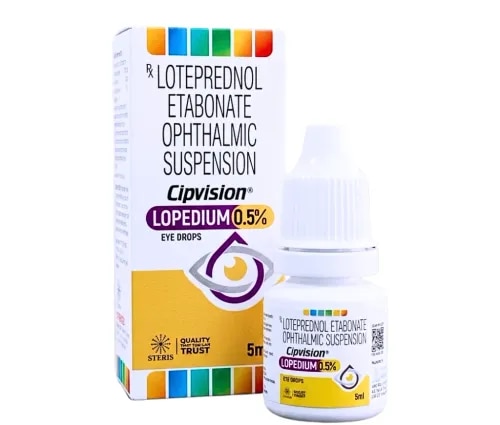
"name": "Loteprednol Etabonate Ophthalmic Suspension",
"description": "Loteprednol etabonate ophthalmic suspension is a prescription corticosteroid eye drop used to treat steroid-responsive inflammatory conditions of the eye, including post-surgical inflammation, allergic conjunctivitis, and certain forms of anterior uveitis. What sets loteprednol apart from older ophthalmic steroids is its “ester-based” chemical structure, which is designed to break down into inactive components after acting on eye tissue — giving it a comparatively lower risk of raising intraocular pressure (IOP) than traditional steroids like prednisolone or dexamethasone, while still delivering effective anti-inflammatory action. The typical dose is one to two drops in the affected eye, four times daily, or as directed, usually for a short, defined course rather than indefinite use. Common side effects include burning, stinging, and blurred vision, while prolonged or unsupervised use can still carry steroid-related risks such as elevated eye pressure. It is a Schedule H prescription-only medicine in India.\n\nWhat Is Loteprednol Etabonate Ophthalmic Suspension?\nLoteprednol etabonate ophthalmic suspension is a topical corticosteroid formulated specifically for use in the eye. It belongs to a category sometimes referred to as “site-specific” or “soft” steroids — a design approach where the drug is engineered to be highly active at the site of application (the eye) but rapidly metabolized into inactive by-products once it has acted, reducing the potential for the cumulative steroid-related side effects seen with older ophthalmic corticosteroids.\nThis suspension is commonly prescribed for:\n\nManaging inflammation following eye surgery, such as cataract surgery\nTreating allergic conjunctivitis, including seasonal allergic conjunctivitis\nCertain anterior segment inflammatory conditions, such as uveitis, under specialist supervision\nGiant papillary conjunctivitis and other steroid-responsive ocular surface conditions\n\nBecause of its comparatively favorable IOP profile, loteprednol is often considered by ophthalmologists for patients who need effective anti-inflammatory therapy but may be at higher risk from more potent steroids — though it is important to note that no ophthalmic steroid is entirely free of IOP-related risk, and monitoring remains necessary.\n\nHow Does Loteprednol Etabonate Work? (Mechanism of Action)\n\nCorticosteroid receptor binding – Loteprednol etabonate binds to glucocorticoid receptors within ocular tissue, initiating anti-inflammatory gene expression changes.\nSuppression of inflammatory mediators – This binding reduces the production of key inflammatory substances, including prostaglandins and cytokines, that drive redness, swelling, and discomfort.\nReduced vascular permeability – By calming the inflammatory cascade, the drug helps reduce leakage of fluid and inflammatory cells into ocular tissue, easing swelling.\nEster-based metabolism – Unlike ketone-based steroids, loteprednol's ester structure allows ocular esterases to break it down into inactive metabolites after it exerts its effect, which is thought to underlie its comparatively lower propensity to raise intraocular pressure.\nLocalized anti-inflammatory effect – The net result is effective control of ocular surface and anterior segment inflammation with a more favorable safety profile than some older steroid formulations, when used for the intended short duration.\n\n\nClinical Indications\nIndicationDetailsPost-operative ocular inflammationCommon after cataract and other intraocular surgeriesAllergic conjunctivitisIncluding seasonal allergic conjunctivitisGiant papillary conjunctivitisOften associated with contact lens wearAnterior uveitisUnder specialist supervisionOther steroid-responsive inflammatory conditions of the palpebral and bulbar conjunctiva, cornea, and anterior segmentAs directed by an ophthalmologist\nNot indicated for: viral (e.g., herpes simplex), fungal, or mycobacterial eye infections, where corticosteroid use can worsen the underlying condition.\n\nDosage & Administration\nParameterRecommendationStandard dose1–2 drops in the affected eye(s), typically 4 times dailyPost-surgical regimenOften started at higher frequency and tapered per surgeon's protocolShake before useYes — this is a suspension; shake well before each applicationDurationShort, defined course as prescribed; not intended for indefinite useTaperingGradual reduction recommended rather than abrupt discontinuation after extended useContact lensesRemove before instillation; reinsert only per your doctor's adviceMissed doseApply as soon as remembered; do not double the next dose\nImportant: Even with its comparatively favorable safety profile, loteprednol should be used strictly for the duration prescribed. Extended, unsupervised use is not recommended.\n\nKey Benefits\n\nEffective anti-inflammatory action for a range of steroid-responsive ocular conditions\nEster-based design associated with a comparatively lower risk of raising intraocular pressure than some older ophthalmic steroids\nUseful for patients needing steroid therapy who may be more sensitive to IOP elevation, under appropriate monitoring\nSuitable for both post-surgical inflammation control and allergic conjunctivitis management\nAvailable in a suspension formulation designed for good ocular surface contact\nOften used as part of a short, defined treatment course, reducing exposure duration compared to continuous long-term steroid regimens\n\n\nPrecautions\n\nUse strictly under ophthalmologist supervision — this is not an over-the-counter product\nNot suitable for viral, fungal, or mycobacterial eye infections\nEven with its favorable profile, prolonged use can still raise intraocular pressure in susceptible individuals — periodic IOP monitoring is recommended\nExtended use may increase the risk of cataract formation, as with other ophthalmic steroids\nMay mask signs of infection or delay wound healing if used inappropriately\nInform your doctor of any history of glaucoma, herpes eye infection, or corneal thinning before starting\nShake the suspension well before each use for accurate dosing\nAvoid touching the dropper tip to the eye or any surface\n\n\nSide Effects\nCommon (Usually Mild and Temporary)\n\nBurning or stinging sensation on instillation\nBlurred vision immediately after application\nEye discomfort or a foreign-body sensation\nMild eye redness\n\nLess Common / Serious (Consult Your Doctor Promptly)\n\nElevated intraocular pressure (comparatively less frequent than with older steroids, but still possible)\nDelayed wound healing\nSigns of secondary or masked ocular infection\nCataract progression with prolonged use\nAllergic reaction (eyelid swelling, itching, rash)\n\nDiscontinue and consult your ophthalmologist promptly if any serious symptom develops.\n\nComparison: Loteprednol vs. Other Ophthalmic Corticosteroids\nTreatmentClassIOP Risk ProfileBest Suited ForLoteprednol etabonate suspensionEster-based (“soft”) corticosteroidComparatively lowerPatients needing effective anti-inflammatory action with reduced IOP concernPrednisolone acetateKetone-based corticosteroidHigher with prolonged useRobust anti-inflammatory action; requires closer IOP monitoringDexamethasoneKetone-based corticosteroidHigher, potent effectSevere inflammatory conditions; typically shorter coursesFluorometholoneKetone-based corticosteroidModerateMild to moderate inflammation with somewhat reduced IOP risk\n\nKey Statistics (Placeholder — Pending Clinical Reviewer Verification)\nMetricValueReported incidence of clinically significant IOP elevation with short-course loteprednol use[Placeholder – insert verified clinical trial statistic]Comparative IOP-elevation rate vs. prednisolone acetate in controlled studies[Placeholder – insert verified reference]Typical duration of post-operative loteprednol therapy[Placeholder – insert reference range]\nAll statistics above are placeholders and must be verified and populated by a qualified clinical reviewer prior to publication.\n\nExpert Insight\n\n[Placeholder — Expert quote pending. To be added only after review and approval by a licensed ophthalmologist/medical reviewer associated with Steris Healthcare. Do not fabricate or publish without sign-off.]\n\n\nPrice of Loteprednol Etabonate Ophthalmic Suspension\nThe price of loteprednol etabonate ophthalmic suspension varies depending on brand, pack size, and region. For current pricing, availability, and prescription verification, please consult your ophthalmologist or an authorized pharmacy.\nPrescription only – consult your doctor.\n\nConclusion\nLoteprednol etabonate ophthalmic suspension offers a valuable option for managing steroid-responsive ocular inflammation — from post-surgical recovery to allergic conjunctivitis — with a design intended to reduce the intraocular pressure risks historically associated with ophthalmic corticosteroids. While its ester-based structure gives it a comparatively favorable safety profile, it remains a steroid, and prolonged or unsupervised use can still carry risks such as elevated eye pressure, cataract progression, and delayed healing. For this reason, loteprednol should always be used for the specific duration prescribed, with appropriate tapering and regular ophthalmic follow-up, rather than as a long-term, self-managed therapy.\n\nFrequently Asked Questions\n\n1. What is loteprednol etabonate ophthalmic suspension used for?\nIt is used to treat steroid-responsive eye inflammation, including inflammation after eye surgery, allergic conjunctivitis, and certain anterior segment inflammatory conditions such as uveitis, under an ophthalmologist's guidance.\n\n2. Is loteprednol a steroid?\nYes, loteprednol etabonate is a corticosteroid. It is specifically designed with an ester-based structure intended to reduce the risk of raising intraocular pressure compared to some older ophthalmic steroids, though it still requires medical supervision.\n\n3. How long can I use loteprednol eye drops?\nLoteprednol is typically prescribed for a short, defined course as determined by your ophthalmologist, often with a tapering schedule. It is not intended for indefinite, unsupervised long-term use.\n\n4. Does loteprednol raise eye pressure?\nLoteprednol has a comparatively lower risk of raising intraocular pressure than some older ophthalmic steroids due to its ester-based design, but it can still cause elevated eye pressure in susceptible individuals, especially with prolonged use, so periodic monitoring is recommended.\n\n5. Can loteprednol cause cataracts?\nProlonged use of any ophthalmic corticosteroid, including loteprednol, can increase the risk of cataract formation, particularly posterior subcapsular cataracts, which is why short, supervised courses are recommended.\n\n6. How is loteprednol different from prednisolone acetate?\nLoteprednol has an ester-based chemical structure designed to break down into inactive components after acting on the eye, which is associated with a lower risk of raising intraocular pressure compared to prednisolone acetate, a ketone-based steroid with a higher IOP-elevation potential.\n\n7. Can loteprednol be used for allergic conjunctivitis?\nYes, loteprednol etabonate ophthalmic suspension is commonly used to manage allergic conjunctivitis, including seasonal allergic conjunctivitis, especially when symptoms are significant or not controlled by other treatments.\n\n8. Is loteprednol safe after cataract surgery?\nYes, loteprednol is frequently prescribed to manage post-operative inflammation following cataract surgery, typically as part of a tapering regimen directed by the operating ophthalmologist.\n\n9. Can loteprednol be used for viral eye infections?\nNo, loteprednol and other corticosteroids are not appropriate for viral eye infections such as herpes simplex keratitis, as steroids can worsen these conditions if used inappropriately.\n\n10. What are the common side effects of loteprednol eye drops?\nCommon side effects include burning or stinging upon application, temporary blurred vision, mild eye redness, and eye discomfort. These are usually mild and resolve quickly.\n11. Does loteprednol need to be shaken before use?\nYes, since it is a suspension, the bottle should be shaken well before each use to ensure the medication is evenly distributed.\n\n12. Can loteprednol be stopped suddenly?\nStopping abruptly, especially after extended use, is generally not recommended. A gradual tapering schedule, as advised by your ophthalmologist, helps prevent rebound inflammation.\n\n13. Is loteprednol safe for long-term daily use?\nNo, loteprednol is generally intended for short, supervised courses rather than continuous long-term daily use, due to steroid-related risks with prolonged exposure.\n\n14. Can contact lenses be worn while using loteprednol?\nIt's generally recommended to remove contact lenses before applying loteprednol and reinsert them only after the interval advised by your doctor.\n\n15. Who should avoid using loteprednol eye drops?\nPatients with active untreated viral, fungal, or mycobacterial eye infections, or known hypersensitivity to the medication, should avoid loteprednol unless specifically directed otherwise by their ophthalmologist.\n\n16. Can loteprednol be used in children?\nUse in children should only occur under the direct guidance and prescription of a pediatric ophthalmologist, based on individual clinical assessment.\n17. Does loteprednol cause blurred vision?\nTemporary blurred vision can occur immediately after instillation in some patients and usually resolves quickly. Persistent blurred vision should be reported to your doctor.",
"price": 150.0,
"discountamount": 45.0,
"currencycode": "INR",
"priority": 1000000,
"isfreeshipmentavailable": false,
"shipmentduration": 1,
"_keywords": null,
"isarchived": false,
"isavailable": true,
"applicationid": null,
"productindex": 2471,
"imageuri": "https://productimages.withfloats.com/actual/6a50a78cd95cad00a915a6d8.png",
"tileimageuri": "https://productimages.withfloats.com/tile/6a50a78cd95cad00a915a6d8.png",
"images": null,
"totalqueries": 0,
"gpid": null,
"groupproductid": null,
"createdon": "2026-07-10T08:04:26.663Z",
"updatedon": "2026-07-10T08:04:26.663Z",
"buyonlinelink": null,
"producturl": "http://WWW.STERISINDIA.COM//loteprednol-etabonate-ophthalmic-suspension/2471",
"availableunits": -1.0,
"iscodavailable": false,
"isprepaidonlineavailable": false,
"maxcodorders": 0,
"maxprepaidonlineorders": 0,
"uniquepaymenturl": null,
"brandname": "CIPVISION LOPEDIUM 0.5%",
"category": "Opthalmology Range",
"tags": [
"Loteprednol Etabonate Ophthalmic Suspension",
"loteprednol etabonate ophthalmic suspension uses",
"loteprednol etabonate ophthalmic suspension uses in hindi",
"loteprednol etabonate ophthalmic suspension in hindi",
"loteprednol etabonate ophthalmic suspension eye drops uses",
"loteprednol etabonate ophthalmic suspension eye drops",
"loteprednol etabonate ophthalmic suspension use"
],
"variants": false,
"keyspecification": null,
"otherspecifications": null,
"pickupaddressreferenceid": null,
"paymenttype": "UniquePaymentUrl",
"producttype": "products",
"hsncode": null,
"gstslab": 0.0,
"isnotforsale": false
},
{
"_id": "6a50a30c9e1ef0fb4df551b0",
"fptag": "STERISHEALTHCARE",
"merchantname": null,
"customwidgets": null,
"externalsourceid": null,
"name": "dorzolamide eye drops ip",
"description": "Dorzolamide eye drops IP are a prescription ophthalmic solution used to lower elevated intraocular pressure (IOP) in patients with open-angle glaucoma or ocular hypertension. Dorzolamide belongs to a class of drugs called carbonic anhydrase inhibitors, which work by reducing the production of aqueous humor (the fluid inside the eye), thereby lowering pressure within the eye. It is typically used two to three times daily and begins measurably lowering eye pressure within about 2 hours, though consistent long-term use is essential for sustained control. Common side effects include a temporary bitter or unusual taste in the mouth, burning or stinging on instillation, and blurred vision. Because dorzolamide is chemically a sulfonamide derivative, it should be used cautiously in patients with known sulfa allergies or significant kidney impairment, and only under an ophthalmologist's supervision. It is a Schedule H prescription-only medicine in India.\n\nWhat Is Dorzolamide Eye Drops IP?\nDorzolamide Eye Drops IP is a topical prescription medication used primarily to manage glaucoma and ocular hypertension — conditions characterized by abnormally elevated pressure inside the eye that, if left uncontrolled, can damage the optic nerve and lead to progressive, irreversible vision loss.\nThe “IP” designation indicates the formulation conforms to standards set out in the Indian Pharmacopoeia, ensuring consistent quality, purity, and potency.\nDorzolamide belongs to the carbonic anhydrase inhibitor (CAI) class of anti-glaucoma medications. Unlike oral carbonic anhydrase inhibitors (such as acetazolamide), which act systemically and often cause more pronounced side effects, topical dorzolamide is designed to act locally within the eye, offering effective IOP reduction with comparatively lower systemic exposure — though some systemic absorption can still occur.\nIt is frequently prescribed either as a standalone treatment or in combination with other IOP-lowering agents, such as beta-blockers (e.g., timolol) or prostaglandin analogues, when a single agent does not achieve adequate pressure control.\n\nHow Does Dorzolamide Work? (Mechanism of Action)\n\nAqueous humor production – The ciliary body inside the eye continuously produces aqueous humor, the clear fluid that maintains intraocular pressure and nourishes ocular tissues.\nCarbonic anhydrase enzyme – This enzyme, found in the ciliary body, plays a key role in the chemical reactions that generate bicarbonate ions, which drive fluid secretion into the eye.\nEnzyme inhibition – Dorzolamide inhibits carbonic anhydrase (specifically the II isoenzyme) within the ciliary processes.\nReduced fluid production – With the enzyme inhibited, bicarbonate-dependent fluid transport slows down, resulting in decreased aqueous humor formation.\nLowered intraocular pressure – Less fluid production means less pressure buildup inside the eye, helping protect the optic nerve from pressure-related damage over time.\n\n\nClinical Indications\nIndicationDetailsOpen-angle glaucomaPrimary indication; helps control chronic elevated IOPOcular hypertensionUsed to reduce elevated eye pressure even before glaucoma-related damage occursAdjunct therapyCombined with beta-blockers or prostaglandin analogues when monotherapy is insufficientPost-laser or post-surgical IOP spikesSometimes used short-term under specialist guidance\n\nDosage & Administration\nParameterRecommendationStandard dose (monotherapy)One drop in the affected eye(s), three times dailyStandard dose (with other IOP-lowering drops)Often reduced to twice daily when combined, per doctor's instructionsOnset of actionMeasurable IOP reduction typically begins within about 2 hoursPeak effectGenerally within a few hours of instillationIf using multiple eye dropsSpace different eye medications at least 10 minutes apartMissed doseApply as soon as remembered; skip if near the next scheduled dose — do not double upDuration of useLong-term, ongoing therapy as glaucoma is a chronic condition requiring continuous management\nNote: Consistency is critical — missed doses can allow intraocular pressure to rise, increasing the risk of progressive optic nerve damage.\n\nKey Benefits\n\nEffectively lowers intraocular pressure in both glaucoma and ocular hypertension\nActs locally in the eye, generally producing lower systemic side effects compared to oral carbonic anhydrase inhibitors\nCan be used as monotherapy or in combination with other classes of glaucoma medication for enhanced pressure control\nHelps protect the optic nerve from pressure-related damage with consistent long-term use\nAvailable in a well-established, pharmacopoeia-standardized formulation (IP grade)\nSuitable for long-term, chronic disease management in glaucoma patients\n\n\nPrecautions\n\nUse strictly as prescribed and do not adjust dosing without consulting your ophthalmologist\nInform your doctor if you have a known sulfonamide (sulfa) allergy, since dorzolamide is chemically related to sulfa drugs\nUse with caution in patients with significant kidney (renal) impairment, due to potential for systemic absorption\nNot typically recommended in patients with severe corneal disease without specialist evaluation\nIf using contact lenses, remove before instillation and reinsert only after the interval advised by your doctor\nRegular eye pressure monitoring and follow-up visits are essential during treatment\nInform your doctor of all other eye medications and systemic drugs you are using\nAvoid touching the dropper tip to the eye or any surface to prevent contamination\n\n\nSide Effects\nCommon (Usually Mild and Temporary)\n\nTemporary bitter or unusual taste in the mouth after application\nBurning or stinging sensation on instillation\nBlurred vision immediately after use\nEye redness or itching\nMild eye discomfort\n\nLess Common / Serious (Consult Your Doctor Promptly)\n\nSigns of an allergic reaction (rash, swelling, severe itching)\nPersistent eye pain or significant vision changes\nSigns of corneal problems (persistent redness, discharge, sensitivity to light)\nSystemic effects related to sulfonamide sensitivity, in rare cases\n\nIf any serious or persistent symptom occurs, discontinue use and contact your ophthalmologist immediately.\n\nComparison: Dorzolamide vs. Other Anti-Glaucoma Therapies\nTreatmentClassMechanismKey ConsiderationDorzolamide eye dropsCarbonic anhydrase inhibitorReduces aqueous humor productionSulfa-related caution; often used as adjunct therapyTimolol eye dropsBeta-blockerReduces aqueous humor production via a different pathwayCaution in asthma, heart conditionsLatanoprost / prostaglandin analoguesProstaglandin analogueIncreases aqueous humor outflowOnce-daily dosing; may darken iris/eyelash growthBrimonidineAlpha-2 agonistReduces production and increases outflowCan cause drowsiness, dry mouthOral acetazolamideSystemic carbonic anhydrase inhibitorReduces aqueous humor production systemicallyMore pronounced systemic side effects than topical dorzolamide\n\nKey Statistics (Placeholder — Pending Clinical Reviewer Verification)\nMetricValueAverage IOP reduction achieved with dorzolamide monotherapy[Placeholder – insert verified clinical trial statistic]Prevalence of open-angle glaucoma in adults over 40[Placeholder – insert epidemiological reference]Proportion of patients requiring combination glaucoma therapy[Placeholder – insert verified reference]\nAll statistics above are placeholders and must be verified and populated by a qualified clinical reviewer prior to publication.\n\nExpert Insight\n\n[Placeholder — Expert quote pending. To be added only after review and approval by a licensed ophthalmologist/medical reviewer associated with Steris Healthcare. Do not fabricate or publish without sign-off.]\n\n\nPrice of Dorzolamide Eye Drops IP\nThe price of dorzolamide eye drops IP varies depending on pack size, brand, and region. For current pricing, availability, and prescription verification, please consult your ophthalmologist or an authorized pharmacy.\nPrescription only – consult your doctor.\n\nConclusion\nDorzolamide Eye Drops IP play a well-established role in the long-term management of glaucoma and ocular hypertension, offering targeted, localized reduction of intraocular pressure through carbonic anhydrase inhibition. Whether used alone or alongside other classes of IOP-lowering medication, consistent, correctly timed use is essential to protect the optic nerve from progressive, irreversible damage. Because dorzolamide is a sulfonamide derivative with potential for systemic absorption, patients with sulfa allergies or kidney impairment should discuss suitability carefully with their ophthalmologist. As with all glaucoma therapy, regular monitoring and adherence to the prescribed regimen — rather than occasional or as-needed use — are what ultimately safeguard long-term vision.\n\nFrequently Asked Questions\n\n1. What is dorzolamide eye drops used for?\nDorzolamide eye drops are used to lower elevated intraocular pressure in patients with open-angle glaucoma or ocular hypertension, helping protect the optic nerve from pressure-related damage.\n\n2. How long does it take dorzolamide to lower eye pressure?\nDorzolamide typically begins measurably lowering intraocular pressure within about 2 hours of application, though consistent, long-term use is needed to maintain stable pressure control over time.\n\n3. What are the side effects of dorzolamide?\nCommon side effects include a temporary bitter or unusual taste in the mouth, burning or stinging upon application, blurred vision, and mild eye redness or discomfort. Less commonly, allergic reactions or persistent eye irritation can occur and should be reported to a doctor.\n4. Does dorzolamide affect the kidneys?\nDorzolamide is a sulfonamide derivative, and although it is applied topically with generally low systemic absorption, caution is advised in patients with significant kidney impairment. Patients with known kidney disease or sulfa allergies should inform their doctor before starting treatment.\n\n5. How often should dorzolamide eye drops be used?\nDorzolamide is typically used three times daily as monotherapy, or twice daily when combined with other glaucoma medications, exactly as directed by your ophthalmologist.\n\n6. Can dorzolamide be used with other glaucoma eye drops?\nYes, dorzolamide is commonly combined with beta-blockers, prostaglandin analogues, or other IOP-lowering agents when a single medication does not achieve adequate pressure control. Different eye drops should be spaced at least 10 minutes apart.\n\n7. Is dorzolamide safe for long-term use?\nYes, dorzolamide is designed for long-term, ongoing use in chronic glaucoma management, provided it is used under regular ophthalmologist supervision with periodic eye pressure monitoring.\n\n8. Who should not use dorzolamide eye drops?\nPatients with known hypersensitivity to sulfonamides, significant kidney impairment, or specific contraindications identified by their doctor should use dorzolamide only under close medical supervision, if at all.\n\n9. Does dorzolamide cause blurred vision?\nTemporary blurred vision can occur immediately after applying dorzolamide. This is usually short-lived, but if it persists, you should consult your ophthalmologist.\n\n10. Can dorzolamide eye drops be used with contact lenses?\nIt's generally recommended to remove contact lenses before applying dorzolamide and reinsert them only after the interval advised by your doctor, as certain preservatives in eye drops can affect contact lens materials.\n\n11. What happens if I miss a dose of dorzolamide?\nApply the missed dose as soon as you remember, unless it is almost time for your next scheduled dose — in that case, skip the missed dose and continue your regular schedule. Do not double up doses.\n\n12. Why does dorzolamide cause a bitter taste?\nThe bitter taste occurs because a small amount of the eye drop drains through the tear duct into the nasal passage and throat, where it can be tasted. This is a recognized, generally harmless effect of topical carbonic anhydrase inhibitors.\n13. Is dorzolamide the same as timolol eye drops?\nNo. Dorzolamide is a carbonic anhydrase inhibitor, while timolol is a beta-blocker. Both lower eye pressure but through different mechanisms, and they are sometimes prescribed together for enhanced effect.\n\n14. Can dorzolamide be used during pregnancy?\nUse during pregnancy or breastfeeding should only occur under direct medical supervision. Inform your doctor if you are pregnant, planning pregnancy, or breastfeeding before starting dorzolamide.\n\n15. How is dorzolamide different from oral glaucoma medications?\nTopical dorzolamide acts locally in the eye and generally causes fewer systemic side effects than oral carbonic anhydrase inhibitors like acetazolamide, which act throughout the body and can cause more pronounced systemic effects.\n16. Can stopping dorzolamide suddenly cause problems?\nStopping dorzolamide abruptly can allow intraocular pressure to rise again, increasing the risk of progressive optic nerve damage. Always consult your ophthalmologist before discontinuing treatment.\n\n17. Does dorzolamide need to be refrigerated?\nStorage requirements can vary by brand and formulation; always follow the storage instructions printed on your specific product's packaging or as advised by your pharmacist.",
"price": 350.0,
"discountamount": 105.0,
"currencycode": "INR",
"priority": 1000000,
"isfreeshipmentavailable": false,
"shipmentduration": 1,
"_keywords": null,
"isarchived": false,
"isavailable": true,
"applicationid": null,
"productindex": 2470,
"imageuri": "https://productimages.withfloats.com/actual/6a50a30e9569e07de66607f4.png",
"tileimageuri": "https://productimages.withfloats.com/tile/6a50a30e9569e07de66607f4.png",
"images": null,
"totalqueries": 0,
"gpid": null,
"groupproductid": null,
"createdon": "2026-07-10T07:45:16.262Z",
"updatedon": "2026-07-10T07:45:16.262Z",
"buyonlinelink": null,
"producturl": "http://WWW.STERISINDIA.COM//dorzolamide-eye-drops-ip/2470",
"availableunits": -1.0,
"iscodavailable": false,
"isprepaidonlineavailable": false,
"maxcodorders": 0,
"maxprepaidonlineorders": 0,
"uniquepaymenturl": null,
"brandname": "CIPVISION DORZONIX 2%",
"category": "Opthalmology Range",
"tags": [
"dorzolamide eye drops ip",
"dorzolamide eye drops",
"dorzolamide eye drops uses",
"dorzolamide eye drops uses in hindi",
"dorzolamide eye drops price",
"dorzolamide eye drops ip",
"dorzolamide eye drops brand name",
"dorzolamide eye drops brands"
],
"variants": false,
"keyspecification": null,
"otherspecifications": null,
"pickupaddressreferenceid": null,
"paymenttype": "UniquePaymentUrl",
"producttype": "products",
"hsncode": null,
"gstslab": 0.0,
"isnotforsale": false
},
{
"_id": "6a5092283075a19d4f2db6bd",
"fptag": "STERISHEALTHCARE",
"merchantname": null,
"customwidgets": null,
"externalsourceid": null,
"name": "Cyclosporine Eye Drops 0.05% w/v",
"description": "Cyclosporine eye drops 0.05% are a prescription ophthalmic emulsion used to treat chronic dry eye disease (keratoconjunctivitis sicca) caused by ocular surface inflammation. Unlike lubricating tear substitutes that only manage symptoms, cyclosporine works as a calcineurin-inhibitor immunomodulator that calms the underlying inflammation suppressing your eyes' natural tear production. It is not a steroid. The standard dose is one drop in each affected eye, twice daily, about 12 hours apart, and visible improvement in tear production typically takes 6–12 weeks, with full benefit sometimes taking up to 3–6 months of consistent use. Common side effects include temporary burning, stinging, redness, and watery eyes at the time of instillation. It is a Schedule H prescription-only medicine in India and should be used only under a qualified ophthalmologist's guidance.\n\nWhat Is Cyclosporine Eye Drops 0.05%?\nCyclosporine eye drops 0.05% (ophthalmic emulsion) is a prescription formulation designed to manage chronic dry eye disease, a condition in which the eyes fail to produce enough tears or produce tears of poor quality, often because of an underlying inflammatory process on the ocular surface and in the lacrimal (tear-producing) gland.\nThis formulation is commonly prescribed for patients whose dry eye is presumed to be due to ocular inflammation — for example, those with moderate to severe dry eye, keratoconjunctivitis sicca, or dry eye associated with conditions like Sjögren's syndrome, that has not responded adequately to artificial tears alone.\nCyclosporine belongs to a class of drugs called calcineurin inhibitors. It differs fundamentally from corticosteroid eye drops, which suppress inflammation broadly and carry risks like raised intraocular pressure and cataract formation with long-term use. Cyclosporine instead selectively dampens the T-cell-mediated inflammatory response that is thought to suppress tear gland function, allowing the eye's own tear-producing mechanism to gradually recover.\n\nHow Do Cyclosporine Eye Drops Work? (Mechanism of Action)\n\nInflammation on the ocular surface – In chronic dry eye, T-lymphocytes infiltrate the conjunctiva and lacrimal gland, triggering a self-perpetuating inflammatory cycle.\nCalcineurin inhibition – Cyclosporine binds to a cellular protein (cyclophilin) and blocks calcineurin, an enzyme required to activate T-cells.\nReduced T-cell activation – With calcineurin blocked, T-cells cannot produce the inflammatory signals (such as interleukin-2) that damage the lacrimal gland and conjunctival tissue.\nRestoration of tear production – As local inflammation subsides over weeks to months, the lacrimal gland's ability to produce natural tears gradually improves.\nImproved tear film stability – With reduced inflammation and increased natural tear volume, patients typically notice less dryness, grittiness, and ocular surface damage over time.\n\nThis is why cyclosporine drops are described as disease-modifying for dry eye rather than purely symptomatic — they address a root inflammatory cause instead of simply lubricating the eye.\n\nClinical Indications\nIndicationDetailsChronic dry eye disease (keratoconjunctivitis sicca)Primary approved use; especially where tear production is suppressed due to ocular inflammationModerate to severe dry eye not controlled by artificial tearsSecond-line option when lubricants alone are insufficientDry eye associated with autoimmune conditionsE.g., Sjögren's syndrome-related dry eye, under specialist supervisionPost-refractive surgery dry eye (select cases)Sometimes used off-label under ophthalmologist guidance\n\nDosage & Administration\nParameterRecommendationStandard doseOne drop in each affected eye, twice dailyDosing intervalApproximately 12 hours apartContact lens useRemove lenses before instillation; wait at least 15 minutes before reinsertingOnset of noticeable effectUsually 6–12 weeksFull therapeutic benefitMay take up to 3–6 months of continuous useMissed doseContinue with next scheduled dose; do not double upDiscontinuationOnly under medical advice — symptoms may return if stopped prematurely\nNote: Cyclosporine eye drops are for long-term, continuous use as directed by your ophthalmologist. Improvement is gradual, not immediate, and consistent daily use is essential for benefit.\n\nKey Benefits\n\nTargets the underlying inflammatory cause of chronic dry eye rather than only masking symptoms\nCan increase natural tear production over sustained use\nGenerally well tolerated for long-term use, since it is not a steroid and does not carry steroid-related risks like elevated eye pressure or cataract with routine use\nMay reduce dependence on frequent artificial tear instillation over time\nSuitable for long-term maintenance therapy in chronic, relapsing dry eye disease\nCan improve comfort during visually demanding tasks (screen use, reading, driving) affected by chronic dryness\n\n\nPrecautions\n\nUse strictly as prescribed by an ophthalmologist; do not self-medicate\nNot intended for immediate relief of dry eye symptoms — artificial tears may be used concurrently for interim comfort as advised by your doctor\nShould not be used in the presence of an active ocular infection unless specifically directed by a physician\nInform your doctor if you are pregnant, breastfeeding, or have any known hypersensitivity to cyclosporine or emulsion components\nAvoid touching the dropper tip to the eye or any surface to prevent contamination\nIf wearing contact lenses, remove before application and reinsert only after 15 minutes\nDo not use expired or previously opened single-use vials, if applicable to your product format\nRegular ophthalmic follow-up is recommended to monitor treatment response\n\n\nSide Effects\nCommon (Usually Mild and Temporary)\n\nBurning or stinging sensation upon instillation\nEye redness\nWatery eyes (excessive tearing)\nEye discomfort or a feeling of something in the eye\nTemporary blurred vision immediately after application\n\nLess Common / Serious (Consult Your Doctor Promptly)\n\nPersistent or worsening eye pain\nSigns of eye infection (discharge, significant redness, swelling)\nVisual disturbance that does not resolve\nSigns of an allergic reaction (eyelid swelling, itching, rash)\n\nIf any serious or persistent symptom occurs, discontinue use and consult your ophthalmologist immediately.\n\nComparison: Cyclosporine Eye Drops vs. Other Dry Eye Treatments\nTreatmentMechanismOnset of ActionLong-Term Use ProfileCyclosporine 0.05% dropsCalcineurin inhibitor; reduces inflammation, restores natural tear productionWeeks to monthsGenerally suitable for continuous long-term useArtificial tears / lubricantsSymptomatic lubrication onlyImmediate, short-livedSafe but does not address inflammation; frequent reapplication neededCorticosteroid eye dropsBroad anti-inflammatory actionFast (days)Not recommended for long-term use due to risk of raised IOP, cataractLifitegrast ophthalmic solutionLFA-1 antagonist; blocks a different inflammatory pathwayWeeksAlternative option, mechanism differs from cyclosporine\n\nKey Statistics (Placeholder — Pending Clinical Reviewer Verification)\nMetricValueReported patients showing improved tear production at 6 months[Placeholder – insert verified clinical trial statistic]Prevalence of chronic dry eye disease in adults[Placeholder – insert epidemiological reference]Average time to symptomatic improvement[Placeholder – insert verified reference range]\nAll statistics above are placeholders and must be verified and populated by a qualified clinical reviewer prior to publication.\n\nExpert Insight\n\n[Placeholder — Expert quote pending. To be added only after review and approval by a licensed ophthalmologist/medical reviewer associated with Steris Healthcare. Do not fabricate or publish without sign-off.]\n\n\nPrice of Cyclosporine Eye Drops 0.05%\nThe price of cyclosporine eye drops 0.05% varies depending on pack size, brand, and region. For current pricing, availability, and prescription verification, please consult your ophthalmologist or authorized pharmacy.\nPrescription only – consult your doctor.\n\nConclusion\nCyclosporine eye drops 0.05% represent a meaningful shift in how chronic dry eye disease is managed — moving beyond temporary lubrication to address the underlying inflammatory process that suppresses natural tear production. For patients with moderate to severe dry eye that hasn't responded well to artificial tears alone, this calcineurin-inhibitor therapy offers a disease-modifying option that, with consistent long-term use, can meaningfully improve ocular comfort and tear film health. Because benefits build gradually over weeks to months, patience and adherence to the prescribed twice-daily regimen are essential. As with any prescription ophthalmic therapy, cyclosporine eye drops should only be used under the guidance of a qualified ophthalmologist, who can confirm suitability, monitor progress, and adjust care as needed.\n\nFrequently Asked Questions\n\n1. What are cyclosporine 0.05% eye drops used for?\nCyclosporine 0.05% eye drops are used to treat chronic dry eye disease caused by ocular surface inflammation. They help increase natural tear production in patients whose tear glands are suppressed due to inflammation, particularly when artificial tears alone aren't enough.\n\n2. How long can I use cyclosporine eye drops?\nCyclosporine eye drops are typically used long-term, as chronic dry eye is an ongoing condition. Many patients continue therapy for months to years under regular ophthalmologist supervision, since symptoms can return if the medication is stopped.\n\n3. Is Cyclomune a steroid?\nNo. Cyclomune (a brand of cyclosporine ophthalmic emulsion) is not a steroid. It is a calcineurin-inhibitor immunomodulator that works differently from steroid eye drops and does not carry the same risk of raised eye pressure or cataract associated with long-term steroid use.\n4. How quickly do cyclosporine eye drops start working?\nMost patients begin noticing improvement in tear production and dry eye symptoms within 6 to 12 weeks, though full benefit may take up to 3 to 6 months of consistent, twice-daily use.\n\n5. Can cyclosporine damage eyes?\nWhen used exactly as prescribed, cyclosporine eye drops are generally considered safe for long-term use. Temporary burning, stinging, or watering can occur at the time of instillation, but serious eye damage is uncommon. Any persistent pain, vision changes, or signs of infection should be reported to your ophthalmologist promptly.\n\n6. How much are cyclosporine 0.05% eye drops?\nPricing varies by brand, pack size, and region. Since this is a prescription-only medicine, please check current pricing with your prescribing doctor or a licensed pharmacy.\n\n7. Is cyclosporine a steroid?\nNo. Cyclosporine is a calcineurin inhibitor, a category of immunomodulating medication that is pharmacologically distinct from corticosteroids (steroids), even though both can reduce inflammation.\n\n8. Can I wear contact lenses while using cyclosporine eye drops?\nContact lenses should be removed before applying the drops and can typically be reinserted after about 15 minutes, unless your ophthalmologist gives different instructions.\n9. What happens if I stop using cyclosporine eye drops suddenly?\nStopping suddenly may cause dry eye symptoms to gradually return, since the underlying inflammation is no longer being managed. Always consult your doctor before discontinuing treatment.\n\n10. Can cyclosporine eye drops be used with artificial tears?\nYes, in many cases artificial tears can be used alongside cyclosporine drops for additional comfort, especially during the initial weeks before cyclosporine's full effect develops. Confirm timing and spacing with your doctor.\n\n11. Who should not use cyclosporine eye drops?\nPatients with known hypersensitivity to cyclosporine or its components, active untreated eye infections, or specific contraindications identified by their doctor should not use this medication without medical clearance.\n\n12. Are cyclosporine eye drops safe during pregnancy?\nUse during pregnancy or breastfeeding should only occur under medical supervision. Inform your doctor if you are pregnant, planning pregnancy, or breastfeeding before starting treatment.\n\n13. What is the difference between cyclosporine eye drops and lubricating eye drops?\nLubricating (artificial tear) drops provide temporary symptomatic relief by adding moisture to the eye, while cyclosporine drops target the underlying inflammation responsible for reduced natural tear production, offering a longer-term, disease-modifying approach.\n\n14. Can children use cyclosporine eye drops?\nUse in children should only be under the direct guidance and prescription of a pediatric ophthalmologist, based on individual clinical assessment.\n\n15. Do cyclosporine eye drops cause blurred vision?\nTemporary blurred vision can occur immediately after instillation in some patients. This usually resolves quickly. If blurred vision persists, consult your doctor.\n\n16. Can cyclosporine eye drops be used with other eye medications?\nOther eye medications, including other prescription drops, should only be combined with cyclosporine under your ophthalmologist's guidance, with appropriate spacing between different drops.\n\n17. Why do cyclosporine eye drops take so long to work?\nBecause cyclosporine works by gradually reducing chronic inflammation in the lacrimal gland and ocular surface rather than providing instant lubrication, visible improvement in natural tear production takes weeks to months rather than being immediate.",
"price": 495.0,
"discountamount": 149.0,
"currencycode": "INR",
"priority": 1000000,
"isfreeshipmentavailable": false,
"shipmentduration": 1,
"_keywords": null,
"isarchived": false,
"isavailable": true,
"applicationid": null,
"productindex": 2468,
"imageuri": "https://productimages.withfloats.com/actual/6a50922a464ced2a630398a1.png",
"tileimageuri": "https://productimages.withfloats.com/tile/6a50922a464ced2a630398a1.png",
"images": null,
"totalqueries": 0,
"gpid": null,
"groupproductid": null,
"createdon": "2026-07-10T06:33:12.096Z",
"updatedon": "2026-07-10T06:33:12.096Z",
"buyonlinelink": null,
"producturl": "http://WWW.STERISINDIA.COM//cyclosporine-eye-drops-0-05-w-v/2468",
"availableunits": -1.0,
"iscodavailable": false,
"isprepaidonlineavailable": false,
"maxcodorders": 0,
"maxprepaidonlineorders": 0,
"uniquepaymenturl": null,
"brandname": "CIPVISION CYCLOPURE 0.5 mg",
"category": "Opthalmology Range",
"tags": [
"Cyclosporine Eye Drops 0.05% w/v",
"cyclosporine eye drops",
"cyclosporine eye drops uses",
"cyclosporine eye drops ip 0.05 w/v",
"cyclosporine eye drops price",
"cyclosporine eye drops uses in hindi",
"cyclosporine eye drops side effects",
"cyclosporine eye drops 0.05",
"cyclosporine eye drops brand name",
"cyclosporine eye drops india"
],
"variants": false,
"keyspecification": null,
"otherspecifications": null,
"pickupaddressreferenceid": null,
"paymenttype": "UniquePaymentUrl",
"producttype": "products",
"hsncode": null,
"gstslab": 0.0,
"isnotforsale": false
}
],
"hasmoreitems": false,
"isapirequest": false,
"totalresults": 27,
"query": null,
"floatingpoint": null
}