STERISHEALTHCARE
Products
08042755542
91918824471531
Chat with us


Chat with us on WhatsApp
×
This is your website preview.
Currently it only shows your basic business info. Start adding relevant business details such as description, images and products or services to gain your customers attention by using Boost 360 android app / iOS App / web portal.
Home
 kidney impairment
 kidney impairment
Items tagged with 'kidney impairment'
{
"products": [
{
"_id": "6ad74702e53c888beeab308d",
"fptag": "STERISHEALTHCARE",
"merchantname": null,
"customwidgets": null,
"externalsourceid": null,
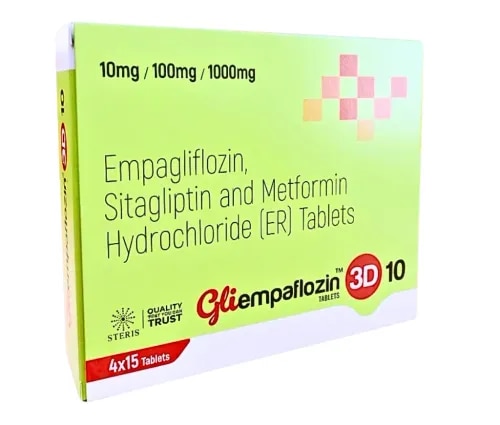
"name": "Empagliozin 10 mg, Sitagliptin 100 mg and Metformin hydrochloride 1000 mg ER Tablets",
"description": "GLIEMPAFLOZIN 3D 10 is a triple-combination antidiabetic tablet containing Empagliflozin 10 mg, Sitagliptin 100 mg, and Metformin Hydrochloride Extended Release (ER) 1000 mg. This combination is intended for the management of type 2 diabetes mellitus in appropriately selected patients under the supervision of a qualified healthcare professional.\n\nThe three active ingredients work through different mechanisms to help regulate blood glucose levels. Empagliflozin helps the kidneys eliminate glucose through urine, Sitagliptin supports glucose-dependent insulin regulation, and Metformin helps reduce glucose production in the liver while improving insulin sensitivity.\n\nBy combining these ingredients in one tablet, GLIEMPAFLOZIN 3D 10 provides a multi-mechanism approach to blood glucose management. Its suitability depends on the patient's clinical condition, kidney function, existing treatment, and the approved prescribing information.\n\nComposition of GLIEMPAFLOZIN 3D 10\nEach tablet contains the following stated active ingredients:\n\nEmpagliflozin 10 mg: A sodium-glucose cotransporter 2 (SGLT2) inhibitor that reduces glucose reabsorption by the kidneys and increases glucose excretion through urine.\nSitagliptin 100 mg: A dipeptidyl peptidase-4 (DPP-4) inhibitor that helps regulate insulin and glucagon responses according to blood glucose levels.\nMetformin Hydrochloride ER 1000 mg: An extended-release biguanide that primarily reduces glucose production in the liver and improves the body's response to insulin.\nThe exact formulation, excipients, approved indications, and administration instructions should be confirmed from the product packaging and official prescribing information.\n\nKey Features of GLIEMPAFLOZIN 3D 10 Tablets\nGLIEMPAFLOZIN 3D 10 combines three established antidiabetic medicines with complementary mechanisms of action.\n\nTriple-combination formulation: Contains Empagliflozin, Sitagliptin, and Metformin Hydrochloride ER.\nMultiple glucose-control pathways: Targets different processes involved in blood glucose regulation.\nExtended-release metformin: Provides a formulation designed to release Metformin gradually over time.\nOral tablet dosage form: Allows administration according to the prescribed regimen.\nIndividualized diabetes management: May be considered when a healthcare professional determines that all three ingredients are appropriate.\nThe combination is not suitable for every person with diabetes. Treatment decisions should be based on individual medical needs and the approved product information.\n\nUses of GLIEMPAFLOZIN 3D 10\nGLIEMPAFLOZIN 3D 10 is intended for the management of type 2 diabetes mellitus, subject to its approved indications and the prescribing healthcare professional's assessment.\n\nType 2 diabetes is a chronic metabolic condition characterized by impaired insulin action and, in many patients, insufficient insulin production. Persistently elevated blood glucose can increase the risk of complications affecting the eyes, kidneys, nerves, heart, and blood vessels.\n\nThe three active ingredients in GLIEMPAFLOZIN 3D 10 address different aspects of glucose regulation. A healthcare professional may consider this combination when multiple medicines are required to achieve an individual's treatment goals and when the combination is clinically appropriate.\n\nThe medicine should be used as part of a comprehensive diabetes-management plan that may include balanced nutrition, regular physical activity, blood glucose monitoring, and routine medical assessments. It is not intended for the treatment of type 1 diabetes or diabetic ketoacidosis.\n\nHow Does GLIEMPAFLOZIN 3D 10 Work?\n1. Empagliflozin 10 mg\nEmpagliflozin belongs to the SGLT2 inhibitor class. It blocks a protein responsible for reabsorbing glucose filtered by the kidneys. This allows more glucose to be eliminated through urine, helping reduce blood glucose levels.\n\nEmpagliflozin has also demonstrated cardiovascular and kidney benefits in certain eligible patient populations. Whether these benefits apply to an individual depends on their clinical condition and the applicable prescribing information.\n\n2. Sitagliptin 100 mg\nSitagliptin inhibits the DPP-4 enzyme, which breaks down incretin hormones. By increasing incretin activity, Sitagliptin supports insulin release when blood glucose is elevated and helps regulate glucagon secretion. These actions contribute to blood glucose control.\n\n3. Metformin Hydrochloride ER 1000 mg\nMetformin primarily reduces glucose production in the liver and improves insulin sensitivity. The extended-release formulation is designed to release the medicine gradually over time.\n\nTogether, these ingredients target several pathways involved in type 2 diabetes. Their combined effectiveness and safety depend on appropriate prescribing, correct administration, and regular monitoring.\n\nPotential Benefits of GLIEMPAFLOZIN 3D 10\nWhen prescribed for an appropriate patient, GLIEMPAFLOZIN 3D 10 may offer the following treatment advantages:\n\nMultiple mechanisms of action: Combines three medicines that influence different aspects of glucose regulation.\nBlood glucose management: Helps improve glycemic control in eligible adults with type 2 diabetes.\nCombination therapy: May simplify a treatment regimen compared with taking the same ingredients as separate tablets.\nExtended-release component: Includes Metformin Hydrochloride ER for gradual drug release.\nPersonalized treatment options: May be considered when a healthcare professional determines that triple therapy is appropriate.\nIndividual outcomes vary, and the medicine does not replace a suitable diet, physical activity, or routine diabetes care.\n\nDirections for Use\nTake GLIEMPAFLOZIN 3D 10 only as prescribed by your healthcare professional.\n\nFollow the prescribed dose and administration schedule.\nTake the tablet with food if directed by the product labeling or your prescriber.\nSwallow the extended-release tablet whole unless the specific product instructions state otherwise. Do not crush, chew, or split it without professional guidance.\nDo not change the dose or stop treatment without consulting your prescriber.\nAttend recommended appointments for kidney-function assessment and blood glucose monitoring.\nIf you miss a dose, follow the official patient information or ask your healthcare professional or pharmacist what to do. Do not take an extra dose to compensate for a missed dose unless specifically instructed.\n\nPrecautions and Safety Information\nGLIEMPAFLOZIN 3D 10 is a prescription medicine and may not be suitable for everyone.\n\nKidney function: Kidney function should be assessed before and during treatment as appropriate. Metformin and Empagliflozin have important kidney-related prescribing considerations.\n\nDehydration: Empagliflozin increases glucose excretion through urine and may increase urination. Patients at risk of dehydration or low blood pressure should discuss appropriate precautions with their healthcare professional.\n\nGenital and urinary infections: Empagliflozin may increase the risk of genital fungal infections and can be associated with urinary tract infections.\n\nLactic acidosis: Metformin can rarely cause a serious condition called lactic acidosis. Risk may increase with significant kidney impairment, severe dehydration, certain acute illnesses, or excessive alcohol intake.\n\nPancreatitis: Pancreatitis has been reported in patients taking Sitagliptin. Severe, persistent abdominal pain requires prompt medical assessment.\n\nHypoglycemia: Low blood glucose may occur, particularly when the combination is used with insulin or insulin secretagogues such as sulfonylureas.\n\nInform your healthcare professional about existing medical conditions, all medicines you take, pregnancy or breastfeeding, planned surgery, prolonged fasting, and upcoming procedures involving iodinated contrast. Follow professional instructions about temporary medicine interruption during acute illness or other high-risk situations.\n\nSeek urgent medical care for severe abdominal pain, difficulty breathing, persistent vomiting, severe dehydration, or other serious symptoms.\n\nWhy Choose GLIEMPAFLOZIN 3D 10?\nGLIEMPAFLOZIN 3D 10 brings together Empagliflozin 10 mg, Sitagliptin 100 mg, and Metformin Hydrochloride ER 1000 mg in a triple-combination tablet intended for selected patients with type 2 diabetes.\n\nFor pharmaceutical websites, pharmacies, distributors, and healthcare professionals, clear information about composition, mechanism of action, potential uses, and precautions supports responsible product awareness.\n\nAlways refer to the approved product label for the exact composition, indications, dosage, contraindications, storage requirements, and instructions for use.\n\nConclusion\nGLIEMPAFLOZIN 3D 10 Tablets combine Empagliflozin 10 mg, Sitagliptin 100 mg, and Metformin Hydrochloride ER 1000 mg to target multiple pathways involved in blood glucose regulation. The combination may be appropriate for selected adults with type 2 diabetes under medical supervision.\n\nFor complete information about dosage, contraindications, warnings, storage, and approved indications, consult the official product packaging and prescribing information. Use this medicine only under the direction of a qualified healthcare professional.\n\nFrequently Asked Questions (FAQs)\n1. What is GLIEMPAFLOZIN 3D 10?\n\nGLIEMPAFLOZIN 3D 10 is a combination tablet containing Empagliflozin 10 mg, Sitagliptin 100 mg, and Metformin Hydrochloride ER 1000 mg.\n\n2. What is GLIEMPAFLOZIN 3D 10 used for?\n\nIt is intended for the management of type 2 diabetes mellitus in patients for whom this combination is considered appropriate by a healthcare professional.\n\n3. How does GLIEMPAFLOZIN 3D 10 work?\n\nEmpagliflozin increases urinary glucose excretion, Sitagliptin supports glucose-dependent insulin regulation, and Metformin reduces glucose production in the liver and improves insulin sensitivity.\n\n4. Can GLIEMPAFLOZIN 3D 10 replace diet and exercise?\n\nNo. Medication should be combined with an individualized diet, physical activity, and monitoring plan recommended by a healthcare professional.\n\n5. Is GLIEMPAFLOZIN 3D 10 suitable for everyone with diabetes?\n\nNo. Suitability depends on the type of diabetes, kidney function, other medical conditions, concurrent medicines, and approved prescribing information.\n\n",
"price": 210.0,
"discountamount": 147.0,
"currencycode": "INR",
"priority": 1000000,
"isfreeshipmentavailable": false,
"shipmentduration": 1,
"_keywords": null,
"isarchived": false,
"isavailable": true,
"applicationid": null,
"productindex": 2505,
"imageuri": "https://productimages.withfloats.com/actual/6ad7470422551901df6e5493.png",
"tileimageuri": "https://productimages.withfloats.com/tile/6ad7470422551901df6e5493.png",
"images": null,
"totalqueries": 0,
"gpid": null,
"groupproductid": null,
"createdon": "2026-10-20T10:48:34.116Z",
"updatedon": "2026-10-20T10:48:34.116Z",
"buyonlinelink": null,
"producturl": "http://WWW.STERISINDIA.COM/products/empagliozin-10-mg-sitagliptin-100-mg-and-metformin-hydrochloride-1000-mg-er-tablets/2505",
"availableunits": -1.0,
"iscodavailable": false,
"isprepaidonlineavailable": false,
"maxcodorders": 0,
"maxprepaidonlineorders": 0,
"uniquepaymenturl": null,
"brandname": "GLIEMPAFLOZIN 3D 10",
"category": "DIABETIC RANGE",
"tags": [],
"variants": false,
"keyspecification": null,
"otherspecifications": null,
"pickupaddressreferenceid": null,
"paymenttype": "UniquePaymentUrl",
"producttype": "products",
"hsncode": null,
"gstslab": 0.0,
"isnotforsale": false
},
{
"_id": "6ad7442bf24c5a4bbccf4b10",
"fptag": "STERISHEALTHCARE",
"merchantname": null,
"customwidgets": null,
"externalsourceid": null,
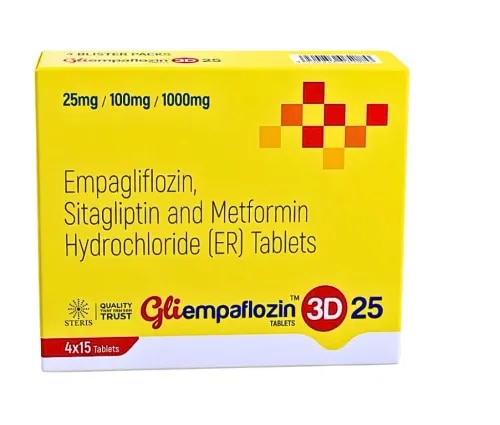
"name": "Empagliflozin,Sitagliptin And Metformin Hydrochloride (ER) Tablets",
"description": "GLIEMPAFLOZIN 3D 25 is a combination pharmaceutical product containing Empagliflozin 25 mg, Sitagliptin 100 mg, and Metformin Hydrochloride Extended Release (ER) 1000 mg. This triple-combination formulation is intended for the management of type 2 diabetes mellitus in appropriate patients, as determined by a qualified healthcare professional.\n\nThe three active ingredients work through different mechanisms to help control blood glucose levels. Empagliflozin belongs to the sodium-glucose cotransporter 2 (SGLT2) inhibitor class, Sitagliptin is a dipeptidyl peptidase-4 (DPP-4) inhibitor, and Metformin is a biguanide antidiabetic medicine. Together, these ingredients target different pathways involved in glucose regulation.\n\nGLIEMPAFLOZIN 3D 25 provides a combination of three established antidiabetic agents in a single tablet. Its suitability depends on the patient's blood glucose levels, kidney function, current diabetes treatment, medical history, and the approved prescribing information.\n\nComposition of GLIEMPAFLOZIN 3D 25\nEach tablet contains the following stated active ingredients:\n\nEmpagliflozin 25 mg: An SGLT2 inhibitor that helps the kidneys remove glucose from the bloodstream through urine.\nSitagliptin 100 mg: A DPP-4 inhibitor that increases the activity of incretin hormones involved in glucose-dependent insulin release and glucagon regulation.\nMetformin Hydrochloride ER 1000 mg: An extended-release biguanide that primarily reduces glucose production in the liver and improves the body's response to insulin.\nThe exact formulation, excipients, administration instructions, and approved indications should be verified against the product packaging and official prescribing information.\n\nKey Features of GLIEMPAFLOZIN 3D 25\nGLIEMPAFLOZIN 3D 25 combines three antidiabetic ingredients with complementary mechanisms of action.\n\nTriple-combination formulation: Contains Empagliflozin, Sitagliptin, and Metformin Hydrochloride ER.\nMultiple glucose-control pathways: The ingredients act through different mechanisms involved in blood glucose regulation.\nExtended-release metformin: The ER formulation is designed to release metformin over an extended period.\nOral tablet dosage form: Provides oral administration according to the prescribed regimen.\nIndividualized diabetes management: May be considered by a healthcare professional when combination therapy is appropriate.\nThe benefits of this combination depend on the patient's clinical needs and the suitability of all three ingredients.\n\nUses of GLIEMPAFLOZIN 3D 25 Tablets\nGLIEMPAFLOZIN 3D 25 is intended for the management of type 2 diabetes mellitus, subject to the product's approved indications and the prescribing healthcare professional's judgment.\n\nType 2 diabetes is a chronic metabolic condition in which the body does not use insulin effectively or does not produce enough insulin to maintain healthy blood glucose levels. Long-term elevated blood glucose can increase the risk of complications affecting the eyes, kidneys, nerves, heart, and blood vessels.\n\nThe three medicines in GLIEMPAFLOZIN 3D 25 target different aspects of glucose regulation. A healthcare professional may consider a combination regimen when an individual's treatment goals are not adequately achieved with a simpler regimen or when the combination is otherwise clinically appropriate.\n\nThe medicine should be used alongside an individualized diabetes-management plan that may include a balanced diet, physical activity, glucose monitoring, and regular medical follow-up. It is not intended for the treatment of type 1 diabetes or diabetic ketoacidosis.\n\nHow Does GLIEMPAFLOZIN 3D 25 Work?\nThe three active ingredients contribute to blood glucose management through distinct mechanisms.\n\n1. Empagliflozin 25 mg\nEmpagliflozin inhibits SGLT2, a protein responsible for reabsorbing much of the glucose filtered by the kidneys. By reducing glucose reabsorption, it increases glucose excretion through urine and helps lower blood glucose levels.\n\nEmpagliflozin has also demonstrated cardiovascular and kidney benefits in certain eligible patient populations. These benefits depend on the patient's condition and the applicable prescribing information and should not be assumed to apply identically to every patient.\n\n2. Sitagliptin 100 mg\nSitagliptin inhibits the DPP-4 enzyme, which breaks down incretin hormones. Increasing incretin activity helps stimulate insulin release when blood glucose is elevated and reduces glucagon secretion when appropriate. This helps regulate glucose levels, particularly after meals.\n\n3. Metformin Hydrochloride ER 1000 mg\nMetformin primarily decreases glucose production in the liver and improves insulin sensitivity. The extended-release formulation is designed to release the medicine gradually over time.\n\nBy combining these mechanisms, GLIEMPAFLOZIN 3D 25 targets several pathways involved in type 2 diabetes. Its overall effectiveness and safety depend on appropriate patient selection, dosing, and ongoing monitoring.\n\nPotential Benefits of GLIEMPAFLOZIN 3D 25\nWhen prescribed for an appropriate patient, this combination may offer the following treatment advantages:\n\nMultiple mechanisms of action: Addresses glucose regulation through three different pharmacological pathways.\nBlood glucose management: Helps improve glycemic control in eligible adults with type 2 diabetes.\nOral combination therapy: Combines three medicines in one tablet, which may simplify a prescribed regimen compared with taking each ingredient separately.\nExtended-release component: Includes Metformin Hydrochloride ER for gradual drug release.\nIndividualized treatment options: May be considered when a healthcare professional determines that all three ingredients are appropriate.\nThese potential advantages do not guarantee a particular result. Treatment effectiveness depends on adherence, diet, physical activity, individual health status, and medical supervision.\n\nDirections for Use\nGLIEMPAFLOZIN 3D 25 should be taken only as prescribed by a qualified healthcare professional.\n\nFollow the prescribed dose and administration schedule.\nTake the tablet with food if directed by the product labeling or prescriber.\nSwallow the extended-release tablet whole unless the specific product instructions state otherwise. Do not crush, chew, or split it without professional guidance.\nDo not change the dose or discontinue treatment without consulting your prescriber.\nAttend recommended appointments for blood glucose monitoring and kidney-function assessment.\nIf a dose is missed, follow the official patient information or ask your healthcare professional or pharmacist for advice. Do not take an extra dose to compensate for a missed dose unless specifically instructed.\n\nPrecautions and Safety Information\nGLIEMPAFLOZIN 3D 25 is a prescription medicine and is not suitable for everyone.\n\nKidney function: Kidney function should be assessed before and during treatment as appropriate. Metformin and Empagliflozin have important renal considerations, and the combination may be unsuitable at certain levels of kidney impairment.\n\nDehydration: Empagliflozin increases glucose excretion through urine and may increase urination. Patients should discuss dehydration risk, low blood pressure, and fluid intake with their healthcare professional.\n\nGenital and urinary infections: Empagliflozin can increase the risk of genital fungal infections and may be associated with urinary tract infections.\n\nLactic acidosis: Metformin can rarely cause a serious condition called lactic acidosis. Risk may increase with significant kidney impairment, severe dehydration, certain acute illnesses, excessive alcohol intake, or other predisposing conditions.\n\nPancreatitis: Pancreatitis has been reported in patients taking Sitagliptin. Severe, persistent abdominal pain requires prompt medical assessment.\n\nLow blood glucose: The risk of hypoglycemia may increase when this combination is used with insulin or insulin secretagogues, such as sulfonylureas.\n\nInform your healthcare professional about existing medical conditions, all medicines you take, pregnancy or breastfeeding, planned surgery, prolonged fasting, or an upcoming medical procedure involving iodinated contrast. Follow professional instructions about temporary medicine interruption during acute illness or other high-risk situations.\n\nSeek urgent medical care for severe abdominal pain, difficulty breathing, unusual weakness, persistent vomiting, severe dehydration, or other serious symptoms.\n\nWhy Choose GLIEMPAFLOZIN 3D 25?\nGLIEMPAFLOZIN 3D 25 brings together Empagliflozin, Sitagliptin, and Metformin Hydrochloride ER in a triple-combination tablet designed for the management of type 2 diabetes in appropriately selected patients.\n\nFor pharmaceutical product catalogues, distributors, pharmacies, and healthcare professionals, accurate information about the composition, mechanism of action, approved indications, and safety profile supports responsible product awareness.\n\nTreatment decisions should always be based on the patient's medical assessment and the approved product information.\n\nConclusion\nGLIEMPAFLOZIN 3D 25 Tablets combine Empagliflozin 25 mg, Sitagliptin 100 mg, and Metformin Hydrochloride ER 1000 mg to target multiple pathways involved in blood glucose regulation. This combination may be appropriate for selected adults with type 2 diabetes under medical supervision.\n\nFor complete information about dosage, contraindications, warnings, storage, and approved indications, consult the official product packaging and prescribing information. Use this medicine only under the direction of a qualified healthcare professional.\n\nFrequently Asked Questions (FAQs)\n1. What is GLIEMPAFLOZIN 3D 25?\n\nGLIEMPAFLOZIN 3D 25 is a combination tablet containing Empagliflozin 25 mg, Sitagliptin 100 mg, and Metformin Hydrochloride ER 1000 mg.\n\n2. What is GLIEMPAFLOZIN 3D 25 used for?\n\nIt is intended for the management of type 2 diabetes mellitus in patients for whom the combination is considered appropriate by a healthcare professional.\n\n3. How does GLIEMPAFLOZIN 3D 25 work?\n\nEmpagliflozin increases urinary glucose excretion, Sitagliptin supports glucose-dependent insulin regulation, and Metformin reduces glucose production in the liver and improves insulin sensitivity.\n\n4. Can GLIEMPAFLOZIN 3D 25 replace diet and exercise?\n\nNo. Medication should be combined with an individualized diet, physical activity, and monitoring plan as recommended by a healthcare professional.\n\n5. Is GLIEMPAFLOZIN 3D 25 suitable for everyone with diabetes?\n\nNo. Its suitability depends on the type of diabetes, kidney function, other medical conditions, concurrent medicines, and the approved prescribing information.",
"price": 230.0,
"discountamount": 69.0,
"currencycode": "INR",
"priority": 1000000,
"isfreeshipmentavailable": false,
"shipmentduration": 1,
"_keywords": null,
"isarchived": false,
"isavailable": true,
"applicationid": null,
"productindex": 2504,
"imageuri": "https://productimages.withfloats.com/actual/6ad7442d6e565c5fe6e5b7cb.png",
"tileimageuri": "https://productimages.withfloats.com/tile/6ad7442d6e565c5fe6e5b7cb.png",
"images": null,
"totalqueries": 0,
"gpid": null,
"groupproductid": null,
"createdon": "2026-10-20T10:36:27.325Z",
"updatedon": "2026-10-20T10:36:27.325Z",
"buyonlinelink": null,
"producturl": "http://WWW.STERISINDIA.COM//empagliflozin-sitagliptin-and-metformin-hydrochloride-er-tablets/2504",
"availableunits": -1.0,
"iscodavailable": false,
"isprepaidonlineavailable": false,
"maxcodorders": 0,
"maxprepaidonlineorders": 0,
"uniquepaymenturl": null,
"brandname": "GLIEMPAFLOZIN 3D 25",
"category": "DIABETIC RANGE",
"tags": [],
"variants": false,
"keyspecification": null,
"otherspecifications": null,
"pickupaddressreferenceid": null,
"paymenttype": "UniquePaymentUrl",
"producttype": "products",
"hsncode": null,
"gstslab": 0.0,
"isnotforsale": false
},
{
"_id": "6abe4471401ae1a1106d67d9",
"fptag": "STERISHEALTHCARE",
"merchantname": null,
"customwidgets": null,
"externalsourceid": null,
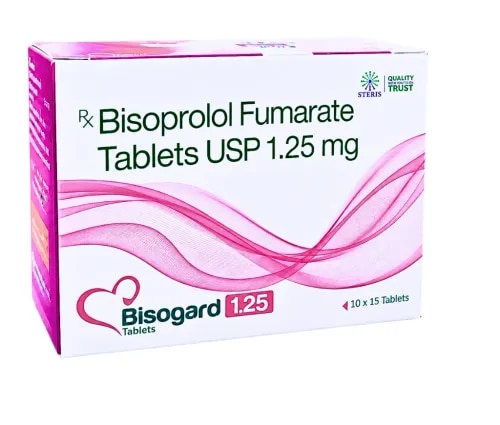
"name": "Bisoprolol 1.25mg",
"description": "Bisoprolol 1.25mg is the smallest tablet strength of bisoprolol, a heart-selective beta-1 blocker. Doctors usually prescribe it to start treatment or to build up the dose gradually in people with high blood pressure, chronic stable heart failure, or fast heart rhythms. It suits older adults, people with mild heart failure, and anyone who reacts strongly to beta-blockers. The medicine slows the heartbeat and eases the force of each contraction, so the heart works less hard. BISOGARD 1.25 from Steris Healthcare Pvt. Ltd. comes in a strip pack of 15 tablets. It is a Schedule H medicine, so it must only be started, changed, or stopped on a doctor's advice.\n\nProduct Snapshot\n\nBrand: BISOGARD 1.25\nManufacturer/Marketer: Steris Healthcare Pvt. Ltd., a WHO-GMP and ISO-certified pharmaceutical company in India\nActive ingredient: Bisoprolol Fumarate 1.25mg\nForm: Tablet\nPack size: 15 tablets\nDrug class: Cardioselective beta-1 blocker\nLegal status: Schedule H (valid prescription required)\nAvailability: Through Steris Healthcare's authorized pharmacies and its B2B PCD franchise network across India\nWhat Is Bisoprolol 1.25mg?\n\nIf your doctor has just prescribed bisoprolol 1.25mg, you have been given the lowest dose on purpose. Bisoprolol is a cardioselective beta-1 blocker, meaning it acts mostly on receptors in the heart and has much less effect on the lungs and blood vessels. This is a major reason it is preferred over older, non-selective beta-blockers, especially for people who also have a mild breathing problem.\n\nThe 1.25mg tablet is not a “light” medicine for mild illness. It is a carefully chosen entry point. In heart failure, a weakened heart can struggle if its rate or pressure drops too quickly, so cardiologists follow a “start low, go slow” approach. Treatment begins at 1.25mg, the response is watched for one to two weeks, and the dose is raised step by step (commonly 2.5mg, 3.75mg, 5mg, 7.5mg, and up to 10mg) as the heart adapts. That is why BISOGARD 1.25 is often the first tablet a newly diagnosed heart failure patient takes.\n\nWhat Is Bisoprolol 1.25mg Used For?\n\nDoctors commonly prescribe this strength for:\n\nChronic heart failure (HFrEF): as the first step of dose titration in patients with a reduced ejection fraction, alongside ACE inhibitors/ARBs and diuretics\nHigh blood pressure: especially in older adults, people with low body weight, and those who are sensitive to blood-pressure-lowering drugs\nStable angina: to reduce the heart's oxygen demand and relieve chest discomfort\nAfter a heart attack: in selected patients, under a cardiologist's care\nHeart rate control in some arrhythmias: sometimes used off-label at a low dose to gently bring down a fast heart rate\n\nAt 1.25mg, bisoprolol is seldom meant as the long-term sole treatment for high blood pressure in an otherwise healthy adult. It is usually the first rung of a titration ladder, or a steady maintenance dose for patients who are unusually beta-blocker sensitive (older age, low body weight, or borderline low pressure or pulse).\n\nHow Does Bisoprolol Work?\n\nBisoprolol selectively blocks beta-1 adrenergic receptors, which are packed mainly into heart muscle. This leads to several effects:\n\nSlower heart rate: the heart has more time to fill and rest between beats\nGentler contractions: the heart muscle needs less oxygen and energy\nLess renin from the kidneys: this helps blood pressure fall gradually over time\nLower overall cardiac workload: a real advantage for a heart that already struggles to pump well, as in heart failure\nKey Benefits of BISOGARD 1.25\nA gentle starting dose, well suited to careful titration in frail or elderly patients\nHeart-focused action, with less effect on the lungs and peripheral blood vessels than non-selective beta-blockers\nOnce-daily dosing, which makes it easier to stay on treatment\nA guideline-recommended beta-blocker for HFrEF with well-established outcomes data [Reviewer note: insert specific outcome statistics/trial citation pending medical sign-off]\nMade by Steris Healthcare Pvt. Ltd. under WHO-GMP and ISO-certified standards\nDosage Guidance\nUsual starting dose (heart failure): 1.25mg once a day, preferably in the morning\nDose increases: typically every 1–2 weeks (2.5mg, 3.75mg, 5mg, 7.5mg, up to a maximum of 10mg daily), depending on how well you tolerate it and on your pulse and blood pressure\nHigh blood pressure (sensitive patients): 1.25mg to 5mg once daily, as set by your doctor\nHow to take it: at the same time every day, with or without food, swallowed whole with water\nIf you miss a dose: take it when you remember, unless the next dose is almost due. Never take a double dose.\nNever stop suddenly: abrupt withdrawal can cause a rebound rise in heart rate, blood pressure, or chest pain. The dose must be reduced gradually under medical supervision.\nIs It Better to Take Bisoprolol in the Morning or at Night?\n\nMost doctors advise a morning dose. Bisoprolol lowers pulse and blood pressure, and taking it early matches its action to your daytime activity. A night-time dose could add to the body's natural overnight dip in blood pressure and raise the chance of dizziness when getting up in the dark. Some people who feel tired during the day are told by their doctor to switch to the evening. Do not change your dosing time without your doctor's approval.\n\nSide Effects of Bisoprolol 1.25mg\n\nCommon side effects\n\nTiredness or fatigue\nDizziness or light-headedness, especially on standing quickly\nCold hands or feet\nSlow pulse (bradycardia)\nHeadache\nMild stomach upset (nausea, loose stools)\nDisturbed sleep\n\nSerious side effects (get medical help promptly)\n\nVery slow heartbeat or fainting\nIncreasing breathlessness or swollen legs/ankles, which may mean heart failure is worsening\nAllergic reaction: rash, swelling of the face or throat, trouble breathing\nCold, numb, or bluish fingers and toes\nWheezing or new breathing difficulty, particularly in people with asthma or COPD\nMood changes, low mood, or confusion\nWhat Are the Bad Side Effects of Bisoprolol?\n\nThe effects that need urgent attention are a dangerously slow pulse, fainting, signs of worsening heart failure (swelling, breathlessness), severe allergic reactions, and airway tightening in people with lung disease. These are uncommon at the 1.25mg dose, but anyone who notices them should seek medical help right away. [Reviewer note: specific incidence rates pending clinical/medical sign-off]\n\nSubstitutes & Comparable Beta-Blockers\nMolecule\tSelectivity\tTypical Use Case\nBisoprolol\tHighly cardioselective\tHeart failure titration, hypertension\nMetoprolol Succinate ER\tCardioselective\tHypertension, angina, heart failure\nAtenolol\tCardioselective (older agent)\tHypertension\nCarvedilol\tNon-selective with alpha-blocking action\tHeart failure (adds vasodilation)\nPropranolol\tNon-selective\tMigraine prevention, anxiety-related fast heartbeat, essential tremor\nPrecautions & Who Should Avoid Bisoprolol\nNot suitable for people with severe bradycardia, certain forms of heart block (unless a pacemaker is fitted), unstable or acutely decompensated heart failure, or severe uncontrolled asthma\nUse carefully in diabetes, because beta-blockers can hide the warning signs of low blood sugar\nTake care in peripheral vascular disease, as cold extremities or leg pain on walking may worsen\nNever stop it abruptly; always taper under a doctor's guidance\nTell your doctor about every medicine you use, especially other blood-pressure drugs, calcium channel blockers, and certain antiarrhythmics\nIn pregnancy and breastfeeding, use only if your doctor advises it after weighing benefits and risks\nIs Bisoprolol Safe for Kidneys?\n\nThe body clears bisoprolol through both the liver and the kidneys in roughly equal measure. It is generally considered safe for people with normal or mildly reduced kidney function. When kidney impairment is significant, drug levels in the blood can rise, so your doctor may lower the dose or monitor you more closely. Always tell your prescriber about any kidney disease before starting.\n\nIs Bisoprolol a High-Risk Medication?\n\nBisoprolol is not a narrow therapeutic index drug like tacrolimus or warfarin, where small dose differences matter greatly. Even so, it needs supervised use because it directly affects heart rate and blood pressure. The main dangers are stopping it suddenly, which can set off rebound cardiac events, and using it with certain existing rhythm disorders. Taken as prescribed and checked regularly, it has a long and reassuring safety record.\n\nDoes 1.25mg Bisoprolol Lower Blood Pressure?\n\nYes. Even the smallest dose measurably reduces heart rate and blood pressure by lightening the heart's workload and reducing renin-driven narrowing of blood vessels. At this strength the effect on blood pressure is fairly mild, which is exactly why it is a safe place to begin, especially for older adults or people starting heart failure treatment. The dose is then raised gradually to reach full benefit.\n\nFrequently Asked Questions\n\n1. What is 1.25 mg of bisoprolol used for?\nMainly as a low starting dose when building up treatment for chronic heart failure, and for high blood pressure in people who are very sensitive to beta-blockers, such as older adults.\n\n2. What are the bad side effects of bisoprolol?\nThe more serious ones are a very slow pulse, fainting, worsening heart failure signs (swelling, breathlessness), severe allergy, and breathing trouble in people with lung conditions.\n\n3. What are the common side effects of bisoprolol fumarate 1.25 mg tablets?\nTiredness, dizziness, cold hands and feet, mild headache, and a slightly slower pulse.\n\n4. Is it better to take bisoprolol in the morning or at night?\nMorning is usually preferred so its effect fits daytime activity, though your doctor may suggest evenings in some cases.\n\n5. What is the cost of bisoprolol?\nPrice depends on strength, pack size, and brand. Use the “Check Price” option above for current BISOGARD 1.25 pricing from Steris Healthcare.\n\n6. Does 1.25 mg bisoprolol lower blood pressure?\nYes, though only modestly at this dose. The dose is often stepped up over time.\n\n7. Is bisoprolol safe for kidneys?\nGenerally yes for normal or mildly reduced kidney function. People with significant kidney impairment need dose adjustment and monitoring.\n\n8. Is bisoprolol a high-risk medication?\nIt is not a narrow therapeutic index drug, but it must never be stopped suddenly and should be used under medical supervision because of its direct effect on the heart.\n\n9. Can I take bisoprolol 1.25mg for the rest of my life?\nMany people with chronic heart failure or hypertension do take bisoprolol long term, but the dose usually rises as tolerated. Your doctor should review it regularly.\n\n10. What happens if I miss a dose of bisoprolol?\nTake it when you remember, unless the next dose is nearly due. In that case skip the missed one. Never take two together.\n\n11. Can bisoprolol 1.25mg cause weight gain?\nIt is not commonly reported at this dose. Fluid retention linked to heart failure itself should be reported to your doctor.\n\n12. Is bisoprolol safe for diabetic patients?\nIt can be used, with care, because beta-blockers may hide warning signs of low blood sugar such as a racing heartbeat.\n\n13. Can I stop taking bisoprolol suddenly if I feel fine?\nNo. Stopping abruptly can cause a rebound rise in heart rate, blood pressure, or chest pain. Reduce the dose gradually under medical guidance.\n\n14. Does bisoprolol interact with other blood pressure medicines?\nYes. Combining it with other drugs that lower heart rate or pressure (such as calcium channel blockers) can cause a very low pulse or pressure. Tell your doctor about all your medicines.\n\n15. Is BISOGARD 1.25 available without a prescription?\nNo. Bisoprolol is a Schedule H medicine in India and needs a valid prescription.\n\n16. How long does it take for bisoprolol 1.25mg to start working?\nSome effect on heart rate appears within hours, but the full benefit for blood pressure or heart failure symptoms builds over several weeks of regular use.\n\n17. Can pregnant women take bisoprolol?\nOnly if clearly necessary and prescribed by a doctor, as it may affect the baby's heart rate and growth.",
"price": 39.0,
"discountamount": 12.0,
"currencycode": "INR",
"priority": 1000000,
"isfreeshipmentavailable": false,
"shipmentduration": 1,
"_keywords": null,
"isarchived": false,
"isavailable": true,
"applicationid": null,
"productindex": 2501,
"imageuri": "https://productimages.withfloats.com/actual/6abe4474c205678e0b16a23a.png",
"tileimageuri": "https://productimages.withfloats.com/tile/6abe4474c205678e0b16a23a.png",
"images": null,
"totalqueries": 0,
"gpid": null,
"groupproductid": null,
"createdon": "2026-10-01T11:30:57.88Z",
"updatedon": "2026-10-01T11:30:57.88Z",
"buyonlinelink": null,
"producturl": "http://WWW.STERISINDIA.COM//bisoprolol-1-25mg/2501",
"availableunits": -1.0,
"iscodavailable": false,
"isprepaidonlineavailable": false,
"maxcodorders": 0,
"maxprepaidonlineorders": 0,
"uniquepaymenturl": null,
"brandname": "Bisogard 1.25",
"category": "CARDIOLOGYRANGE",
"tags": [],
"variants": false,
"keyspecification": null,
"otherspecifications": null,
"pickupaddressreferenceid": null,
"paymenttype": "UniquePaymentUrl",
"producttype": "products",
"hsncode": null,
"gstslab": 0.0,
"isnotforsale": false
},
{
"_id": "6a86e496cc4491de1ed77dfd",
"fptag": "STERISHEALTHCARE",
"merchantname": null,
"customwidgets": null,
"externalsourceid": null,
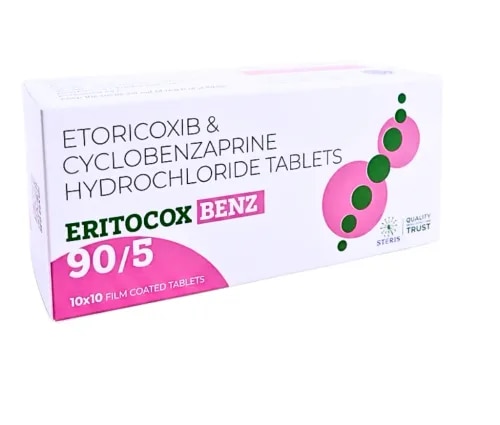
"name": "Etoricoxib & Cyclobenzaprine Hydrochloride Tablets",
"description": "ERITOCOX BENZ 90/5 is a fixed-dose combination tablet pairing Etoricoxib 90 mg, a selective COX-2 anti-inflammatory, with Cyclobenzaprine Hydrochloride 5 mg, a centrally acting muscle relaxant. It is prescribed for short-term relief of acute musculoskeletal problems where pain, swelling, and muscle tightness occur together — think a sudden low-back strain, a stiff neck, or a flare-up of arthritis where the surrounding muscles clamp down defensively. Rather than treating the inflammation alone or the spasm alone, this tablet addresses both mechanisms in one dose, which can mean fewer pills and a more complete response for short, acute episodes. It is a prescription-only (Schedule H) medicine, produced under WHO-GMP and ISO-certified manufacturing standards by Steris Healthcare Pvt. Ltd. Typical side effects include drowsiness, dry mouth, and mild stomach upset; because the combination carries cardiovascular, gastrointestinal, and kidney considerations, it should only be used under a doctor's supervision. This page walks through what the tablet does, how it works, correct usage, safety information, and answers to the questions people most often ask.\n\nWhat Is ERITOCOX BENZ 90/5?\n\nPain from an acute back injury, a wrenched neck, or an arthritis episode almost never travels alone — it tends to bring a tense, guarded muscle along with it that makes every movement feel worse. ERITOCOX BENZ 90/5 was formulated with that pattern in mind, folding two separate mechanisms into a single tablet rather than requiring two prescriptions.\n\nActive Ingredient\tStrength\tRole\nEtoricoxib\t90 mg\tSelective COX-2 inhibitor for inflammatory pain\nCyclobenzaprine Hydrochloride\t5 mg\tCentrally acting skeletal muscle relaxant\n\nEach tablet is manufactured by Steris Healthcare Pvt. Ltd., a WHO-GMP and ISO-certified pharmaceutical company, so every batch meets verified potency and quality benchmarks.\n\nWhy This Combination Makes Sense\n\nMusculoskeletal pain is rarely a single-track problem. When tissue is injured or irritated, inflammation flares up locally — and nearby muscles frequently respond by tightening protectively. That protective tightening, the spasm, often becomes a pain generator of its own. Treat only the inflammation and the spasm can linger; treat only the spasm and the underlying inflammation keeps driving discomfort.\n\nERITOCOX BENZ 90/5 is built to intervene on both fronts at once:\n\nEtoricoxib addresses the chemical cascade responsible for pain and swelling at the injured site.\nCyclobenzaprine works through the central nervous system to calm the muscle guarding that so often rides alongside that pain.\nMechanism of Action: How ERITOCOX BENZ 90/5 Works\n\nEtoricoxib selectively inhibits the COX-2 enzyme — the enzyme the body ramps up at sites of tissue damage or irritation to manufacture prostaglandins, the chemical messengers behind pain, swelling, and localized heat. Because it targets COX-2 specifically rather than blocking both COX-1 and COX-2 the way older, non-selective NSAIDs do, etoricoxib is designed to control inflammatory pain while leaving more of the COX-1 activity that protects the stomach lining relatively undisturbed.\n\nCyclobenzaprine Hydrochloride takes a different route entirely — its primary site of action is the brainstem, not the muscle fiber itself. By dampening excessive motor signaling sent to skeletal muscle, it reduces spasm and stiffness without producing the broad muscle weakness that a directly-acting muscle agent might cause.\n\nPut together, the tablet delivers a two-pronged effect: peripheral anti-inflammatory action from etoricoxib, layered with central muscle relaxation from cyclobenzaprine.\n\n[Reviewer placeholder: insert verified pharmacokinetic data (onset, half-life, bioavailability) once confirmed by medical/regulatory team — do not publish unverified figures.]\n\nClinical Uses of ERITOCOX BENZ 90/5\n\nA physician may prescribe this combination for short-term management of acute conditions where pain, inflammation, and spasm show up together, including:\n\nCondition\tTypical Presentation\nAcute lower back pain\tPain with associated muscle guarding/spasm\nNeck strain / cervical spasm\tStiff, restricted neck movement\nSprains, strains, overuse injuries\tMusculoskeletal trauma with inflammatory pain\nOsteoarthritis flare-ups\tJoint pain accompanied by surrounding muscle tightness\nPostural or occupational muscle pain\tWork- or posture-related inflammation and tension\nMovement restriction linked to spasm\tReduced range of motion driven by muscular guarding\n\nSuitability for any of the above must be confirmed by a doctor based on your specific diagnosis and medical history.\n\nKey Benefits of ERITOCOX BENZ 90/5\nOne tablet, two mechanisms — anti-inflammatory pain relief and muscle-spasm relief combined, simplifying an otherwise two-drug regimen.\nSite-focused inflammation control — etoricoxib's COX-2 selectivity is intended to concentrate its effect where inflammation is actually active.\nA comparatively gentler GI footprint — COX-2-selective action is generally linked to lower gastrointestinal irritation risk than older non-selective NSAIDs, though vigilance is still warranted.\nLoosens spasm-related stiffness — cyclobenzaprine's central action helps release tight, guarded muscles restricting movement.\nAids functional recovery — easing both pain and spasm can make it more realistic to resume light activity, stretching, or physiotherapy once your doctor clears you.\nStreamlined short-course dosing — a once-daily schedule (as prescribed) cuts down pill burden versus taking an NSAID and a muscle relaxant separately.\nDosage & Administration\n\nThe following is general reference information — your doctor's specific prescription always takes precedence.\n\nTake ERITOCOX BENZ 90/5 exactly as prescribed, generally once a day, with or without food.\nSwallow the tablet whole with water; avoid crushing or chewing unless your doctor tells you otherwise.\nTreatment is typically short — anywhere from a few days to roughly two weeks — reflecting the acute, self-limiting nature of most pain-and-spasm episodes.\nIf a dose is missed, take it as soon as you remember, but skip it entirely if the next dose is nearly due. Never double up to make up for a missed dose.\nDo not extend the treatment period or adjust your dose independently, even if symptoms haven't fully resolved.\nSide Effects of ERITOCOX BENZ 90/5\nCommon Side Effects\nDrowsiness or sleepiness\nDizziness\nDry mouth\nHeadache\nStomach discomfort or indigestion\nNausea\nFatigue\nMild elevation in blood pressure in some individuals\nSerious Side Effects — Seek Medical Help Promptly\nSigns of gastrointestinal bleeding, such as black stools or vomiting blood\nA severe allergic reaction — swelling of the face or throat, breathing difficulty, or widespread rash\nChest pain, irregular heartbeat, or other symptoms suggestive of a cardiovascular event\nYellowing of the skin or eyes, which may point to liver involvement\nA noticeable drop in urine output, which may suggest kidney impairment\nSevere dizziness, confusion, or fainting\n\nIf any of these serious symptoms appear, stop the medicine and get medical attention immediately.\n\nPrecautions & Warnings\nShare your full medical history with your doctor before starting, including any heart, kidney, or liver conditions.\nUse cautiously — or avoid altogether — if you have a history of stomach ulcers or gastrointestinal bleeding.\nGenerally not advised for people with uncontrolled high blood pressure, existing heart disease, or a prior stroke, unless a doctor specifically clears its use.\nSteer clear of alcohol, since it can amplify cyclobenzaprine's sedative effect and add to gastrointestinal risk.\nCyclobenzaprine may cause drowsiness or dizziness — hold off on driving or operating machinery until you know how the tablet affects you.\nDon't combine ERITOCOX BENZ 90/5 with other NSAIDs, painkillers, or sedating medicines without checking with your doctor first.\nAvoid the medicine if you have known hypersensitivity to etoricoxib, cyclobenzaprine, or related compounds.\nNot generally recommended during pregnancy or breastfeeding unless a doctor specifically advises otherwise.\nAvoid combining with MAO inhibitors, or using shortly after stopping them.\nDrug Interactions to Flag With Your Doctor\n\nDisclose every prescription medicine, over-the-counter product, and supplement you take. Extra caution is needed around medicines affecting:\n\nBlood pressure regulation\nKidney function\nBlood clotting\nCentral nervous system activity (sedatives, other muscle relaxants)\nLiver metabolism\nOther anti-inflammatory or pain-relief medicines\nConclusion\n\nERITOCOX BENZ 90/5 brings Etoricoxib 90 mg and Cyclobenzaprine Hydrochloride 5 mg together to tackle a problem that rarely presents as a single issue — pain, inflammation, and muscle spasm that reinforce one another in acute musculoskeletal conditions. By acting on both the inflammatory and muscular sides of that cycle, it offers a more rounded short-term response than either ingredient could provide alone.\n\nGiven the genuine cardiovascular, gastrointestinal, kidney, and central-nervous-system considerations involved, ERITOCOX BENZ 90/5 is meant strictly for short, doctor-supervised courses — not casual or extended self-treatment. Always check with your doctor to confirm whether this combination is right for your condition, medical history, and current medications.\n\nPrescription only – consult your doctor.\n\nFrequently Asked Questions (Google & AI Mode / Voice Search Optimized)\n\n1. What is ERITOCOX BENZ 90/5 used for? It's typically prescribed for short-term relief of acute musculoskeletal issues — such as back pain, neck strain, or an arthritis flare-up — where pain, inflammation, and muscle spasm show up together.\n\n2. Is ERITOCOX BENZ 90/5 a muscle relaxant? It's a combination tablet: the muscle-relaxing effect comes from its Cyclobenzaprine Hydrochloride component, while Etoricoxib supplies the pain-relieving, anti-inflammatory action.\n\n3. Is Etoricoxib a strong painkiller? Etoricoxib is an effective selective COX-2 inhibitor typically used for moderate inflammation-related pain, such as arthritis or an acute musculoskeletal injury. Its appropriateness for your level of pain should be assessed by a doctor.\n\n4. Is Etoricoxib safe for the kidneys? As with other NSAIDs, etoricoxib can influence kidney function, particularly with extended use, higher doses, dehydration, or existing kidney disease. It should be used carefully and only under medical guidance if kidney health is a concern.\n\n5. Should ERITOCOX BENZ 90/5 be taken in the morning or at night? It's usually taken once a day at a time your doctor sets. Since cyclobenzaprine can cause drowsiness, many doctors lean toward an evening dose — but always stick to your specific prescription.\n\n6. What are the common side effects of ERITOCOX BENZ 90/5? Frequently reported effects include drowsiness, dizziness, dry mouth, headache, stomach discomfort, and mild fatigue. Most fade on their own, but persistent symptoms should be reported to your doctor.\n\n7. How fast does ERITOCOX BENZ 90/5 start working? Etoricoxib tends to absorb fairly quickly, and many people feel pain relief within roughly an hour, though onset can vary by individual and whether the tablet is taken with food.\n\n8. What should be avoided while on ERITOCOX BENZ 90/5? Skip alcohol, avoid taking other NSAIDs or painkillers without medical advice, and hold off on driving or operating machinery if you're feeling drowsy or dizzy.\n\n9. How many days can ERITOCOX BENZ 90/5 be taken? It's usually prescribed for a short stretch — a few days up to around two weeks — matching how acute conditions typically resolve. Anything longer needs your doctor's review.\n\n10. What are the benefits of ERITOCOX BENZ 90/5? It delivers combined relief from pain, inflammation, and muscle spasm in one tablet, which can make it easier to move normally and get back to daily activity sooner when used as directed.\n\n11. How safe is ERITOCOX BENZ 90/5? Taken exactly as prescribed and for the recommended duration, it's generally considered safe for most adults. It does carry cardiovascular, gastrointestinal, kidney, and liver-related risks that call for medical supervision, especially if you already have related conditions.\n\n12. Can ERITOCOX BENZ 90/5 be used for knee pain? Yes — its etoricoxib component is commonly used for joint pain tied to osteoarthritis or an acute injury, including the knee, by reducing the underlying inflammation. A doctor should confirm suitability first.\n\n13. Does ERITOCOX BENZ 90/5 cause drowsiness? Yes — drowsiness and dizziness are known effects linked to its cyclobenzaprine component. Avoid driving or tasks requiring full alertness until you know how it affects you.\n\n14. Can ERITOCOX BENZ 90/5 be bought without a prescription? No. This is a prescription-only medicine meant to be taken solely under a qualified doctor's supervision — it isn't meant for self-prescribing or extended use without medical oversight.\n\n15. Can ERITOCOX BENZ 90/5 be taken with food? It can generally be taken with or without food, though taking it with food may ease stomach discomfort for some people. Follow your doctor's specific instructions.\n\n16. Is ERITOCOX BENZ 90/5 habit-forming? Cyclobenzaprine isn't considered addictive with typical short-term use, but the tablet should still be taken only for the prescribed duration and not restarted on your own without medical advice.\n\n17. Who should avoid taking ERITOCOX BENZ 90/5? People with active stomach ulcers, significant heart, kidney, or liver disease, known hypersensitivity to NSAIDs, or those who are pregnant or breastfeeding should avoid it unless a doctor specifically clears its use.",
"price": 222.0,
"discountamount": 67.0,
"currencycode": "INR",
"priority": 1000000,
"isfreeshipmentavailable": false,
"shipmentduration": 1,
"_keywords": null,
"isarchived": false,
"isavailable": true,
"applicationid": null,
"productindex": 2495,
"imageuri": "https://productimages.withfloats.com/actual/6a86e4990f089c4695c57658.png",
"tileimageuri": "https://productimages.withfloats.com/tile/6a86e4990f089c4695c57658.png",
"images": null,
"totalqueries": 0,
"gpid": null,
"groupproductid": null,
"createdon": "2026-08-20T11:27:18.403Z",
"updatedon": "2026-08-20T11:27:18.403Z",
"buyonlinelink": null,
"producturl": "http://WWW.STERISINDIA.COM//etoricoxib-cyclobenzaprine-hydrochloride-tablets/2495",
"availableunits": -1.0,
"iscodavailable": false,
"isprepaidonlineavailable": false,
"maxcodorders": 0,
"maxprepaidonlineorders": 0,
"uniquepaymenturl": null,
"brandname": "ERITOCOX BENZ 90/5",
"category": "",
"tags": [],
"variants": false,
"keyspecification": null,
"otherspecifications": null,
"pickupaddressreferenceid": null,
"paymenttype": "UniquePaymentUrl",
"producttype": "products",
"hsncode": null,
"gstslab": 0.0,
"isnotforsale": false
},
{
"_id": "6a7722af7f45a0190eb37920",
"fptag": "STERISHEALTHCARE",
"merchantname": null,
"customwidgets": null,
"externalsourceid": null,
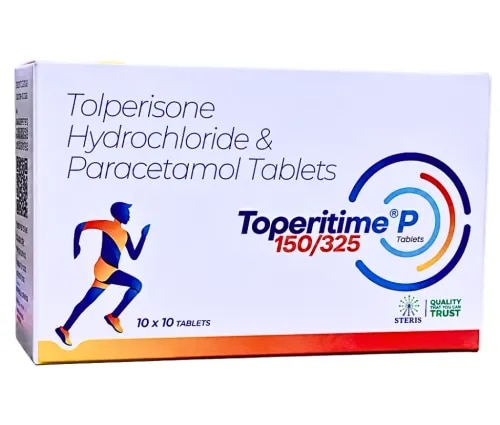
"name": "Tolperisone Hydrochloride & Paracetamol Tablets",
"description": "TOPERITIME P 150/325: Dual-Action Relief for Musculoskeletal Pain and Spasms\nTOPERITIME P 150/325 is a prescription combination therapy formulated to treat acute musculoskeletal discomfort, muscle stiffness, and associated inflammatory pain. By uniting a centrally acting muscle relaxant with a proven analgesic, this film-coated tablet addresses both the neurological and physical aspects of muscle strain, restoring movement and facilitating recovery.\n\nActive Ingredients\nEach film-coated tablet contains:\n\nTolperisone Hydrochloride (150 mg): A muscle relaxant targeting involuntary contractions within the central nervous system.\n\nParacetamol (325 mg): A widely recognized analgesic and antipyretic agent that blocks pain signal transmission.\n\nAvailable in blister packaging and dispensed strictly under a licensed physician's order.\n\nTherapeutic Mechanism\nPainful muscle conditions often create a feedback loop where localized pain triggers involuntary spasms, which in turn exacerbate the pain. TOPERITIME P 150/325 disrupts this cycle through a two-pronged mechanism:\n\nNeuromuscular Regulation: Tolperisone Hydrochloride acts on the spinal cord and brainstem reflexes to inhibit hyperactive nerve impulses driving muscle tension. Unlike traditional skeletal muscle relaxants, it achieves this with minimal central nervous system depression, significantly reducing the likelihood of heavy sedation.\n\nNociceptive Blocking: Paracetamol inhibits prostaglandin synthesis within the central nervous system, raising the body's overall pain threshold and attenuating pain signals originating from injured tissues.\n\nBy simultaneously relaxing tight muscle fibers and dampening pain sensation, the formulation provides comprehensive symptomatic relief.\n\nClinical Indications\nHealthcare professionals may prescribe TOPERITIME P 150/325 for various acute and subacute conditions characterized by pain and hypertonia, including:\n\nAcute muscle spasms and athletic injuries\n\nAcute or chronic lower back pain (lumbago)\n\nCervical spine discomfort and stiff neck\n\nCervical and lumbar spondylosis\n\nFrozen shoulder (adhesive capsulitis)\n\nPost-operative or post-traumatic muscle recovery\n\nGeneralized connective tissue or orthopedic pain\n\nKey Clinical Features\nBalanced Dual Action: Simultaneously targets involuntary contractions and pain sensation.\n\nLow-Sedation Profile: Tolperisone allows patients to maintain daily function without severe daytime drowsiness typical of older relaxants.\n\nEnhanced Mobility: Reduces joint and tissue stiffness, enabling better engagement in physical rehabilitation.\n\nStreamlined Regimen: Combines two therapeutic agents into a single convenient dosage form.\n\nUsage Guidelines\nThis medication must be taken strictly in accordance with a medical prescription.\n\nAdministration: Swallow the tablet whole with water. Do not crush, chew, or split the film-coated tablet.\n\nTiming: Take immediately after a meal to reduce potential gastrointestinal upset, unless directed otherwise by a doctor.\n\nCompliance: Complete the full course prescribed by your physician, and do not alter the recommended dosage.\n\nPotential Side Effects\nWhile generally well-tolerated, some individuals may experience mild side effects, including:\n\nGastrointestinal distress or mild nausea\n\nTransient dizziness or lightheadedness\n\nHeadaches\n\nGeneral fatigue or muscular weakness\n\nRare: Hypersensitivity reactions or cutaneous skin rashes (discontinue use and consult a physician immediately if severe symptoms appear).\n\nSafety Precautions and Considerations\nConsult a medical practitioner prior to initiating treatment if any of the following apply:\n\nPre-existing hepatic (liver) or renal (kidney) impairment\n\nKnown hypersensitivity to Tolperisone, Paracetamol, or related compounds\n\nPregnancy, plans for pregnancy, or active breastfeeding\n\nHistory of chronic alcohol dependency (due to increased liver sensitivity with Paracetamol)\n\nConcurrent use of other medications, particularly other products containing Paracetamol or central nervous system depressants\n\nStorage and Handling\nStore in a cool, dry area below 25°C (77°F).\n\nProtect from direct light, heat, and moisture.\n\nKeep strictly out of reach of children and pets.\n\nCheck the packaging expiration date before administration.\n\nFrequently Asked Questions\nWhat primary conditions does TOPERITIME P 150/325 treat?\n\nIt is indicated for short-term relief from acute musculoskeletal pain, muscle spasms, neck strains, backaches, and related orthopedic disorders.\n\nWhy is Tolperisone combined with Paracetamol?\n\nTolperisone eases muscle tightness at the neurological level, while Paracetamol lowers overall pain perception, creating a synergistic effect that addresses both spasm and pain together.\n\nWill this medication cause severe drowsiness?\n\nTolperisone is specifically designed to exert less sedating activity compared to older muscle relaxants. However, individual sensitivity varies, so caution is advised when driving or operating machinery until individual tolerance is established.\n\nIs TOPERITIME P 150/325 available over the counter?\n\nNo. It requires a valid medical prescription and direct supervision by a registered healthcare professional.",
"price": 95.0,
"discountamount": 29.0,
"currencycode": "INR",
"priority": 1000000,
"isfreeshipmentavailable": false,
"shipmentduration": 1,
"_keywords": null,
"isarchived": false,
"isavailable": true,
"applicationid": null,
"productindex": 2493,
"imageuri": "https://productimages.withfloats.com/actual/6a7722b0ed25653efa18364e.png",
"tileimageuri": "https://productimages.withfloats.com/tile/6a7722b0ed25653efa18364e.png",
"images": null,
"totalqueries": 0,
"gpid": null,
"groupproductid": null,
"createdon": "2026-08-08T12:35:59.075Z",
"updatedon": "2026-08-08T12:35:59.075Z",
"buyonlinelink": null,
"producturl": "http://WWW.STERISINDIA.COM//tolperisone-hydrochloride-paracetamol-tablets/2493",
"availableunits": -1.0,
"iscodavailable": false,
"isprepaidonlineavailable": false,
"maxcodorders": 0,
"maxprepaidonlineorders": 0,
"uniquepaymenturl": null,
"brandname": "TOPERITIME P 150/325",
"category": "ORTHOLOGYRANGE",
"tags": [],
"variants": false,
"keyspecification": null,
"otherspecifications": null,
"pickupaddressreferenceid": null,
"paymenttype": "UniquePaymentUrl",
"producttype": "products",
"hsncode": null,
"gstslab": 0.0,
"isnotforsale": false
},
{
"_id": "6a6dec4d7747964c2eea9a0f",
"fptag": "STERISHEALTHCARE",
"merchantname": null,
"customwidgets": null,
"externalsourceid": null,
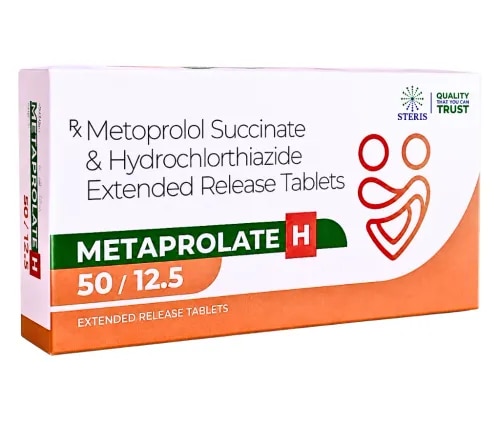
"name": "Metoprolol Succinate & Hydrochlorthiazide Extended Release Tablets",
"description": "METAPROLATE H 50/12.5 is a premium antihypertensive medication formulated with Metoprolol Succinate Extended Release 50 mg and Hydrochlorothiazide 12.5 mg. This dual-action combination is intended for the treatment of hypertension (high blood pressure) in adults who require combination therapy for better blood pressure control. By combining two well-established medicines with complementary mechanisms of action, the formulation helps support long-term cardiovascular health while offering the convenience of once-daily dosing.\n\nManufactured in GMP-certified facilities using high-quality pharmaceutical ingredients, METAPROLATE H 50/12.5 is produced under rigorous quality assurance protocols to ensure safety, efficacy, and batch-to-batch consistency. The extended-release technology allows a gradual release of Metoprolol throughout the day, providing sustained therapeutic effects and helping maintain stable blood pressure levels.\n\nComposition\n\nBrand Name: METAPROLATE H 50/12.5\n\nGeneric Name: Metoprolol Succinate Extended Release & Hydrochlorothiazide Tablets\n\nEach Extended Release Tablet Contains:\n\nMetoprolol Succinate Extended Release – 50 mg\nHydrochlorothiazide – 12.5 mg\n\nDosage Form: Extended Release Tablets\n\nTherapeutic Category: Antihypertensive Medication\n\nWhat is METAPROLATE H 50/12.5?\n\nMETAPROLATE H 50/12.5 combines a beta-blocker and a thiazide diuretic to provide comprehensive blood pressure management.\n\nMetoprolol Succinate selectively blocks beta-1 receptors in the heart, reducing heart rate and decreasing the workload on the cardiovascular system. Hydrochlorothiazide acts as a diuretic by helping the body eliminate excess sodium and water through urine, lowering blood volume and contributing to reduced blood pressure.\n\nTogether, these medicines offer a complementary approach to hypertension treatment and may help lower the risk of complications associated with persistently elevated blood pressure, including stroke, heart attack, and kidney damage, when used according to medical advice.\n\nUses of METAPROLATE H 50/12.5\n\nHealthcare professionals may prescribe METAPROLATE H 50/12.5 for:\n\nManagement of essential hypertension\nPatients requiring combination antihypertensive therapy\nLong-term maintenance of healthy blood pressure levels\nReducing cardiovascular risks associated with uncontrolled hypertension\nSupporting comprehensive blood pressure management alongside lifestyle modifications\n\nThis medicine should always be used under the supervision of a qualified healthcare professional.\n\nBenefits of METAPROLATE H 50/12.5\nDual-Action Blood Pressure Control\n\nThe combination of Metoprolol Succinate and Hydrochlorothiazide addresses hypertension through two different therapeutic pathways, providing effective blood pressure reduction.\n\nSustained Drug Release\n\nThe extended-release formulation delivers Metoprolol gradually over 24 hours, helping maintain stable therapeutic levels and consistent blood pressure control.\n\nConvenient Once-Daily Administration\n\nA single daily dose simplifies long-term treatment and may improve patient adherence to prescribed therapy.\n\nSupports Cardiovascular Health\n\nMaintaining optimal blood pressure with appropriate treatment can help reduce the likelihood of serious cardiovascular complications over time.\n\nManufactured to High Quality Standards\n\nEvery batch is produced using premium pharmaceutical ingredients under strict GMP guidelines, ensuring reliable quality, safety, and consistency.\n\nHow METAPROLATE H 50/12.5 Works\n\nThe effectiveness of METAPROLATE H 50/12.5 is based on the complementary actions of its two active ingredients.\n\nMetoprolol Succinate works by selectively blocking beta-1 adrenergic receptors in the heart, which helps:\n\nSlow the heart rate\nReduce the force of cardiac contractions\nDecrease oxygen demand by the heart\nLower blood pressure\n\nHydrochlorothiazide works by promoting the removal of excess salt and water from the body through the kidneys. This helps:\n\nReduce circulating blood volume\nMinimize fluid retention\nLower blood pressure\nImprove overall cardiovascular function\n\nTogether, these mechanisms contribute to effective and sustained blood pressure management.\n\nDosage and Administration\n\nTake METAPROLATE H 50/12.5 exactly as prescribed by your physician.\n\nGeneral recommendations include:\n\nTake one tablet daily or as directed by your healthcare provider.\nSwallow the extended-release tablet whole with water.\nDo not crush, chew, or split the tablet unless specifically instructed.\nIt may be taken with or without food according to your doctor's advice.\nTake the medication at the same time each day to maintain consistent therapeutic levels.\nContinue treatment as prescribed, even if your blood pressure is well controlled, unless your doctor advises otherwise.\nPossible Side Effects\n\nAs with any prescription medicine, some individuals may experience side effects, although many people tolerate the medication well.\n\nCommonly reported side effects include:\n\nDizziness\nTiredness or fatigue\nSlow heartbeat\nHeadache\nIncreased urination\nNausea\nLow blood pressure\nChanges in electrolyte levels\n\nSeek immediate medical attention if you experience severe allergic reactions, breathing difficulties, fainting, persistent chest pain, or any other serious symptoms.\n\nConsult your healthcare provider if any side effect persists or becomes troublesome.\n\nPrecautions and Warnings\n\nBefore starting METAPROLATE H 50/12.5, inform your healthcare provider if you have:\n\nHeart rhythm abnormalities\nHeart failure\nAsthma or chronic respiratory disorders\nDiabetes mellitus\nKidney or liver impairment\nGout\nElectrolyte imbalance\nThyroid disorders\nAllergy to Metoprolol, Hydrochlorothiazide, sulfonamide-derived medicines, or any ingredient in this product\n\nRegular monitoring of blood pressure, heart rate, kidney function, and electrolyte levels may be recommended during treatment.\n\nStorage Instructions\n\nTo maintain product quality:\n\nStore in a cool and dry place.\nProtect from excessive heat, moisture, and direct sunlight.\nKeep the tablets in their original packaging until use.\nStore at the temperature indicated on the product label.\nKeep out of the reach of children.\nWhy Choose METAPROLATE H 50/12.5?\n\nMETAPROLATE H 50/12.5 is formulated to provide dependable blood pressure management with the convenience of a once-daily extended-release dosage form. Manufactured according to stringent pharmaceutical quality standards, it combines two trusted antihypertensive agents in a single tablet, supporting improved treatment adherence and long-term cardiovascular care.\n\nKey Advantages\n\nExtended-release formulation for sustained therapeutic action\nCombination of two proven antihypertensive medicines\nConvenient once-daily dosing\nHigh-quality manufacturing with strict quality assurance\nReliable efficacy and consistent product performance\nSuitable for long-term hypertension management under medical supervision\nFrequently Asked Questions (FAQs)\nWhat is METAPROLATE H 50/12.5 prescribed for?\n\nIt is prescribed for the treatment of high blood pressure in adults who require combination antihypertensive therapy.\n\nHow does the extended-release formulation benefit patients?\n\nThe extended-release technology gradually releases Metoprolol throughout the day, helping maintain consistent blood levels and prolonged blood pressure control.\n\nCan I discontinue METAPROLATE H 50/12.5 on my own?\n\nNo. Beta-blockers should not be stopped suddenly, as abrupt discontinuation may increase cardiovascular risk. Always consult your healthcare provider before making any changes to your treatment.\n\nCan this medicine be used with other antihypertensive medications?\n\nYour doctor will determine whether additional blood pressure medicines are necessary based on your medical condition and treatment goals.\n\nHow long should treatment continue?\n\nHypertension is often a lifelong condition requiring continuous management. Continue taking METAPROLATE H 50/12.5 for the duration recommended by your healthcare professional, along with appropriate lifestyle modifications and regular medical follow-up.",
"price": 248.0,
"discountamount": 75.0,
"currencycode": "INR",
"priority": 1000000,
"isfreeshipmentavailable": false,
"shipmentduration": 1,
"_keywords": null,
"isarchived": false,
"isavailable": true,
"applicationid": null,
"productindex": 2488,
"imageuri": "https://productimages.withfloats.com/actual/6a6dec4fc0246085c8f72513.png",
"tileimageuri": "https://productimages.withfloats.com/tile/6a6dec4fc0246085c8f72513.png",
"images": null,
"totalqueries": 0,
"gpid": null,
"groupproductid": null,
"createdon": "2026-08-01T12:53:33.409Z",
"updatedon": "2026-08-01T12:53:33.409Z",
"buyonlinelink": null,
"producturl": "http://WWW.STERISINDIA.COM//metoprolol-succinate-hydrochlorthiazide-extended-release-tablets/2488",
"availableunits": -1.0,
"iscodavailable": false,
"isprepaidonlineavailable": false,
"maxcodorders": 0,
"maxprepaidonlineorders": 0,
"uniquepaymenturl": null,
"brandname": "METAPROLATE H 50/12.5",
"category": "CARDIOLOGYRANGE",
"tags": [],
"variants": false,
"keyspecification": null,
"otherspecifications": null,
"pickupaddressreferenceid": null,
"paymenttype": "UniquePaymentUrl",
"producttype": "products",
"hsncode": null,
"gstslab": 0.0,
"isnotforsale": false
},
{
"_id": "6a5df8cd5046d247bd5a48c2",
"fptag": "STERISHEALTHCARE",
"merchantname": null,
"customwidgets": null,
"externalsourceid": null,
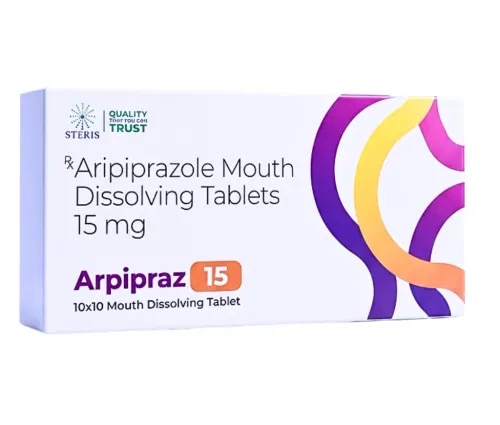
"name": "Arpiprazole Mouth Dissolving Tablets 15 mg",
"description": "ARPIPRAZ 15 is a mouth-dissolving tablet containing Aripiprazole 15 mg, prescribed for schizophrenia, bipolar disorder, autism-related irritability, Tourette's disorder, and as an add-on to antidepressants for major depressive disorder. Unlike many antipsychotics that fully block dopamine, Aripiprazole acts as a partial dopamine agonist, fine-tuning rather than shutting down dopamine activity — which can mean fewer movement-related side effects for some patients. The tablet dissolves on the tongue without water, helping patients who struggle with swallowing. It's not considered habit-forming but must be taken exactly as prescribed and never stopped abruptly. Prescription only – consult your doctor.\n\nMeta Title Options (50–60 characters)\nARPIPRAZ 15 Price – Aripiprazole MD Tablet | Steris (Recommended)\nARPIPRAZ 15 – Aripiprazole Mouth Dissolving Tablet\nARPIPRAZ 15 Price – Schizophrenia & Bipolar Care\nAripiprazole 15mg MD Tablet – ARPIPRAZ Price\nARPIPRAZ 15 – Antipsychotic for Multiple Conditions\n\nRationale: Option 1 leads with the “Price” anchor required for this Schedule H drug, keeps the brand searchable alongside the generic name, and fits within the 50–60 character band.\n\nMeta Description (140–160 characters)\n\nARPIPRAZ 15 (Aripiprazole 15mg MD) treats schizophrenia, bipolar disorder & more. Check price online. Prescription only – consult your doctor first.\n\nFull CMS Article\nARPIPRAZ 15: Aripiprazole Mouth Dissolving Tablet for Schizophrenia, Bipolar Disorder, and Related Conditions\nTL;DR / AI Mode Summary\n\nARPIPRAZ 15 supplies Aripiprazole 15 mg in a mouth-dissolving format, used across a broader range of conditions than many antipsychotics — schizophrenia, bipolar disorder, autism-related irritability, Tourette's disorder, and as an adjunct to antidepressant therapy in major depressive disorder. Its defining feature is a partial dopamine agonist mechanism: rather than fully blocking dopamine like older antipsychotics, it modulates it, which is associated with a comparatively lower risk of certain movement side effects. The dissolving tablet skips the need for water, supporting patients who find conventional tablets hard to swallow.\n\nWhat Sets ARPIPRAZ 15 Apart?\n\nMost antipsychotic medicines work by blocking dopamine receptors outright. Aripiprazole takes a different approach — it acts as a partial agonist, meaning it can either boost or dampen dopamine activity depending on what the brain's current chemical state calls for. This “smart stabilizer” action is one reason Aripiprazole is prescribed across such a wide span of psychiatric conditions, from psychotic disorders to mood conditions to certain neurodevelopmental and tic-related presentations.\n\nComposition at a Glance\nAttribute\tDetail\nBrand Name\tARPIPRAZ 15\nActive Ingredient\tAripiprazole\nStrength\t15 mg\nForm\tMouth Dissolving Tablet (MD)\nDrug Class\tAtypical Antipsychotic — Partial Dopamine Agonist\nSchedule Status\tSchedule H – Prescription Only\nConditions ARPIPRAZ 15 Is Prescribed For\n\nSchizophrenia — helps ease hallucinations, delusions, disorganized thought, social withdrawal, and reduced motivation, supporting better day-to-day and social functioning.\n\nBipolar I Disorder — used for acute manic and mixed episodes, as well as maintenance therapy aimed at reducing relapse.\n\nMajor Depressive Disorder (adjunct) — added alongside antidepressants when depression hasn't responded fully to antidepressant treatment alone.\n\nIrritability Linked to Autism Spectrum Disorder — may reduce aggression, irritability, outbursts, and self-injurious behavior in eligible patients.\n\nTourette's Disorder — can reduce the frequency and intensity of motor and vocal tics for some patients.\n\nMechanism of Action\n\nAripiprazole works on three key receptor systems:\n\nDopamine D2 receptors — partially activated rather than fully blocked, helping normalize rather than suppress dopamine signaling\nSerotonin 5-HT1A receptors — contributing to mood stabilization and reduced anxiety\nSerotonin 5-HT2A receptors — supporting the reduction of psychotic symptoms\n\nTogether, this receptor profile helps ease hallucinations and delusions, stabilize mood swings, reduce anxiety, and support clearer cognitive functioning — while the partial-agonist approach is associated with a comparatively lower likelihood of certain movement-related side effects compared to older-generation antipsychotics.\n\nDirections for Use\nTake ARPIPRAZ 15 strictly as your doctor prescribes.\nPlace the tablet on the tongue and let it dissolve fully — no water is typically needed.\nDon't chew or crush it unless your doctor specifically advises otherwise.\nTake it at a consistent time each day.\nContinue the full course even once you start feeling better, unless your doctor says otherwise.\nNever discontinue suddenly on your own — stopping abruptly can bring symptoms back.\nPossible Side Effects\n\nCommonly reported:\n\nHeadache\nDizziness\nNausea or vomiting\nConstipation\nDry mouth\nRestlessness\nAnxiety\nInsomnia\nFatigue\nIncreased appetite\nWeight changes\n\nSerious — seek immediate medical attention for:\n\nSevere allergic reactions\nHigh fever combined with muscle stiffness\nSeizures\nDifficulty swallowing\nUncontrolled body movements\nFainting\nIrregular heartbeat\nSuicidal thoughts or sudden behavioral changes\n\nPlaceholder: incidence rates and comparative trial data pending qualified clinical reviewer sign-off before publication.\n\nTalk to your doctor promptly if any side effect feels severe or doesn't improve.\n\nWho Should Be Cautious\n\nLet your doctor know before starting if you have any of the following:\n\nDiabetes\nHeart disease, or high or low blood pressure\nLiver or kidney impairment\nSeizure disorders\nParkinson's disease\nDementia\nA history of stroke\nA history of substance use\n\nLong-term treatment often includes periodic checks of blood sugar, body weight, and general health.\n\nPregnancy & Breastfeeding\n\nAripiprazole should be used in pregnancy or while breastfeeding only if a doctor determines the benefits outweigh the potential risks. This decision should always be made in consultation with your healthcare provider.\n\nDrug Interactions to Flag for Your Doctor\n\nARPIPRAZ 15 can interact with:\n\nAntidepressants and anti-anxiety medicines\nAntiepileptic drugs\nBlood pressure medications\nCertain antifungal medicines and antibiotics\nHIV medications\nSleeping pills\nAlcohol\n\nShare a complete list of everything you're taking — prescription drugs, over-the-counter products, vitamins, and herbal supplements — with your prescriber before starting treatment.\n\nPrecautions & Storage\nTake only as prescribed; don't adjust the dose independently.\nAvoid alcohol during treatment.\nStore below 25°C, in the original packaging, away from moisture and direct sunlight.\nKeep out of reach of children.\nDon't use beyond the printed expiry date.\nHow ARPIPRAZ 15 Compares to Other Antipsychotics\nFeature\tOlder-Generation Antipsychotics\tARPIPRAZ 15 (Aripiprazole)\nDopamine Action\tFull receptor blockade\tPartial agonist — modulates rather than blocks\nMovement-Related Side Effect Risk\tComparatively higher\tComparatively lower for many patients\nRange of Approved Uses\tTypically narrower\tBroader — includes autism-related irritability and Tourette's\nAdministration\tUsually standard tablets\tAvailable in swallow-free MD format\n\nNote: The right antipsychotic and formulation is a clinical decision made by a psychiatrist based on individual patient factors.\n\nWhy Choose ARPIPRAZ 15?\n\nBeyond its versatility across several psychiatric and neurodevelopmental conditions, ARPIPRAZ 15's mouth-dissolving format removes a real practical hurdle for patients who struggle with regular tablets. It isn't considered habit-forming, and its partial-agonist mechanism offers a distinct option for psychiatrists balancing symptom control against side-effect tolerability. Manufactured to consistent quality standards, it's built for dependable day-to-day use under medical supervision.\n\nConclusion\n\nWhether the goal is easing psychotic symptoms, stabilizing mood in bipolar disorder, supporting antidepressant therapy, or reducing irritability and tics in specific conditions, ARPIPRAZ 15 offers a versatile treatment option built on Aripiprazole's distinctive dopamine-modulating action. Its dissolving tablet format simplifies daily dosing, and with consistent use under a psychiatrist's care, it supports steadier symptom management over time. Prescription only – consult your doctor.\n\nFrequently Asked Questions\nWhat is ARPIPRAZ 15 used for? It treats schizophrenia, bipolar disorder, autism-related irritability, and Tourette's disorder, and is used as an add-on treatment for major depressive disorder.\nCan it be taken without water? Yes, it's a mouth-dissolving tablet designed to break down on the tongue without needing water.\nIs ARPIPRAZ 15 habit-forming? No, Aripiprazole isn't considered habit-forming, though it should always be used under medical supervision.\nCan I stop taking it once I feel better? No — stopping without medical guidance can cause symptoms to return; any discontinuation should be doctor-directed.\nDoes it cause weight gain? Some patients notice weight changes during treatment; a balanced diet and regular activity can help manage this.\nHow is ARPIPRAZ 15 different from other antipsychotics? It works as a partial dopamine agonist rather than fully blocking dopamine, which is linked to a lower risk of certain movement-related side effects for many patients.\nCan this medicine be used for depression? Yes, it's sometimes added alongside antidepressants when depression hasn't responded fully to antidepressant treatment alone.\nIs it suitable for autism-related irritability? It's prescribed for irritability associated with autism spectrum disorder in eligible patients, under a specialist's guidance.\nDoes ARPIPRAZ 15 interact with alcohol? Yes, alcohol should generally be avoided during treatment, as it may affect the medicine's tolerability.\nWhat serious symptoms require urgent medical attention? Severe allergic reactions, high fever with muscle stiffness, seizures, uncontrolled movements, fainting, irregular heartbeat, or sudden behavioral changes need immediate care.\nWhat health conditions should I mention to my doctor beforehand? Diabetes, heart disease, blood pressure issues, liver or kidney impairment, seizure disorders, Parkinson's disease, dementia, stroke history, and substance use history should all be disclosed.\nCan ARPIPRAZ 15 be used in pregnancy? Only if your doctor determines the benefits outweigh potential risks — this should always be discussed directly with your healthcare provider.\nDoes this medicine interact with other drugs I'm taking? It can interact with several medicine classes, including antidepressants, antiepileptics, blood pressure drugs, and certain antibiotics or antifungals — share your full medication list with your doctor.\nIs a prescription required to purchase ARPIPRAZ 15? Yes, it's a Schedule H medicine dispensed only against a valid doctor's prescription.\nHow long does it take to see results? Response time varies by condition and individual; your psychiatrist will track progress through follow-up visits.\n\n[Steris Healthcare Footer] Manufactured and marketed by Steris Healthcare Pvt. Ltd. — a WHO-GMP and ISO-certified pharmaceutical manufacturer. For queries, reach us at contact@sterispharma.com or +91 8824175417. This content is for informational purposes only and does not replace professional medical advice. Prescription only – consult your doctor.",
"price": 210.0,
"discountamount": 63.0,
"currencycode": "INR",
"priority": 1000000,
"isfreeshipmentavailable": false,
"shipmentduration": 1,
"_keywords": null,
"isarchived": false,
"isavailable": true,
"applicationid": null,
"productindex": 2480,
"imageuri": "https://productimages.withfloats.com/actual/6a5df8cfa4709fd448b5e572.png",
"tileimageuri": "https://productimages.withfloats.com/tile/6a5df8cfa4709fd448b5e572.png",
"images": null,
"totalqueries": 0,
"gpid": null,
"groupproductid": null,
"createdon": "2026-07-20T10:30:37.014Z",
"updatedon": "2026-07-20T10:30:37.014Z",
"buyonlinelink": null,
"producturl": "http://WWW.STERISINDIA.COM//arpiprazole-mouth-dissolving-tablets-15-mg/2480",
"availableunits": -1.0,
"iscodavailable": false,
"isprepaidonlineavailable": false,
"maxcodorders": 0,
"maxprepaidonlineorders": 0,
"uniquepaymenturl": null,
"brandname": "ARPIPRAZ 15",
"category": "NEUROLOGYRANGE",
"tags": [],
"variants": false,
"keyspecification": null,
"otherspecifications": null,
"pickupaddressreferenceid": null,
"paymenttype": "UniquePaymentUrl",
"producttype": "products",
"hsncode": null,
"gstslab": 0.0,
"isnotforsale": false
},
{
"_id": "6a50a30c9e1ef0fb4df551b0",
"fptag": "STERISHEALTHCARE",
"merchantname": null,
"customwidgets": null,
"externalsourceid": null,
"name": "dorzolamide eye drops ip",
"description": "Dorzolamide eye drops IP are a prescription ophthalmic solution used to lower elevated intraocular pressure (IOP) in patients with open-angle glaucoma or ocular hypertension. Dorzolamide belongs to a class of drugs called carbonic anhydrase inhibitors, which work by reducing the production of aqueous humor (the fluid inside the eye), thereby lowering pressure within the eye. It is typically used two to three times daily and begins measurably lowering eye pressure within about 2 hours, though consistent long-term use is essential for sustained control. Common side effects include a temporary bitter or unusual taste in the mouth, burning or stinging on instillation, and blurred vision. Because dorzolamide is chemically a sulfonamide derivative, it should be used cautiously in patients with known sulfa allergies or significant kidney impairment, and only under an ophthalmologist's supervision. It is a Schedule H prescription-only medicine in India.\n\nWhat Is Dorzolamide Eye Drops IP?\nDorzolamide Eye Drops IP is a topical prescription medication used primarily to manage glaucoma and ocular hypertension — conditions characterized by abnormally elevated pressure inside the eye that, if left uncontrolled, can damage the optic nerve and lead to progressive, irreversible vision loss.\nThe “IP” designation indicates the formulation conforms to standards set out in the Indian Pharmacopoeia, ensuring consistent quality, purity, and potency.\nDorzolamide belongs to the carbonic anhydrase inhibitor (CAI) class of anti-glaucoma medications. Unlike oral carbonic anhydrase inhibitors (such as acetazolamide), which act systemically and often cause more pronounced side effects, topical dorzolamide is designed to act locally within the eye, offering effective IOP reduction with comparatively lower systemic exposure — though some systemic absorption can still occur.\nIt is frequently prescribed either as a standalone treatment or in combination with other IOP-lowering agents, such as beta-blockers (e.g., timolol) or prostaglandin analogues, when a single agent does not achieve adequate pressure control.\n\nHow Does Dorzolamide Work? (Mechanism of Action)\n\nAqueous humor production – The ciliary body inside the eye continuously produces aqueous humor, the clear fluid that maintains intraocular pressure and nourishes ocular tissues.\nCarbonic anhydrase enzyme – This enzyme, found in the ciliary body, plays a key role in the chemical reactions that generate bicarbonate ions, which drive fluid secretion into the eye.\nEnzyme inhibition – Dorzolamide inhibits carbonic anhydrase (specifically the II isoenzyme) within the ciliary processes.\nReduced fluid production – With the enzyme inhibited, bicarbonate-dependent fluid transport slows down, resulting in decreased aqueous humor formation.\nLowered intraocular pressure – Less fluid production means less pressure buildup inside the eye, helping protect the optic nerve from pressure-related damage over time.\n\n\nClinical Indications\nIndicationDetailsOpen-angle glaucomaPrimary indication; helps control chronic elevated IOPOcular hypertensionUsed to reduce elevated eye pressure even before glaucoma-related damage occursAdjunct therapyCombined with beta-blockers or prostaglandin analogues when monotherapy is insufficientPost-laser or post-surgical IOP spikesSometimes used short-term under specialist guidance\n\nDosage & Administration\nParameterRecommendationStandard dose (monotherapy)One drop in the affected eye(s), three times dailyStandard dose (with other IOP-lowering drops)Often reduced to twice daily when combined, per doctor's instructionsOnset of actionMeasurable IOP reduction typically begins within about 2 hoursPeak effectGenerally within a few hours of instillationIf using multiple eye dropsSpace different eye medications at least 10 minutes apartMissed doseApply as soon as remembered; skip if near the next scheduled dose — do not double upDuration of useLong-term, ongoing therapy as glaucoma is a chronic condition requiring continuous management\nNote: Consistency is critical — missed doses can allow intraocular pressure to rise, increasing the risk of progressive optic nerve damage.\n\nKey Benefits\n\nEffectively lowers intraocular pressure in both glaucoma and ocular hypertension\nActs locally in the eye, generally producing lower systemic side effects compared to oral carbonic anhydrase inhibitors\nCan be used as monotherapy or in combination with other classes of glaucoma medication for enhanced pressure control\nHelps protect the optic nerve from pressure-related damage with consistent long-term use\nAvailable in a well-established, pharmacopoeia-standardized formulation (IP grade)\nSuitable for long-term, chronic disease management in glaucoma patients\n\n\nPrecautions\n\nUse strictly as prescribed and do not adjust dosing without consulting your ophthalmologist\nInform your doctor if you have a known sulfonamide (sulfa) allergy, since dorzolamide is chemically related to sulfa drugs\nUse with caution in patients with significant kidney (renal) impairment, due to potential for systemic absorption\nNot typically recommended in patients with severe corneal disease without specialist evaluation\nIf using contact lenses, remove before instillation and reinsert only after the interval advised by your doctor\nRegular eye pressure monitoring and follow-up visits are essential during treatment\nInform your doctor of all other eye medications and systemic drugs you are using\nAvoid touching the dropper tip to the eye or any surface to prevent contamination\n\n\nSide Effects\nCommon (Usually Mild and Temporary)\n\nTemporary bitter or unusual taste in the mouth after application\nBurning or stinging sensation on instillation\nBlurred vision immediately after use\nEye redness or itching\nMild eye discomfort\n\nLess Common / Serious (Consult Your Doctor Promptly)\n\nSigns of an allergic reaction (rash, swelling, severe itching)\nPersistent eye pain or significant vision changes\nSigns of corneal problems (persistent redness, discharge, sensitivity to light)\nSystemic effects related to sulfonamide sensitivity, in rare cases\n\nIf any serious or persistent symptom occurs, discontinue use and contact your ophthalmologist immediately.\n\nComparison: Dorzolamide vs. Other Anti-Glaucoma Therapies\nTreatmentClassMechanismKey ConsiderationDorzolamide eye dropsCarbonic anhydrase inhibitorReduces aqueous humor productionSulfa-related caution; often used as adjunct therapyTimolol eye dropsBeta-blockerReduces aqueous humor production via a different pathwayCaution in asthma, heart conditionsLatanoprost / prostaglandin analoguesProstaglandin analogueIncreases aqueous humor outflowOnce-daily dosing; may darken iris/eyelash growthBrimonidineAlpha-2 agonistReduces production and increases outflowCan cause drowsiness, dry mouthOral acetazolamideSystemic carbonic anhydrase inhibitorReduces aqueous humor production systemicallyMore pronounced systemic side effects than topical dorzolamide\n\nKey Statistics (Placeholder — Pending Clinical Reviewer Verification)\nMetricValueAverage IOP reduction achieved with dorzolamide monotherapy[Placeholder – insert verified clinical trial statistic]Prevalence of open-angle glaucoma in adults over 40[Placeholder – insert epidemiological reference]Proportion of patients requiring combination glaucoma therapy[Placeholder – insert verified reference]\nAll statistics above are placeholders and must be verified and populated by a qualified clinical reviewer prior to publication.\n\nExpert Insight\n\n[Placeholder — Expert quote pending. To be added only after review and approval by a licensed ophthalmologist/medical reviewer associated with Steris Healthcare. Do not fabricate or publish without sign-off.]\n\n\nPrice of Dorzolamide Eye Drops IP\nThe price of dorzolamide eye drops IP varies depending on pack size, brand, and region. For current pricing, availability, and prescription verification, please consult your ophthalmologist or an authorized pharmacy.\nPrescription only – consult your doctor.\n\nConclusion\nDorzolamide Eye Drops IP play a well-established role in the long-term management of glaucoma and ocular hypertension, offering targeted, localized reduction of intraocular pressure through carbonic anhydrase inhibition. Whether used alone or alongside other classes of IOP-lowering medication, consistent, correctly timed use is essential to protect the optic nerve from progressive, irreversible damage. Because dorzolamide is a sulfonamide derivative with potential for systemic absorption, patients with sulfa allergies or kidney impairment should discuss suitability carefully with their ophthalmologist. As with all glaucoma therapy, regular monitoring and adherence to the prescribed regimen — rather than occasional or as-needed use — are what ultimately safeguard long-term vision.\n\nFrequently Asked Questions\n\n1. What is dorzolamide eye drops used for?\nDorzolamide eye drops are used to lower elevated intraocular pressure in patients with open-angle glaucoma or ocular hypertension, helping protect the optic nerve from pressure-related damage.\n\n2. How long does it take dorzolamide to lower eye pressure?\nDorzolamide typically begins measurably lowering intraocular pressure within about 2 hours of application, though consistent, long-term use is needed to maintain stable pressure control over time.\n\n3. What are the side effects of dorzolamide?\nCommon side effects include a temporary bitter or unusual taste in the mouth, burning or stinging upon application, blurred vision, and mild eye redness or discomfort. Less commonly, allergic reactions or persistent eye irritation can occur and should be reported to a doctor.\n4. Does dorzolamide affect the kidneys?\nDorzolamide is a sulfonamide derivative, and although it is applied topically with generally low systemic absorption, caution is advised in patients with significant kidney impairment. Patients with known kidney disease or sulfa allergies should inform their doctor before starting treatment.\n\n5. How often should dorzolamide eye drops be used?\nDorzolamide is typically used three times daily as monotherapy, or twice daily when combined with other glaucoma medications, exactly as directed by your ophthalmologist.\n\n6. Can dorzolamide be used with other glaucoma eye drops?\nYes, dorzolamide is commonly combined with beta-blockers, prostaglandin analogues, or other IOP-lowering agents when a single medication does not achieve adequate pressure control. Different eye drops should be spaced at least 10 minutes apart.\n\n7. Is dorzolamide safe for long-term use?\nYes, dorzolamide is designed for long-term, ongoing use in chronic glaucoma management, provided it is used under regular ophthalmologist supervision with periodic eye pressure monitoring.\n\n8. Who should not use dorzolamide eye drops?\nPatients with known hypersensitivity to sulfonamides, significant kidney impairment, or specific contraindications identified by their doctor should use dorzolamide only under close medical supervision, if at all.\n\n9. Does dorzolamide cause blurred vision?\nTemporary blurred vision can occur immediately after applying dorzolamide. This is usually short-lived, but if it persists, you should consult your ophthalmologist.\n\n10. Can dorzolamide eye drops be used with contact lenses?\nIt's generally recommended to remove contact lenses before applying dorzolamide and reinsert them only after the interval advised by your doctor, as certain preservatives in eye drops can affect contact lens materials.\n\n11. What happens if I miss a dose of dorzolamide?\nApply the missed dose as soon as you remember, unless it is almost time for your next scheduled dose — in that case, skip the missed dose and continue your regular schedule. Do not double up doses.\n\n12. Why does dorzolamide cause a bitter taste?\nThe bitter taste occurs because a small amount of the eye drop drains through the tear duct into the nasal passage and throat, where it can be tasted. This is a recognized, generally harmless effect of topical carbonic anhydrase inhibitors.\n13. Is dorzolamide the same as timolol eye drops?\nNo. Dorzolamide is a carbonic anhydrase inhibitor, while timolol is a beta-blocker. Both lower eye pressure but through different mechanisms, and they are sometimes prescribed together for enhanced effect.\n\n14. Can dorzolamide be used during pregnancy?\nUse during pregnancy or breastfeeding should only occur under direct medical supervision. Inform your doctor if you are pregnant, planning pregnancy, or breastfeeding before starting dorzolamide.\n\n15. How is dorzolamide different from oral glaucoma medications?\nTopical dorzolamide acts locally in the eye and generally causes fewer systemic side effects than oral carbonic anhydrase inhibitors like acetazolamide, which act throughout the body and can cause more pronounced systemic effects.\n16. Can stopping dorzolamide suddenly cause problems?\nStopping dorzolamide abruptly can allow intraocular pressure to rise again, increasing the risk of progressive optic nerve damage. Always consult your ophthalmologist before discontinuing treatment.\n\n17. Does dorzolamide need to be refrigerated?\nStorage requirements can vary by brand and formulation; always follow the storage instructions printed on your specific product's packaging or as advised by your pharmacist.",
"price": 350.0,
"discountamount": 105.0,
"currencycode": "INR",
"priority": 1000000,
"isfreeshipmentavailable": false,
"shipmentduration": 1,
"_keywords": null,
"isarchived": false,
"isavailable": true,
"applicationid": null,
"productindex": 2470,
"imageuri": "https://productimages.withfloats.com/actual/6a50a30e9569e07de66607f4.png",
"tileimageuri": "https://productimages.withfloats.com/tile/6a50a30e9569e07de66607f4.png",
"images": null,
"totalqueries": 0,
"gpid": null,
"groupproductid": null,
"createdon": "2026-07-10T07:45:16.262Z",
"updatedon": "2026-07-10T07:45:16.262Z",
"buyonlinelink": null,
"producturl": "http://WWW.STERISINDIA.COM//dorzolamide-eye-drops-ip/2470",
"availableunits": -1.0,
"iscodavailable": false,
"isprepaidonlineavailable": false,
"maxcodorders": 0,
"maxprepaidonlineorders": 0,
"uniquepaymenturl": null,
"brandname": "CIPVISION DORZONIX 2%",
"category": "Opthalmology Range",
"tags": [
"dorzolamide eye drops ip",
"dorzolamide eye drops",
"dorzolamide eye drops uses",
"dorzolamide eye drops uses in hindi",
"dorzolamide eye drops price",
"dorzolamide eye drops ip",
"dorzolamide eye drops brand name",
"dorzolamide eye drops brands"
],
"variants": false,
"keyspecification": null,
"otherspecifications": null,
"pickupaddressreferenceid": null,
"paymenttype": "UniquePaymentUrl",
"producttype": "products",
"hsncode": null,
"gstslab": 0.0,
"isnotforsale": false
},
{
"_id": "6a43bee2d208c802be053f9d",
"fptag": "STERISHEALTHCARE",
"merchantname": null,
"customwidgets": null,
"externalsourceid": null,
"name": "Sitagliptin 100mg Metformin Hydrochloride 1000mg Sustained Release Pioglitazone 15 mg",
"description": "Managing type 2 diabetes often requires more than a single medication to achieve long-term blood sugar control. Sitagliptin 100mg Metformin Hydrochloride 1000mg Sustained Release Pioglitazone 15 mg is a triple-combination prescription medicine formulated to help adults with type 2 diabetes maintain healthy glucose levels when diet, exercise, and single-drug therapy are not enough.\n\nThis advanced combination works through three different mechanisms to improve insulin sensitivity, reduce glucose production by the liver, and enhance the body's natural insulin response after meals. Because of its multi-action approach, it is frequently prescribed by healthcare professionals for patients requiring comprehensive glycemic control.\n\nIf you are searching for Sitagliptin 100mg Metformin Hydrochloride 1000mg Sustained Release Pioglitazone 15 mg, this guide covers everything you need to know—including how it works, benefits, dosage information, side effects, precautions, storage, and frequently asked questions.\n\nWhat is Sitagliptin 100mg Metformin Hydrochloride 1000mg Sustained Release Pioglitazone 15 mg?\n\nSitagliptin 100mg Metformin Hydrochloride 1000mg Sustained Release Pioglitazone 15 mg is a prescription oral anti-diabetic medicine used to manage Type 2 Diabetes Mellitus. It combines three clinically proven medicines into one convenient tablet to provide better blood sugar management throughout the day.\n\nThe formulation contains:\n\nSitagliptin 100 mg – A DPP-4 inhibitor that increases incretin hormones to improve insulin secretion.\nMetformin Hydrochloride 1000 mg Sustained Release – A biguanide that lowers glucose production by the liver and improves insulin sensitivity.\nPioglitazone 15 mg – A thiazolidinedione that enhances the body's response to insulin.\n\nTogether, these ingredients target multiple causes of high blood sugar, helping patients achieve better diabetes control while reducing the need for multiple separate medications.\n\nHow Does Sitagliptin 100mg Metformin Hydrochloride 1000mg Sustained Release Pioglitazone 15 mg Work?\n\nThis triple-combination tablet works through complementary mechanisms:\n\n1. Sitagliptin\n\nSitagliptin inhibits the DPP-4 enzyme, allowing incretin hormones to remain active longer. These hormones increase insulin release after meals and reduce excess glucagon production.\n\n2. Metformin SR\n\nMetformin Sustained Release decreases glucose production in the liver, reduces intestinal glucose absorption, and improves insulin sensitivity without causing excessive insulin release.\n\n3. Pioglitazone\n\nPioglitazone improves insulin sensitivity in muscle and fat tissues, enabling cells to utilize glucose more effectively.\n\nThe combination helps maintain consistent blood sugar levels throughout the day while lowering both fasting and post-meal glucose.\n\nWhy is This Triple Combination Important?\n\nType 2 diabetes progresses over time, making it difficult for many patients to control blood sugar using a single medication. A triple therapy offers several advantages:\n\nBetter HbA1c reduction\nMultiple mechanisms of action\nReduced insulin resistance\nImproved post-meal glucose control\nLower fasting blood sugar\nSimplified treatment with one tablet\nImproved medication adherence\nReduced need for additional medications\n\nHealthcare providers often prescribe this combination when dual therapy no longer provides adequate glucose control.\n\nKey Benefits of Sitagliptin 100mg Metformin Hydrochloride 1000mg Sustained Release Pioglitazone 15 mg\nExcellent Blood Sugar Control\n\nThe medicine helps reduce both fasting and postprandial blood glucose levels effectively.\n\nTriple Mechanism of Action\n\nEach ingredient targets a different pathway involved in diabetes, resulting in more comprehensive glycemic control.\n\nImproved Insulin Sensitivity\n\nPioglitazone increases insulin responsiveness, helping the body utilize glucose more efficiently.\n\nReduced Liver Glucose Production\n\nMetformin decreases glucose release from the liver, preventing unnecessary increases in blood sugar.\n\nSupports Long-Term Diabetes Management\n\nRegular use, alongside lifestyle modifications, contributes to improved HbA1c levels and reduced diabetes-related complications.\n\nConvenient Once-Daily Regimen\n\nCombining three medicines into a single tablet improves treatment convenience and supports better compliance.\n\nWho May Benefit from This Medicine?\n\nHealthcare professionals may prescribe this medication for adults with Type 2 Diabetes who:\n\nHave uncontrolled blood sugar despite dual therapy\nRequire triple oral anti-diabetic therapy\nHave elevated HbA1c levels\nNeed improved insulin sensitivity\nPrefer fewer tablets in their treatment plan\nAre following dietary and exercise recommendations but require additional glucose control\n\nThis medicine is not intended for Type 1 Diabetes or diabetic ketoacidosis.\n\nHow to Take Sitagliptin 100mg Metformin Hydrochloride 1000mg Sustained Release Pioglitazone 15 mg\n\nAlways follow your physician's instructions.\n\nGeneral recommendations include:\n\nTake once daily or as prescribed.\nSwallow the tablet whole.\nDo not crush, split, or chew the sustained-release tablet.\nTake with food to reduce stomach discomfort.\nTake it at the same time each day.\nContinue exercising and following a diabetic meal plan.\n\nNever stop treatment without consulting your healthcare provider.\n\nPossible Side Effects\n\nLike all prescription medicines, this combination may cause side effects, although not everyone experiences them.\n\nCommon side effects include:\n\nNausea\nStomach discomfort\nDiarrhea\nHeadache\nUpper respiratory infection\nWeight gain\nSwelling of feet or ankles\nMuscle aches\nDizziness\n\nSeek immediate medical attention if you experience:\n\nSevere allergic reaction\nPersistent vomiting\nDifficulty breathing\nSevere abdominal pain\nUnusual fatigue\nYellowing of skin or eyes\nSymptoms of lactic acidosis\nSigns of heart failure, such as rapid weight gain or shortness of breath\nPrecautions Before Using This Medicine\n\nInform your healthcare provider if you have:\n\nKidney disease\nLiver disease\nHeart failure\nBladder cancer history\nPancreatitis\nSevere dehydration\nAlcohol dependence\nVitamin B12 deficiency\nPlanned surgery or imaging with contrast dye\n\nWomen who are pregnant or breastfeeding should use this medicine only under medical supervision.\n\nDrug Interactions\n\nTell your doctor about all medicines you take, including:\n\nInsulin\nSulfonylureas\nDiuretics\nCorticosteroids\nThyroid medicines\nBlood pressure medicines\nRifampicin\nAlcohol\nCimetidine\nCertain antifungal medicines\n\nProper medication review helps minimize interaction risks.\n\nLifestyle Tips for Better Diabetes Control\n\nMedicine works best when combined with healthy lifestyle habits.\n\nRecommended practices include:\n\nFollow a balanced diabetic diet.\nExercise for at least 30 minutes most days.\nMonitor blood sugar regularly.\nMaintain a healthy body weight.\nStay hydrated.\nAvoid smoking.\nLimit alcohol intake.\nGet regular HbA1c tests.\nManage stress effectively.\nAttend routine medical check-ups.\nStorage Instructions\n\nStore the tablets:\n\nBelow 25°C\nIn a cool, dry place\nAway from moisture and direct sunlight\nIn the original packaging\nOut of reach of children and pets\n\nDo not use expired medicine.\n\nWhy Healthcare Professionals Choose This Triple Combination\n\nDoctors frequently recommend Sitagliptin 100mg Metformin Hydrochloride 1000mg Sustained Release Pioglitazone 15 mg because it addresses multiple aspects of diabetes management in a single formulation. By improving insulin secretion, reducing hepatic glucose production, and enhancing insulin sensitivity, it provides comprehensive glycemic control while simplifying treatment. When combined with a healthy lifestyle and regular medical follow-up, it can support long-term diabetes management and help reduce the risk of complications associated with uncontrolled blood sugar.\n\nConclusion\n\nSitagliptin 100mg Metformin Hydrochloride 1000mg Sustained Release Pioglitazone 15 mg is an effective prescription medication designed for adults with Type 2 Diabetes Mellitus who require stronger blood sugar management than single or dual therapy can provide. Its triple-action formula offers improved glycemic control, better insulin utilization, and convenient once-daily dosing. While highly effective, it should always be used under the guidance of a qualified healthcare professional, together with a balanced diet, regular physical activity, and routine blood sugar monitoring for the best long-term outcomes.\n\nHigh-Ranking FAQs (Google Search & Voice Search Optimized)\n1. What is Sitagliptin 100mg Metformin Hydrochloride 1000mg Sustained Release Pioglitazone 15 mg used for?\n\nIt is prescribed to help adults with Type 2 Diabetes Mellitus control blood sugar when lifestyle changes and other oral medicines do not provide adequate glycemic control.\n\n2. How does this triple-combination tablet work?\n\nIt combines three medicines that increase insulin release after meals, reduce glucose production by the liver, and improve the body's sensitivity to insulin, resulting in better overall blood sugar control.\n\n3. Can this medicine be taken once daily?\n\nYes. Many patients take it once daily, but the exact dosage and timing should always follow the prescribing doctor's instructions.\n\n4. Should I take this tablet with food?\n\nYes. Taking it with meals helps reduce stomach-related side effects associated with metformin and improves tolerability.\n\n5. Can this medicine cure diabetes?\n\nNo. It helps control blood sugar levels but does not cure Type 2 Diabetes. Long-term treatment, healthy eating, exercise, and regular monitoring remain essential.\n\n6. What should I do if I miss a dose?\n\nTake the missed dose as soon as you remember unless it is nearly time for your next scheduled dose. Do not take two doses together to make up for a missed dose.\n\n7. Can this medicine cause low blood sugar?\n\nOn its own, the risk is relatively low. However, the likelihood increases when it is used with insulin or sulfonylurea medicines, or if meals are skipped.\n\n8. Is this medicine safe for patients with kidney disease?\n\nPatients with kidney impairment require medical evaluation before using this medicine, particularly because metformin may not be suitable in severe kidney dysfunction.\n\n9. Can I drink alcohol while taking this medication?\n\nAlcohol intake should be limited or avoided, as excessive consumption may increase the risk of serious side effects, including lactic acidosis.\n\n10. Who should not use Sitagliptin 100mg Metformin Hydrochloride 1000mg Sustained Release Pioglitazone 15 mg?\n\nIt should not be used without medical advice by individuals with Type 1 Diabetes, diabetic ketoacidosis, severe kidney disease, certain liver conditions, or a history of serious hypersensitivity to any of its ingredients. Always consult your healthcare provider before starting treatment.",
"price": 243.0,
"discountamount": 73.0,
"currencycode": "INR",
"priority": 1000000,
"isfreeshipmentavailable": false,
"shipmentduration": 1,
"_keywords": null,
"isarchived": false,
"isavailable": true,
"applicationid": null,
"productindex": 2462,
"imageuri": "https://productimages.withfloats.com/actual/6a43bee3de301bd6de277db2.png",
"tileimageuri": "https://productimages.withfloats.com/tile/6a43bee3de301bd6de277db2.png",
"images": null,
"totalqueries": 0,
"gpid": null,
"groupproductid": null,
"createdon": "2026-06-30T13:04:34Z",
"updatedon": "2026-06-30T13:04:34Z",
"buyonlinelink": null,
"producturl": "http://WWW.STERISINDIA.COM//sitagliptin-100mg-metformin-hydrochloride-1000mg-sustained-release-pioglitazone-15-mg/2462",
"availableunits": -1.0,
"iscodavailable": false,
"isprepaidonlineavailable": false,
"maxcodorders": 0,
"maxprepaidonlineorders": 0,
"uniquepaymenturl": null,
"brandname": "ST GLIPTIN 3D 1000",
"category": "DIABETIC RANGE",
"tags": [],
"variants": false,
"keyspecification": null,
"otherspecifications": null,
"pickupaddressreferenceid": null,
"paymenttype": "UniquePaymentUrl",
"producttype": "products",
"hsncode": null,
"gstslab": 0.0,
"isnotforsale": false
}
],
"hasmoreitems": false,
"isapirequest": false,
"totalresults": 27,
"query": null,
"floatingpoint": null
}