STERISHEALTHCARE
Products
08042755542
91918824471531
Chat with us


Chat with us on WhatsApp
×
This is your website preview.
Currently it only shows your basic business info. Start adding relevant business details such as description, images and products or services to gain your customers attention by using Boost 360 android app / iOS App / web portal.
Home
 fungal infection management
 fungal infection management
Items tagged with 'fungal infection management'
{
"products": [
{
"_id": "6ad74702e53c888beeab308d",
"fptag": "STERISHEALTHCARE",
"merchantname": null,
"customwidgets": null,
"externalsourceid": null,
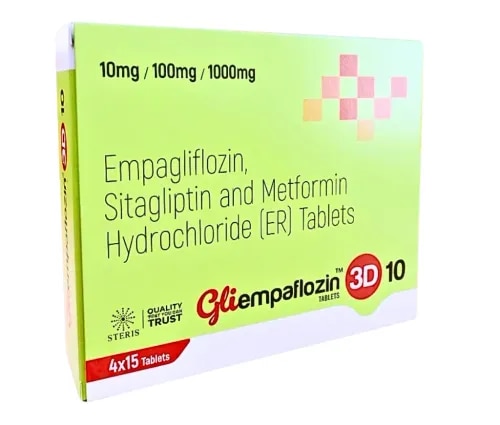
"name": "Empagliozin 10 mg, Sitagliptin 100 mg and Metformin hydrochloride 1000 mg ER Tablets",
"description": "GLIEMPAFLOZIN 3D 10 is a triple-combination antidiabetic tablet containing Empagliflozin 10 mg, Sitagliptin 100 mg, and Metformin Hydrochloride Extended Release (ER) 1000 mg. This combination is intended for the management of type 2 diabetes mellitus in appropriately selected patients under the supervision of a qualified healthcare professional.\n\nThe three active ingredients work through different mechanisms to help regulate blood glucose levels. Empagliflozin helps the kidneys eliminate glucose through urine, Sitagliptin supports glucose-dependent insulin regulation, and Metformin helps reduce glucose production in the liver while improving insulin sensitivity.\n\nBy combining these ingredients in one tablet, GLIEMPAFLOZIN 3D 10 provides a multi-mechanism approach to blood glucose management. Its suitability depends on the patient's clinical condition, kidney function, existing treatment, and the approved prescribing information.\n\nComposition of GLIEMPAFLOZIN 3D 10\nEach tablet contains the following stated active ingredients:\n\nEmpagliflozin 10 mg: A sodium-glucose cotransporter 2 (SGLT2) inhibitor that reduces glucose reabsorption by the kidneys and increases glucose excretion through urine.\nSitagliptin 100 mg: A dipeptidyl peptidase-4 (DPP-4) inhibitor that helps regulate insulin and glucagon responses according to blood glucose levels.\nMetformin Hydrochloride ER 1000 mg: An extended-release biguanide that primarily reduces glucose production in the liver and improves the body's response to insulin.\nThe exact formulation, excipients, approved indications, and administration instructions should be confirmed from the product packaging and official prescribing information.\n\nKey Features of GLIEMPAFLOZIN 3D 10 Tablets\nGLIEMPAFLOZIN 3D 10 combines three established antidiabetic medicines with complementary mechanisms of action.\n\nTriple-combination formulation: Contains Empagliflozin, Sitagliptin, and Metformin Hydrochloride ER.\nMultiple glucose-control pathways: Targets different processes involved in blood glucose regulation.\nExtended-release metformin: Provides a formulation designed to release Metformin gradually over time.\nOral tablet dosage form: Allows administration according to the prescribed regimen.\nIndividualized diabetes management: May be considered when a healthcare professional determines that all three ingredients are appropriate.\nThe combination is not suitable for every person with diabetes. Treatment decisions should be based on individual medical needs and the approved product information.\n\nUses of GLIEMPAFLOZIN 3D 10\nGLIEMPAFLOZIN 3D 10 is intended for the management of type 2 diabetes mellitus, subject to its approved indications and the prescribing healthcare professional's assessment.\n\nType 2 diabetes is a chronic metabolic condition characterized by impaired insulin action and, in many patients, insufficient insulin production. Persistently elevated blood glucose can increase the risk of complications affecting the eyes, kidneys, nerves, heart, and blood vessels.\n\nThe three active ingredients in GLIEMPAFLOZIN 3D 10 address different aspects of glucose regulation. A healthcare professional may consider this combination when multiple medicines are required to achieve an individual's treatment goals and when the combination is clinically appropriate.\n\nThe medicine should be used as part of a comprehensive diabetes-management plan that may include balanced nutrition, regular physical activity, blood glucose monitoring, and routine medical assessments. It is not intended for the treatment of type 1 diabetes or diabetic ketoacidosis.\n\nHow Does GLIEMPAFLOZIN 3D 10 Work?\n1. Empagliflozin 10 mg\nEmpagliflozin belongs to the SGLT2 inhibitor class. It blocks a protein responsible for reabsorbing glucose filtered by the kidneys. This allows more glucose to be eliminated through urine, helping reduce blood glucose levels.\n\nEmpagliflozin has also demonstrated cardiovascular and kidney benefits in certain eligible patient populations. Whether these benefits apply to an individual depends on their clinical condition and the applicable prescribing information.\n\n2. Sitagliptin 100 mg\nSitagliptin inhibits the DPP-4 enzyme, which breaks down incretin hormones. By increasing incretin activity, Sitagliptin supports insulin release when blood glucose is elevated and helps regulate glucagon secretion. These actions contribute to blood glucose control.\n\n3. Metformin Hydrochloride ER 1000 mg\nMetformin primarily reduces glucose production in the liver and improves insulin sensitivity. The extended-release formulation is designed to release the medicine gradually over time.\n\nTogether, these ingredients target several pathways involved in type 2 diabetes. Their combined effectiveness and safety depend on appropriate prescribing, correct administration, and regular monitoring.\n\nPotential Benefits of GLIEMPAFLOZIN 3D 10\nWhen prescribed for an appropriate patient, GLIEMPAFLOZIN 3D 10 may offer the following treatment advantages:\n\nMultiple mechanisms of action: Combines three medicines that influence different aspects of glucose regulation.\nBlood glucose management: Helps improve glycemic control in eligible adults with type 2 diabetes.\nCombination therapy: May simplify a treatment regimen compared with taking the same ingredients as separate tablets.\nExtended-release component: Includes Metformin Hydrochloride ER for gradual drug release.\nPersonalized treatment options: May be considered when a healthcare professional determines that triple therapy is appropriate.\nIndividual outcomes vary, and the medicine does not replace a suitable diet, physical activity, or routine diabetes care.\n\nDirections for Use\nTake GLIEMPAFLOZIN 3D 10 only as prescribed by your healthcare professional.\n\nFollow the prescribed dose and administration schedule.\nTake the tablet with food if directed by the product labeling or your prescriber.\nSwallow the extended-release tablet whole unless the specific product instructions state otherwise. Do not crush, chew, or split it without professional guidance.\nDo not change the dose or stop treatment without consulting your prescriber.\nAttend recommended appointments for kidney-function assessment and blood glucose monitoring.\nIf you miss a dose, follow the official patient information or ask your healthcare professional or pharmacist what to do. Do not take an extra dose to compensate for a missed dose unless specifically instructed.\n\nPrecautions and Safety Information\nGLIEMPAFLOZIN 3D 10 is a prescription medicine and may not be suitable for everyone.\n\nKidney function: Kidney function should be assessed before and during treatment as appropriate. Metformin and Empagliflozin have important kidney-related prescribing considerations.\n\nDehydration: Empagliflozin increases glucose excretion through urine and may increase urination. Patients at risk of dehydration or low blood pressure should discuss appropriate precautions with their healthcare professional.\n\nGenital and urinary infections: Empagliflozin may increase the risk of genital fungal infections and can be associated with urinary tract infections.\n\nLactic acidosis: Metformin can rarely cause a serious condition called lactic acidosis. Risk may increase with significant kidney impairment, severe dehydration, certain acute illnesses, or excessive alcohol intake.\n\nPancreatitis: Pancreatitis has been reported in patients taking Sitagliptin. Severe, persistent abdominal pain requires prompt medical assessment.\n\nHypoglycemia: Low blood glucose may occur, particularly when the combination is used with insulin or insulin secretagogues such as sulfonylureas.\n\nInform your healthcare professional about existing medical conditions, all medicines you take, pregnancy or breastfeeding, planned surgery, prolonged fasting, and upcoming procedures involving iodinated contrast. Follow professional instructions about temporary medicine interruption during acute illness or other high-risk situations.\n\nSeek urgent medical care for severe abdominal pain, difficulty breathing, persistent vomiting, severe dehydration, or other serious symptoms.\n\nWhy Choose GLIEMPAFLOZIN 3D 10?\nGLIEMPAFLOZIN 3D 10 brings together Empagliflozin 10 mg, Sitagliptin 100 mg, and Metformin Hydrochloride ER 1000 mg in a triple-combination tablet intended for selected patients with type 2 diabetes.\n\nFor pharmaceutical websites, pharmacies, distributors, and healthcare professionals, clear information about composition, mechanism of action, potential uses, and precautions supports responsible product awareness.\n\nAlways refer to the approved product label for the exact composition, indications, dosage, contraindications, storage requirements, and instructions for use.\n\nConclusion\nGLIEMPAFLOZIN 3D 10 Tablets combine Empagliflozin 10 mg, Sitagliptin 100 mg, and Metformin Hydrochloride ER 1000 mg to target multiple pathways involved in blood glucose regulation. The combination may be appropriate for selected adults with type 2 diabetes under medical supervision.\n\nFor complete information about dosage, contraindications, warnings, storage, and approved indications, consult the official product packaging and prescribing information. Use this medicine only under the direction of a qualified healthcare professional.\n\nFrequently Asked Questions (FAQs)\n1. What is GLIEMPAFLOZIN 3D 10?\n\nGLIEMPAFLOZIN 3D 10 is a combination tablet containing Empagliflozin 10 mg, Sitagliptin 100 mg, and Metformin Hydrochloride ER 1000 mg.\n\n2. What is GLIEMPAFLOZIN 3D 10 used for?\n\nIt is intended for the management of type 2 diabetes mellitus in patients for whom this combination is considered appropriate by a healthcare professional.\n\n3. How does GLIEMPAFLOZIN 3D 10 work?\n\nEmpagliflozin increases urinary glucose excretion, Sitagliptin supports glucose-dependent insulin regulation, and Metformin reduces glucose production in the liver and improves insulin sensitivity.\n\n4. Can GLIEMPAFLOZIN 3D 10 replace diet and exercise?\n\nNo. Medication should be combined with an individualized diet, physical activity, and monitoring plan recommended by a healthcare professional.\n\n5. Is GLIEMPAFLOZIN 3D 10 suitable for everyone with diabetes?\n\nNo. Suitability depends on the type of diabetes, kidney function, other medical conditions, concurrent medicines, and approved prescribing information.\n\n",
"price": 210.0,
"discountamount": 147.0,
"currencycode": "INR",
"priority": 1000000,
"isfreeshipmentavailable": false,
"shipmentduration": 1,
"_keywords": null,
"isarchived": false,
"isavailable": true,
"applicationid": null,
"productindex": 2505,
"imageuri": "https://productimages.withfloats.com/actual/6ad7470422551901df6e5493.png",
"tileimageuri": "https://productimages.withfloats.com/tile/6ad7470422551901df6e5493.png",
"images": null,
"totalqueries": 0,
"gpid": null,
"groupproductid": null,
"createdon": "2026-10-20T10:48:34.116Z",
"updatedon": "2026-10-20T10:48:34.116Z",
"buyonlinelink": null,
"producturl": "http://WWW.STERISINDIA.COM/products/empagliozin-10-mg-sitagliptin-100-mg-and-metformin-hydrochloride-1000-mg-er-tablets/2505",
"availableunits": -1.0,
"iscodavailable": false,
"isprepaidonlineavailable": false,
"maxcodorders": 0,
"maxprepaidonlineorders": 0,
"uniquepaymenturl": null,
"brandname": "GLIEMPAFLOZIN 3D 10",
"category": "DIABETIC RANGE",
"tags": [],
"variants": false,
"keyspecification": null,
"otherspecifications": null,
"pickupaddressreferenceid": null,
"paymenttype": "UniquePaymentUrl",
"producttype": "products",
"hsncode": null,
"gstslab": 0.0,
"isnotforsale": false
},
{
"_id": "6ad7442bf24c5a4bbccf4b10",
"fptag": "STERISHEALTHCARE",
"merchantname": null,
"customwidgets": null,
"externalsourceid": null,
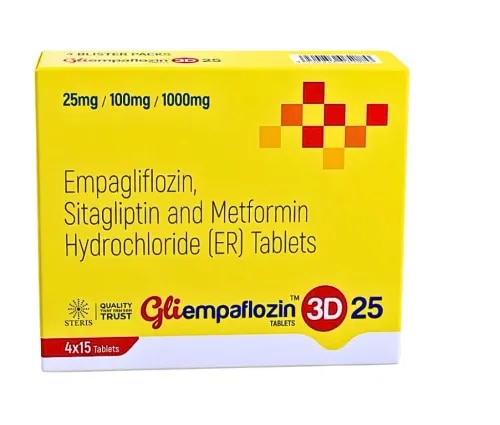
"name": "Empagliflozin,Sitagliptin And Metformin Hydrochloride (ER) Tablets",
"description": "GLIEMPAFLOZIN 3D 25 is a combination pharmaceutical product containing Empagliflozin 25 mg, Sitagliptin 100 mg, and Metformin Hydrochloride Extended Release (ER) 1000 mg. This triple-combination formulation is intended for the management of type 2 diabetes mellitus in appropriate patients, as determined by a qualified healthcare professional.\n\nThe three active ingredients work through different mechanisms to help control blood glucose levels. Empagliflozin belongs to the sodium-glucose cotransporter 2 (SGLT2) inhibitor class, Sitagliptin is a dipeptidyl peptidase-4 (DPP-4) inhibitor, and Metformin is a biguanide antidiabetic medicine. Together, these ingredients target different pathways involved in glucose regulation.\n\nGLIEMPAFLOZIN 3D 25 provides a combination of three established antidiabetic agents in a single tablet. Its suitability depends on the patient's blood glucose levels, kidney function, current diabetes treatment, medical history, and the approved prescribing information.\n\nComposition of GLIEMPAFLOZIN 3D 25\nEach tablet contains the following stated active ingredients:\n\nEmpagliflozin 25 mg: An SGLT2 inhibitor that helps the kidneys remove glucose from the bloodstream through urine.\nSitagliptin 100 mg: A DPP-4 inhibitor that increases the activity of incretin hormones involved in glucose-dependent insulin release and glucagon regulation.\nMetformin Hydrochloride ER 1000 mg: An extended-release biguanide that primarily reduces glucose production in the liver and improves the body's response to insulin.\nThe exact formulation, excipients, administration instructions, and approved indications should be verified against the product packaging and official prescribing information.\n\nKey Features of GLIEMPAFLOZIN 3D 25\nGLIEMPAFLOZIN 3D 25 combines three antidiabetic ingredients with complementary mechanisms of action.\n\nTriple-combination formulation: Contains Empagliflozin, Sitagliptin, and Metformin Hydrochloride ER.\nMultiple glucose-control pathways: The ingredients act through different mechanisms involved in blood glucose regulation.\nExtended-release metformin: The ER formulation is designed to release metformin over an extended period.\nOral tablet dosage form: Provides oral administration according to the prescribed regimen.\nIndividualized diabetes management: May be considered by a healthcare professional when combination therapy is appropriate.\nThe benefits of this combination depend on the patient's clinical needs and the suitability of all three ingredients.\n\nUses of GLIEMPAFLOZIN 3D 25 Tablets\nGLIEMPAFLOZIN 3D 25 is intended for the management of type 2 diabetes mellitus, subject to the product's approved indications and the prescribing healthcare professional's judgment.\n\nType 2 diabetes is a chronic metabolic condition in which the body does not use insulin effectively or does not produce enough insulin to maintain healthy blood glucose levels. Long-term elevated blood glucose can increase the risk of complications affecting the eyes, kidneys, nerves, heart, and blood vessels.\n\nThe three medicines in GLIEMPAFLOZIN 3D 25 target different aspects of glucose regulation. A healthcare professional may consider a combination regimen when an individual's treatment goals are not adequately achieved with a simpler regimen or when the combination is otherwise clinically appropriate.\n\nThe medicine should be used alongside an individualized diabetes-management plan that may include a balanced diet, physical activity, glucose monitoring, and regular medical follow-up. It is not intended for the treatment of type 1 diabetes or diabetic ketoacidosis.\n\nHow Does GLIEMPAFLOZIN 3D 25 Work?\nThe three active ingredients contribute to blood glucose management through distinct mechanisms.\n\n1. Empagliflozin 25 mg\nEmpagliflozin inhibits SGLT2, a protein responsible for reabsorbing much of the glucose filtered by the kidneys. By reducing glucose reabsorption, it increases glucose excretion through urine and helps lower blood glucose levels.\n\nEmpagliflozin has also demonstrated cardiovascular and kidney benefits in certain eligible patient populations. These benefits depend on the patient's condition and the applicable prescribing information and should not be assumed to apply identically to every patient.\n\n2. Sitagliptin 100 mg\nSitagliptin inhibits the DPP-4 enzyme, which breaks down incretin hormones. Increasing incretin activity helps stimulate insulin release when blood glucose is elevated and reduces glucagon secretion when appropriate. This helps regulate glucose levels, particularly after meals.\n\n3. Metformin Hydrochloride ER 1000 mg\nMetformin primarily decreases glucose production in the liver and improves insulin sensitivity. The extended-release formulation is designed to release the medicine gradually over time.\n\nBy combining these mechanisms, GLIEMPAFLOZIN 3D 25 targets several pathways involved in type 2 diabetes. Its overall effectiveness and safety depend on appropriate patient selection, dosing, and ongoing monitoring.\n\nPotential Benefits of GLIEMPAFLOZIN 3D 25\nWhen prescribed for an appropriate patient, this combination may offer the following treatment advantages:\n\nMultiple mechanisms of action: Addresses glucose regulation through three different pharmacological pathways.\nBlood glucose management: Helps improve glycemic control in eligible adults with type 2 diabetes.\nOral combination therapy: Combines three medicines in one tablet, which may simplify a prescribed regimen compared with taking each ingredient separately.\nExtended-release component: Includes Metformin Hydrochloride ER for gradual drug release.\nIndividualized treatment options: May be considered when a healthcare professional determines that all three ingredients are appropriate.\nThese potential advantages do not guarantee a particular result. Treatment effectiveness depends on adherence, diet, physical activity, individual health status, and medical supervision.\n\nDirections for Use\nGLIEMPAFLOZIN 3D 25 should be taken only as prescribed by a qualified healthcare professional.\n\nFollow the prescribed dose and administration schedule.\nTake the tablet with food if directed by the product labeling or prescriber.\nSwallow the extended-release tablet whole unless the specific product instructions state otherwise. Do not crush, chew, or split it without professional guidance.\nDo not change the dose or discontinue treatment without consulting your prescriber.\nAttend recommended appointments for blood glucose monitoring and kidney-function assessment.\nIf a dose is missed, follow the official patient information or ask your healthcare professional or pharmacist for advice. Do not take an extra dose to compensate for a missed dose unless specifically instructed.\n\nPrecautions and Safety Information\nGLIEMPAFLOZIN 3D 25 is a prescription medicine and is not suitable for everyone.\n\nKidney function: Kidney function should be assessed before and during treatment as appropriate. Metformin and Empagliflozin have important renal considerations, and the combination may be unsuitable at certain levels of kidney impairment.\n\nDehydration: Empagliflozin increases glucose excretion through urine and may increase urination. Patients should discuss dehydration risk, low blood pressure, and fluid intake with their healthcare professional.\n\nGenital and urinary infections: Empagliflozin can increase the risk of genital fungal infections and may be associated with urinary tract infections.\n\nLactic acidosis: Metformin can rarely cause a serious condition called lactic acidosis. Risk may increase with significant kidney impairment, severe dehydration, certain acute illnesses, excessive alcohol intake, or other predisposing conditions.\n\nPancreatitis: Pancreatitis has been reported in patients taking Sitagliptin. Severe, persistent abdominal pain requires prompt medical assessment.\n\nLow blood glucose: The risk of hypoglycemia may increase when this combination is used with insulin or insulin secretagogues, such as sulfonylureas.\n\nInform your healthcare professional about existing medical conditions, all medicines you take, pregnancy or breastfeeding, planned surgery, prolonged fasting, or an upcoming medical procedure involving iodinated contrast. Follow professional instructions about temporary medicine interruption during acute illness or other high-risk situations.\n\nSeek urgent medical care for severe abdominal pain, difficulty breathing, unusual weakness, persistent vomiting, severe dehydration, or other serious symptoms.\n\nWhy Choose GLIEMPAFLOZIN 3D 25?\nGLIEMPAFLOZIN 3D 25 brings together Empagliflozin, Sitagliptin, and Metformin Hydrochloride ER in a triple-combination tablet designed for the management of type 2 diabetes in appropriately selected patients.\n\nFor pharmaceutical product catalogues, distributors, pharmacies, and healthcare professionals, accurate information about the composition, mechanism of action, approved indications, and safety profile supports responsible product awareness.\n\nTreatment decisions should always be based on the patient's medical assessment and the approved product information.\n\nConclusion\nGLIEMPAFLOZIN 3D 25 Tablets combine Empagliflozin 25 mg, Sitagliptin 100 mg, and Metformin Hydrochloride ER 1000 mg to target multiple pathways involved in blood glucose regulation. This combination may be appropriate for selected adults with type 2 diabetes under medical supervision.\n\nFor complete information about dosage, contraindications, warnings, storage, and approved indications, consult the official product packaging and prescribing information. Use this medicine only under the direction of a qualified healthcare professional.\n\nFrequently Asked Questions (FAQs)\n1. What is GLIEMPAFLOZIN 3D 25?\n\nGLIEMPAFLOZIN 3D 25 is a combination tablet containing Empagliflozin 25 mg, Sitagliptin 100 mg, and Metformin Hydrochloride ER 1000 mg.\n\n2. What is GLIEMPAFLOZIN 3D 25 used for?\n\nIt is intended for the management of type 2 diabetes mellitus in patients for whom the combination is considered appropriate by a healthcare professional.\n\n3. How does GLIEMPAFLOZIN 3D 25 work?\n\nEmpagliflozin increases urinary glucose excretion, Sitagliptin supports glucose-dependent insulin regulation, and Metformin reduces glucose production in the liver and improves insulin sensitivity.\n\n4. Can GLIEMPAFLOZIN 3D 25 replace diet and exercise?\n\nNo. Medication should be combined with an individualized diet, physical activity, and monitoring plan as recommended by a healthcare professional.\n\n5. Is GLIEMPAFLOZIN 3D 25 suitable for everyone with diabetes?\n\nNo. Its suitability depends on the type of diabetes, kidney function, other medical conditions, concurrent medicines, and the approved prescribing information.",
"price": 230.0,
"discountamount": 69.0,
"currencycode": "INR",
"priority": 1000000,
"isfreeshipmentavailable": false,
"shipmentduration": 1,
"_keywords": null,
"isarchived": false,
"isavailable": true,
"applicationid": null,
"productindex": 2504,
"imageuri": "https://productimages.withfloats.com/actual/6ad7442d6e565c5fe6e5b7cb.png",
"tileimageuri": "https://productimages.withfloats.com/tile/6ad7442d6e565c5fe6e5b7cb.png",
"images": null,
"totalqueries": 0,
"gpid": null,
"groupproductid": null,
"createdon": "2026-10-20T10:36:27.325Z",
"updatedon": "2026-10-20T10:36:27.325Z",
"buyonlinelink": null,
"producturl": "http://WWW.STERISINDIA.COM//empagliflozin-sitagliptin-and-metformin-hydrochloride-er-tablets/2504",
"availableunits": -1.0,
"iscodavailable": false,
"isprepaidonlineavailable": false,
"maxcodorders": 0,
"maxprepaidonlineorders": 0,
"uniquepaymenturl": null,
"brandname": "GLIEMPAFLOZIN 3D 25",
"category": "DIABETIC RANGE",
"tags": [],
"variants": false,
"keyspecification": null,
"otherspecifications": null,
"pickupaddressreferenceid": null,
"paymenttype": "UniquePaymentUrl",
"producttype": "products",
"hsncode": null,
"gstslab": 0.0,
"isnotforsale": false
},
{
"_id": "6ad738866e5950566f21f588",
"fptag": "STERISHEALTHCARE",
"merchantname": null,
"customwidgets": null,
"externalsourceid": null,
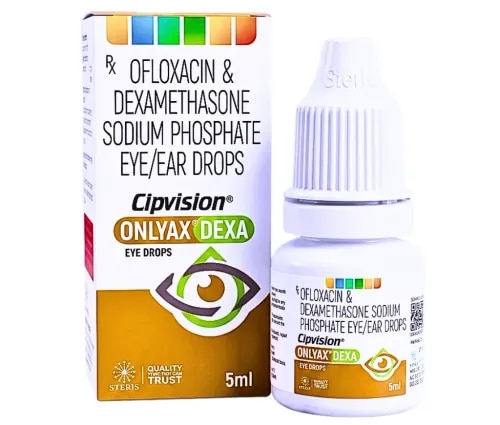
"name": "Ofloxacin & Dexamethasoneone Sodium Phosphate Eye/Ear Drops",
"description": "CIPVISION ONLYAX DEXA Eye/Ear Drops is a pharmaceutical formulation containing Ofloxacin and Dexamethasone Sodium Phosphate. These ingredients perform complementary roles: Ofloxacin helps control infections caused by susceptible bacteria, while Dexamethasone Sodium Phosphate helps reduce inflammation. The combination may be prescribed for selected eye or ear conditions when both antibacterial treatment and inflammation control are clinically appropriate.\n\nIntended for ophthalmic and otic applications, CIPVISION ONLYAX DEXA should be used according to a qualified healthcare professional's instructions. The suitability of this formulation depends on the patient's diagnosis, medical history, and the approved product information.\n\nWith its defined composition and distinct brand identity, CIPVISION ONLYAX DEXA is a pharmaceutical product option for healthcare professionals, pharmacies, and medical distributors.\n\nComposition of CIPVISION ONLYAX DEXA Eye/Ear Drops\n\nCIPVISION ONLYAX DEXA contains two active pharmaceutical ingredients:\n\nOfloxacin: A fluoroquinolone antibiotic that works by interfering with bacterial enzymes required for DNA replication and repair. This action helps inhibit the growth of susceptible bacteria.\n\nDexamethasone Sodium Phosphate: A corticosteroid that suppresses inflammatory responses and helps reduce symptoms such as redness, swelling, and discomfort when steroid treatment is appropriate.\n\nThe exact strength, approved indications, and recommended dosage should always be checked on the product packaging and prescribing information.\n\nKey Features of CIPVISION ONLYAX DEXA\n\nThe formulation combines antibacterial and anti-inflammatory properties in one topical product.\n\nDual-ingredient formulation: Combines an antibiotic with a corticosteroid.\n\nAntibacterial action: Ofloxacin targets susceptible bacteria when used for an appropriate indication.\n\nInflammation control: Dexamethasone Sodium Phosphate helps manage inflammatory symptoms.\n\nTopical application: Intended for eye or ear use according to the approved product labelling.\n\nProfessional supervision: Requires appropriate clinical assessment and guidance for safe use.\n\nThe suitability of these features depends on the diagnosed condition and whether both ingredients are necessary for treatment.\n\nWhat Is CIPVISION ONLYAX DEXA Used For?\n\nCIPVISION ONLYAX DEXA may be prescribed for certain bacterial eye or ear conditions accompanied by inflammation. A healthcare professional must determine whether this combination is appropriate for the specific diagnosis.\n\nOphthalmic Applications\n\nWhen indicated by the approved product label, an Ofloxacin and Dexamethasone formulation may be used for selected bacterial eye conditions associated with inflammation.\n\nOfloxacin helps address susceptible bacterial pathogens, while Dexamethasone Sodium Phosphate helps control the inflammatory response. However, eye redness, watering, itching, and pain can result from allergies, viral infections, fungal infections, or other disorders. These conditions may require different treatments.\n\nA proper eye examination is important before using antibiotic-corticosteroid drops.\n\nOtic Applications\n\nFor selected ear conditions, an appropriate antibiotic and corticosteroid combination may be prescribed when bacterial infection and inflammation occur together.\n\nSymptoms such as ear pain, discharge, swelling, and itching can have different causes. The choice of treatment depends on the site of infection, the condition of the eardrum, and the product's approved indications.\n\nUse CIPVISION ONLYAX DEXA in the ear only when the prescribing information permits it and a healthcare professional recommends its use.\n\nHow Does CIPVISION ONLYAX DEXA Work?\n\nThe two active ingredients act through different mechanisms.\n\nOfloxacin: This antibiotic inhibits bacterial enzymes called DNA gyrase and topoisomerase IV. These enzymes are essential for bacterial DNA replication and repair. Interfering with these processes helps prevent susceptible bacteria from multiplying.\n\nDexamethasone Sodium Phosphate: This corticosteroid reduces inflammatory activity in affected tissues. It helps control inflammation and associated symptoms when corticosteroid treatment is medically appropriate.\n\nTogether, these ingredients provide antibacterial and anti-inflammatory effects in selected conditions. However, corticosteroids may mask signs of infection or worsen certain untreated infections. Therefore, this combination should only be used for an appropriate diagnosis under medical supervision.\n\nPotential Benefits of CIPVISION ONLYAX DEXA\n\nThe potential benefits depend on the patient's condition and the clinical suitability of the formulation.\n\nCombined treatment approach: Offers an antibiotic and an anti-inflammatory ingredient in one formulation.\n\nTargeted antibacterial activity: Ofloxacin acts against susceptible bacteria.\n\nInflammation management: Dexamethasone Sodium Phosphate helps reduce inflammation.\n\nLocal administration: Drops allow topical application when suitable for the diagnosed condition.\n\nSupport for prescribed treatment: May be included in a healthcare professional's treatment plan for selected eye or ear conditions.\n\nThis product is not suitable for every infection. Its effectiveness depends on the cause of the condition, bacterial susceptibility, correct administration, and adherence to the prescribed treatment.\n\nHow to Use CIPVISION ONLYAX DEXA Eye/Ear Drops\n\nUse CIPVISION ONLYAX DEXA according to your doctor's instructions and the product label.\n\nWash your hands: Clean your hands before handling the bottle or administering the drops.\n\nCheck the product: Confirm the product name, expiry date, and instructions before use.\n\nAvoid contamination: Do not allow the dropper tip to touch your eye, ear, fingers, or other surfaces.\n\nFollow the prescribed dose: Use only the number of drops and the frequency recommended by your healthcare professional.\n\nComplete the prescribed course: Do not stop, extend, or repeat treatment without medical advice.\n\nAvoid sharing: Never share the bottle with another person, as this can spread infection.\n\nStore correctly: Follow the storage and after-opening instructions printed on the packaging.\n\nFor eye administration, ask your healthcare professional about contact lens precautions. For ear administration, seek advice before use if you have had ear surgery, have ear tubes, or may have a perforated eardrum.\n\nPrecautions and Safety Information\n\nCIPVISION ONLYAX DEXA should be used only when clinically indicated. Its antibiotic and corticosteroid components may not be appropriate for every patient or type of infection.\n\nProlonged use: Extended or inappropriate corticosteroid use may increase eye pressure, contribute to glaucoma or cataracts, and delay tissue healing.\n\nInfection risks: Corticosteroids may mask symptoms or worsen certain viral, fungal, or untreated infections.\n\nAllergies: Inform your healthcare professional about any previous reaction to Ofloxacin, Dexamethasone, or related ingredients.\n\nExisting conditions: Disclose any history of glaucoma, eye disease, ear problems, or ear surgery before treatment.\n\nOther medicines: Tell your doctor about other prescription medicines and eye or ear preparations you are using.\n\nPregnancy and breastfeeding: Seek medical advice before using the product during pregnancy or while breastfeeding.\n\nWorsening symptoms: Obtain prompt medical assessment if symptoms persist, worsen, or return after treatment.\n\nSeek urgent medical attention for severe eye pain, sudden changes in vision, significant hearing changes, or other serious symptoms.\n\nDo not use the product after its expiry date. Follow the packaging instructions for storage and disposal after opening.\n\nWhy Is CIPVISION ONLYAX DEXA Relevant to Pharmaceutical Product Portfolios?\n\nCIPVISION ONLYAX DEXA combines two established pharmaceutical ingredients in a topical formulation intended for selected conditions involving bacterial infection and inflammation. Its defined composition and identifiable brand make it relevant to pharmaceutical catalogues and product information resources.\n\nFor pharmacies, distributors, healthcare professionals, and pharmaceutical websites, clear product information helps communicate the formulation's intended use, precautions, and administration requirements. Accurate product descriptions should always reflect the approved label rather than imply that the formulation is suitable for every eye or ear complaint.\n\nConclusion\n\nCIPVISION ONLYAX DEXA Eye/Ear Drops contains Ofloxacin and Dexamethasone Sodium Phosphate, combining antibacterial activity with anti-inflammatory action. It may be prescribed for selected eye or ear conditions when both components are clinically appropriate.\n\nUnderstanding the composition, intended applications, administration precautions, and potential risks supports responsible use. Always consult a qualified healthcare professional and refer to the approved product packaging for the exact strength, indications, contraindications, and directions for use.\n\nFrequently Asked Questions (FAQs)\n\n1. What is CIPVISION ONLYAX DEXA Eye/Ear Drops?\n\nCIPVISION ONLYAX DEXA is a pharmaceutical formulation containing Ofloxacin, an antibiotic, and Dexamethasone Sodium Phosphate, a corticosteroid. It is intended for selected conditions as directed by a healthcare professional.\n\n2. What is the composition of CIPVISION ONLYAX DEXA?\n\nThe stated active ingredients are Ofloxacin and Dexamethasone Sodium Phosphate. Refer to the product packaging to confirm their exact strengths and the approved formulation details.\n\n3. What is CIPVISION ONLYAX DEXA used for?\n\nIt may be prescribed for certain bacterial eye or ear conditions associated with inflammation when an antibiotic-corticosteroid combination is appropriate.\n\n4. Can CIPVISION ONLYAX DEXA be used without medical advice?\n\nNo. Medical guidance is important because the corticosteroid component may worsen certain infections or be unsuitable for particular eye and ear conditions.\n\n5. How should CIPVISION ONLYAX DEXA be stored?\n\nFollow the storage instructions printed on the product packaging. Keep the bottle tightly closed as directed, protect it from unsuitable storage conditions, and keep it out of children's reach.\n\n6. Can CIPVISION ONLYAX DEXA be used for every type of eye or ear infection?\n\nNo. Different infections and inflammatory conditions require different treatments. A healthcare professional should identify the cause of the symptoms and confirm whether this formulation is appropriate.",
"price": 50.0,
"discountamount": 15.0,
"currencycode": "INR",
"priority": 1000000,
"isfreeshipmentavailable": false,
"shipmentduration": 1,
"_keywords": null,
"isarchived": false,
"isavailable": true,
"applicationid": null,
"productindex": 2502,
"imageuri": "https://productimages.withfloats.com/actual/6ad73887063777c0e22d5809.png",
"tileimageuri": "https://productimages.withfloats.com/tile/6ad73887063777c0e22d5809.png",
"images": null,
"totalqueries": 0,
"gpid": null,
"groupproductid": null,
"createdon": "2026-10-20T09:46:46.02Z",
"updatedon": "2026-10-20T09:46:46.02Z",
"buyonlinelink": null,
"producturl": "http://WWW.STERISINDIA.COM//ofloxacin-dexamethasoneone-sodium-phosphate-eye-ear-drops/2502",
"availableunits": -1.0,
"iscodavailable": false,
"isprepaidonlineavailable": false,
"maxcodorders": 0,
"maxprepaidonlineorders": 0,
"uniquepaymenturl": null,
"brandname": "CIPVISION ONLYAX DEXA",
"category": "Opthalmology Range",
"tags": [],
"variants": false,
"keyspecification": null,
"otherspecifications": null,
"pickupaddressreferenceid": null,
"paymenttype": "UniquePaymentUrl",
"producttype": "products",
"hsncode": null,
"gstslab": 0.0,
"isnotforsale": false
},
{
"_id": "6a5dede90a28dfffb7c76516",
"fptag": "STERISHEALTHCARE",
"merchantname": null,
"customwidgets": null,
"externalsourceid": null,
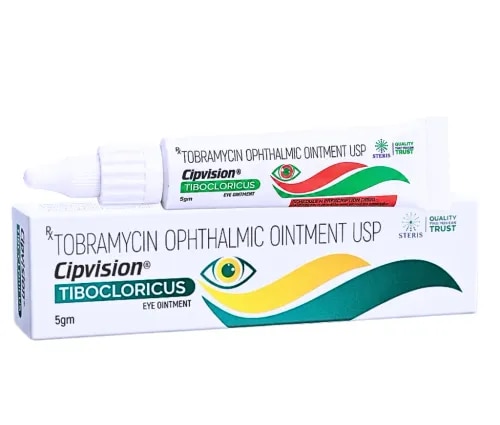
"name": "Tobramycin Ophthalmic Ointment USP",
"description": "CIPVISION MYCOAZITHER is an ophthalmic antibiotic ointment formulated with Azithromycin 1% w/w, manufactured by Steris Healthcare Pvt. Ltd. It is prescribed by eye specialists to treat bacterial infections of the eye caused by organisms sensitive to Azithromycin. As a macrolide-class antibiotic, it works by blocking the protein-building machinery bacteria rely on to multiply, halting the spread of infection at the source.\n\nBacterial eye infections often bring redness, swelling, watering, crusty eyelids, and general discomfort. Left unchecked, they can progress and interfere with everyday eye function. CIPVISION MYCOAZITHER is applied directly to the affected eye, concentrating the antibiotic exactly where it's needed to clear the infection and ease these symptoms.\n\nThis ointment is meant for use strictly under an ophthalmologist's guidance. It has no role in treating infections caused by viruses or fungi.\n\nComposition\n\nEvery gram of the ointment contains:\n\nAzithromycin Eye Ointment 1% w/w\n\nWhat Is CIPVISION MYCOAZITHER Prescribed For?\n\nDoctors recommend CIPVISION MYCOAZITHER for bacterial eye conditions such as:\n\nBacterial conjunctivitis (commonly called pink eye)\nBacterial infections of the eyelid margins\nSurface-level bacterial infections of the eye\nBacterial infections following eye surgery, where advised\nOther ocular bacterial infections identified by an eye care specialist\n\nAn ophthalmologist is best placed to confirm whether this ointment suits your particular eye condition.\n\nMechanism of Action\n\nAzithromycin is a macrolide antibiotic. It attaches to the 50S ribosomal subunit inside susceptible bacterial cells, disrupting their ability to synthesize proteins. Without this protein-building process, the bacteria can't grow or reproduce, giving the immune system the opening it needs to clear the infection.\n\nBecause it's delivered topically to the eye, the ointment achieves a strong local concentration right at the infection site, while limiting how much medicine enters the bloodstream.\n\nBenefits of Using CIPVISION MYCOAZITHER\n\nUsed correctly under medical supervision, this ointment may:\n\nClear bacterial eye infections caused by sensitive organisms\nCalm redness and swelling linked to the infection\nEase eye irritation and discomfort\nCurb further bacterial growth\nAid recovery of infected eye tissue\nSpeed healing from bacterial conjunctivitis\nLower the chance of the infection spreading further\nHow to Apply the Ointment Correctly\n\nFollow these steps for effective application:\n\nWash your hands well before starting.\nTilt your head back a little.\nPull the lower eyelid down gently to form a small pocket.\nSqueeze a thin line of ointment into that pocket, keeping the tube tip away from your eye and skin.\nShut your eyes softly for a minute or two so the ointment spreads evenly.\nBlot away any extra ointment with a clean tissue.\nWash your hands again once done.\n\nStick to your doctor's prescribed schedule and finish the entire course, even if your symptoms clear up sooner than expected.\n\nDosage Guidance\n\nUse CIPVISION MYCOAZITHER strictly as your ophthalmologist prescribes. Don't adjust the amount, frequency, or duration on your own.\n\nPossible Side Effects\n\nSide effects vary from person to person and aren't guaranteed to occur.\n\nCommonly reported effects:\n\nBrief blurring of vision right after application\nMild stinging or burning\nEye irritation\nExcess tearing\nSlight itching\nShort-lived discomfort\n\nSeek urgent medical care if you notice:\n\nIntense eye pain\nSudden vision changes\nSwelling around the face or eyelids\nTrouble breathing\nSigns of a severe allergic reaction\nPrecautions Before Use\n\nLet your doctor know if any of these apply to you:\n\nHistory of allergy to Azithromycin, erythromycin, or related macrolide antibiotics\nYou wear contact lenses\nYou have a serious eye injury\nYou currently have a viral or fungal eye infection\nYou're pregnant or breastfeeding\nYou're using any other eye drops or ointments\n\nTake care not to let the tube's tip touch your eye, eyelid, or any other surface — this helps avoid contaminating the product.\n\nIs It Safe to Wear Contact Lenses?\n\nIt's best to skip contact lenses while an eye infection is active, unless your ophthalmologist tells you otherwise.\n\nStorage Instructions\nKeep below 25°C.\nShield the tube from heat and direct sunlight.\nClose the cap firmly after each use.\nStore out of children's reach.\nDiscard once the expiry date has passed.\nWhy Choose CIPVISION MYCOAZITHER from Steris Healthcare Pvt. Ltd.?\n\nSteris Healthcare Pvt. Ltd. manufactures CIPVISION MYCOAZITHER under strict quality controls to ensure dependable ophthalmic treatment. The 1% w/w Azithromycin formulation targets the infection directly at its source, supporting effective bacterial eye-infection management when used exactly as your doctor prescribes.\n\nFor the best outcome, follow your ophthalmologist's instructions precisely and keep any recommended follow-up visits.\n\nDisclaimer: Use this medicine only under a qualified healthcare professional's guidance. It is meant for bacterial eye infections and should not be used for viral, fungal, or other non-bacterial conditions unless a doctor specifically advises it.\n\nFrequently Asked Questions\n\nWhat does CIPVISION MYCOAZITHER treat? It treats bacterial eye infections caused by organisms sensitive to Azithromycin, under an eye specialist's supervision.\n\nHow does Azithromycin Eye Ointment act on the infection? It blocks bacteria from making the proteins they need to survive and multiply, letting the infection resolve.\n\nWill it work on viral conjunctivitis? No — it only targets susceptible bacterial infections and isn't meant for viral or fungal eye infections unless specifically prescribed.\n\nCan I stop applying it once my eye looks better? No. Finish the full course your doctor prescribed to make sure the infection is fully cleared and doesn't come back.\n\nCan I combine it with other eye medicines? Only if your doctor approves. If you're using more than one eye medication, space out the applications as recommended.",
"price": 120.0,
"discountamount": 36.0,
"currencycode": "INR",
"priority": 1000000,
"isfreeshipmentavailable": false,
"shipmentduration": 1,
"_keywords": null,
"isarchived": false,
"isavailable": true,
"applicationid": null,
"productindex": 2475,
"imageuri": "https://productimages.withfloats.com/actual/6a5dedeb124cadcb9465dcec.png",
"tileimageuri": "https://productimages.withfloats.com/tile/6a5dedeb124cadcb9465dcec.png",
"images": null,
"totalqueries": 0,
"gpid": null,
"groupproductid": null,
"createdon": "2026-07-20T09:44:09.629Z",
"updatedon": "2026-07-20T09:44:09.629Z",
"buyonlinelink": null,
"producturl": "http://WWW.STERISINDIA.COM//tobramycin-ophthalmic-ointment-usp/2475",
"availableunits": -1.0,
"iscodavailable": false,
"isprepaidonlineavailable": false,
"maxcodorders": 0,
"maxprepaidonlineorders": 0,
"uniquepaymenturl": null,
"brandname": "CIPVISION TIBOCLORICUS EYE OINTMENT",
"category": "Opthalmology Range",
"tags": [],
"variants": false,
"keyspecification": null,
"otherspecifications": null,
"pickupaddressreferenceid": null,
"paymenttype": "UniquePaymentUrl",
"producttype": "products",
"hsncode": null,
"gstslab": 0.0,
"isnotforsale": false
},
{
"_id": "6a5de8a70a28dfffb7c764ed",
"fptag": "STERISHEALTHCARE",
"merchantname": null,
"customwidgets": null,
"externalsourceid": null,
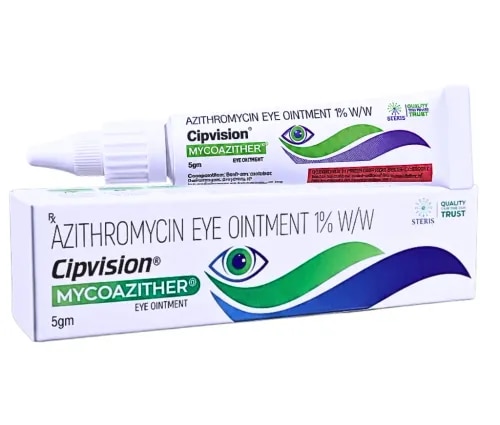
"name": "Azithromycin Eye Ointment 1% w/w",
"description": "CIPVISION MYCOAZITHER is an ophthalmic antibiotic ointment formulated with Azithromycin 1% w/w, manufactured by Steris Healthcare Pvt. Ltd. It is prescribed by eye specialists to treat bacterial infections of the eye caused by organisms sensitive to Azithromycin. As a macrolide-class antibiotic, it works by blocking the protein-building machinery bacteria rely on to multiply, halting the spread of infection at the source.\n\nBacterial eye infections often bring redness, swelling, watering, crusty eyelids, and general discomfort. Left unchecked, they can progress and interfere with everyday eye function. CIPVISION MYCOAZITHER is applied directly to the affected eye, concentrating the antibiotic exactly where it's needed to clear the infection and ease these symptoms.\n\nThis ointment is meant for use strictly under an ophthalmologist's guidance. It has no role in treating infections caused by viruses or fungi.\n\nComposition\n\nEvery gram of the ointment contains:\n\nAzithromycin Eye Ointment 1% w/w\n\nWhat Is CIPVISION MYCOAZITHER Prescribed For?\n\nDoctors recommend CIPVISION MYCOAZITHER for bacterial eye conditions such as:\n\nBacterial conjunctivitis (commonly called pink eye)\nBacterial infections of the eyelid margins\nSurface-level bacterial infections of the eye\nBacterial infections following eye surgery, where advised\nOther ocular bacterial infections identified by an eye care specialist\n\nAn ophthalmologist is best placed to confirm whether this ointment suits your particular eye condition.\n\nMechanism of Action\n\nAzithromycin is a macrolide antibiotic. It attaches to the 50S ribosomal subunit inside susceptible bacterial cells, disrupting their ability to synthesize proteins. Without this protein-building process, the bacteria can't grow or reproduce, giving the immune system the opening it needs to clear the infection.\n\nBecause it's delivered topically to the eye, the ointment achieves a strong local concentration right at the infection site, while limiting how much medicine enters the bloodstream.\n\nBenefits of Using CIPVISION MYCOAZITHER\n\nUsed correctly under medical supervision, this ointment may:\n\nClear bacterial eye infections caused by sensitive organisms\nCalm redness and swelling linked to the infection\nEase eye irritation and discomfort\nCurb further bacterial growth\nAid recovery of infected eye tissue\nSpeed healing from bacterial conjunctivitis\nLower the chance of the infection spreading further\nHow to Apply the Ointment Correctly\n\nFollow these steps for effective application:\n\nWash your hands well before starting.\nTilt your head back a little.\nPull the lower eyelid down gently to form a small pocket.\nSqueeze a thin line of ointment into that pocket, keeping the tube tip away from your eye and skin.\nShut your eyes softly for a minute or two so the ointment spreads evenly.\nBlot away any extra ointment with a clean tissue.\nWash your hands again once done.\n\nStick to your doctor's prescribed schedule and finish the entire course, even if your symptoms clear up sooner than expected.\n\nDosage Guidance\n\nUse CIPVISION MYCOAZITHER strictly as your ophthalmologist prescribes. Don't adjust the amount, frequency, or duration on your own.\n\nPossible Side Effects\n\nSide effects vary from person to person and aren't guaranteed to occur.\n\nCommonly reported effects:\n\nBrief blurring of vision right after application\nMild stinging or burning\nEye irritation\nExcess tearing\nSlight itching\nShort-lived discomfort\n\nSeek urgent medical care if you notice:\n\nIntense eye pain\nSudden vision changes\nSwelling around the face or eyelids\nTrouble breathing\nSigns of a severe allergic reaction\nPrecautions Before Use\n\nLet your doctor know if any of these apply to you:\n\nHistory of allergy to Azithromycin, erythromycin, or related macrolide antibiotics\nYou wear contact lenses\nYou have a serious eye injury\nYou currently have a viral or fungal eye infection\nYou're pregnant or breastfeeding\nYou're using any other eye drops or ointments\n\nTake care not to let the tube's tip touch your eye, eyelid, or any other surface — this helps avoid contaminating the product.\n\nIs It Safe to Wear Contact Lenses?\n\nIt's best to skip contact lenses while an eye infection is active, unless your ophthalmologist tells you otherwise.\n\nStorage Instructions\nKeep below 25°C.\nShield the tube from heat and direct sunlight.\nClose the cap firmly after each use.\nStore out of children's reach.\nDiscard once the expiry date has passed.\nWhy Choose CIPVISION MYCOAZITHER from Steris Healthcare Pvt. Ltd.?\n\nSteris Healthcare Pvt. Ltd. manufactures CIPVISION MYCOAZITHER under strict quality controls to ensure dependable ophthalmic treatment. The 1% w/w Azithromycin formulation targets the infection directly at its source, supporting effective bacterial eye-infection management when used exactly as your doctor prescribes.\n\nFor the best outcome, follow your ophthalmologist's instructions precisely and keep any recommended follow-up visits.\n\nDisclaimer: Use this medicine only under a qualified healthcare professional's guidance. It is meant for bacterial eye infections and should not be used for viral, fungal, or other non-bacterial conditions unless a doctor specifically advises it.\n\nFrequently Asked Questions\n\nWhat does CIPVISION MYCOAZITHER treat? It treats bacterial eye infections caused by organisms sensitive to Azithromycin, under an eye specialist's supervision.\n\nHow does Azithromycin Eye Ointment act on the infection? It blocks bacteria from making the proteins they need to survive and multiply, letting the infection resolve.\n\nWill it work on viral conjunctivitis? No — it only targets susceptible bacterial infections and isn't meant for viral or fungal eye infections unless specifically prescribed.\n\nCan I stop applying it once my eye looks better? No. Finish the full course your doctor prescribed to make sure the infection is fully cleared and doesn't come back.\n\nCan I combine it with other eye medicines? Only if your doctor approves. If you're using more than one eye medication, space out the applications as recommended.",
"price": 110.0,
"discountamount": 33.0,
"currencycode": "INR",
"priority": 1000000,
"isfreeshipmentavailable": false,
"shipmentduration": 1,
"_keywords": null,
"isarchived": false,
"isavailable": true,
"applicationid": null,
"productindex": 2474,
"imageuri": "https://productimages.withfloats.com/actual/6a5de8a9771761e1cf709714.png",
"tileimageuri": "https://productimages.withfloats.com/tile/6a5de8a9771761e1cf709714.png",
"images": null,
"totalqueries": 0,
"gpid": null,
"groupproductid": null,
"createdon": "2026-07-20T09:21:43.276Z",
"updatedon": "2026-07-20T09:21:43.276Z",
"buyonlinelink": null,
"producturl": "http://WWW.STERISINDIA.COM//azithromycin-eye-ointment-1-w-w/2474",
"availableunits": -1.0,
"iscodavailable": false,
"isprepaidonlineavailable": false,
"maxcodorders": 0,
"maxprepaidonlineorders": 0,
"uniquepaymenturl": null,
"brandname": "CIPVISION MYCOAZITHER",
"category": "Opthalmology Range",
"tags": [],
"variants": false,
"keyspecification": null,
"otherspecifications": null,
"pickupaddressreferenceid": null,
"paymenttype": "UniquePaymentUrl",
"producttype": "products",
"hsncode": null,
"gstslab": 0.0,
"isnotforsale": false
},
{
"_id": "6a50a78a75263abd944f583a",
"fptag": "STERISHEALTHCARE",
"merchantname": null,
"customwidgets": null,
"externalsourceid": null,
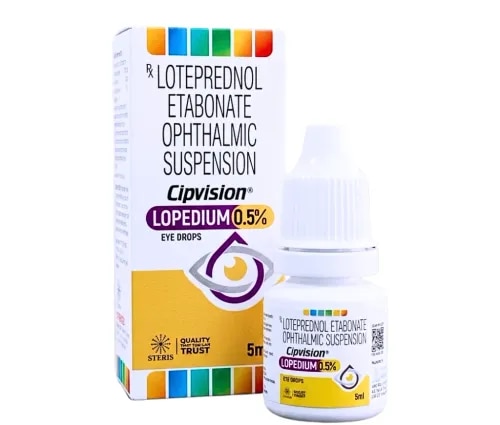
"name": "Loteprednol Etabonate Ophthalmic Suspension",
"description": "Loteprednol etabonate ophthalmic suspension is a prescription corticosteroid eye drop used to treat steroid-responsive inflammatory conditions of the eye, including post-surgical inflammation, allergic conjunctivitis, and certain forms of anterior uveitis. What sets loteprednol apart from older ophthalmic steroids is its “ester-based” chemical structure, which is designed to break down into inactive components after acting on eye tissue — giving it a comparatively lower risk of raising intraocular pressure (IOP) than traditional steroids like prednisolone or dexamethasone, while still delivering effective anti-inflammatory action. The typical dose is one to two drops in the affected eye, four times daily, or as directed, usually for a short, defined course rather than indefinite use. Common side effects include burning, stinging, and blurred vision, while prolonged or unsupervised use can still carry steroid-related risks such as elevated eye pressure. It is a Schedule H prescription-only medicine in India.\n\nWhat Is Loteprednol Etabonate Ophthalmic Suspension?\nLoteprednol etabonate ophthalmic suspension is a topical corticosteroid formulated specifically for use in the eye. It belongs to a category sometimes referred to as “site-specific” or “soft” steroids — a design approach where the drug is engineered to be highly active at the site of application (the eye) but rapidly metabolized into inactive by-products once it has acted, reducing the potential for the cumulative steroid-related side effects seen with older ophthalmic corticosteroids.\nThis suspension is commonly prescribed for:\n\nManaging inflammation following eye surgery, such as cataract surgery\nTreating allergic conjunctivitis, including seasonal allergic conjunctivitis\nCertain anterior segment inflammatory conditions, such as uveitis, under specialist supervision\nGiant papillary conjunctivitis and other steroid-responsive ocular surface conditions\n\nBecause of its comparatively favorable IOP profile, loteprednol is often considered by ophthalmologists for patients who need effective anti-inflammatory therapy but may be at higher risk from more potent steroids — though it is important to note that no ophthalmic steroid is entirely free of IOP-related risk, and monitoring remains necessary.\n\nHow Does Loteprednol Etabonate Work? (Mechanism of Action)\n\nCorticosteroid receptor binding – Loteprednol etabonate binds to glucocorticoid receptors within ocular tissue, initiating anti-inflammatory gene expression changes.\nSuppression of inflammatory mediators – This binding reduces the production of key inflammatory substances, including prostaglandins and cytokines, that drive redness, swelling, and discomfort.\nReduced vascular permeability – By calming the inflammatory cascade, the drug helps reduce leakage of fluid and inflammatory cells into ocular tissue, easing swelling.\nEster-based metabolism – Unlike ketone-based steroids, loteprednol's ester structure allows ocular esterases to break it down into inactive metabolites after it exerts its effect, which is thought to underlie its comparatively lower propensity to raise intraocular pressure.\nLocalized anti-inflammatory effect – The net result is effective control of ocular surface and anterior segment inflammation with a more favorable safety profile than some older steroid formulations, when used for the intended short duration.\n\n\nClinical Indications\nIndicationDetailsPost-operative ocular inflammationCommon after cataract and other intraocular surgeriesAllergic conjunctivitisIncluding seasonal allergic conjunctivitisGiant papillary conjunctivitisOften associated with contact lens wearAnterior uveitisUnder specialist supervisionOther steroid-responsive inflammatory conditions of the palpebral and bulbar conjunctiva, cornea, and anterior segmentAs directed by an ophthalmologist\nNot indicated for: viral (e.g., herpes simplex), fungal, or mycobacterial eye infections, where corticosteroid use can worsen the underlying condition.\n\nDosage & Administration\nParameterRecommendationStandard dose1–2 drops in the affected eye(s), typically 4 times dailyPost-surgical regimenOften started at higher frequency and tapered per surgeon's protocolShake before useYes — this is a suspension; shake well before each applicationDurationShort, defined course as prescribed; not intended for indefinite useTaperingGradual reduction recommended rather than abrupt discontinuation after extended useContact lensesRemove before instillation; reinsert only per your doctor's adviceMissed doseApply as soon as remembered; do not double the next dose\nImportant: Even with its comparatively favorable safety profile, loteprednol should be used strictly for the duration prescribed. Extended, unsupervised use is not recommended.\n\nKey Benefits\n\nEffective anti-inflammatory action for a range of steroid-responsive ocular conditions\nEster-based design associated with a comparatively lower risk of raising intraocular pressure than some older ophthalmic steroids\nUseful for patients needing steroid therapy who may be more sensitive to IOP elevation, under appropriate monitoring\nSuitable for both post-surgical inflammation control and allergic conjunctivitis management\nAvailable in a suspension formulation designed for good ocular surface contact\nOften used as part of a short, defined treatment course, reducing exposure duration compared to continuous long-term steroid regimens\n\n\nPrecautions\n\nUse strictly under ophthalmologist supervision — this is not an over-the-counter product\nNot suitable for viral, fungal, or mycobacterial eye infections\nEven with its favorable profile, prolonged use can still raise intraocular pressure in susceptible individuals — periodic IOP monitoring is recommended\nExtended use may increase the risk of cataract formation, as with other ophthalmic steroids\nMay mask signs of infection or delay wound healing if used inappropriately\nInform your doctor of any history of glaucoma, herpes eye infection, or corneal thinning before starting\nShake the suspension well before each use for accurate dosing\nAvoid touching the dropper tip to the eye or any surface\n\n\nSide Effects\nCommon (Usually Mild and Temporary)\n\nBurning or stinging sensation on instillation\nBlurred vision immediately after application\nEye discomfort or a foreign-body sensation\nMild eye redness\n\nLess Common / Serious (Consult Your Doctor Promptly)\n\nElevated intraocular pressure (comparatively less frequent than with older steroids, but still possible)\nDelayed wound healing\nSigns of secondary or masked ocular infection\nCataract progression with prolonged use\nAllergic reaction (eyelid swelling, itching, rash)\n\nDiscontinue and consult your ophthalmologist promptly if any serious symptom develops.\n\nComparison: Loteprednol vs. Other Ophthalmic Corticosteroids\nTreatmentClassIOP Risk ProfileBest Suited ForLoteprednol etabonate suspensionEster-based (“soft”) corticosteroidComparatively lowerPatients needing effective anti-inflammatory action with reduced IOP concernPrednisolone acetateKetone-based corticosteroidHigher with prolonged useRobust anti-inflammatory action; requires closer IOP monitoringDexamethasoneKetone-based corticosteroidHigher, potent effectSevere inflammatory conditions; typically shorter coursesFluorometholoneKetone-based corticosteroidModerateMild to moderate inflammation with somewhat reduced IOP risk\n\nKey Statistics (Placeholder — Pending Clinical Reviewer Verification)\nMetricValueReported incidence of clinically significant IOP elevation with short-course loteprednol use[Placeholder – insert verified clinical trial statistic]Comparative IOP-elevation rate vs. prednisolone acetate in controlled studies[Placeholder – insert verified reference]Typical duration of post-operative loteprednol therapy[Placeholder – insert reference range]\nAll statistics above are placeholders and must be verified and populated by a qualified clinical reviewer prior to publication.\n\nExpert Insight\n\n[Placeholder — Expert quote pending. To be added only after review and approval by a licensed ophthalmologist/medical reviewer associated with Steris Healthcare. Do not fabricate or publish without sign-off.]\n\n\nPrice of Loteprednol Etabonate Ophthalmic Suspension\nThe price of loteprednol etabonate ophthalmic suspension varies depending on brand, pack size, and region. For current pricing, availability, and prescription verification, please consult your ophthalmologist or an authorized pharmacy.\nPrescription only – consult your doctor.\n\nConclusion\nLoteprednol etabonate ophthalmic suspension offers a valuable option for managing steroid-responsive ocular inflammation — from post-surgical recovery to allergic conjunctivitis — with a design intended to reduce the intraocular pressure risks historically associated with ophthalmic corticosteroids. While its ester-based structure gives it a comparatively favorable safety profile, it remains a steroid, and prolonged or unsupervised use can still carry risks such as elevated eye pressure, cataract progression, and delayed healing. For this reason, loteprednol should always be used for the specific duration prescribed, with appropriate tapering and regular ophthalmic follow-up, rather than as a long-term, self-managed therapy.\n\nFrequently Asked Questions\n\n1. What is loteprednol etabonate ophthalmic suspension used for?\nIt is used to treat steroid-responsive eye inflammation, including inflammation after eye surgery, allergic conjunctivitis, and certain anterior segment inflammatory conditions such as uveitis, under an ophthalmologist's guidance.\n\n2. Is loteprednol a steroid?\nYes, loteprednol etabonate is a corticosteroid. It is specifically designed with an ester-based structure intended to reduce the risk of raising intraocular pressure compared to some older ophthalmic steroids, though it still requires medical supervision.\n\n3. How long can I use loteprednol eye drops?\nLoteprednol is typically prescribed for a short, defined course as determined by your ophthalmologist, often with a tapering schedule. It is not intended for indefinite, unsupervised long-term use.\n\n4. Does loteprednol raise eye pressure?\nLoteprednol has a comparatively lower risk of raising intraocular pressure than some older ophthalmic steroids due to its ester-based design, but it can still cause elevated eye pressure in susceptible individuals, especially with prolonged use, so periodic monitoring is recommended.\n\n5. Can loteprednol cause cataracts?\nProlonged use of any ophthalmic corticosteroid, including loteprednol, can increase the risk of cataract formation, particularly posterior subcapsular cataracts, which is why short, supervised courses are recommended.\n\n6. How is loteprednol different from prednisolone acetate?\nLoteprednol has an ester-based chemical structure designed to break down into inactive components after acting on the eye, which is associated with a lower risk of raising intraocular pressure compared to prednisolone acetate, a ketone-based steroid with a higher IOP-elevation potential.\n\n7. Can loteprednol be used for allergic conjunctivitis?\nYes, loteprednol etabonate ophthalmic suspension is commonly used to manage allergic conjunctivitis, including seasonal allergic conjunctivitis, especially when symptoms are significant or not controlled by other treatments.\n\n8. Is loteprednol safe after cataract surgery?\nYes, loteprednol is frequently prescribed to manage post-operative inflammation following cataract surgery, typically as part of a tapering regimen directed by the operating ophthalmologist.\n\n9. Can loteprednol be used for viral eye infections?\nNo, loteprednol and other corticosteroids are not appropriate for viral eye infections such as herpes simplex keratitis, as steroids can worsen these conditions if used inappropriately.\n\n10. What are the common side effects of loteprednol eye drops?\nCommon side effects include burning or stinging upon application, temporary blurred vision, mild eye redness, and eye discomfort. These are usually mild and resolve quickly.\n11. Does loteprednol need to be shaken before use?\nYes, since it is a suspension, the bottle should be shaken well before each use to ensure the medication is evenly distributed.\n\n12. Can loteprednol be stopped suddenly?\nStopping abruptly, especially after extended use, is generally not recommended. A gradual tapering schedule, as advised by your ophthalmologist, helps prevent rebound inflammation.\n\n13. Is loteprednol safe for long-term daily use?\nNo, loteprednol is generally intended for short, supervised courses rather than continuous long-term daily use, due to steroid-related risks with prolonged exposure.\n\n14. Can contact lenses be worn while using loteprednol?\nIt's generally recommended to remove contact lenses before applying loteprednol and reinsert them only after the interval advised by your doctor.\n\n15. Who should avoid using loteprednol eye drops?\nPatients with active untreated viral, fungal, or mycobacterial eye infections, or known hypersensitivity to the medication, should avoid loteprednol unless specifically directed otherwise by their ophthalmologist.\n\n16. Can loteprednol be used in children?\nUse in children should only occur under the direct guidance and prescription of a pediatric ophthalmologist, based on individual clinical assessment.\n17. Does loteprednol cause blurred vision?\nTemporary blurred vision can occur immediately after instillation in some patients and usually resolves quickly. Persistent blurred vision should be reported to your doctor.",
"price": 150.0,
"discountamount": 45.0,
"currencycode": "INR",
"priority": 1000000,
"isfreeshipmentavailable": false,
"shipmentduration": 1,
"_keywords": null,
"isarchived": false,
"isavailable": true,
"applicationid": null,
"productindex": 2471,
"imageuri": "https://productimages.withfloats.com/actual/6a50a78cd95cad00a915a6d8.png",
"tileimageuri": "https://productimages.withfloats.com/tile/6a50a78cd95cad00a915a6d8.png",
"images": null,
"totalqueries": 0,
"gpid": null,
"groupproductid": null,
"createdon": "2026-07-10T08:04:26.663Z",
"updatedon": "2026-07-10T08:04:26.663Z",
"buyonlinelink": null,
"producturl": "http://WWW.STERISINDIA.COM//loteprednol-etabonate-ophthalmic-suspension/2471",
"availableunits": -1.0,
"iscodavailable": false,
"isprepaidonlineavailable": false,
"maxcodorders": 0,
"maxprepaidonlineorders": 0,
"uniquepaymenturl": null,
"brandname": "CIPVISION LOPEDIUM 0.5%",
"category": "Opthalmology Range",
"tags": [
"Loteprednol Etabonate Ophthalmic Suspension",
"loteprednol etabonate ophthalmic suspension uses",
"loteprednol etabonate ophthalmic suspension uses in hindi",
"loteprednol etabonate ophthalmic suspension in hindi",
"loteprednol etabonate ophthalmic suspension eye drops uses",
"loteprednol etabonate ophthalmic suspension eye drops",
"loteprednol etabonate ophthalmic suspension use"
],
"variants": false,
"keyspecification": null,
"otherspecifications": null,
"pickupaddressreferenceid": null,
"paymenttype": "UniquePaymentUrl",
"producttype": "products",
"hsncode": null,
"gstslab": 0.0,
"isnotforsale": false
},
{
"_id": "6a43bee2d208c802be053f9d",
"fptag": "STERISHEALTHCARE",
"merchantname": null,
"customwidgets": null,
"externalsourceid": null,
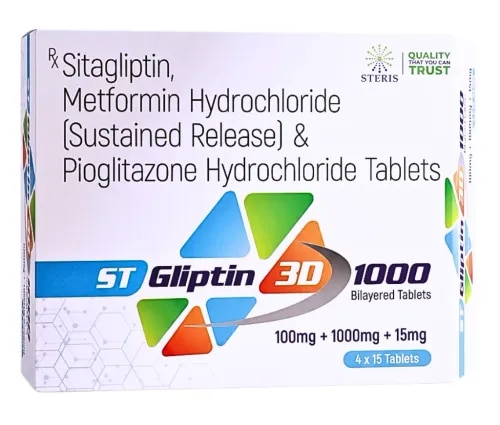
"name": "Sitagliptin 100mg Metformin Hydrochloride 1000mg Sustained Release Pioglitazone 15 mg",
"description": "Managing type 2 diabetes often requires more than a single medication to achieve long-term blood sugar control. Sitagliptin 100mg Metformin Hydrochloride 1000mg Sustained Release Pioglitazone 15 mg is a triple-combination prescription medicine formulated to help adults with type 2 diabetes maintain healthy glucose levels when diet, exercise, and single-drug therapy are not enough.\n\nThis advanced combination works through three different mechanisms to improve insulin sensitivity, reduce glucose production by the liver, and enhance the body's natural insulin response after meals. Because of its multi-action approach, it is frequently prescribed by healthcare professionals for patients requiring comprehensive glycemic control.\n\nIf you are searching for Sitagliptin 100mg Metformin Hydrochloride 1000mg Sustained Release Pioglitazone 15 mg, this guide covers everything you need to know—including how it works, benefits, dosage information, side effects, precautions, storage, and frequently asked questions.\n\nWhat is Sitagliptin 100mg Metformin Hydrochloride 1000mg Sustained Release Pioglitazone 15 mg?\n\nSitagliptin 100mg Metformin Hydrochloride 1000mg Sustained Release Pioglitazone 15 mg is a prescription oral anti-diabetic medicine used to manage Type 2 Diabetes Mellitus. It combines three clinically proven medicines into one convenient tablet to provide better blood sugar management throughout the day.\n\nThe formulation contains:\n\nSitagliptin 100 mg – A DPP-4 inhibitor that increases incretin hormones to improve insulin secretion.\nMetformin Hydrochloride 1000 mg Sustained Release – A biguanide that lowers glucose production by the liver and improves insulin sensitivity.\nPioglitazone 15 mg – A thiazolidinedione that enhances the body's response to insulin.\n\nTogether, these ingredients target multiple causes of high blood sugar, helping patients achieve better diabetes control while reducing the need for multiple separate medications.\n\nHow Does Sitagliptin 100mg Metformin Hydrochloride 1000mg Sustained Release Pioglitazone 15 mg Work?\n\nThis triple-combination tablet works through complementary mechanisms:\n\n1. Sitagliptin\n\nSitagliptin inhibits the DPP-4 enzyme, allowing incretin hormones to remain active longer. These hormones increase insulin release after meals and reduce excess glucagon production.\n\n2. Metformin SR\n\nMetformin Sustained Release decreases glucose production in the liver, reduces intestinal glucose absorption, and improves insulin sensitivity without causing excessive insulin release.\n\n3. Pioglitazone\n\nPioglitazone improves insulin sensitivity in muscle and fat tissues, enabling cells to utilize glucose more effectively.\n\nThe combination helps maintain consistent blood sugar levels throughout the day while lowering both fasting and post-meal glucose.\n\nWhy is This Triple Combination Important?\n\nType 2 diabetes progresses over time, making it difficult for many patients to control blood sugar using a single medication. A triple therapy offers several advantages:\n\nBetter HbA1c reduction\nMultiple mechanisms of action\nReduced insulin resistance\nImproved post-meal glucose control\nLower fasting blood sugar\nSimplified treatment with one tablet\nImproved medication adherence\nReduced need for additional medications\n\nHealthcare providers often prescribe this combination when dual therapy no longer provides adequate glucose control.\n\nKey Benefits of Sitagliptin 100mg Metformin Hydrochloride 1000mg Sustained Release Pioglitazone 15 mg\nExcellent Blood Sugar Control\n\nThe medicine helps reduce both fasting and postprandial blood glucose levels effectively.\n\nTriple Mechanism of Action\n\nEach ingredient targets a different pathway involved in diabetes, resulting in more comprehensive glycemic control.\n\nImproved Insulin Sensitivity\n\nPioglitazone increases insulin responsiveness, helping the body utilize glucose more efficiently.\n\nReduced Liver Glucose Production\n\nMetformin decreases glucose release from the liver, preventing unnecessary increases in blood sugar.\n\nSupports Long-Term Diabetes Management\n\nRegular use, alongside lifestyle modifications, contributes to improved HbA1c levels and reduced diabetes-related complications.\n\nConvenient Once-Daily Regimen\n\nCombining three medicines into a single tablet improves treatment convenience and supports better compliance.\n\nWho May Benefit from This Medicine?\n\nHealthcare professionals may prescribe this medication for adults with Type 2 Diabetes who:\n\nHave uncontrolled blood sugar despite dual therapy\nRequire triple oral anti-diabetic therapy\nHave elevated HbA1c levels\nNeed improved insulin sensitivity\nPrefer fewer tablets in their treatment plan\nAre following dietary and exercise recommendations but require additional glucose control\n\nThis medicine is not intended for Type 1 Diabetes or diabetic ketoacidosis.\n\nHow to Take Sitagliptin 100mg Metformin Hydrochloride 1000mg Sustained Release Pioglitazone 15 mg\n\nAlways follow your physician's instructions.\n\nGeneral recommendations include:\n\nTake once daily or as prescribed.\nSwallow the tablet whole.\nDo not crush, split, or chew the sustained-release tablet.\nTake with food to reduce stomach discomfort.\nTake it at the same time each day.\nContinue exercising and following a diabetic meal plan.\n\nNever stop treatment without consulting your healthcare provider.\n\nPossible Side Effects\n\nLike all prescription medicines, this combination may cause side effects, although not everyone experiences them.\n\nCommon side effects include:\n\nNausea\nStomach discomfort\nDiarrhea\nHeadache\nUpper respiratory infection\nWeight gain\nSwelling of feet or ankles\nMuscle aches\nDizziness\n\nSeek immediate medical attention if you experience:\n\nSevere allergic reaction\nPersistent vomiting\nDifficulty breathing\nSevere abdominal pain\nUnusual fatigue\nYellowing of skin or eyes\nSymptoms of lactic acidosis\nSigns of heart failure, such as rapid weight gain or shortness of breath\nPrecautions Before Using This Medicine\n\nInform your healthcare provider if you have:\n\nKidney disease\nLiver disease\nHeart failure\nBladder cancer history\nPancreatitis\nSevere dehydration\nAlcohol dependence\nVitamin B12 deficiency\nPlanned surgery or imaging with contrast dye\n\nWomen who are pregnant or breastfeeding should use this medicine only under medical supervision.\n\nDrug Interactions\n\nTell your doctor about all medicines you take, including:\n\nInsulin\nSulfonylureas\nDiuretics\nCorticosteroids\nThyroid medicines\nBlood pressure medicines\nRifampicin\nAlcohol\nCimetidine\nCertain antifungal medicines\n\nProper medication review helps minimize interaction risks.\n\nLifestyle Tips for Better Diabetes Control\n\nMedicine works best when combined with healthy lifestyle habits.\n\nRecommended practices include:\n\nFollow a balanced diabetic diet.\nExercise for at least 30 minutes most days.\nMonitor blood sugar regularly.\nMaintain a healthy body weight.\nStay hydrated.\nAvoid smoking.\nLimit alcohol intake.\nGet regular HbA1c tests.\nManage stress effectively.\nAttend routine medical check-ups.\nStorage Instructions\n\nStore the tablets:\n\nBelow 25°C\nIn a cool, dry place\nAway from moisture and direct sunlight\nIn the original packaging\nOut of reach of children and pets\n\nDo not use expired medicine.\n\nWhy Healthcare Professionals Choose This Triple Combination\n\nDoctors frequently recommend Sitagliptin 100mg Metformin Hydrochloride 1000mg Sustained Release Pioglitazone 15 mg because it addresses multiple aspects of diabetes management in a single formulation. By improving insulin secretion, reducing hepatic glucose production, and enhancing insulin sensitivity, it provides comprehensive glycemic control while simplifying treatment. When combined with a healthy lifestyle and regular medical follow-up, it can support long-term diabetes management and help reduce the risk of complications associated with uncontrolled blood sugar.\n\nConclusion\n\nSitagliptin 100mg Metformin Hydrochloride 1000mg Sustained Release Pioglitazone 15 mg is an effective prescription medication designed for adults with Type 2 Diabetes Mellitus who require stronger blood sugar management than single or dual therapy can provide. Its triple-action formula offers improved glycemic control, better insulin utilization, and convenient once-daily dosing. While highly effective, it should always be used under the guidance of a qualified healthcare professional, together with a balanced diet, regular physical activity, and routine blood sugar monitoring for the best long-term outcomes.\n\nHigh-Ranking FAQs (Google Search & Voice Search Optimized)\n1. What is Sitagliptin 100mg Metformin Hydrochloride 1000mg Sustained Release Pioglitazone 15 mg used for?\n\nIt is prescribed to help adults with Type 2 Diabetes Mellitus control blood sugar when lifestyle changes and other oral medicines do not provide adequate glycemic control.\n\n2. How does this triple-combination tablet work?\n\nIt combines three medicines that increase insulin release after meals, reduce glucose production by the liver, and improve the body's sensitivity to insulin, resulting in better overall blood sugar control.\n\n3. Can this medicine be taken once daily?\n\nYes. Many patients take it once daily, but the exact dosage and timing should always follow the prescribing doctor's instructions.\n\n4. Should I take this tablet with food?\n\nYes. Taking it with meals helps reduce stomach-related side effects associated with metformin and improves tolerability.\n\n5. Can this medicine cure diabetes?\n\nNo. It helps control blood sugar levels but does not cure Type 2 Diabetes. Long-term treatment, healthy eating, exercise, and regular monitoring remain essential.\n\n6. What should I do if I miss a dose?\n\nTake the missed dose as soon as you remember unless it is nearly time for your next scheduled dose. Do not take two doses together to make up for a missed dose.\n\n7. Can this medicine cause low blood sugar?\n\nOn its own, the risk is relatively low. However, the likelihood increases when it is used with insulin or sulfonylurea medicines, or if meals are skipped.\n\n8. Is this medicine safe for patients with kidney disease?\n\nPatients with kidney impairment require medical evaluation before using this medicine, particularly because metformin may not be suitable in severe kidney dysfunction.\n\n9. Can I drink alcohol while taking this medication?\n\nAlcohol intake should be limited or avoided, as excessive consumption may increase the risk of serious side effects, including lactic acidosis.\n\n10. Who should not use Sitagliptin 100mg Metformin Hydrochloride 1000mg Sustained Release Pioglitazone 15 mg?\n\nIt should not be used without medical advice by individuals with Type 1 Diabetes, diabetic ketoacidosis, severe kidney disease, certain liver conditions, or a history of serious hypersensitivity to any of its ingredients. Always consult your healthcare provider before starting treatment.",
"price": 243.0,
"discountamount": 73.0,
"currencycode": "INR",
"priority": 1000000,
"isfreeshipmentavailable": false,
"shipmentduration": 1,
"_keywords": null,
"isarchived": false,
"isavailable": true,
"applicationid": null,
"productindex": 2462,
"imageuri": "https://productimages.withfloats.com/actual/6a43bee3de301bd6de277db2.png",
"tileimageuri": "https://productimages.withfloats.com/tile/6a43bee3de301bd6de277db2.png",
"images": null,
"totalqueries": 0,
"gpid": null,
"groupproductid": null,
"createdon": "2026-06-30T13:04:34Z",
"updatedon": "2026-06-30T13:04:34Z",
"buyonlinelink": null,
"producturl": "http://WWW.STERISINDIA.COM//sitagliptin-100mg-metformin-hydrochloride-1000mg-sustained-release-pioglitazone-15-mg/2462",
"availableunits": -1.0,
"iscodavailable": false,
"isprepaidonlineavailable": false,
"maxcodorders": 0,
"maxprepaidonlineorders": 0,
"uniquepaymenturl": null,
"brandname": "ST GLIPTIN 3D 1000",
"category": "DIABETIC RANGE",
"tags": [],
"variants": false,
"keyspecification": null,
"otherspecifications": null,
"pickupaddressreferenceid": null,
"paymenttype": "UniquePaymentUrl",
"producttype": "products",
"hsncode": null,
"gstslab": 0.0,
"isnotforsale": false
},
{
"_id": "6a3a28e1f86185e41b2d185a",
"fptag": "STERISHEALTHCARE",
"merchantname": null,
"customwidgets": null,
"externalsourceid": null,
"name": "ciprofloxacin eye drops ip",
"description": "Eye infections can cause discomfort, redness, irritation, excessive tearing, and blurred vision, affecting daily activities and overall eye health. When bacterial infections affect the eyes, prompt treatment becomes essential to prevent complications and support faster recovery. Ciprofloxacin Eye Drops IP is a widely prescribed ophthalmic antibiotic formulation designed to treat bacterial eye infections effectively by eliminating infection-causing bacteria and reducing associated symptoms.\n\nWhether you are searching for a reliable treatment for bacterial conjunctivitis, corneal ulcers, or other bacterial eye conditions, understanding how Ciprofloxacin Eye Drops IP works can help you make an informed healthcare decision. This guide provides comprehensive information about its uses, benefits, mechanism of action, dosage guidelines, safety precautions, and frequently asked questions.\n\nWhat is Ciprofloxacin Eye Drops IP?\n\nCiprofloxacin Eye Drops IP is an antibiotic eye medication containing Ciprofloxacin, a fluoroquinolone antibiotic known for its broad-spectrum antibacterial activity. It is formulated specifically for ophthalmic use and is commonly prescribed by healthcare professionals to treat bacterial infections affecting the eye and surrounding tissues.\n\nThe formulation works against a wide range of gram-positive and gram-negative bacteria responsible for common eye infections. Because it targets bacterial infections directly, it helps reduce symptoms such as redness, swelling, discharge, burning sensation, and irritation.\n\nHow Does Ciprofloxacin Eye Drops IP Work?\n\nCiprofloxacin belongs to the fluoroquinolone class of antibiotics. It works by inhibiting bacterial DNA gyrase and topoisomerase IV, enzymes that are essential for bacterial DNA replication and repair.\n\nWithout these enzymes, bacteria cannot multiply or survive, leading to the elimination of the infection. As the bacterial load decreases, symptoms gradually improve, allowing the eye to heal naturally.\n\nThis targeted antibacterial action makes Ciprofloxacin Eye Drops IP highly effective against various bacterial strains commonly responsible for ophthalmic infections.\n\nWhy is Ciprofloxacin Eye Drops IP Important?\n\nEye infections should never be ignored because untreated bacterial infections can lead to serious complications, including corneal damage and vision impairment. Ciprofloxacin Eye Drops IP plays a crucial role in managing bacterial eye infections by:\n\nProviding targeted antibacterial treatment\nPreventing the spread of infection\nReducing inflammation and discomfort\nSupporting faster recovery\nProtecting vision by preventing complications\nTreating both mild and severe bacterial eye conditions\n\nTimely use under medical supervision can significantly improve treatment outcomes and patient comfort.\n\nCommon Uses of Ciprofloxacin Eye Drops IP\n\nHealthcare professionals commonly prescribe Ciprofloxacin Eye Drops IP for:\n\nBacterial Conjunctivitis\n\nAlso known as pink eye, bacterial conjunctivitis causes redness, irritation, discharge, and swelling. Ciprofloxacin helps eliminate the bacteria causing the infection.\n\nCorneal Ulcers\n\nCorneal ulcers are serious infections that can threaten vision if not treated promptly. Ciprofloxacin Eye Drops IP helps control bacterial growth and supports healing.\n\nBlepharitis\n\nInfections affecting the eyelids may respond well to antibiotic treatment with Ciprofloxacin.\n\nPost-Surgical Eye Infection Prevention\n\nDoctors may prescribe Ciprofloxacin Eye Drops IP after certain ophthalmic procedures to reduce the risk of bacterial infection.\n\nOther Susceptible Bacterial Eye Infections\n\nIt may also be recommended for other eye infections caused by bacteria sensitive to Ciprofloxacin.\n\nKey Benefits of Ciprofloxacin Eye Drops IP\nBroad-Spectrum Antibacterial Coverage\n\nThe formulation works against a wide variety of bacteria commonly associated with eye infections.\n\nRapid Symptom Relief\n\nMany patients experience improvement in redness, irritation, discharge, and discomfort within a few days of treatment.\n\nDirect Application\n\nSince the medication is applied directly to the eye, it delivers targeted treatment at the infection site.\n\nHelps Prevent Complications\n\nPrompt treatment can reduce the risk of infection progression and vision-related complications.\n\nConvenient Administration\n\nEasy-to-use eye drop formulation supports patient compliance and effective treatment.\n\nSuitable for Various Bacterial Eye Conditions\n\nIt is widely utilized across multiple ophthalmic bacterial infections.\n\nWho May Benefit from Ciprofloxacin Eye Drops IP?\n\nCiprofloxacin Eye Drops IP may be recommended for:\n\nAdults with bacterial eye infections\nPatients diagnosed with bacterial conjunctivitis\nIndividuals with bacterial corneal ulcers\nPatients recovering from eye surgery\nPeople experiencing bacterial eye inflammation under medical supervision\n\nA healthcare provider should always confirm whether the infection is bacterial before initiating treatment.\n\nHow to Use Ciprofloxacin Eye Drops IP\n\nFor optimal results, follow your doctor's instructions carefully.\n\nGeneral administration guidelines include:\n\nWash hands thoroughly before use.\nAvoid touching the dropper tip.\nTilt the head backward.\nPull down the lower eyelid gently.\nInstill the prescribed number of drops.\nClose the eyes for a few moments.\nAvoid rubbing the eyes immediately after application.\n\nContinue the full prescribed course even if symptoms improve earlier to ensure complete eradication of the infection.\n\nDosage Information\n\nThe dosage and duration depend on:\n\nType of infection\nSeverity of symptoms\nPatient age\nClinical response to treatment\n\nMild infections may require less frequent dosing, while severe infections such as corneal ulcers may require intensive administration during the initial treatment phase.\n\nAlways follow the prescription provided by your ophthalmologist.\n\nImportant Precautions\n\nBefore using Ciprofloxacin Eye Drops IP, consider the following precautions:\n\nUse only for ophthalmic application.\nDo not share eye drops with others.\nRemove contact lenses if advised by your doctor.\nAvoid contaminating the dropper tip.\nInform your physician about any allergies to fluoroquinolone antibiotics.\nComplete the entire prescribed treatment course.\n\nIf symptoms worsen or fail to improve, seek medical attention promptly.\n\nPossible Side Effects\n\nLike all medications, Ciprofloxacin Eye Drops IP may cause side effects in some individuals.\n\nCommon side effects may include:\n\nTemporary eye irritation\nMild burning sensation\nEye discomfort\nItching\nRedness\nBlurred vision immediately after administration\nForeign body sensation\n\nThese effects are generally mild and temporary. Persistent or severe reactions should be reported to a healthcare professional.\n\nStorage Instructions\n\nTo maintain product quality:\n\nStore at room temperature.\nKeep the bottle tightly closed.\nProtect from excessive heat and moisture.\nKeep away from direct sunlight.\nKeep out of reach of children.\nDo not use after the expiration date.\n\nProper storage helps preserve the effectiveness and sterility of the formulation.\n\nWhy Healthcare Professionals Trust Ciprofloxacin Eye Drops IP\n\nCiprofloxacin has been extensively used in ophthalmology due to its proven antibacterial efficacy and broad-spectrum activity. Its ability to target common ocular pathogens makes it a preferred treatment option for bacterial eye infections.\n\nDoctors often choose Ciprofloxacin Eye Drops IP because of:\n\nStrong antibacterial performance\nEstablished clinical use\nBroad pathogen coverage\nEffective symptom control\nDirect ocular delivery system\n\nWhen prescribed appropriately, it remains an important treatment option for bacterial eye care management.\n\nConclusion\n\nCiprofloxacin Eye Drops IP is a trusted ophthalmic antibiotic solution designed to combat bacterial eye infections effectively. By targeting infection-causing bacteria directly, it helps relieve redness, irritation, discharge, and discomfort while supporting faster healing and protecting eye health.\n\nWhether treating bacterial conjunctivitis, corneal ulcers, or post-surgical infections, Ciprofloxacin Eye Drops IP offers targeted antibacterial action and reliable clinical results. Always use this medication under the guidance of a qualified healthcare professional and complete the prescribed treatment course for optimal outcomes.\n\nFrequently Asked Questions (FAQs)\nWhat is Ciprofloxacin Eye Drops IP used for?\n\nCiprofloxacin Eye Drops IP is used to treat bacterial eye infections such as bacterial conjunctivitis, corneal ulcers, and other susceptible ocular infections.\n\nHow quickly does Ciprofloxacin Eye Drops IP start working?\n\nMany patients notice symptom improvement within a few days, although complete recovery depends on the severity of the infection.\n\nCan Ciprofloxacin Eye Drops IP treat viral eye infections?\n\nNo. Ciprofloxacin Eye Drops IP is an antibiotic and is only effective against bacterial infections, not viral or fungal infections.\n\nCan I wear contact lenses while using Ciprofloxacin Eye Drops IP?\n\nYour doctor may advise avoiding contact lenses during treatment until the infection has fully resolved.\n\nHow many times a day should I use Ciprofloxacin Eye Drops IP?\n\nThe dosing schedule varies depending on the infection and your doctor's recommendation. Always follow prescribed instructions.\n\nIs Ciprofloxacin Eye Drops IP safe for children?\n\nIt may be prescribed for pediatric patients when considered appropriate by a healthcare professional.\n\nWhat should I do if I miss a dose?\n\nApply the missed dose as soon as you remember unless it is nearly time for the next scheduled dose.\n\nCan I stop using the drops once symptoms improve?\n\nNo. Complete the full prescribed course to ensure the infection is fully treated and to help prevent bacterial resistance.\n\nAre there any side effects of Ciprofloxacin Eye Drops IP?\n\nPossible side effects include temporary burning, irritation, redness, itching, and mild discomfort after application.\n\nCan Ciprofloxacin Eye Drops IP cause blurred vision?\n\nTemporary blurred vision may occur immediately after administration and usually resolves quickly.\n\nDo I need a prescription for Ciprofloxacin Eye Drops IP?\n\nYes. Ciprofloxacin Eye Drops IP should be used under the supervision of a qualified healthcare professional.\n\nHow should Ciprofloxacin Eye Drops IP be stored?\n\nStore at room temperature, away from direct sunlight, heat, and moisture, and keep the bottle tightly closed after use.\n\nCan Ciprofloxacin Eye Drops IP be used after eye surgery?\n\nDoctors may prescribe it after certain ophthalmic procedures to help prevent bacterial infections.\n\nWhat bacteria does Ciprofloxacin Eye Drops IP treat?\n\nIt is effective against many gram-positive and gram-negative bacteria commonly associated with eye infections.\n\nWhen should I contact a doctor while using Ciprofloxacin Eye Drops IP?\n\nSeek medical advice if symptoms worsen, vision changes occur, severe irritation develops, or the infection does not improve as expected.",
"price": 11.0,
"discountamount": 0.0,
"currencycode": "INR",
"priority": 1000000,
"isfreeshipmentavailable": false,
"shipmentduration": 1,
"_keywords": null,
"isarchived": false,
"isavailable": true,
"applicationid": null,
"productindex": 2459,
"imageuri": "https://productimages.withfloats.com/actual/6a3a28e3a030eaa17eb84d32.png",
"tileimageuri": "https://productimages.withfloats.com/tile/6a3a28e3a030eaa17eb84d32.png",
"images": null,
"totalqueries": 0,
"gpid": null,
"groupproductid": null,
"createdon": "2026-06-23T06:34:09.197Z",
"updatedon": "2026-06-23T06:34:09.197Z",
"buyonlinelink": null,
"producturl": "http://WWW.STERISINDIA.COM//ciprofloxacin-eye-drops-ip/2459",
"availableunits": -1.0,
"iscodavailable": false,
"isprepaidonlineavailable": false,
"maxcodorders": 0,
"maxprepaidonlineorders": 0,
"uniquepaymenturl": null,
"brandname": "CIPVISION CIPRO",
"category": "Opthalmology Range",
"tags": [
"ciprofloxacin eye drops ip",
"ciprofloxacin eye drops",
"ciprofloxacin eye drops uses in hindi",
"ciprofloxacin eye drops uses",
"ciprofloxacin eye drops ip uses in hindi",
"ciprofloxacin eye drops ip",
"ciprofloxacin eye drops price",
"ciprofloxacin eye drops side effects",
"ciprofloxacin eye drops in hindi",
"ciprofloxacin eye drops ip uses",
"ciprofloxacin eye drops uses in tamil",
"ciprofloxacin eye drops ip in hindi",
"ciprofloxacin eye drops how many times a day",
"ciprofloxacin eye drops use"
],
"variants": false,
"keyspecification": null,
"otherspecifications": null,
"pickupaddressreferenceid": null,
"paymenttype": "UniquePaymentUrl",
"producttype": "products",
"hsncode": null,
"gstslab": 0.0,
"isnotforsale": false
},
{
"_id": "6a2686e24a6b2b1094ff5db5",
"fptag": "STERISHEALTHCARE",
"merchantname": null,
"customwidgets": null,
"externalsourceid": null,
"name": "moxifloxacin eye ointment 0.5 w w",
"description": "Moxifloxacin Eye Ointment 0.5% w/w\n\nIf you are searching for a reliable and effective treatment for bacterial eye infections, Moxifloxacin Eye Ointment 0.5% w/w is a trusted ophthalmic antibiotic formulation designed to provide targeted infection control and promote faster healing. This advanced eye ointment contains moxifloxacin, a broad-spectrum fluoroquinolone antibiotic that works against a wide range of bacteria responsible for ocular infections.\n\nBacterial eye infections can cause symptoms such as redness, irritation, swelling, discharge, pain, and discomfort. Without proper treatment, these infections may worsen and affect vision or overall eye health. Moxifloxacin Eye Ointment 0.5% w/w delivers the antibiotic directly to the site of infection, helping eliminate harmful bacteria while providing prolonged contact with the affected area.\n\nWhether prescribed for bacterial conjunctivitis, eyelid infections, corneal infections, or post-surgical infection prevention, Moxifloxacin Eye Ointment 0.5% w/w remains a preferred choice among ophthalmologists and patients seeking effective antibacterial eye care.\n\nWhat Is Moxifloxacin Eye Ointment 0.5% w/w?\n\nMoxifloxacin Eye Ointment 0.5% w/w is a topical ophthalmic antibiotic medication containing moxifloxacin as its active ingredient. Moxifloxacin belongs to the fluoroquinolone class of antibiotics and is known for its broad-spectrum antibacterial activity.\n\nThe ointment formulation allows the medication to remain in contact with the eye surface for a longer period compared to standard eye drops, ensuring sustained antibacterial action and improved therapeutic effectiveness.\n\nThis medication is commonly used for:\n\nBacterial conjunctivitis\nBacterial keratitis\nEyelid infections\nCorneal infections\nPost-operative infection prevention\nExternal ocular bacterial infections\nManagement of susceptible bacterial eye conditions\n\nMoxifloxacin Eye Ointment should only be used for bacterial infections and is not effective against viral, fungal, or allergic eye conditions.\n\nHow Moxifloxacin Eye Ointment 0.5% w/w Works\n\nThe effectiveness of Moxifloxacin Eye Ointment comes from its ability to eliminate infection-causing bacteria.\n\nMechanism of Action\n\nMoxifloxacin works by:\n\nInhibiting bacterial DNA replication\nBlocking bacterial growth and multiplication\nDestroying susceptible bacteria\nPreventing the spread of infection\nSupporting the natural healing process\n\nBy targeting essential bacterial enzymes required for survival, moxifloxacin effectively controls infection and helps restore eye health.\n\nThe ointment base also creates a protective layer over the eye surface, allowing prolonged antibiotic exposure and improved treatment outcomes.\n\nUses of Moxifloxacin Eye Ointment 0.5% w/w\n1. Bacterial Conjunctivitis\n\nOne of the most common uses of Moxifloxacin Eye Ointment is the treatment of bacterial conjunctivitis, often referred to as pink eye. It helps reduce redness, discharge, and irritation caused by bacterial infection.\n\n2. Bacterial Keratitis\n\nKeratitis is an infection of the cornea that can threaten vision if left untreated. Moxifloxacin helps eliminate the bacteria responsible and supports corneal healing.\n\n3. Eyelid Infections\n\nCertain bacterial infections affecting the eyelids can respond effectively to topical antibiotic therapy.\n\n4. Corneal Ulcers\n\nBacterial corneal ulcers require prompt treatment to prevent complications. Moxifloxacin provides direct antibacterial action at the site of infection.\n\n5. Post-Surgical Eye Care\n\nOphthalmologists may prescribe Moxifloxacin Eye Ointment after eye surgery to reduce the risk of bacterial infection during recovery.\n\n6. External Ocular Infections\n\nThe ointment can be used for various bacterial infections affecting the external structures of the eye.\n\nKey Benefits of Moxifloxacin Eye Ointment 0.5% w/w\nBroad-Spectrum Antibacterial Coverage\n\nMoxifloxacin is active against many bacteria commonly associated with eye infections.\n\nProlonged Contact Time\n\nThe ointment formulation remains on the eye surface longer than standard eye drops, enhancing therapeutic effectiveness.\n\nFast Infection Control\n\nThe medication begins working directly at the infection site to help reduce bacterial growth.\n\nSupports Faster Healing\n\nBy controlling infection, the ointment creates a favorable environment for tissue recovery.\n\nConvenient Night-Time Use\n\nMany patients find eye ointments particularly useful before bedtime due to their prolonged action.\n\nReduced Risk of Infection Spread\n\nEffective treatment helps prevent bacterial infection from worsening or spreading.\n\nTrusted Ophthalmic Antibiotic\n\nMoxifloxacin is widely used and recognized for its effectiveness in ophthalmic care.\n\nWhy Buyers Choose Moxifloxacin Eye Ointment 0.5% w/w\n\nPatients and healthcare providers often select Moxifloxacin Eye Ointment because of its proven ability to treat bacterial eye infections effectively.\n\nBuyer-Focused Advantages\nBroad-spectrum antibacterial activity\nLong-lasting ointment formulation\nDirect application to infected tissues\nTrusted antibiotic therapy\nEffective symptom relief\nSuitable for various bacterial eye infections\nSupports post-surgical eye care\nRecommended by ophthalmologists\n\nThese advantages make Moxifloxacin Eye Ointment 0.5% w/w a preferred choice for bacterial ocular infection management.\n\nWho Can Benefit from Moxifloxacin Eye Ointment 0.5% w/w?\n\nThis medication may be suitable for:\n\nAdults with bacterial eye infections\nPatients diagnosed with bacterial conjunctivitis\nIndividuals with bacterial corneal infections\nPatients recovering from eye surgery\nPeople experiencing bacterial eyelid infections\nIndividuals requiring topical antibiotic eye treatment\n\nA healthcare professional should determine whether this medication is appropriate for your condition.\n\nHow to Use Moxifloxacin Eye Ointment 0.5% w/w\n\nAlways follow your doctor's instructions regarding dosage and treatment duration.\n\nGeneral Directions for Use\nWash your hands thoroughly before application.\nTilt your head backward.\nPull down the lower eyelid gently.\nApply a small ribbon of ointment inside the lower eyelid.\nClose your eyes gently for a few moments.\nAvoid touching the tube tip to the eye or any surface.\nReplace the cap securely after use.\n\nTemporary blurred vision may occur immediately after application due to the ointment consistency.\n\nComplete the full prescribed course even if symptoms improve earlier.\n\nImportant Precautions\n\nBefore using Moxifloxacin Eye Ointment 0.5% w/w, inform your healthcare provider if you:\n\nHave allergies to moxifloxacin or other quinolone antibiotics\nWear contact lenses\nHave a history of severe allergic reactions\nAre pregnant or breastfeeding\nHave other eye disorders\nAre using additional eye medications\n\nAvoid wearing contact lenses during active eye infections unless instructed otherwise by your doctor.\n\nPossible Side Effects of Moxifloxacin Eye Ointment 0.5% w/w\n\nLike all medications, side effects may occur in some individuals.\n\nCommon Side Effects\nTemporary blurred vision\nMild eye irritation\nBurning sensation\nStinging after application\nIncreased tearing\nEye discomfort\nLess Common Side Effects\nEye redness\nItching\nDry eye sensation\nForeign body sensation\nSerious Side Effects\n\nSeek immediate medical attention if you experience:\n\nSevere eye pain\nSignificant swelling\nSudden vision changes\nSevere allergic reactions\nDifficulty breathing\nPersistent worsening of symptoms\n\nMost side effects are mild and resolve without intervention.\n\nStorage Instructions\n\nProper storage helps maintain product quality and effectiveness.\n\nRecommended Storage Conditions\nStore at room temperature.\nKeep away from direct sunlight.\nProtect from excessive heat and moisture.\nKeep the tube tightly closed.\nDo not use after the expiration date.\nKeep out of reach of children.\n\nAlways follow the storage instructions mentioned on the product packaging.\n\nFrequently Asked Questions\nWhat is Moxifloxacin Eye Ointment 0.5% w/w used for?\n\nIt is used to treat bacterial eye infections such as conjunctivitis, keratitis, and other susceptible ocular infections.\n\nIs it effective against viral eye infections?\n\nNo. Moxifloxacin is an antibiotic and works only against bacterial infections.\n\nHow long does treatment usually last?\n\nThe duration depends on the type and severity of the infection. Always follow your healthcare provider's recommendations.\n\nCan children use Moxifloxacin Eye Ointment?\n\nUse in children should only occur under medical supervision.\n\nCan I stop treatment once symptoms improve?\n\nNo. Completing the full prescribed course helps ensure complete infection control and reduces the risk of recurrence.\n\nConclusion\n\nMoxifloxacin Eye Ointment 0.5% w/w is a highly effective broad-spectrum ophthalmic antibiotic designed to treat bacterial eye infections and support rapid recovery. Its advanced ointment formulation provides prolonged contact with the eye surface, allowing sustained antibacterial action and enhanced treatment effectiveness.\n\nWhether used for bacterial conjunctivitis, keratitis, corneal infections, eyelid infections, or post-operative care, Moxifloxacin Eye Ointment 0.5% w/w offers reliable infection control and improved ocular comfort. Its proven clinical efficacy, convenient application, and broad-spectrum coverage make it a preferred choice among ophthalmologists and patients alike.",
"price": 130.0,
"discountamount": 39.0,
"currencycode": "INR",
"priority": 1000000,
"isfreeshipmentavailable": false,
"shipmentduration": 1,
"_keywords": null,
"isarchived": false,
"isavailable": true,
"applicationid": null,
"productindex": 2446,
"imageuri": "https://productimages.withfloats.com/actual/6a2686e500181eb478c30ebf.png",
"tileimageuri": "https://productimages.withfloats.com/tile/6a2686e500181eb478c30ebf.png",
"images": null,
"totalqueries": 0,
"gpid": null,
"groupproductid": null,
"createdon": "2026-06-08T09:09:54.667Z",
"updatedon": "2026-06-08T09:09:54.667Z",
"buyonlinelink": null,
"producturl": "http://WWW.STERISINDIA.COM//moxifloxacin-eye-ointment-0-5-w-w/2446",
"availableunits": -1.0,
"iscodavailable": false,
"isprepaidonlineavailable": false,
"maxcodorders": 0,
"maxprepaidonlineorders": 0,
"uniquepaymenturl": null,
"brandname": "CIPVISION MOXI 0.5%",
"category": "Opthalmology Range",
"tags": [
"moxifloxacin eye ointment 0.5 w w",
"moxifloxacin eye ointment 0.5 ww uses in hindi",
"moxifloxacin eye drops uses in hindi price"
],
"variants": false,
"keyspecification": null,
"otherspecifications": null,
"pickupaddressreferenceid": null,
"paymenttype": "UniquePaymentUrl",
"producttype": "products",
"hsncode": null,
"gstslab": 0.0,
"isnotforsale": false
}
],
"hasmoreitems": false,
"isapirequest": false,
"totalresults": 27,
"query": null,
"floatingpoint": null
}