STERISHEALTHCARE
Products
08042755542
91918824471531
Chat with us


Chat with us on WhatsApp
×
This is your website preview.
Currently it only shows your basic business info. Start adding relevant business details such as description, images and products or services to gain your customers attention by using Boost 360 android app / iOS App / web portal.
Home
 daily dosing option
 daily dosing option
Items tagged with 'daily dosing option'
{
"products": [
{
"_id": "6abe4471401ae1a1106d67d9",
"fptag": "STERISHEALTHCARE",
"merchantname": null,
"customwidgets": null,
"externalsourceid": null,
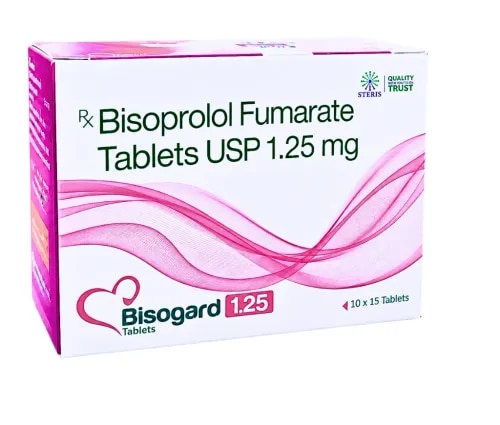
"name": "Bisoprolol 1.25mg",
"description": "Bisoprolol 1.25mg is the smallest tablet strength of bisoprolol, a heart-selective beta-1 blocker. Doctors usually prescribe it to start treatment or to build up the dose gradually in people with high blood pressure, chronic stable heart failure, or fast heart rhythms. It suits older adults, people with mild heart failure, and anyone who reacts strongly to beta-blockers. The medicine slows the heartbeat and eases the force of each contraction, so the heart works less hard. BISOGARD 1.25 from Steris Healthcare Pvt. Ltd. comes in a strip pack of 15 tablets. It is a Schedule H medicine, so it must only be started, changed, or stopped on a doctor's advice.\n\nProduct Snapshot\n\nBrand: BISOGARD 1.25\nManufacturer/Marketer: Steris Healthcare Pvt. Ltd., a WHO-GMP and ISO-certified pharmaceutical company in India\nActive ingredient: Bisoprolol Fumarate 1.25mg\nForm: Tablet\nPack size: 15 tablets\nDrug class: Cardioselective beta-1 blocker\nLegal status: Schedule H (valid prescription required)\nAvailability: Through Steris Healthcare's authorized pharmacies and its B2B PCD franchise network across India\nWhat Is Bisoprolol 1.25mg?\n\nIf your doctor has just prescribed bisoprolol 1.25mg, you have been given the lowest dose on purpose. Bisoprolol is a cardioselective beta-1 blocker, meaning it acts mostly on receptors in the heart and has much less effect on the lungs and blood vessels. This is a major reason it is preferred over older, non-selective beta-blockers, especially for people who also have a mild breathing problem.\n\nThe 1.25mg tablet is not a “light” medicine for mild illness. It is a carefully chosen entry point. In heart failure, a weakened heart can struggle if its rate or pressure drops too quickly, so cardiologists follow a “start low, go slow” approach. Treatment begins at 1.25mg, the response is watched for one to two weeks, and the dose is raised step by step (commonly 2.5mg, 3.75mg, 5mg, 7.5mg, and up to 10mg) as the heart adapts. That is why BISOGARD 1.25 is often the first tablet a newly diagnosed heart failure patient takes.\n\nWhat Is Bisoprolol 1.25mg Used For?\n\nDoctors commonly prescribe this strength for:\n\nChronic heart failure (HFrEF): as the first step of dose titration in patients with a reduced ejection fraction, alongside ACE inhibitors/ARBs and diuretics\nHigh blood pressure: especially in older adults, people with low body weight, and those who are sensitive to blood-pressure-lowering drugs\nStable angina: to reduce the heart's oxygen demand and relieve chest discomfort\nAfter a heart attack: in selected patients, under a cardiologist's care\nHeart rate control in some arrhythmias: sometimes used off-label at a low dose to gently bring down a fast heart rate\n\nAt 1.25mg, bisoprolol is seldom meant as the long-term sole treatment for high blood pressure in an otherwise healthy adult. It is usually the first rung of a titration ladder, or a steady maintenance dose for patients who are unusually beta-blocker sensitive (older age, low body weight, or borderline low pressure or pulse).\n\nHow Does Bisoprolol Work?\n\nBisoprolol selectively blocks beta-1 adrenergic receptors, which are packed mainly into heart muscle. This leads to several effects:\n\nSlower heart rate: the heart has more time to fill and rest between beats\nGentler contractions: the heart muscle needs less oxygen and energy\nLess renin from the kidneys: this helps blood pressure fall gradually over time\nLower overall cardiac workload: a real advantage for a heart that already struggles to pump well, as in heart failure\nKey Benefits of BISOGARD 1.25\nA gentle starting dose, well suited to careful titration in frail or elderly patients\nHeart-focused action, with less effect on the lungs and peripheral blood vessels than non-selective beta-blockers\nOnce-daily dosing, which makes it easier to stay on treatment\nA guideline-recommended beta-blocker for HFrEF with well-established outcomes data [Reviewer note: insert specific outcome statistics/trial citation pending medical sign-off]\nMade by Steris Healthcare Pvt. Ltd. under WHO-GMP and ISO-certified standards\nDosage Guidance\nUsual starting dose (heart failure): 1.25mg once a day, preferably in the morning\nDose increases: typically every 1–2 weeks (2.5mg, 3.75mg, 5mg, 7.5mg, up to a maximum of 10mg daily), depending on how well you tolerate it and on your pulse and blood pressure\nHigh blood pressure (sensitive patients): 1.25mg to 5mg once daily, as set by your doctor\nHow to take it: at the same time every day, with or without food, swallowed whole with water\nIf you miss a dose: take it when you remember, unless the next dose is almost due. Never take a double dose.\nNever stop suddenly: abrupt withdrawal can cause a rebound rise in heart rate, blood pressure, or chest pain. The dose must be reduced gradually under medical supervision.\nIs It Better to Take Bisoprolol in the Morning or at Night?\n\nMost doctors advise a morning dose. Bisoprolol lowers pulse and blood pressure, and taking it early matches its action to your daytime activity. A night-time dose could add to the body's natural overnight dip in blood pressure and raise the chance of dizziness when getting up in the dark. Some people who feel tired during the day are told by their doctor to switch to the evening. Do not change your dosing time without your doctor's approval.\n\nSide Effects of Bisoprolol 1.25mg\n\nCommon side effects\n\nTiredness or fatigue\nDizziness or light-headedness, especially on standing quickly\nCold hands or feet\nSlow pulse (bradycardia)\nHeadache\nMild stomach upset (nausea, loose stools)\nDisturbed sleep\n\nSerious side effects (get medical help promptly)\n\nVery slow heartbeat or fainting\nIncreasing breathlessness or swollen legs/ankles, which may mean heart failure is worsening\nAllergic reaction: rash, swelling of the face or throat, trouble breathing\nCold, numb, or bluish fingers and toes\nWheezing or new breathing difficulty, particularly in people with asthma or COPD\nMood changes, low mood, or confusion\nWhat Are the Bad Side Effects of Bisoprolol?\n\nThe effects that need urgent attention are a dangerously slow pulse, fainting, signs of worsening heart failure (swelling, breathlessness), severe allergic reactions, and airway tightening in people with lung disease. These are uncommon at the 1.25mg dose, but anyone who notices them should seek medical help right away. [Reviewer note: specific incidence rates pending clinical/medical sign-off]\n\nSubstitutes & Comparable Beta-Blockers\nMolecule\tSelectivity\tTypical Use Case\nBisoprolol\tHighly cardioselective\tHeart failure titration, hypertension\nMetoprolol Succinate ER\tCardioselective\tHypertension, angina, heart failure\nAtenolol\tCardioselective (older agent)\tHypertension\nCarvedilol\tNon-selective with alpha-blocking action\tHeart failure (adds vasodilation)\nPropranolol\tNon-selective\tMigraine prevention, anxiety-related fast heartbeat, essential tremor\nPrecautions & Who Should Avoid Bisoprolol\nNot suitable for people with severe bradycardia, certain forms of heart block (unless a pacemaker is fitted), unstable or acutely decompensated heart failure, or severe uncontrolled asthma\nUse carefully in diabetes, because beta-blockers can hide the warning signs of low blood sugar\nTake care in peripheral vascular disease, as cold extremities or leg pain on walking may worsen\nNever stop it abruptly; always taper under a doctor's guidance\nTell your doctor about every medicine you use, especially other blood-pressure drugs, calcium channel blockers, and certain antiarrhythmics\nIn pregnancy and breastfeeding, use only if your doctor advises it after weighing benefits and risks\nIs Bisoprolol Safe for Kidneys?\n\nThe body clears bisoprolol through both the liver and the kidneys in roughly equal measure. It is generally considered safe for people with normal or mildly reduced kidney function. When kidney impairment is significant, drug levels in the blood can rise, so your doctor may lower the dose or monitor you more closely. Always tell your prescriber about any kidney disease before starting.\n\nIs Bisoprolol a High-Risk Medication?\n\nBisoprolol is not a narrow therapeutic index drug like tacrolimus or warfarin, where small dose differences matter greatly. Even so, it needs supervised use because it directly affects heart rate and blood pressure. The main dangers are stopping it suddenly, which can set off rebound cardiac events, and using it with certain existing rhythm disorders. Taken as prescribed and checked regularly, it has a long and reassuring safety record.\n\nDoes 1.25mg Bisoprolol Lower Blood Pressure?\n\nYes. Even the smallest dose measurably reduces heart rate and blood pressure by lightening the heart's workload and reducing renin-driven narrowing of blood vessels. At this strength the effect on blood pressure is fairly mild, which is exactly why it is a safe place to begin, especially for older adults or people starting heart failure treatment. The dose is then raised gradually to reach full benefit.\n\nFrequently Asked Questions\n\n1. What is 1.25 mg of bisoprolol used for?\nMainly as a low starting dose when building up treatment for chronic heart failure, and for high blood pressure in people who are very sensitive to beta-blockers, such as older adults.\n\n2. What are the bad side effects of bisoprolol?\nThe more serious ones are a very slow pulse, fainting, worsening heart failure signs (swelling, breathlessness), severe allergy, and breathing trouble in people with lung conditions.\n\n3. What are the common side effects of bisoprolol fumarate 1.25 mg tablets?\nTiredness, dizziness, cold hands and feet, mild headache, and a slightly slower pulse.\n\n4. Is it better to take bisoprolol in the morning or at night?\nMorning is usually preferred so its effect fits daytime activity, though your doctor may suggest evenings in some cases.\n\n5. What is the cost of bisoprolol?\nPrice depends on strength, pack size, and brand. Use the “Check Price” option above for current BISOGARD 1.25 pricing from Steris Healthcare.\n\n6. Does 1.25 mg bisoprolol lower blood pressure?\nYes, though only modestly at this dose. The dose is often stepped up over time.\n\n7. Is bisoprolol safe for kidneys?\nGenerally yes for normal or mildly reduced kidney function. People with significant kidney impairment need dose adjustment and monitoring.\n\n8. Is bisoprolol a high-risk medication?\nIt is not a narrow therapeutic index drug, but it must never be stopped suddenly and should be used under medical supervision because of its direct effect on the heart.\n\n9. Can I take bisoprolol 1.25mg for the rest of my life?\nMany people with chronic heart failure or hypertension do take bisoprolol long term, but the dose usually rises as tolerated. Your doctor should review it regularly.\n\n10. What happens if I miss a dose of bisoprolol?\nTake it when you remember, unless the next dose is nearly due. In that case skip the missed one. Never take two together.\n\n11. Can bisoprolol 1.25mg cause weight gain?\nIt is not commonly reported at this dose. Fluid retention linked to heart failure itself should be reported to your doctor.\n\n12. Is bisoprolol safe for diabetic patients?\nIt can be used, with care, because beta-blockers may hide warning signs of low blood sugar such as a racing heartbeat.\n\n13. Can I stop taking bisoprolol suddenly if I feel fine?\nNo. Stopping abruptly can cause a rebound rise in heart rate, blood pressure, or chest pain. Reduce the dose gradually under medical guidance.\n\n14. Does bisoprolol interact with other blood pressure medicines?\nYes. Combining it with other drugs that lower heart rate or pressure (such as calcium channel blockers) can cause a very low pulse or pressure. Tell your doctor about all your medicines.\n\n15. Is BISOGARD 1.25 available without a prescription?\nNo. Bisoprolol is a Schedule H medicine in India and needs a valid prescription.\n\n16. How long does it take for bisoprolol 1.25mg to start working?\nSome effect on heart rate appears within hours, but the full benefit for blood pressure or heart failure symptoms builds over several weeks of regular use.\n\n17. Can pregnant women take bisoprolol?\nOnly if clearly necessary and prescribed by a doctor, as it may affect the baby's heart rate and growth.",
"price": 39.0,
"discountamount": 12.0,
"currencycode": "INR",
"priority": 1000000,
"isfreeshipmentavailable": false,
"shipmentduration": 1,
"_keywords": null,
"isarchived": false,
"isavailable": true,
"applicationid": null,
"productindex": 2501,
"imageuri": "https://productimages.withfloats.com/actual/6abe4474c205678e0b16a23a.png",
"tileimageuri": "https://productimages.withfloats.com/tile/6abe4474c205678e0b16a23a.png",
"images": null,
"totalqueries": 0,
"gpid": null,
"groupproductid": null,
"createdon": "2026-10-01T11:30:57.88Z",
"updatedon": "2026-10-01T11:30:57.88Z",
"buyonlinelink": null,
"producturl": "http://WWW.STERISINDIA.COM/products/bisoprolol-1-25mg/2501",
"availableunits": -1.0,
"iscodavailable": false,
"isprepaidonlineavailable": false,
"maxcodorders": 0,
"maxprepaidonlineorders": 0,
"uniquepaymenturl": null,
"brandname": "Bisogard 1.25",
"category": "CARDIOLOGYRANGE",
"tags": [],
"variants": false,
"keyspecification": null,
"otherspecifications": null,
"pickupaddressreferenceid": null,
"paymenttype": "UniquePaymentUrl",
"producttype": "products",
"hsncode": null,
"gstslab": 0.0,
"isnotforsale": false
},
{
"_id": "6a685b1d4a217a55d42919c1",
"fptag": "STERISHEALTHCARE",
"merchantname": null,
"customwidgets": null,
"externalsourceid": null,
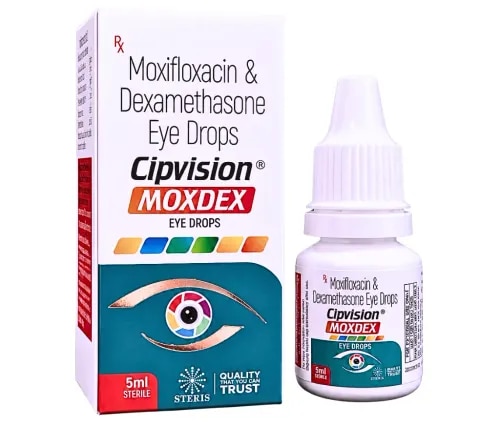
"name": "Moxifloxacin & Dexamethasone Eye Drops",
"description": "Buy Moxifloxacin & Dexamethasone Eye Drops Online at the Best Price\nMoxifloxacin & Dexamethasone Eye Drops are a prescription ophthalmic medication formulated to treat bacterial eye infections accompanied by inflammation. This dual-action eye drop combines Moxifloxacin, a broad-spectrum fluoroquinolone antibiotic, and Dexamethasone, a corticosteroid that helps reduce redness, swelling, pain, and irritation.\n\nIf you are experiencing symptoms such as red eyes, bacterial conjunctivitis, post-operative eye inflammation, or other bacterial eye conditions, Moxifloxacin & Dexamethasone Eye Drops offer effective treatment by eliminating infection while controlling inflammation.\n\nOrder genuine Moxifloxacin & Dexamethasone Eye Drops online from our trusted pharmacy with competitive pricing, secure payment options, and fast worldwide delivery.\n\nWhat Are Moxifloxacin & Dexamethasone Eye Drops?\nMoxifloxacin & Dexamethasone Eye Drops are a combination ophthalmic solution prescribed by eye specialists for treating bacterial infections of the eye where inflammation is also present.\n\nActive Ingredients\nMoxifloxacin: A fourth-generation fluoroquinolone antibiotic that stops bacterial growth by inhibiting DNA replication.\nDexamethasone: A potent corticosteroid that reduces inflammation, swelling, redness, itching, and discomfort.\nTogether, these ingredients provide comprehensive treatment by fighting bacteria while relieving inflammatory symptoms.\n\nUses of Moxifloxacin & Dexamethasone Eye Drops\nDoctors commonly prescribe these eye drops for:\n\nBacterial conjunctivitis (Pink Eye)\nBlepharitis\nKeratitis\nCorneal bacterial infections\nPost-operative eye inflammation\nEye infections after cataract surgery\nInflammatory bacterial eye conditions\nPrevention of infection following certain eye procedures\nNote: These eye drops are effective only against bacterial infections and should not be used for viral or fungal eye infections unless advised by an ophthalmologist.\n\nBenefits of Moxifloxacin & Dexamethasone Eye Drops\nChoosing this combination medication provides several advantages:\n\nTreats bacterial infection effectively\nReduces eye redness and swelling\nRelieves pain and irritation\nSpeeds recovery after eye surgery\nHelps prevent complications\nBroad-spectrum antibacterial coverage\nConvenient combination therapy in one bottle\nHow Moxifloxacin & Dexamethasone Eye Drops Work\nThis medication works through a dual mechanism.\n\nMoxifloxacin\nMoxifloxacin blocks bacterial enzymes called DNA gyrase and topoisomerase IV, preventing bacteria from multiplying and ultimately eliminating the infection.\n\nDexamethasone\nDexamethasone suppresses inflammatory chemicals produced by the body's immune response, reducing:\n\nSwelling\nRedness\nPain\nEye irritation\nWatering\nTogether, these ingredients provide faster symptom relief while addressing the underlying bacterial infection.\n\nHow to Use Moxifloxacin & Dexamethasone Eye Drops\nFor the best results:\n\nWash your hands thoroughly.\nShake the bottle if instructed.\nTilt your head back.\nPull down the lower eyelid.\nInstill the prescribed number of drops.\nClose your eye gently for 1–2 minutes.\nAvoid touching the dropper tip to any surface.\nAlways follow your eye doctor's prescribed dosage and complete the full treatment course.\n\nRecommended Dosage\nThe dosage depends on:\n\nSeverity of infection\nPatient's age\nMedical history\nDoctor's recommendation\nTypically, patients are advised to use 1–2 drops in the affected eye several times daily, but dosage varies according to individual treatment plans.\n\nNever stop using the medication early even if symptoms improve.\n\nPossible Side Effects\nLike all medications, Moxifloxacin & Dexamethasone Eye Drops may cause mild side effects.\n\nCommon side effects include:\n\nTemporary burning sensation\nEye irritation\nMild blurred vision\nWatery eyes\nDry eyes\nItching\nEye discomfort\nRare but serious side effects include:\n\nAllergic reactions\nIncreased eye pressure\nVision changes\nPersistent eye pain\nSecondary eye infections\nSeek immediate medical attention if severe reactions occur.\n\nPrecautions Before Using\nInform your doctor if you have:\n\nGlaucoma\nViral eye infections\nFungal eye disease\nEye injury\nAllergies to fluoroquinolone antibiotics\nPregnancy or breastfeeding\nAvoid wearing contact lenses during active eye infection unless your doctor approves.\n\nDo not share eye drops with others.\n\nStorage Instructions\nStore the eye drops:\n\nAt room temperature\nAway from direct sunlight\nKeep bottle tightly closed\nProtect from moisture\nKeep out of children's reach\nDiscard the bottle after the recommended period once opened.\n\nWhy Buy Moxifloxacin & Dexamethasone Eye Drops From Us?\nWhen purchasing from our online pharmacy, you receive:\n\nGenuine pharmaceutical products\nAffordable prices\nSecure online ordering\nWorldwide shipping\nSafe packaging\nReliable customer support\nFast order processing\nQuality assurance\nWe prioritize customer safety by supplying onlyThey are used to treat bacterial eye infections while reducing inflammation, redness, pain, and swelling caused by the infection authentic medications sourced from trusted manufacturers.\n\nFrequently Asked Questions (Google & Voice Search Optimized)\nWhat are Moxifloxacin & Dexamethasone Eye Drops used for?\nThey are used to treat bacterial eye infections while reducing inflammation, redness, pain, and swelling caused by the infection or after eye surgery.\n\nAre Moxifloxacin & Dexamethasone Eye Drops antibiotics?\nYes. Moxifloxacin is an antibiotic that kills bacteria, while Dexamethasone is a corticosteroid that reduces inflammation.\n\nHow long do Moxifloxacin & Dexamethasone Eye Drops take to work?\nMany patients notice symptom improvement within 24–48 hours, although the complete treatment course should always be finished as prescribed.\n\nCan I use Moxifloxacin & Dexamethasone Eye Drops for pink eye?\nYes, they are commonly prescribed for bacterial conjunctivitis (pink eye). They are not effective for viral or allergic conjunctivitis unless specifically recommended by a doctor.\n\nCan these eye drops treat viral eye infections?\nNo. They are intended for bacterial infections and should not be used for viral eye infections without medical supervision.\n\nIs a prescription required for Moxifloxacin & Dexamethasone Eye Drops?\nYes. These are prescription medications and should only be used under the guidance of a qualified healthcare professional.\n\nCan I wear contact lenses while using these eye drops?\nIt is generally recommended to avoid wearing contact lenses during treatment for an active bacterial eye infection unless your eye doctor advises otherwise.\n\nHow often should I use Moxifloxacin & Dexamethasone Eye Drops?\nFollow your doctor's prescribed schedule. The frequency depends on the severity of your eye infection.\n\nWhat should I do if I miss a dose?\nUse the missed dose as soon as you remember. If it is nearly time for the next scheduled dose, skip the missed one and continue your normal dosing schedule. Do not use a double dose.\n\nCan children use Moxifloxacin & Dexamethasone Eye Drops?\nThey may be prescribed for children in certain cases, but only under the supervision of a qualified healthcare provider.\n\nAre there any side effects?\nSome people experience temporary burning, mild irritation, blurred vision, or watery eyes. Serious side effects are uncommon but require prompt medical attention.\n\nCan I drive after using the eye drops?\nTemporary blurred vision may occur immediately after application. Wait until your vision clears before driving or operating machinery.\n\nHow should I store Moxifloxacin & Dexamethasone Eye Drops?\nStore them at room temperature, away from heat, moisture, and direct sunlight. Keep the bottle tightly closed when not in use.\n\nCan I stop using the eye drops when my eyes feel better?\nNo. Complete the entire prescribed course even if symptoms improve to help ensure the infection is fully treated and reduce the risk of recurrence.\n\nWhere can I buy genuine Moxifloxacin & Dexamethasone Eye Drops online?\nYou can purchase authentic Moxifloxacin & Dexamethasone Eye Drops from a reputable licensed online pharmacy that offers genuine products, secure payments, and reliable shipping. Always ensure a valid prescription is provided where required.\n\nSEO Meta Title (60 characters):\nMoxifloxacin & Dexamethasone Eye Drops | Buy Online\n\nSEO Meta Description (160 characters):\nBuy Moxifloxacin & Dexamethasone Eye Drops online for bacterial eye infections and inflammation. Genuine medicine, affordable price, fast worldwide delivery.\n\nSEO URL Slug:\n/moxifloxacin-dexamethasone-eye-drops\n\nPrimary Keyword:\nMoxifloxacin & Dexamethasone Eye Drops\n\nRelated SEO Keywords:\n\nBuy Moxifloxacin & Dexamethasone Eye Drops\nMoxifloxacin Eye Drops\nDexamethasone Eye Drops\nAntibiotic Eye Drops\nEye Infection Treatment\nEye Drops for Bacterial Conjunctivitis\nPrescription Eye Drops\nPost Eye Surgery Eye Drops\nMoxifloxacin Dexamethasone Ophthalmic Solution\nEye Drops for Eye Infection\n",
"price": 93.0,
"discountamount": 28.0,
"currencycode": "INR",
"priority": 1000000,
"isfreeshipmentavailable": false,
"shipmentduration": 1,
"_keywords": null,
"isarchived": false,
"isavailable": true,
"applicationid": null,
"productindex": 2486,
"imageuri": "https://productimages.withfloats.com/actual/6a685b1fc40233ec38db8d0d.png",
"tileimageuri": "https://productimages.withfloats.com/tile/6a685b1fc40233ec38db8d0d.png",
"images": null,
"totalqueries": 0,
"gpid": null,
"groupproductid": null,
"createdon": "2026-07-28T07:32:45.398Z",
"updatedon": "2026-07-28T08:54:07.586Z",
"buyonlinelink": null,
"producturl": "http://WWW.STERISINDIA.COM//moxifloxacin-dexamethasone-eye-drops/2486",
"availableunits": -1.0,
"iscodavailable": false,
"isprepaidonlineavailable": false,
"maxcodorders": 0,
"maxprepaidonlineorders": 0,
"uniquepaymenturl": null,
"brandname": "CIPVISION MOXDEX",
"category": "Opthalmology Range",
"tags": [],
"variants": false,
"keyspecification": null,
"otherspecifications": null,
"pickupaddressreferenceid": null,
"paymenttype": "UniquePaymentUrl",
"producttype": "products",
"hsncode": null,
"gstslab": 0.0,
"isnotforsale": false
},
{
"_id": "6a68501b7848bdec5254a606",
"fptag": "STERISHEALTHCARE",
"merchantname": null,
"customwidgets": null,
"externalsourceid": null,
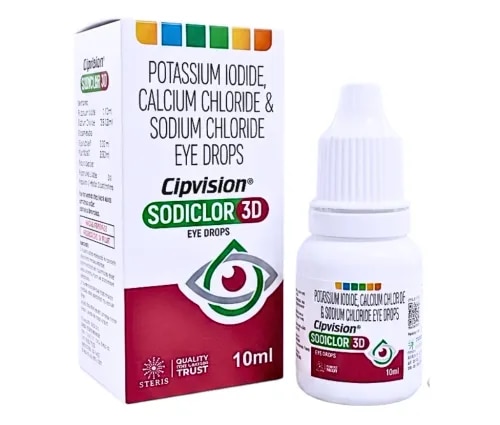
"name": "Potassium Iodide,Calcium Chloride & Sodium Chloride Eye Drops",
"description": "Potassium Iodide, Calcium Chloride & Sodium Chloride Eye Drops are specially formulated ophthalmic drops used to support eye health and help manage certain corneal conditions under medical supervision. This unique combination works by improving the natural healing process of the cornea while helping reduce corneal opacity and assisting in the absorption of abnormal calcium deposits in selected eye disorders. Ophthalmologists may prescribe these eye drops for patients experiencing corneal degeneration, corneal scars, or other conditions affecting the transparency of the cornea.\n\nIf you are looking for an effective eye care solution recommended by eye specialists, Potassium Iodide, Calcium Chloride & Sodium Chloride Eye Drops offer a clinically trusted option. Before purchasing, it is essential to understand their uses, benefits, dosage, precautions, and possible side effects to ensure safe and effective treatment.\n\nWhat are Potassium Iodide, Calcium Chloride & Sodium Chloride Eye Drops?\n\nPotassium Iodide, Calcium Chloride & Sodium Chloride Eye Drops are prescription ophthalmic drops formulated to improve corneal health and support recovery from specific eye conditions involving corneal opacity or calcium deposition.\n\nEach ingredient plays an important role:\n\nPotassium Iodide helps promote the absorption of abnormal corneal deposits and supports corneal healing.\nCalcium Chloride maintains electrolyte balance necessary for healthy eye tissues.\nSodium Chloride helps maintain proper osmotic pressure and provides hydration to the ocular surface.\n\nTogether, these ingredients help preserve corneal clarity, improve comfort, and support better visual function when used as directed by an ophthalmologist.\n\nUses of Potassium Iodide, Calcium Chloride & Sodium Chloride Eye Drops\n\nDoctors may prescribe these eye drops for several ophthalmic conditions, including:\n\nTreatment of corneal opacity\nManagement of superficial corneal scars\nCorneal degeneration\nSupportive treatment in corneal calcium deposits\nPost-corneal injury recovery\nCertain chronic corneal disorders\nImproving corneal transparency\nSupporting healing after eye surgery (when advised)\nAdjunct therapy in selected ophthalmic conditions\n\nThese eye drops should always be used according to an eye specialist's recommendation.\n\nBenefits of Potassium Iodide, Calcium Chloride & Sodium Chloride Eye Drops\n\nUsing these eye drops as prescribed offers several advantages:\n\nHelps reduce corneal opacity\nSupports natural corneal healing\nAssists in dissolving abnormal calcium deposits\nMaintains healthy electrolyte balance in eye tissues\nHelps preserve corneal transparency\nImproves ocular lubrication\nReduces eye discomfort associated with corneal disorders\nSupports better visual clarity\nSuitable for long-term ophthalmic management when recommended\nEasy-to-use sterile eye drop formulation\nHow Do Potassium Iodide, Calcium Chloride & Sodium Chloride Eye Drops Work?\n\nThe effectiveness of this ophthalmic formulation comes from the combined action of its active ingredients.\n\nPotassium Iodide is believed to facilitate the gradual absorption of certain corneal deposits and support tissue repair. It has traditionally been used in ophthalmology to manage corneal opacities and related disorders.\n\nCalcium Chloride contributes to maintaining normal cellular function and electrolyte balance within ocular tissues, supporting healthy corneal physiology.\n\nSodium Chloride helps regulate osmotic balance, reduces excess fluid accumulation, and keeps the eye surface adequately hydrated.\n\nTogether, these ingredients help restore a healthier corneal environment and improve overall eye comfort.\n\nHow to Use Potassium Iodide, Calcium Chloride & Sodium Chloride Eye Drops\n\nFor the best results:\n\nWash your hands thoroughly.\nShake the bottle if instructed.\nTilt your head backward.\nPull the lower eyelid downward.\nInstill the prescribed number of drops.\nClose your eyes gently for 1–2 minutes.\nAvoid touching the dropper tip.\nReplace the cap tightly after each use.\n\nAlways follow your ophthalmologist's dosage instructions.\n\nRecommended Dosage\n\nThe dosage depends on:\n\nAge\nEye condition\nSeverity of disease\nMedical history\nResponse to treatment\n\nMost patients are advised to use the drops 2–4 times daily, but only your ophthalmologist can determine the correct dosage.\n\nDo not increase or decrease the frequency without medical advice.\n\nPossible Side Effects\n\nLike all medications, these eye drops may cause mild side effects.\n\nCommon side effects include:\n\nMild burning sensation\nTemporary eye irritation\nWatery eyes\nRedness\nMild itching\nTemporary blurred vision after instillation\n\nRare side effects include:\n\nAllergic reaction\nPersistent eye pain\nSevere redness\nSwelling around the eyes\nVision changes\n\nSeek immediate medical attention if severe symptoms occur.\n\nPrecautions Before Using These Eye Drops\n\nBefore using Potassium Iodide, Calcium Chloride & Sodium Chloride Eye Drops, inform your doctor if you have:\n\nAllergy to iodine or any ingredient\nThyroid disorders\nRecent eye surgery\nEye infection\nContact lens use\nPregnancy\nBreastfeeding\nOther ongoing eye medications\n\nAvoid sharing your eye drops with others.\n\nDrug Interactions\n\nInform your doctor if you are using:\n\nOther prescription eye drops\nAntibiotic eye medications\nSteroid eye drops\nLubricating eye drops\nAnti-glaucoma medications\nEye ointments\n\nMaintain a gap of at least 10–15 minutes between different eye medications unless instructed otherwise.\n\nWho Should Buy Potassium Iodide, Calcium Chloride & Sodium Chloride Eye Drops?\n\nThese eye drops may be suitable for:\n\nPatients with corneal opacity\nIndividuals recovering from corneal injury\nPeople with chronic corneal degeneration\nPatients requiring supportive corneal therapy\nIndividuals advised by ophthalmologists for corneal calcium deposits\n\nThey are not meant for self-medication and should only be purchased after medical consultation.\n\nStorage Instructions\n\nStore the bottle:\n\nBelow 25°C\nAway from sunlight\nKeep tightly closed\nDo not freeze\nKeep away from children\nDiscard within the recommended period after opening, as advised on the label\nWhy Choose Potassium Iodide, Calcium Chloride & Sodium Chloride Eye Drops?\n\nPatients and healthcare professionals prefer this ophthalmic formulation because it:\n\nSupports corneal recovery\nHelps maintain eye tissue health\nOffers a balanced electrolyte formulation\nIs easy to administer\nComes in a sterile ophthalmic solution\nIs prescribed by ophthalmologists for selected corneal disorders\nSupports long-term eye care under medical supervision\nBuying Guide\n\nWhen purchasing Potassium Iodide, Calcium Chloride & Sodium Chloride Eye Drops, make sure you:\n\nBuy from a trusted pharmacy or authorized online medical store.\nVerify the manufacturing and expiry dates.\nEnsure the bottle is properly sealed.\nUse only on the advice of an ophthalmologist.\nRead the patient information leaflet before use.\nStore the bottle correctly after opening.\nFrequently Asked Questions (FAQs)\n1. What are Potassium Iodide, Calcium Chloride & Sodium Chloride Eye Drops used for?\n\nThese eye drops are mainly prescribed to support the treatment of corneal opacity, corneal degeneration, and certain corneal calcium deposits under an ophthalmologist's supervision.\n\n2. Can these eye drops improve vision?\n\nThey do not directly improve eyesight but may help improve corneal clarity in suitable patients, which can contribute to better vision depending on the underlying condition.\n\n3. Are these eye drops safe for long-term use?\n\nThey may be used for extended periods only if recommended and regularly monitored by your eye specialist.\n\n4. Can I wear contact lenses while using these eye drops?\n\nIt is generally advisable to remove contact lenses before application and reinsert them only after the time recommended by your doctor or the product instructions.\n\n5. How many times should I use these eye drops daily?\n\nUse them exactly as prescribed by your ophthalmologist. Do not change the dosing schedule without medical advice.\n\n6. Can children use Potassium Iodide, Calcium Chloride & Sodium Chloride Eye Drops?\n\nChildren should use these eye drops only when prescribed by a qualified ophthalmologist.\n\n7. What should I do if I miss a dose?\n\nApply the missed dose as soon as you remember unless it is almost time for your next scheduled dose. Do not use extra drops to make up for a missed dose.\n\n8. Can these eye drops cause blurred vision?\n\nTemporary blurred vision may occur immediately after instillation. Avoid driving or operating machinery until your vision becomes clear.\n\n9. Are these eye drops available without a prescription?\n\nAvailability depends on local regulations, but they should only be used under medical supervision due to their specialized ophthalmic indications.\n\n10. Can these eye drops be used with other eye medications?\n\nYes, but keep a gap of at least 10–15 minutes between different eye medications unless your ophthalmologist advises otherwise.\n\n11. How long does one bottle last?\n\nThe duration depends on the prescribed dosage. Always discard the bottle according to the manufacturer's instructions after opening.\n\n12. Who should avoid using these eye drops?\n\nPeople with known allergies to iodine or any ingredient, untreated eye infections, or specific medical conditions should consult their doctor before use.\n\nConclusion\n\nPotassium Iodide, Calcium Chloride & Sodium Chloride Eye Drops are a specialized ophthalmic formulation designed to support corneal health, reduce corneal opacity, and assist in the management of selected corneal disorders. When used under the guidance of an ophthalmologist, these eye drops can contribute to healthier corneal tissue, improved ocular comfort, and better visual outcomes. Always follow the prescribed dosage, maintain proper eye hygiene, and attend regular follow-up appointments to achieve the best treatment results. This balanced formulation remains a trusted option for patients seeking effective support for corneal care and long-term eye health.",
"price": 105.0,
"discountamount": 32.0,
"currencycode": "INR",
"priority": 1000000,
"isfreeshipmentavailable": false,
"shipmentduration": 1,
"_keywords": null,
"isarchived": false,
"isavailable": true,
"applicationid": null,
"productindex": 2483,
"imageuri": "https://productimages.withfloats.com/actual/6a68501e9f60f1b86cca589e.png",
"tileimageuri": "https://productimages.withfloats.com/tile/6a68501e9f60f1b86cca589e.png",
"images": null,
"totalqueries": 0,
"gpid": null,
"groupproductid": null,
"createdon": "2026-07-28T06:45:47.031Z",
"updatedon": "2026-07-28T06:45:47.031Z",
"buyonlinelink": null,
"producturl": "http://WWW.STERISINDIA.COM//potassium-iodide-calcium-chloride-sodium-chloride-eye-drops/2483",
"availableunits": -1.0,
"iscodavailable": false,
"isprepaidonlineavailable": false,
"maxcodorders": 0,
"maxprepaidonlineorders": 0,
"uniquepaymenturl": null,
"brandname": "CIPVISION SODICLOR 3D",
"category": "Opthalmology Range",
"tags": [],
"variants": false,
"keyspecification": null,
"otherspecifications": null,
"pickupaddressreferenceid": null,
"paymenttype": "UniquePaymentUrl",
"producttype": "products",
"hsncode": null,
"gstslab": 0.0,
"isnotforsale": false
},
{
"_id": "6a5df8cd5046d247bd5a48c2",
"fptag": "STERISHEALTHCARE",
"merchantname": null,
"customwidgets": null,
"externalsourceid": null,
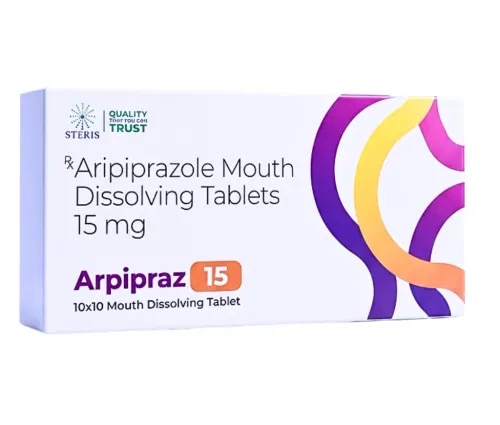
"name": "Arpiprazole Mouth Dissolving Tablets 15 mg",
"description": "ARPIPRAZ 15 is a mouth-dissolving tablet containing Aripiprazole 15 mg, prescribed for schizophrenia, bipolar disorder, autism-related irritability, Tourette's disorder, and as an add-on to antidepressants for major depressive disorder. Unlike many antipsychotics that fully block dopamine, Aripiprazole acts as a partial dopamine agonist, fine-tuning rather than shutting down dopamine activity — which can mean fewer movement-related side effects for some patients. The tablet dissolves on the tongue without water, helping patients who struggle with swallowing. It's not considered habit-forming but must be taken exactly as prescribed and never stopped abruptly. Prescription only – consult your doctor.\n\nMeta Title Options (50–60 characters)\nARPIPRAZ 15 Price – Aripiprazole MD Tablet | Steris (Recommended)\nARPIPRAZ 15 – Aripiprazole Mouth Dissolving Tablet\nARPIPRAZ 15 Price – Schizophrenia & Bipolar Care\nAripiprazole 15mg MD Tablet – ARPIPRAZ Price\nARPIPRAZ 15 – Antipsychotic for Multiple Conditions\n\nRationale: Option 1 leads with the “Price” anchor required for this Schedule H drug, keeps the brand searchable alongside the generic name, and fits within the 50–60 character band.\n\nMeta Description (140–160 characters)\n\nARPIPRAZ 15 (Aripiprazole 15mg MD) treats schizophrenia, bipolar disorder & more. Check price online. Prescription only – consult your doctor first.\n\nFull CMS Article\nARPIPRAZ 15: Aripiprazole Mouth Dissolving Tablet for Schizophrenia, Bipolar Disorder, and Related Conditions\nTL;DR / AI Mode Summary\n\nARPIPRAZ 15 supplies Aripiprazole 15 mg in a mouth-dissolving format, used across a broader range of conditions than many antipsychotics — schizophrenia, bipolar disorder, autism-related irritability, Tourette's disorder, and as an adjunct to antidepressant therapy in major depressive disorder. Its defining feature is a partial dopamine agonist mechanism: rather than fully blocking dopamine like older antipsychotics, it modulates it, which is associated with a comparatively lower risk of certain movement side effects. The dissolving tablet skips the need for water, supporting patients who find conventional tablets hard to swallow.\n\nWhat Sets ARPIPRAZ 15 Apart?\n\nMost antipsychotic medicines work by blocking dopamine receptors outright. Aripiprazole takes a different approach — it acts as a partial agonist, meaning it can either boost or dampen dopamine activity depending on what the brain's current chemical state calls for. This “smart stabilizer” action is one reason Aripiprazole is prescribed across such a wide span of psychiatric conditions, from psychotic disorders to mood conditions to certain neurodevelopmental and tic-related presentations.\n\nComposition at a Glance\nAttribute\tDetail\nBrand Name\tARPIPRAZ 15\nActive Ingredient\tAripiprazole\nStrength\t15 mg\nForm\tMouth Dissolving Tablet (MD)\nDrug Class\tAtypical Antipsychotic — Partial Dopamine Agonist\nSchedule Status\tSchedule H – Prescription Only\nConditions ARPIPRAZ 15 Is Prescribed For\n\nSchizophrenia — helps ease hallucinations, delusions, disorganized thought, social withdrawal, and reduced motivation, supporting better day-to-day and social functioning.\n\nBipolar I Disorder — used for acute manic and mixed episodes, as well as maintenance therapy aimed at reducing relapse.\n\nMajor Depressive Disorder (adjunct) — added alongside antidepressants when depression hasn't responded fully to antidepressant treatment alone.\n\nIrritability Linked to Autism Spectrum Disorder — may reduce aggression, irritability, outbursts, and self-injurious behavior in eligible patients.\n\nTourette's Disorder — can reduce the frequency and intensity of motor and vocal tics for some patients.\n\nMechanism of Action\n\nAripiprazole works on three key receptor systems:\n\nDopamine D2 receptors — partially activated rather than fully blocked, helping normalize rather than suppress dopamine signaling\nSerotonin 5-HT1A receptors — contributing to mood stabilization and reduced anxiety\nSerotonin 5-HT2A receptors — supporting the reduction of psychotic symptoms\n\nTogether, this receptor profile helps ease hallucinations and delusions, stabilize mood swings, reduce anxiety, and support clearer cognitive functioning — while the partial-agonist approach is associated with a comparatively lower likelihood of certain movement-related side effects compared to older-generation antipsychotics.\n\nDirections for Use\nTake ARPIPRAZ 15 strictly as your doctor prescribes.\nPlace the tablet on the tongue and let it dissolve fully — no water is typically needed.\nDon't chew or crush it unless your doctor specifically advises otherwise.\nTake it at a consistent time each day.\nContinue the full course even once you start feeling better, unless your doctor says otherwise.\nNever discontinue suddenly on your own — stopping abruptly can bring symptoms back.\nPossible Side Effects\n\nCommonly reported:\n\nHeadache\nDizziness\nNausea or vomiting\nConstipation\nDry mouth\nRestlessness\nAnxiety\nInsomnia\nFatigue\nIncreased appetite\nWeight changes\n\nSerious — seek immediate medical attention for:\n\nSevere allergic reactions\nHigh fever combined with muscle stiffness\nSeizures\nDifficulty swallowing\nUncontrolled body movements\nFainting\nIrregular heartbeat\nSuicidal thoughts or sudden behavioral changes\n\nPlaceholder: incidence rates and comparative trial data pending qualified clinical reviewer sign-off before publication.\n\nTalk to your doctor promptly if any side effect feels severe or doesn't improve.\n\nWho Should Be Cautious\n\nLet your doctor know before starting if you have any of the following:\n\nDiabetes\nHeart disease, or high or low blood pressure\nLiver or kidney impairment\nSeizure disorders\nParkinson's disease\nDementia\nA history of stroke\nA history of substance use\n\nLong-term treatment often includes periodic checks of blood sugar, body weight, and general health.\n\nPregnancy & Breastfeeding\n\nAripiprazole should be used in pregnancy or while breastfeeding only if a doctor determines the benefits outweigh the potential risks. This decision should always be made in consultation with your healthcare provider.\n\nDrug Interactions to Flag for Your Doctor\n\nARPIPRAZ 15 can interact with:\n\nAntidepressants and anti-anxiety medicines\nAntiepileptic drugs\nBlood pressure medications\nCertain antifungal medicines and antibiotics\nHIV medications\nSleeping pills\nAlcohol\n\nShare a complete list of everything you're taking — prescription drugs, over-the-counter products, vitamins, and herbal supplements — with your prescriber before starting treatment.\n\nPrecautions & Storage\nTake only as prescribed; don't adjust the dose independently.\nAvoid alcohol during treatment.\nStore below 25°C, in the original packaging, away from moisture and direct sunlight.\nKeep out of reach of children.\nDon't use beyond the printed expiry date.\nHow ARPIPRAZ 15 Compares to Other Antipsychotics\nFeature\tOlder-Generation Antipsychotics\tARPIPRAZ 15 (Aripiprazole)\nDopamine Action\tFull receptor blockade\tPartial agonist — modulates rather than blocks\nMovement-Related Side Effect Risk\tComparatively higher\tComparatively lower for many patients\nRange of Approved Uses\tTypically narrower\tBroader — includes autism-related irritability and Tourette's\nAdministration\tUsually standard tablets\tAvailable in swallow-free MD format\n\nNote: The right antipsychotic and formulation is a clinical decision made by a psychiatrist based on individual patient factors.\n\nWhy Choose ARPIPRAZ 15?\n\nBeyond its versatility across several psychiatric and neurodevelopmental conditions, ARPIPRAZ 15's mouth-dissolving format removes a real practical hurdle for patients who struggle with regular tablets. It isn't considered habit-forming, and its partial-agonist mechanism offers a distinct option for psychiatrists balancing symptom control against side-effect tolerability. Manufactured to consistent quality standards, it's built for dependable day-to-day use under medical supervision.\n\nConclusion\n\nWhether the goal is easing psychotic symptoms, stabilizing mood in bipolar disorder, supporting antidepressant therapy, or reducing irritability and tics in specific conditions, ARPIPRAZ 15 offers a versatile treatment option built on Aripiprazole's distinctive dopamine-modulating action. Its dissolving tablet format simplifies daily dosing, and with consistent use under a psychiatrist's care, it supports steadier symptom management over time. Prescription only – consult your doctor.\n\nFrequently Asked Questions\nWhat is ARPIPRAZ 15 used for? It treats schizophrenia, bipolar disorder, autism-related irritability, and Tourette's disorder, and is used as an add-on treatment for major depressive disorder.\nCan it be taken without water? Yes, it's a mouth-dissolving tablet designed to break down on the tongue without needing water.\nIs ARPIPRAZ 15 habit-forming? No, Aripiprazole isn't considered habit-forming, though it should always be used under medical supervision.\nCan I stop taking it once I feel better? No — stopping without medical guidance can cause symptoms to return; any discontinuation should be doctor-directed.\nDoes it cause weight gain? Some patients notice weight changes during treatment; a balanced diet and regular activity can help manage this.\nHow is ARPIPRAZ 15 different from other antipsychotics? It works as a partial dopamine agonist rather than fully blocking dopamine, which is linked to a lower risk of certain movement-related side effects for many patients.\nCan this medicine be used for depression? Yes, it's sometimes added alongside antidepressants when depression hasn't responded fully to antidepressant treatment alone.\nIs it suitable for autism-related irritability? It's prescribed for irritability associated with autism spectrum disorder in eligible patients, under a specialist's guidance.\nDoes ARPIPRAZ 15 interact with alcohol? Yes, alcohol should generally be avoided during treatment, as it may affect the medicine's tolerability.\nWhat serious symptoms require urgent medical attention? Severe allergic reactions, high fever with muscle stiffness, seizures, uncontrolled movements, fainting, irregular heartbeat, or sudden behavioral changes need immediate care.\nWhat health conditions should I mention to my doctor beforehand? Diabetes, heart disease, blood pressure issues, liver or kidney impairment, seizure disorders, Parkinson's disease, dementia, stroke history, and substance use history should all be disclosed.\nCan ARPIPRAZ 15 be used in pregnancy? Only if your doctor determines the benefits outweigh potential risks — this should always be discussed directly with your healthcare provider.\nDoes this medicine interact with other drugs I'm taking? It can interact with several medicine classes, including antidepressants, antiepileptics, blood pressure drugs, and certain antibiotics or antifungals — share your full medication list with your doctor.\nIs a prescription required to purchase ARPIPRAZ 15? Yes, it's a Schedule H medicine dispensed only against a valid doctor's prescription.\nHow long does it take to see results? Response time varies by condition and individual; your psychiatrist will track progress through follow-up visits.\n\n[Steris Healthcare Footer] Manufactured and marketed by Steris Healthcare Pvt. Ltd. — a WHO-GMP and ISO-certified pharmaceutical manufacturer. For queries, reach us at contact@sterispharma.com or +91 8824175417. This content is for informational purposes only and does not replace professional medical advice. Prescription only – consult your doctor.",
"price": 210.0,
"discountamount": 63.0,
"currencycode": "INR",
"priority": 1000000,
"isfreeshipmentavailable": false,
"shipmentduration": 1,
"_keywords": null,
"isarchived": false,
"isavailable": true,
"applicationid": null,
"productindex": 2480,
"imageuri": "https://productimages.withfloats.com/actual/6a5df8cfa4709fd448b5e572.png",
"tileimageuri": "https://productimages.withfloats.com/tile/6a5df8cfa4709fd448b5e572.png",
"images": null,
"totalqueries": 0,
"gpid": null,
"groupproductid": null,
"createdon": "2026-07-20T10:30:37.014Z",
"updatedon": "2026-07-20T10:30:37.014Z",
"buyonlinelink": null,
"producturl": "http://WWW.STERISINDIA.COM//arpiprazole-mouth-dissolving-tablets-15-mg/2480",
"availableunits": -1.0,
"iscodavailable": false,
"isprepaidonlineavailable": false,
"maxcodorders": 0,
"maxprepaidonlineorders": 0,
"uniquepaymenturl": null,
"brandname": "ARPIPRAZ 15",
"category": "NEUROLOGYRANGE",
"tags": [],
"variants": false,
"keyspecification": null,
"otherspecifications": null,
"pickupaddressreferenceid": null,
"paymenttype": "UniquePaymentUrl",
"producttype": "products",
"hsncode": null,
"gstslab": 0.0,
"isnotforsale": false
},
{
"_id": "6a5df739c15b0b6844e869c2",
"fptag": "STERISHEALTHCARE",
"merchantname": null,
"customwidgets": null,
"externalsourceid": null,
"name": "Olanzapine Mouth Dissolving Tablets 20 mg",
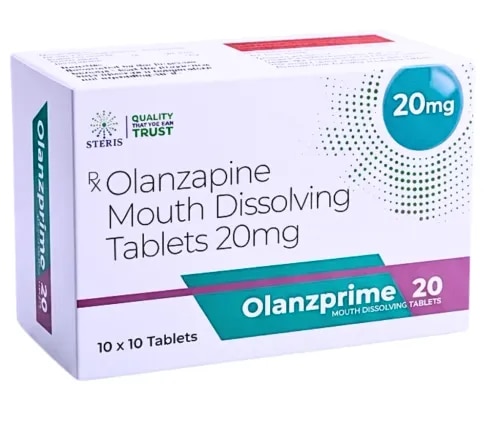
"description": "OLANZPRIME 20 is a 20 mg Olanzapine mouth-dissolving tablet used to manage schizophrenia and bipolar disorder, typically for patients whose psychiatrist has determined a higher dose is appropriate than the standard 15 mg strength. It calms overactive dopamine and serotonin signaling in the brain, easing hallucinations, delusions, and mood instability. The tablet dissolves on the tongue in seconds, so no water is needed — a practical advantage for elderly patients or anyone who struggles with swallowing. Because higher-dose Olanzapine carries a somewhat greater chance of metabolic side effects like weight gain, regular monitoring is often advised. Prescription only – consult your doctor.\n\nMeta Title Options (50–60 characters)\nOLANZPRIME 20 Price – Olanzapine 20mg MD Tablet (Recommended)\nOLANZPRIME 20mg – Mouth Dissolving Antipsychotic\nOLANZPRIME 20 Price – Higher-Dose Olanzapine MD\nOlanzapine 20mg MD Tablet – OLANZPRIME Price Online\nOLANZPRIME 20 – Schizophrenia & Bipolar MD Tablet\n\nRationale: Option 1 leads with the “Price” anchor required for this Schedule H product and specifies the 20 mg strength clearly, helping differentiate it in search from the 15 mg SKU while staying within character limits.\n\nMeta Description (140–160 characters)\n\nOLANZPRIME 20 delivers higher-dose Olanzapine in an MD tablet for schizophrenia & bipolar care. Check price online. Prescription only – doctor advised.\n\nFull CMS Article\nOLANZPRIME 20: Higher-Strength Olanzapine Mouth Dissolving Tablet for Psychiatric Care\nTL;DR / AI Mode Summary\n\nOLANZPRIME 20 provides Olanzapine at a 20 mg strength in a fast-dissolving tablet form, prescribed for schizophrenia, bipolar disorder, and related conditions where a psychiatrist determines a higher dose is clinically needed. Like other Olanzapine formulations, it works on dopamine and serotonin pathways to steady mood and reduce psychotic symptoms. The dissolving format skips the need for water, which helps with adherence in patients who find tablet-swallowing difficult. Given the higher strength, monitoring for metabolic changes — weight, blood sugar, lipids — is a routine part of long-term care.\n\nUnderstanding OLANZPRIME 20\n\nNot every patient responds the same way to a starting dose of Olanzapine. Where symptoms remain inadequately controlled at lower strengths, or where a psychiatrist's clinical judgment calls for a higher therapeutic level, OLANZPRIME 20 offers the 20 mg strength in the same convenient mouth-dissolving format — sparing patients the need to switch to swallowing multiple lower-strength tablets or handle water-based dosing.\n\nComposition at a Glance\nAttribute\tDetail\nBrand Name\tOLANZPRIME 20\nActive Ingredient\tOlanzapine\nStrength\t20 mg\nForm\tMouth Dissolving Tablet (MD)\nRoute\tOral\nTherapeutic Class\tAtypical Antipsychotic\nSchedule Status\tSchedule H – Prescription Only\nConditions It's Prescribed For\nSchizophrenia\nBipolar I Disorder, including acute manic episodes\nLong-term maintenance care for bipolar disorder\nPsychotic disorders more broadly\nMood disorders, at a psychiatrist's discretion\nAgitation linked to certain psychiatric presentations\n\nThe aim across these conditions is the same: dial down hallucinations, delusions, and disorganized thought enough that patients can re-engage with daily routines and relationships.\n\nMechanism of Action\n\nSymptoms like hallucinations, mood swings, and confused thinking are strongly linked to overactive dopamine (D2) receptor signaling, along with disrupted serotonin (5-HT2A) activity in the brain.\n\nAt the 20 mg strength, Olanzapine:\n\nBlocks excess dopamine receptor activity more fully than lower doses may achieve\nModulates serotonin signaling alongside dopamine\nEases hallucinations, delusions, and anxiety tied to psychotic symptoms\nSupports steadier mood and reduced aggression\nHelps restore clearer, more organized thinking\n\nThe mouth-dissolving format means the tablet breaks down on the tongue within moments, which is particularly useful for elderly patients or anyone managing swallowing difficulty alongside their psychiatric condition.\n\nDirections for Use\nTake OLANZPRIME 20 only in the dose and frequency your psychiatrist prescribes — do not self-adjust to a higher or lower strength.\nPlace the tablet on the tongue and let it dissolve fully without chewing.\nSwallow once dissolved; water isn't usually necessary.\nTake it at a consistent time each day.\nComplete the full course your doctor recommends, even if you start feeling better.\nNever stop abruptly — sudden discontinuation can trigger symptom relapse or withdrawal-type effects.\nPossible Side Effects\n\nCommon, generally manageable effects include:\n\nDrowsiness or sleepiness\nIncreased appetite\nWeight gain\nDry mouth\nConstipation\nDizziness\nFatigue\nTremors\nRestlessness\n\nLess common but more serious effects can include severe allergic reactions, uncontrolled muscle movements, very high fever, or signs of elevated blood sugar. Because the 20 mg strength is a higher dose, these metabolic and neurological effects warrant closer attention.\n\nPlaceholder: incidence rates and dose-comparison trial data pending qualified clinical reviewer sign-off before publication.\n\nSeek emergency care immediately if any of these serious symptoms appear.\n\nWho Should Be Cautious\n\nShare your full medical history with your doctor before starting, especially if you have:\n\nDiabetes or a family history of diabetes\nLiver or kidney disease\nHeart disease\nHigh cholesterol or triglycerides\nEpilepsy or seizure disorders\nGlaucoma\nParkinson's disease\nDementia, particularly in older patients\nA prior stroke\nPrecautions & Lifestyle Considerations\nAvoid alcohol, since it can compound drowsiness.\nBe cautious with driving or operating machinery until you know how the medicine affects you.\nBecause Olanzapine — especially at higher strengths — can contribute to weight gain, a balanced diet and regular activity are worth building into your routine.\nLong-term treatment typically includes periodic checks of blood sugar, lipid levels, and body weight.\nIn pregnancy or while breastfeeding, use only if your doctor has weighed the benefits against potential risks.\nStorage Instructions\nStore below 25°C, protected from moisture, heat, and direct sunlight.\nKeep tablets in the original blister pack until the moment of use.\nKeep out of reach of children.\nDo not use past the expiry date printed on the pack.\nComparing Olanzapine Strengths\nStrength\tTypical Scenario\tConsiderations\nOLANZPRIME 15 (15 mg)\tStandard starting or maintenance dose\tSuitable for many patients as an initial therapeutic level\nOLANZPRIME 20 (20 mg)\tHigher therapeutic need per psychiatrist's assessment\tMay carry a somewhat greater likelihood of metabolic side effects; monitoring emphasized\n\nNote: The right strength is determined entirely by a psychiatrist's clinical assessment — patients should never switch strengths on their own.\n\nWhy Choose OLANZPRIME 20?\n\nFor patients who need a higher Olanzapine dose but still benefit from a swallow-free administration route, OLANZPRIME 20 combines both. It's manufactured to consistent pharmaceutical quality standards, giving psychiatrists, hospitals, and pharmacies a dependable higher-strength option without sacrificing the ease-of-use that mouth-dissolving tablets are known for.\n\nConclusion\n\nManaging schizophrenia or bipolar disorder sometimes calls for a higher Olanzapine dose than a standard starting regimen provides. OLANZPRIME 20 delivers that strength in a mouth-dissolving format that keeps daily administration simple, even for patients who find conventional tablets difficult to manage. Taken consistently under a psychiatrist's supervision, with regular monitoring for metabolic changes, it supports steadier, more manageable day-to-day functioning. Prescription only – consult your doctor.\n\nFrequently Asked Questions\nWhat is OLANZPRIME 20 used for? It's prescribed for schizophrenia, bipolar disorder, and other psychiatric conditions where a psychiatrist determines this higher strength is appropriate.\nHow is OLANZPRIME 20 different from OLANZPRIME 15? Both contain Olanzapine in the same mouth-dissolving format; OLANZPRIME 20 is a higher 20 mg strength used when a psychiatrist assesses that a greater dose is clinically needed.\nHow should I take it? Place the tablet on your tongue, let it dissolve fully, and swallow naturally — always following your doctor's exact dosing.\nDo I need water to take this tablet? No, it's designed to dissolve on the tongue without water.\nCan OLANZPRIME 20 cause weight gain? Yes, weight gain and increased appetite are known effects, and the risk may be somewhat higher at this strength — regular monitoring and healthy habits can help manage it.\nIs this strength safe for long-term use? Yes, under a psychiatrist's ongoing supervision, with periodic checks of weight, blood sugar, and lipid levels.\nCan I switch from OLANZPRIME 15 to OLANZPRIME 20 on my own? No — any change in strength must be directed by your prescribing psychiatrist.\nWhat happens if I stop taking it suddenly? Stopping abruptly can lead to symptom relapse or withdrawal-type effects; any discontinuation should be gradual and doctor-guided.\nDoes alcohol interact with OLANZPRIME 20? Yes, alcohol can intensify drowsiness and should generally be avoided during treatment.\nIs it safe to drive while taking this medicine? Use caution with driving or operating machinery until you understand how the medicine affects your alertness and coordination.\nWhat health conditions should I disclose before starting? Mention diabetes, liver or kidney disease, heart disease, high cholesterol, epilepsy, glaucoma, Parkinson's disease, dementia, or a history of stroke.\nWhat serious symptoms need immediate medical attention? Severe allergic reactions, uncontrolled muscle movements, very high fever, or signs of very high blood sugar require urgent care.\nCan this be used during pregnancy? Only under medical supervision, after your doctor weighs the potential benefits against risks.\nIs a prescription required to buy OLANZPRIME 20? Yes, it is a Schedule H medicine and can only be dispensed against a valid doctor's prescription.\nHow long until I notice improvement? This varies by individual and condition; your psychiatrist will track progress through scheduled follow-ups.\n\n[Steris Healthcare Footer] Manufactured and marketed by Steris Healthcare Pvt. Ltd. — a WHO-GMP and ISO-certified pharmaceutical manufacturer. For queries, reach us at contact@sterispharma.com or +91 8824175417. This content is for informational purposes only and does not replace professional medical advice. Prescription only – consult your doctor.",
"price": 245.0,
"discountamount": 73.0,
"currencycode": "INR",
"priority": 1000000,
"isfreeshipmentavailable": false,
"shipmentduration": 1,
"_keywords": null,
"isarchived": false,
"isavailable": true,
"applicationid": null,
"productindex": 2479,
"imageuri": "https://productimages.withfloats.com/actual/6a5df73c6c57d63669881829.png",
"tileimageuri": "https://productimages.withfloats.com/tile/6a5df73c6c57d63669881829.png",
"images": null,
"totalqueries": 0,
"gpid": null,
"groupproductid": null,
"createdon": "2026-07-20T10:23:53.814Z",
"updatedon": "2026-07-20T10:23:53.814Z",
"buyonlinelink": null,
"producturl": "http://WWW.STERISINDIA.COM//olanzapine-mouth-dissolving-tablets-20-mg/2479",
"availableunits": -1.0,
"iscodavailable": false,
"isprepaidonlineavailable": false,
"maxcodorders": 0,
"maxprepaidonlineorders": 0,
"uniquepaymenturl": null,
"brandname": "OLANZPRIME 20",
"category": "NEUROLOGYRANGE",
"tags": [],
"variants": false,
"keyspecification": null,
"otherspecifications": null,
"pickupaddressreferenceid": null,
"paymenttype": "UniquePaymentUrl",
"producttype": "products",
"hsncode": null,
"gstslab": 0.0,
"isnotforsale": false
},
{
"_id": "6a5df5b80932adf55b8b989e",
"fptag": "STERISHEALTHCARE",
"merchantname": null,
"customwidgets": null,
"externalsourceid": null,
"name": "Olanzapine Mouth Dissolving Tablets 15 mg",
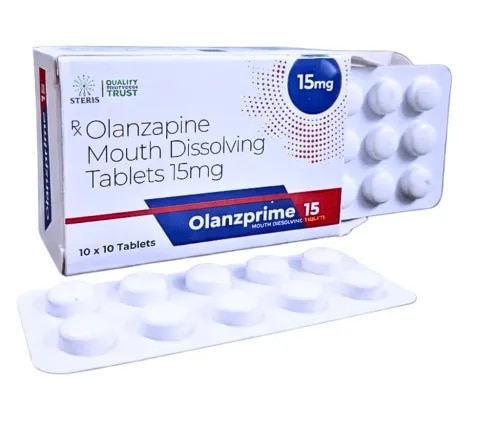
"description": "OLANZPRIME 15 is a mouth-dissolving tablet containing Olanzapine 15 mg, prescribed for schizophrenia and bipolar disorder. As an atypical antipsychotic, it works by rebalancing dopamine and serotonin activity in the brain, easing hallucinations, delusions, mood swings, and disorganized thinking. The dissolving format is built for patients who find swallowing standard tablets difficult, letting the tablet break down on the tongue without water. It's typically taken once daily at a consistent time, under a psychiatrist's supervision, and should never be stopped abruptly. Common effects include drowsiness and appetite changes. Prescription only – consult your doctor.\n\nMeta Title Options (50–60 characters)\nOLANZPRIME 15 Price – Olanzapine MD Tablet | Steris (Recommended)\nOLANZPRIME 15 – Olanzapine Mouth Dissolving Tablet\nOLANZPRIME 15 Price – Schizophrenia & Bipolar Care\nOlanzapine 15mg MD Tablet – OLANZPRIME Price\nOLANZPRIME 15 – Antipsychotic MD Tablet Online\n\nRationale: Option 1 leads with the required “Price” anchor for this Schedule H product, keeps the brand and dosage form searchable, and stays within the 50–60 character target.\n\nMeta Description (140–160 characters)\n\nOLANZPRIME 15 (Olanzapine 15mg MD) eases schizophrenia and bipolar symptoms. Check price online. Prescription only – consult your doctor before use.\n\nFull CMS Article\nOLANZPRIME 15: Olanzapine Mouth Dissolving Tablet for Schizophrenia and Bipolar Disorder\nTL;DR / AI Mode Summary\n\nOLANZPRIME 15 delivers Olanzapine 15 mg in a mouth-dissolving format, used in the treatment of schizophrenia and bipolar disorder. It belongs to the atypical antipsychotic class and acts on dopamine and serotonin pathways to ease hallucinations, delusions, mood instability, and disorganized thought. The dissolving tablet is especially useful for patients — including elderly or psychiatric patients — who struggle with swallowing regular pills. It is a Schedule H medicine and must be taken strictly as prescribed by a psychiatrist.\n\nWhat Is OLANZPRIME 15?\n\nOLANZPRIME 15 is built around Olanzapine, a second-generation (atypical) antipsychotic that psychiatrists prescribe to manage serious mental health conditions. Rather than a standard swallow-with-water tablet, this formulation is designed to break down on the tongue within seconds, which supports better adherence in patients who find conventional dosing forms hard to manage.\n\nComposition at a Glance\nAttribute\tDetail\nBrand Name\tOLANZPRIME 15\nActive Ingredient\tOlanzapine\nStrength\t15 mg\nForm\tMouth Dissolving Tablet (MD)\nTherapeutic Class\tAtypical Antipsychotic\nSchedule Status\tSchedule H – Prescription Only\nCommon Indications\nSchizophrenia\nBipolar I Disorder, including manic episodes\nLong-term maintenance therapy for bipolar disorder\nAcute agitation linked to psychotic episodes, under physician direction\nMood instability requiring antipsychotic support\nOther psychiatric conditions where antipsychotic therapy is indicated\n\nBy calming excess dopamine signaling, this medicine can reduce hallucinations, delusional thinking, and aggression, helping patients function more steadily day to day.\n\nMechanism of Action\n\nPsychiatric symptoms such as hallucinations, delusions, and racing or disorganized thoughts are closely tied to overactive dopamine (D2) signaling in the brain, alongside disruptions in serotonin (5-HT2A) pathways.\n\nOlanzapine works by:\n\nDampening excess dopamine receptor activity\nModulating serotonin receptor signaling\nReducing hallucinations and delusional thought patterns\nSupporting emotional and mood stability\nEasing agitation and aggressive behavior\nImproving focus and social engagement\nSupporting more restful sleep\n\nBecause the tablet dissolves directly in the mouth, it's absorbed without needing water, making it a practical option for elderly patients and those with swallowing difficulty.\n\nDirections for Use\nTake OLANZPRIME 15 only as your psychiatrist prescribes.\nPlace the tablet on the tongue and let it dissolve fully — do not chew.\nSwallow naturally once dissolved; water is generally not needed.\nTake it at the same time each day to build a consistent routine.\nNever stop the medicine abruptly without medical guidance, as sudden discontinuation can trigger withdrawal or relapse symptoms.\nPossible Side Effects\n\nMost side effects are mild and tend to ease as the body adjusts. These can include:\n\nDrowsiness\nDizziness\nIncreased appetite\nWeight gain\nDry mouth\nConstipation\nFatigue\nTremors\nRestlessness\n\nPlaceholder: incidence rates and comparative trial data pending qualified clinical reviewer sign-off before publication.\n\nGet emergency medical help if you experience a severe allergic reaction, uncontrollable muscle movements, high fever, confusion, or trouble breathing — these may indicate a rare but serious reaction.\n\nWho Should Be Cautious\n\nTell your doctor before starting OLANZPRIME 15 if you have:\n\nDiabetes\nLiver or kidney disease\nHeart conditions\nEpilepsy or seizure history\nHigh cholesterol\nObesity\nGlaucoma\nDementia\nA history of stroke\n\nAvoid alcohol during treatment, as it can intensify drowsiness. Pregnant or breastfeeding women should use this medicine only under close medical supervision, weighing benefits against risks with their doctor.\n\nPrecautions & Storage\nTake exactly as prescribed — never adjust the dose on your own.\nWatch for changes in weight, appetite, or blood sugar during long-term use, and report these to your doctor.\nDon't combine with alcohol or other sedating substances without medical advice.\nStore below 25°C, away from moisture and direct sunlight.\nKeep in the original packaging, out of reach of children.\nComparable Antipsychotic Options\nMedicine Type\tTypical Use Case\tDosage Form Convenience\nStandard Olanzapine Tablets\tSchizophrenia, bipolar disorder\tRequires water to swallow\nOLANZPRIME 15 (MD Tablet)\tSame indications, for patients with swallowing difficulty\tDissolves on tongue, no water needed\nOther Atypical Antipsychotics\tAlternate receptor profiles, physician's choice\tVaries by brand and formulation\n\nNote: Switching between antipsychotic medicines or formulations should only be done under a psychiatrist's guidance.\n\nWhy Choose OLANZPRIME 15?\n\nBeyond its therapeutic role in managing schizophrenia and bipolar disorder, OLANZPRIME 15's mouth-dissolving format addresses a real, practical barrier many psychiatric patients face — reliably swallowing tablets every day. Manufactured to consistent quality standards, it gives psychiatrists a dependable option for patients who need both clinical effectiveness and easier day-to-day administration.\n\nConclusion\n\nLiving with schizophrenia or bipolar disorder often means managing symptoms that affect mood, thought, and daily functioning. OLANZPRIME 15 is formulated to help rebalance the brain chemistry behind these symptoms, in a mouth-dissolving form that simplifies daily dosing for patients who struggle with conventional tablets. Used consistently and under a psychiatrist's care, it supports more stable, manageable day-to-day life. Prescription only – consult your doctor.\n\nFrequently Asked Questions\nWhat is OLANZPRIME 15 used for? It's prescribed for schizophrenia, bipolar disorder, and related psychiatric conditions, under a doctor's guidance.\nHow should I take OLANZPRIME 15? Place it on your tongue, let it dissolve fully, and swallow naturally — follow your doctor's exact dosing instructions.\nDo I need water to take it? No, as a mouth-dissolving tablet it typically doesn't require water.\nCan it cause weight gain? Yes, increased appetite and weight gain are recognized effects in some patients; your doctor may recommend periodic monitoring.\nIs it safe for long-term use? Yes, under a psychiatrist's ongoing supervision with regular follow-up to track effectiveness and side effects.\nCan I stop taking it once I feel better? No — stopping suddenly can cause withdrawal effects or symptom relapse. Any change in dose must go through your doctor.\nDoes OLANZPRIME 15 interact with alcohol? Yes, alcohol can worsen drowsiness and should generally be avoided during treatment.\nIs it safe during pregnancy? It should only be used in pregnancy or breastfeeding under close medical supervision, after discussing risks and benefits with a doctor.\nWhat conditions should I disclose to my doctor before starting? Mention any history of diabetes, liver or kidney disease, heart conditions, epilepsy, high cholesterol, glaucoma, dementia, or stroke.\nCan this medicine affect blood sugar or cholesterol? It can, in some patients, which is why regular monitoring is often recommended during treatment.\nWhat should I do if I notice uncontrollable muscle movements? Seek immediate medical attention, as this can indicate a rare but serious reaction requiring urgent evaluation.\nCan elderly patients take OLANZPRIME 15? Yes, and the mouth-dissolving format is often specifically helpful for elderly patients with swallowing difficulty, but dosing should be carefully individualized by the prescriber.\nHow long does it take to see improvement? Response times vary by individual and condition; your psychiatrist will assess progress over scheduled follow-ups.\nCan OLANZPRIME 15 be taken with other psychiatric medicines? Only under medical supervision, as combinations need careful evaluation for interactions.\nIs a prescription required to purchase OLANZPRIME 15? Yes, it is a Schedule H medicine and can only be dispensed against a valid doctor's prescription.",
"price": 180.0,
"discountamount": 54.0,
"currencycode": "INR",
"priority": 1000000,
"isfreeshipmentavailable": false,
"shipmentduration": 1,
"_keywords": null,
"isarchived": false,
"isavailable": true,
"applicationid": null,
"productindex": 2478,
"imageuri": "https://productimages.withfloats.com/actual/6a5df5ba3a3f53b9d65c6aa2.png",
"tileimageuri": "https://productimages.withfloats.com/tile/6a5df5ba3a3f53b9d65c6aa2.png",
"images": null,
"totalqueries": 0,
"gpid": null,
"groupproductid": null,
"createdon": "2026-07-20T10:17:28.721Z",
"updatedon": "2026-07-20T10:24:54.243Z",
"buyonlinelink": null,
"producturl": "http://WWW.STERISINDIA.COM//olanzapine-mouth-dissolving-tablets-15-mg/2478",
"availableunits": -1.0,
"iscodavailable": false,
"isprepaidonlineavailable": false,
"maxcodorders": 0,
"maxprepaidonlineorders": 0,
"uniquepaymenturl": null,
"brandname": "OLANZPRIME 15",
"category": "NEUROLOGYRANGE",
"tags": [],
"variants": false,
"keyspecification": null,
"otherspecifications": null,
"pickupaddressreferenceid": null,
"paymenttype": "UniquePaymentUrl",
"producttype": "products",
"hsncode": null,
"gstslab": 0.0,
"isnotforsale": false
},
{
"_id": "6a5de55aa467a7e64774de83",
"fptag": "STERISHEALTHCARE",
"merchantname": null,
"customwidgets": null,
"externalsourceid": null,
"name": "Teneligliptin 20mg,Pioglitazone 15mg & Metformin Hydrochloride (Sustained Release) 1000mg Tablets",
"description": "TENELIGOLD PM 1000 brings together three antidiabetic agents — Teneligliptin 20 mg, Pioglitazone 15 mg, and Metformin Hydrochloride (Sustained Release) 1000 mg — in a single tablet built to support glycemic control in adults living with Type 2 Diabetes Mellitus (T2DM). Rather than relying on one pathway, this triple-action formula addresses blood glucose from several angles at once, offering a more rounded approach to sugar management.\n\nProduced under strict pharmaceutical quality benchmarks, TENELIGOLD PM 1000 works to sharpen the body's response to insulin, prompt insulin release in step with rising glucose, and rein in the liver's excess sugar output. It's typically brought into a treatment plan once lifestyle changes and single-drug therapy no longer keep blood sugar within target range.\n\nComposition\n\nEach sustained-release tablet delivers:\n\nTeneligliptin – 20 mg\nPioglitazone – 15 mg\nMetformin Hydrochloride (Sustained Release) – 1000 mg\n\nDosage Form: Sustained Release Tablets\n\nHow TENELIGOLD PM 1000 Works\n\nThis tablet pairs three well-known antidiabetic molecules so their effects complement one another.\n\n1. Teneligliptin 20 mg\n\nA DPP-4 inhibitor, Teneligliptin raises the body's incretin hormone activity, which in turn:\n\nTriggers insulin output only when glucose levels are elevated\nCurbs glucagon release\nFlattens the post-meal blood sugar rise\nKeeps hypoglycemia risk low\n\n2. Pioglitazone 15 mg\n\nBelonging to the Thiazolidinedione (TZD) family, Pioglitazone:\n\nSharpens the body's sensitivity to insulin\nHelps muscle tissue take up and use glucose more effectively\nCuts down insulin resistance\nAids sustained glycemic management over time\n\n3. Metformin SR 1000 mg\n\nA Biguanide-class agent, Metformin SR:\n\nSlows the liver's glucose output\nLimits how much glucose the intestines absorb\nBoosts insulin responsiveness\nDelivers steady blood sugar control across the day\n\nBecause it's released gradually, the sustained-release format is also gentler on the stomach than immediate-release versions.\n\nBenefits of TENELIGOLD PM 1000\n\nWell-Rounded Blood Sugar Control The three-pronged formula works to steady both fasting glucose and the spikes that follow meals.\n\nStronger HbA1c Improvement Used appropriately, this combination therapy may lower HbA1c more than a single-agent approach would.\n\nSharper Insulin Response Pioglitazone's role in easing insulin resistance means the insulin the body produces (or receives) does more work.\n\nSteady, All-Day Coverage Metformin SR's gradual release keeps blood sugar levels more consistent throughout the day.\n\nOne Tablet, Three Medicines Combining proven antidiabetic drugs into a single pill can make treatment simpler and support better adherence.\n\nA Foundation for Long-Term Care Sustained glycemic control, paired with healthy lifestyle habits, may help lower the risk of diabetes-related complications down the line.\n\nIndications\n\nTENELIGOLD PM 1000 is intended as an add-on to diet and exercise for improving blood sugar control in adults with Type 2 Diabetes Mellitus, particularly where a physician determines combination therapy is the right course.\n\nIt is not meant for Type 1 Diabetes Mellitus or diabetic ketoacidosis.\n\nKey Features\nTriple-combination antidiabetic tablet\nSustained-release Metformin component\nSupports both fasting and post-meal glucose control\nImproves insulin sensitivity\nEncourages glucose-responsive insulin release\nLowers hepatic glucose output\nOnce-daily dosing convenience, as prescribed\nManufactured to rigorous quality standards\nSuited to long-term diabetes management under medical guidance\nWho May Benefit?\n\nPhysicians may consider TENELIGOLD PM 1000 for adult T2DM patients who:\n\nContinue to have unmanaged blood sugar despite two-drug therapy\nNeed better HbA1c outcomes\nShow marked insulin resistance\nRequire broader glycemic coverage\nWould benefit from a sustained-release metformin option\n\nEvery treatment decision should be tailored by the prescribing doctor.\n\nDirections for Use\nTake exactly as directed by your physician.\nSwallow the tablet whole with water.\nNever crush, chew, or split the sustained-release tablet.\nTaking it with food is generally advised to ease stomach upset.\nPair the medicine with your prescribed diet and exercise plan for best results.\nPossible Side Effects\n\nAs with any medicine, TENELIGOLD PM 1000 can cause side effects, though not everyone will experience them.\n\nCommonly reported:\n\nNausea\nDiarrhea\nStomach discomfort\nHeadache\nSlight weight gain\nSwelling in the extremities (peripheral edema), linked mainly to pioglitazone\n\nLess common but serious:\n\nLactic acidosis (a metformin-related risk, more likely in vulnerable patients)\nWorsening heart failure (associated with pioglitazone in select patients)\nAllergic reactions\nAbnormal liver function\n\nSeek urgent medical care if severe weakness, breathing difficulty, chest pain, or ongoing abdominal pain develops.\n\nPrecautions\n\nTell your healthcare provider before starting TENELIGOLD PM 1000 if you have any of the following:\n\nKidney disease\nLiver disease\nHeart failure\nBladder cancer, present or past\nPancreatitis\nVitamin B12 deficiency\nSevere dehydration\nAn upcoming surgery or imaging test involving iodinated contrast dye\n\nRoutine checks of blood glucose, HbA1c, kidney function, liver function, and related markers are advised throughout treatment.\n\nStorage Instructions\nStore below 30°C.\nKeep away from moisture and direct sunlight.\nLeave in the original packaging.\nStore out of children's reach.\nWhy Choose TENELIGOLD PM 1000?\n\nTENELIGOLD PM 1000 brings three established antidiabetic medicines together in one sustained-release tablet, giving physicians a way to simplify a patient's regimen while still addressing multiple facets of Type 2 Diabetes. Through its complementary mechanisms, it offers a well-rounded route to blood sugar control for suitably selected adult patients under medical supervision.\n\nFrequently Asked Questions (FAQs)\n\nWhat is TENELIGOLD PM 1000 used for? It's prescribed to help manage Type 2 Diabetes Mellitus in adults whose blood sugar needs combination therapy alongside diet and exercise.\n\nIs TENELIGOLD PM 1000 meant to be taken every day? Yes, exactly as your physician prescribes. Don't adjust the dose on your own.\n\nCan TENELIGOLD PM 1000 lead to low blood sugar? Taken alone, the hypoglycemia risk is generally low, though it can rise if combined with insulin or sulfonylureas.\n\nCan I stop the medicine once my sugar levels normalize? No — diabetes is a long-term condition. Keep taking the medicine unless your doctor says otherwise.\n\nIs this medicine right for Type 1 Diabetes? No. It's formulated only for adults with Type 2 Diabetes Mellitus.\n\nShould TENELIGOLD PM 1000 be taken with food? Yes, taking it with meals is generally recommended to reduce stomach-related side effects.\n\nDoes it help bring down HbA1c? Yes — used as directed alongside lifestyle changes, it can support meaningful HbA1c improvement.\n\nPrescription only – consult your doctor.\n\n",
"price": 385.0,
"discountamount": 95.0,
"currencycode": "INR",
"priority": 1000000,
"isfreeshipmentavailable": false,
"shipmentduration": 1,
"_keywords": null,
"isarchived": false,
"isavailable": true,
"applicationid": null,
"productindex": 2473,
"imageuri": "https://productimages.withfloats.com/actual/6a5de55cdc76c6268e3fe287.png",
"tileimageuri": "https://productimages.withfloats.com/tile/6a5de55cdc76c6268e3fe287.png",
"images": null,
"totalqueries": 0,
"gpid": null,
"groupproductid": null,
"createdon": "2026-07-20T09:07:38.732Z",
"updatedon": "2026-07-20T09:07:38.732Z",
"buyonlinelink": null,
"producturl": "http://WWW.STERISINDIA.COM//teneligliptin-20mg-pioglitazone-15mg-metformin-hydrochloride-sustained-release-1000mg-tablets/2473",
"availableunits": -1.0,
"iscodavailable": false,
"isprepaidonlineavailable": false,
"maxcodorders": 0,
"maxprepaidonlineorders": 0,
"uniquepaymenturl": null,
"brandname": "TENELIGOLD PM 1000",
"category": "DIABETIC RANGE",
"tags": [],
"variants": false,
"keyspecification": null,
"otherspecifications": null,
"pickupaddressreferenceid": null,
"paymenttype": "UniquePaymentUrl",
"producttype": "products",
"hsncode": null,
"gstslab": 0.0,
"isnotforsale": false
},
{
"_id": "6a50b1ae8f6638fa60654b85",
"fptag": "STERISHEALTHCARE",
"merchantname": null,
"customwidgets": null,
"externalsourceid": null,
"name": "Bromfenac Ophthalmic Solution 0.09% w/v",
"description": "Bromfenac ophthalmic solution 0.09% w/v is a prescription non-steroidal anti-inflammatory drug (NSAID) eye drop used primarily to treat pain and inflammation following cataract surgery and to reduce the risk of post-operative cystoid macular edema. Unlike corticosteroid eye drops, bromfenac is not a steroid — it works by inhibiting the cyclooxygenase (COX) enzyme, blocking the production of prostaglandins that drive inflammation, redness, and pain. A key advantage of bromfenac is its once-daily dosing, compared to the multiple daily doses required by many other topical NSAIDs and steroids, which improves ease of use during post-surgical recovery. Common side effects include mild burning or stinging on instillation and temporary blurred vision, while rare but serious risks include corneal complications with prolonged or inappropriate use. It is a Schedule H prescription-only medicine in India.\n\nWhat Is Bromfenac Ophthalmic Solution 0.09% w/v?\nBromfenac ophthalmic solution 0.09% w/v is a topical non-steroidal anti-inflammatory drug (NSAID) formulated for use in the eye. It is most commonly prescribed to manage inflammation and pain following ocular surgery, particularly cataract surgery, and is also used to help reduce the risk of post-operative cystoid macular edema, a swelling of the central retina that can occur after intraocular procedures.\nAs an NSAID, bromfenac differs fundamentally from corticosteroid eye drops. It does not carry the risk of raising intraocular pressure (IOP) that steroids do, making it a valuable option — often used alongside or instead of a steroid — in the post-surgical care protocol, depending on the surgeon's assessment.\nOne of bromfenac's most notable practical advantages is its once-daily dosing schedule, which sets it apart from several other ophthalmic NSAIDs that require two to four applications per day. This simplified regimen can improve patient adherence during the post-operative recovery period.\n\nHow Does Bromfenac Work? (Mechanism of Action)\n\nTissue injury response – Ocular surgery and inflammation trigger the release of arachidonic acid from damaged cell membranes.\nCyclooxygenase (COX) enzyme activity – The COX-1 and COX-2 enzymes convert arachidonic acid into prostaglandins, which are key mediators of inflammation, pain, and vascular permeability.\nCOX inhibition by bromfenac – Bromfenac inhibits both COX-1 and COX-2 enzymes, blocking the prostaglandin synthesis pathway.\nReduced inflammation and pain – With prostaglandin production suppressed, inflammation, redness, and post-surgical discomfort are reduced.\nProtection against macular edema – By limiting prostaglandin-driven vascular permeability, bromfenac also helps lower the risk of fluid accumulation in the macula following surgery.\n\n\nClinical Indications\nIndicationDetailsPost-operative inflammationPrimary use following cataract surgeryPost-operative pain managementReduces surgical site discomfort during recoveryPrevention of post-operative cystoid macular edemaUsed prophylactically around the time of cataract surgeryAdjunct to steroid therapySometimes used alongside corticosteroid drops for comprehensive post-surgical control\n\nDosage & Administration\nParameterRecommendationStandard doseOne drop in the operated eye, once dailyTimingOften started shortly before surgery and continued through the recovery period, as directedDurationTypically a defined post-operative course as prescribed by your ophthalmic surgeonContact lensesAvoid wearing contact lenses during the immediate post-operative period unless advised otherwiseMissed doseApply as soon as remembered; do not double the next doseCombination useMay be prescribed alongside antibiotic and/or steroid eye drops as part of a full post-surgical regimen — space applications as directed\nNote: Always follow your surgeon's specific pre- and post-operative dosing schedule, as timing around the surgery date is clinically important.\n\nKey Benefits\n\nEffectively reduces post-surgical pain and inflammation without the IOP-related risks of steroids\nOnce-daily dosing improves convenience and adherence compared to multi-dose NSAID or steroid regimens\nHelps lower the risk of post-operative cystoid macular edema, a potentially vision-affecting complication\nCan be used alongside steroid and antibiotic eye drops as part of a comprehensive post-surgical protocol\nGenerally does not raise intraocular pressure, unlike corticosteroid alternatives\nSupports a smoother, more comfortable post-operative recovery experience\n\n\nPrecautions\n\nUse strictly as directed by your ophthalmic surgeon, particularly regarding timing before and after surgery\nUse with caution in patients with known bleeding disorders or those taking medications that increase bleeding tendency, as NSAIDs can affect clotting\nRare but serious corneal complications (including delayed healing or, very rarely, corneal thinning) have been reported with prolonged or inappropriate NSAID use — report any unusual eye pain or vision change immediately\nNot recommended for patients with known hypersensitivity to bromfenac or other NSAIDs\nCaution advised in patients with complicated ocular surgeries, pre-existing corneal disease, or dry eye, as these may increase sensitivity to corneal side effects\nAvoid contact lens wear during the treatment period unless specifically advised by your doctor\nInform your doctor of all other eye medications and systemic drugs, especially blood thinners\n\n\nSide Effects\nCommon (Usually Mild and Temporary)\n\nMild burning or stinging sensation on instillation\nTemporary blurred vision\nEye redness\nEye discomfort or itching\n\nLess Common / Serious (Consult Your Doctor Promptly)\n\nPersistent or worsening eye pain\nDelayed corneal healing\nRare corneal complications, including corneal thinning or perforation with prolonged/inappropriate use\nIncreased risk of bleeding at the ocular surface in susceptible individuals\nSigns of an allergic reaction (swelling, itching, rash)\n\nDiscontinue and contact your ophthalmologist immediately if any serious or persistent symptom develops.\n\nComparison: Bromfenac vs. Other Post-Surgical Anti-Inflammatory Options\nTreatmentClassDosing FrequencyKey ConsiderationBromfenac ophthalmic solution 0.09%NSAIDOnce dailyConvenient dosing; no IOP risk; rare corneal risk with prolonged usePrednisolone acetateCorticosteroidMultiple times dailyEffective anti-inflammatory; carries IOP and cataract risk with prolonged useKetorolac ophthalmic solutionNSAIDMultiple times dailySimilar NSAID mechanism; more frequent dosing than bromfenacNepafenac ophthalmic suspensionNSAID (prodrug)1–3 times daily depending on formulationAlternative NSAID option; dosing varies by strength\n\nKey Statistics (Placeholder — Pending Clinical Reviewer Verification)\nMetricValueReported reduction in post-operative cystoid macular edema incidence with prophylactic NSAID use[Placeholder – insert verified clinical trial statistic]Typical duration of post-cataract-surgery bromfenac therapy[Placeholder – insert verified reference range]Reported rate of corneal adverse events with appropriate short-course use[Placeholder – insert epidemiological reference]\nAll statistics above are placeholders and must be verified and populated by a qualified clinical reviewer prior to publication.\n\nExpert Insight\n\n[Placeholder — Expert quote pending. To be added only after review and approval by a licensed ophthalmologist/medical reviewer associated with Steris Healthcare. Do not fabricate or publish without sign-off.]\n\n\nPrice of Bromfenac Ophthalmic Solution 0.09% w/v\nThe price of bromfenac ophthalmic solution 0.09% w/v varies depending on brand, pack size, and region. For current pricing, availability, and prescription verification, please consult your ophthalmologist or an authorized pharmacy.\nPrescription only – consult your doctor.\n\nConclusion\nBromfenac ophthalmic solution 0.09% w/v has become a widely used part of modern post-cataract-surgery care, offering effective pain and inflammation control along with a meaningful reduction in the risk of post-operative cystoid macular edema — all with the convenience of once-daily dosing. As an NSAID rather than a steroid, it avoids the intraocular pressure concerns associated with corticosteroid therapy, though it carries its own specific precautions, particularly around rare corneal complications with prolonged or inappropriate use. Used exactly as directed by your ophthalmic surgeon, within the prescribed post-operative window, bromfenac supports a smoother, more comfortable surgical recovery.\n\nFrequently Asked Questions\n\n1. What is bromfenac ophthalmic solution 0.09% used for?\nIt is used to treat pain and inflammation following cataract surgery and to help reduce the risk of post-operative cystoid macular edema, a swelling of the central retina that can occur after eye surgery.\n\n2. Is bromfenac a steroid?\nNo. Bromfenac is a non-steroidal anti-inflammatory drug (NSAID). It works by inhibiting the cyclooxygenase (COX) enzyme rather than acting through the steroid pathway, and it does not carry the intraocular pressure risks associated with corticosteroids.\n\n3. How often should bromfenac eye drops be used?\nBromfenac ophthalmic solution 0.09% is typically used once daily in the operated eye, making it more convenient than many other post-surgical eye drops that require multiple daily doses.\n\n4. How long is bromfenac used after cataract surgery?\nThe duration is determined by your ophthalmic surgeon based on your individual recovery, often continuing through a defined post-operative period as part of your overall surgical care protocol.\n\n5. Can bromfenac be used with steroid eye drops?\nYes, bromfenac is often prescribed alongside corticosteroid and/or antibiotic eye drops as part of a comprehensive post-surgical regimen, with applications spaced as directed by your doctor.\n\n6. What are the side effects of bromfenac eye drops?\nCommon side effects include mild burning or stinging upon application, temporary blurred vision, and eye redness. Rare but serious effects can include delayed corneal healing or corneal complications with prolonged or inappropriate use.\n\n7. Does bromfenac raise eye pressure?\nNo, as an NSAID, bromfenac does not typically raise intraocular pressure the way corticosteroid eye drops can, which is one of its key advantages in post-surgical care.\n\n8. Can bromfenac cause corneal problems?\nRare but serious corneal complications, including delayed healing or corneal thinning, have been reported with prolonged or inappropriate NSAID use. Any unusual eye pain or vision change should be reported to your doctor immediately.\n\n9. Is bromfenac safe for people on blood thinners?\nNSAIDs like bromfenac can affect bleeding tendency, so patients on blood-thinning medications or with known bleeding disorders should inform their doctor before starting treatment.\n10. Can contact lenses be worn while using bromfenac?\nIt is generally advised to avoid wearing contact lenses during the post-operative treatment period unless your ophthalmologist specifically advises otherwise.\n11. What happens if I miss a dose of bromfenac?\nApply the missed dose as soon as you remember, unless it is nearly time for your next scheduled dose, in which case skip the missed dose. Do not double up doses.\n12. How is bromfenac different from ketorolac eye drops?\nBoth are NSAIDs with a similar mechanism of action, but bromfenac typically requires only once-daily dosing, while ketorolac usually requires multiple applications per day.\n13. Can bromfenac prevent macular edema after cataract surgery?\nBromfenac is commonly used prophylactically around the time of cataract surgery to help reduce the risk of post-operative cystoid macular edema, a recognized complication of intraocular surgery.\n\n14. Is bromfenac safe for long-term use?\nBromfenac is generally prescribed for a defined post-operative course rather than continuous long-term use, and prolonged or unsupervised use should be avoided due to rare corneal risks.\n\n15. Who should not use bromfenac eye drops?\nPatients with known hypersensitivity to bromfenac or other NSAIDs, or those with certain pre-existing corneal or bleeding conditions, should use bromfenac only under close medical supervision, if at all.\n\n16. Does bromfenac cause blurred vision?\nTemporary blurred vision can occur immediately after instillation in some patients and usually resolves quickly. Persistent blurred vision should be reported to your doctor.\n\n17. Can bromfenac be used before cataract surgery as well as after?\nYes, bromfenac is often started shortly before surgery and continued through the post-operative recovery period, following the specific schedule set by your ophthalmic surgeon.\n",
"price": 195.0,
"discountamount": 136.0,
"currencycode": "INR",
"priority": 1000000,
"isfreeshipmentavailable": false,
"shipmentduration": 1,
"_keywords": null,
"isarchived": false,
"isavailable": true,
"applicationid": null,
"productindex": 2472,
"imageuri": "https://productimages.withfloats.com/actual/6a50b1b32d7a16f0f95be110.png",
"tileimageuri": "https://productimages.withfloats.com/tile/6a50b1b32d7a16f0f95be110.png",
"images": null,
"totalqueries": 0,
"gpid": null,
"groupproductid": null,
"createdon": "2026-07-10T08:47:42.715Z",
"updatedon": "2026-07-10T08:47:42.715Z",
"buyonlinelink": null,
"producturl": "http://WWW.STERISINDIA.COM//bromfenac-ophthalmic-solution-0-09-w-v/2472",
"availableunits": -1.0,
"iscodavailable": false,
"isprepaidonlineavailable": false,
"maxcodorders": 0,
"maxprepaidonlineorders": 0,
"uniquepaymenturl": null,
"brandname": "CIPVISION BROMAXIS 0.09%",
"category": "Opthalmology Range",
"tags": [
"Bromfenac Ophthalmic Solution 0.09% w/v",
"bromfenac ophthalmic solution 0.09%"
],
"variants": false,
"keyspecification": null,
"otherspecifications": null,
"pickupaddressreferenceid": null,
"paymenttype": "UniquePaymentUrl",
"producttype": "products",
"hsncode": null,
"gstslab": 0.0,
"isnotforsale": false
},
{
"_id": "6a50a78a75263abd944f583a",
"fptag": "STERISHEALTHCARE",
"merchantname": null,
"customwidgets": null,
"externalsourceid": null,
"name": "Loteprednol Etabonate Ophthalmic Suspension",
"description": "Loteprednol etabonate ophthalmic suspension is a prescription corticosteroid eye drop used to treat steroid-responsive inflammatory conditions of the eye, including post-surgical inflammation, allergic conjunctivitis, and certain forms of anterior uveitis. What sets loteprednol apart from older ophthalmic steroids is its “ester-based” chemical structure, which is designed to break down into inactive components after acting on eye tissue — giving it a comparatively lower risk of raising intraocular pressure (IOP) than traditional steroids like prednisolone or dexamethasone, while still delivering effective anti-inflammatory action. The typical dose is one to two drops in the affected eye, four times daily, or as directed, usually for a short, defined course rather than indefinite use. Common side effects include burning, stinging, and blurred vision, while prolonged or unsupervised use can still carry steroid-related risks such as elevated eye pressure. It is a Schedule H prescription-only medicine in India.\n\nWhat Is Loteprednol Etabonate Ophthalmic Suspension?\nLoteprednol etabonate ophthalmic suspension is a topical corticosteroid formulated specifically for use in the eye. It belongs to a category sometimes referred to as “site-specific” or “soft” steroids — a design approach where the drug is engineered to be highly active at the site of application (the eye) but rapidly metabolized into inactive by-products once it has acted, reducing the potential for the cumulative steroid-related side effects seen with older ophthalmic corticosteroids.\nThis suspension is commonly prescribed for:\n\nManaging inflammation following eye surgery, such as cataract surgery\nTreating allergic conjunctivitis, including seasonal allergic conjunctivitis\nCertain anterior segment inflammatory conditions, such as uveitis, under specialist supervision\nGiant papillary conjunctivitis and other steroid-responsive ocular surface conditions\n\nBecause of its comparatively favorable IOP profile, loteprednol is often considered by ophthalmologists for patients who need effective anti-inflammatory therapy but may be at higher risk from more potent steroids — though it is important to note that no ophthalmic steroid is entirely free of IOP-related risk, and monitoring remains necessary.\n\nHow Does Loteprednol Etabonate Work? (Mechanism of Action)\n\nCorticosteroid receptor binding – Loteprednol etabonate binds to glucocorticoid receptors within ocular tissue, initiating anti-inflammatory gene expression changes.\nSuppression of inflammatory mediators – This binding reduces the production of key inflammatory substances, including prostaglandins and cytokines, that drive redness, swelling, and discomfort.\nReduced vascular permeability – By calming the inflammatory cascade, the drug helps reduce leakage of fluid and inflammatory cells into ocular tissue, easing swelling.\nEster-based metabolism – Unlike ketone-based steroids, loteprednol's ester structure allows ocular esterases to break it down into inactive metabolites after it exerts its effect, which is thought to underlie its comparatively lower propensity to raise intraocular pressure.\nLocalized anti-inflammatory effect – The net result is effective control of ocular surface and anterior segment inflammation with a more favorable safety profile than some older steroid formulations, when used for the intended short duration.\n\n\nClinical Indications\nIndicationDetailsPost-operative ocular inflammationCommon after cataract and other intraocular surgeriesAllergic conjunctivitisIncluding seasonal allergic conjunctivitisGiant papillary conjunctivitisOften associated with contact lens wearAnterior uveitisUnder specialist supervisionOther steroid-responsive inflammatory conditions of the palpebral and bulbar conjunctiva, cornea, and anterior segmentAs directed by an ophthalmologist\nNot indicated for: viral (e.g., herpes simplex), fungal, or mycobacterial eye infections, where corticosteroid use can worsen the underlying condition.\n\nDosage & Administration\nParameterRecommendationStandard dose1–2 drops in the affected eye(s), typically 4 times dailyPost-surgical regimenOften started at higher frequency and tapered per surgeon's protocolShake before useYes — this is a suspension; shake well before each applicationDurationShort, defined course as prescribed; not intended for indefinite useTaperingGradual reduction recommended rather than abrupt discontinuation after extended useContact lensesRemove before instillation; reinsert only per your doctor's adviceMissed doseApply as soon as remembered; do not double the next dose\nImportant: Even with its comparatively favorable safety profile, loteprednol should be used strictly for the duration prescribed. Extended, unsupervised use is not recommended.\n\nKey Benefits\n\nEffective anti-inflammatory action for a range of steroid-responsive ocular conditions\nEster-based design associated with a comparatively lower risk of raising intraocular pressure than some older ophthalmic steroids\nUseful for patients needing steroid therapy who may be more sensitive to IOP elevation, under appropriate monitoring\nSuitable for both post-surgical inflammation control and allergic conjunctivitis management\nAvailable in a suspension formulation designed for good ocular surface contact\nOften used as part of a short, defined treatment course, reducing exposure duration compared to continuous long-term steroid regimens\n\n\nPrecautions\n\nUse strictly under ophthalmologist supervision — this is not an over-the-counter product\nNot suitable for viral, fungal, or mycobacterial eye infections\nEven with its favorable profile, prolonged use can still raise intraocular pressure in susceptible individuals — periodic IOP monitoring is recommended\nExtended use may increase the risk of cataract formation, as with other ophthalmic steroids\nMay mask signs of infection or delay wound healing if used inappropriately\nInform your doctor of any history of glaucoma, herpes eye infection, or corneal thinning before starting\nShake the suspension well before each use for accurate dosing\nAvoid touching the dropper tip to the eye or any surface\n\n\nSide Effects\nCommon (Usually Mild and Temporary)\n\nBurning or stinging sensation on instillation\nBlurred vision immediately after application\nEye discomfort or a foreign-body sensation\nMild eye redness\n\nLess Common / Serious (Consult Your Doctor Promptly)\n\nElevated intraocular pressure (comparatively less frequent than with older steroids, but still possible)\nDelayed wound healing\nSigns of secondary or masked ocular infection\nCataract progression with prolonged use\nAllergic reaction (eyelid swelling, itching, rash)\n\nDiscontinue and consult your ophthalmologist promptly if any serious symptom develops.\n\nComparison: Loteprednol vs. Other Ophthalmic Corticosteroids\nTreatmentClassIOP Risk ProfileBest Suited ForLoteprednol etabonate suspensionEster-based (“soft”) corticosteroidComparatively lowerPatients needing effective anti-inflammatory action with reduced IOP concernPrednisolone acetateKetone-based corticosteroidHigher with prolonged useRobust anti-inflammatory action; requires closer IOP monitoringDexamethasoneKetone-based corticosteroidHigher, potent effectSevere inflammatory conditions; typically shorter coursesFluorometholoneKetone-based corticosteroidModerateMild to moderate inflammation with somewhat reduced IOP risk\n\nKey Statistics (Placeholder — Pending Clinical Reviewer Verification)\nMetricValueReported incidence of clinically significant IOP elevation with short-course loteprednol use[Placeholder – insert verified clinical trial statistic]Comparative IOP-elevation rate vs. prednisolone acetate in controlled studies[Placeholder – insert verified reference]Typical duration of post-operative loteprednol therapy[Placeholder – insert reference range]\nAll statistics above are placeholders and must be verified and populated by a qualified clinical reviewer prior to publication.\n\nExpert Insight\n\n[Placeholder — Expert quote pending. To be added only after review and approval by a licensed ophthalmologist/medical reviewer associated with Steris Healthcare. Do not fabricate or publish without sign-off.]\n\n\nPrice of Loteprednol Etabonate Ophthalmic Suspension\nThe price of loteprednol etabonate ophthalmic suspension varies depending on brand, pack size, and region. For current pricing, availability, and prescription verification, please consult your ophthalmologist or an authorized pharmacy.\nPrescription only – consult your doctor.\n\nConclusion\nLoteprednol etabonate ophthalmic suspension offers a valuable option for managing steroid-responsive ocular inflammation — from post-surgical recovery to allergic conjunctivitis — with a design intended to reduce the intraocular pressure risks historically associated with ophthalmic corticosteroids. While its ester-based structure gives it a comparatively favorable safety profile, it remains a steroid, and prolonged or unsupervised use can still carry risks such as elevated eye pressure, cataract progression, and delayed healing. For this reason, loteprednol should always be used for the specific duration prescribed, with appropriate tapering and regular ophthalmic follow-up, rather than as a long-term, self-managed therapy.\n\nFrequently Asked Questions\n\n1. What is loteprednol etabonate ophthalmic suspension used for?\nIt is used to treat steroid-responsive eye inflammation, including inflammation after eye surgery, allergic conjunctivitis, and certain anterior segment inflammatory conditions such as uveitis, under an ophthalmologist's guidance.\n\n2. Is loteprednol a steroid?\nYes, loteprednol etabonate is a corticosteroid. It is specifically designed with an ester-based structure intended to reduce the risk of raising intraocular pressure compared to some older ophthalmic steroids, though it still requires medical supervision.\n\n3. How long can I use loteprednol eye drops?\nLoteprednol is typically prescribed for a short, defined course as determined by your ophthalmologist, often with a tapering schedule. It is not intended for indefinite, unsupervised long-term use.\n\n4. Does loteprednol raise eye pressure?\nLoteprednol has a comparatively lower risk of raising intraocular pressure than some older ophthalmic steroids due to its ester-based design, but it can still cause elevated eye pressure in susceptible individuals, especially with prolonged use, so periodic monitoring is recommended.\n\n5. Can loteprednol cause cataracts?\nProlonged use of any ophthalmic corticosteroid, including loteprednol, can increase the risk of cataract formation, particularly posterior subcapsular cataracts, which is why short, supervised courses are recommended.\n\n6. How is loteprednol different from prednisolone acetate?\nLoteprednol has an ester-based chemical structure designed to break down into inactive components after acting on the eye, which is associated with a lower risk of raising intraocular pressure compared to prednisolone acetate, a ketone-based steroid with a higher IOP-elevation potential.\n\n7. Can loteprednol be used for allergic conjunctivitis?\nYes, loteprednol etabonate ophthalmic suspension is commonly used to manage allergic conjunctivitis, including seasonal allergic conjunctivitis, especially when symptoms are significant or not controlled by other treatments.\n\n8. Is loteprednol safe after cataract surgery?\nYes, loteprednol is frequently prescribed to manage post-operative inflammation following cataract surgery, typically as part of a tapering regimen directed by the operating ophthalmologist.\n\n9. Can loteprednol be used for viral eye infections?\nNo, loteprednol and other corticosteroids are not appropriate for viral eye infections such as herpes simplex keratitis, as steroids can worsen these conditions if used inappropriately.\n\n10. What are the common side effects of loteprednol eye drops?\nCommon side effects include burning or stinging upon application, temporary blurred vision, mild eye redness, and eye discomfort. These are usually mild and resolve quickly.\n11. Does loteprednol need to be shaken before use?\nYes, since it is a suspension, the bottle should be shaken well before each use to ensure the medication is evenly distributed.\n\n12. Can loteprednol be stopped suddenly?\nStopping abruptly, especially after extended use, is generally not recommended. A gradual tapering schedule, as advised by your ophthalmologist, helps prevent rebound inflammation.\n\n13. Is loteprednol safe for long-term daily use?\nNo, loteprednol is generally intended for short, supervised courses rather than continuous long-term daily use, due to steroid-related risks with prolonged exposure.\n\n14. Can contact lenses be worn while using loteprednol?\nIt's generally recommended to remove contact lenses before applying loteprednol and reinsert them only after the interval advised by your doctor.\n\n15. Who should avoid using loteprednol eye drops?\nPatients with active untreated viral, fungal, or mycobacterial eye infections, or known hypersensitivity to the medication, should avoid loteprednol unless specifically directed otherwise by their ophthalmologist.\n\n16. Can loteprednol be used in children?\nUse in children should only occur under the direct guidance and prescription of a pediatric ophthalmologist, based on individual clinical assessment.\n17. Does loteprednol cause blurred vision?\nTemporary blurred vision can occur immediately after instillation in some patients and usually resolves quickly. Persistent blurred vision should be reported to your doctor.",
"price": 150.0,
"discountamount": 45.0,
"currencycode": "INR",
"priority": 1000000,
"isfreeshipmentavailable": false,
"shipmentduration": 1,
"_keywords": null,
"isarchived": false,
"isavailable": true,
"applicationid": null,
"productindex": 2471,
"imageuri": "https://productimages.withfloats.com/actual/6a50a78cd95cad00a915a6d8.png",
"tileimageuri": "https://productimages.withfloats.com/tile/6a50a78cd95cad00a915a6d8.png",
"images": null,
"totalqueries": 0,
"gpid": null,
"groupproductid": null,
"createdon": "2026-07-10T08:04:26.663Z",
"updatedon": "2026-07-10T08:04:26.663Z",
"buyonlinelink": null,
"producturl": "http://WWW.STERISINDIA.COM//loteprednol-etabonate-ophthalmic-suspension/2471",
"availableunits": -1.0,
"iscodavailable": false,
"isprepaidonlineavailable": false,
"maxcodorders": 0,
"maxprepaidonlineorders": 0,
"uniquepaymenturl": null,
"brandname": "CIPVISION LOPEDIUM 0.5%",
"category": "Opthalmology Range",
"tags": [
"Loteprednol Etabonate Ophthalmic Suspension",
"loteprednol etabonate ophthalmic suspension uses",
"loteprednol etabonate ophthalmic suspension uses in hindi",
"loteprednol etabonate ophthalmic suspension in hindi",
"loteprednol etabonate ophthalmic suspension eye drops uses",
"loteprednol etabonate ophthalmic suspension eye drops",
"loteprednol etabonate ophthalmic suspension use"
],
"variants": false,
"keyspecification": null,
"otherspecifications": null,
"pickupaddressreferenceid": null,
"paymenttype": "UniquePaymentUrl",
"producttype": "products",
"hsncode": null,
"gstslab": 0.0,
"isnotforsale": false
}
],
"hasmoreitems": false,
"isapirequest": false,
"totalresults": 27,
"query": null,
"floatingpoint": null
}