STERISHEALTHCARE
Products
08042755542
91918824471531
Chat with us


Chat with us on WhatsApp
×
This is your website preview.
Currently it only shows your basic business info. Start adding relevant business details such as description, images and products or services to gain your customers attention by using Boost 360 android app / iOS App / web portal.
Home
 combined action helps
 combined action helps
Items tagged with 'combined action helps'
{
"products": [
{
"_id": "6afd7913b717a47660353170",
"fptag": "STERISHEALTHCARE",
"merchantname": null,
"customwidgets": null,
"externalsourceid": null,
"name": "Myo-inositol, vitamin D3 & Folic Acid sachets",
"description": "What Is ORAVERSE D?\nORAVERSE D is a nutritional supplement containing Myo-Inositol, Vitamin D3 (Cholecalciferol) and Folic Acid. This combination is formulated to provide nutritional support for women's health, particularly for women who require additional support for reproductive wellness, metabolic health and nutritional balance.\n\nMyo-Inositol plays a role in insulin-related cellular signalling and is widely studied for its potential supportive benefits in women with Polycystic Ovary Syndrome (PCOS). Vitamin D3 contributes to calcium absorption, bone maintenance and normal muscle function, whereas Folic Acid is essential for DNA formation and healthy red blood cell production.\n\nAvailable in a convenient powder sachet format, ORAVERSE D can be mixed with water and consumed according to the recommended instructions. It offers a practical supplementation option for women who prefer a drinkable formulation instead of taking multiple capsules or tablets. Manufactured and marketed by Steris Healthcare Pvt. Ltd., ORAVERSE D is intended to support nutritional requirements as part of an appropriate healthcare routine.\nORAVERSE D Product Information\nProduct Details\tInformation\nBrand Name\tORAVERSE D\nComposition\tMyo-Inositol + Vitamin D3 (Cholecalciferol) + Folic Acid\nDosage Form\tOral Powder Sachet\nPack Size\tAs mentioned on the product packaging\nManufacturer/Marketer\tSteris Healthcare Pvt. Ltd.\nManufacturing Standards\tWHO-GMP and ISO-certified manufacturing\nProduct Category\tNutraceutical / Dietary Supplement\nIntended Users\tAdults and women of reproductive age, as advised by a healthcare professional\n\nWhat Are Myo-Inositol, Vitamin D3 and Folic Acid Sachets Used For?\nMyo-Inositol, Vitamin D3 and Folic Acid are three important nutritional components that contribute to different functions in the body. Their combination may be considered by healthcare professionals for women who need nutritional support related to reproductive health, metabolic function and general well-being.\n\nSome common situations in which this combination may be recommended include:\nHealth and Nutritional Requirements\tRole of the Ingredients\nPCOS or PCOD management\tMyo-Inositol is involved in cellular insulin signalling and has been studied for its potential role in supporting metabolic health in women with PCOS.\nIrregular menstrual cycles\tMyo-Inositol participates in ovarian signalling pathways associated with normal reproductive functions.\nOvulation-related concerns\tMyo-Inositol has been investigated for its possible supportive role in ovarian function and reproductive health.\nPregnancy preparation\tFolic Acid helps support early fetal development and reduces the risk of neural tube defects when taken before conception and during early pregnancy.\nLow Vitamin D levels\tVitamin D3 helps maintain calcium absorption, bone strength and normal muscle function.\nGeneral nutritional support\tThe combination supplies nutrients involved in metabolic processes, cellular development and reproductive wellness.\n\nThe suitability of supplementation depends on individual nutritional status, medical history and healthcare requirements. It should not be considered a replacement for prescribed PCOS treatment or fertility medication.\nHow Do the Ingredients in ORAVERSE D Work?\nORAVERSE D combines three nutritional ingredients that perform different but complementary functions in the human body. Understanding their individual roles helps explain why they may be included together in a women's nutritional supplement.\n1. Myo-Inositol – Supports Insulin Signalling and Ovarian Function\nMyo-Inositol is a naturally occurring compound belonging to the inositol family. It is present in the human body and can also be obtained through foods such as fruits, vegetables, grains, legumes and certain animal-based foods.\n\nOne of its important functions is participating in cellular signalling mechanisms associated with insulin activity. It also contributes to signalling pathways involved in the action of reproductive hormones, including follicle-stimulating hormone (FSH).\n\nIn women with PCOS, changes in insulin-related metabolic processes and ovarian function may contribute to different reproductive and hormonal concerns. Myo-Inositol has therefore received scientific attention for its potential role in supporting insulin sensitivity and certain reproductive parameters.\n\nHowever, research findings are not consistent enough to establish it as a standard treatment for PCOS. Its use should be discussed with a qualified healthcare professional.\n2. Vitamin D3 (Cholecalciferol) – Essential for Bone and Muscle Health\nVitamin D3, also called Cholecalciferol, is a fat-soluble vitamin that helps the body maintain healthy calcium and phosphorus levels. After entering the body, it undergoes conversion in the liver and kidneys into forms that participate in important physiological processes.\n\nIts primary functions include supporting calcium absorption, maintaining normal bone mineralisation and contributing to healthy muscle function. Vitamin D also plays a role in normal immune system activity.\n\nInadequate Vitamin D levels can occur even in countries like India, where sunlight is widely available. Factors such as limited outdoor activity, lifestyle habits, clothing and other individual factors can influence Vitamin D status.\n\nIncluding Vitamin D3 in ORAVERSE D provides nutritional support for individuals who require additional Vitamin D intake as advised by their healthcare provider.\n3. Folic Acid (Vitamin B9) – Important for Cell Growth and Pregnancy Planning\nFolic Acid is a synthetic form of Vitamin B9, an essential nutrient required for normal cell growth, DNA production and red blood cell formation.\n\nIt is particularly important for women who are planning pregnancy because adequate folic acid intake before conception and during early pregnancy helps reduce the possibility of neural tube defects in developing babies.\n\nSince early fetal development begins before many women realise they are pregnant, maintaining adequate folate intake during the preconception period is important.\n\nFolic Acid also contributes to normal tissue growth and cellular development. Its inclusion in ORAVERSE D helps address nutritional requirements associated with these essential body functions.\nKey Benefits of ORAVERSE D\nORAVERSE D brings together Myo-Inositol, Vitamin D3 and Folic Acid in one convenient nutritional formulation. Each ingredient contributes to different aspects of women's health.\n\n1. Supports Metabolic Health\n\nMyo-Inositol participates in insulin-related signalling pathways and has been studied for its potential supportive role in maintaining metabolic health, particularly among women experiencing PCOS-related concerns.\n\n2. Provides Nutritional Support for Ovarian Function\n\nMyo-Inositol is involved in cellular pathways associated with ovarian activity. It may be considered as supportive supplementation for certain women with PCOS, depending on their individual healthcare needs.\n\n3. Helps Meet Daily Vitamin D Requirements\n\nVitamin D3 supports calcium utilisation and contributes to maintaining healthy bones and normal muscle function. Supplementation may be useful when dietary intake or natural Vitamin D levels are inadequate.\n\n4. Supports Preconception Nutritional Requirements\n\nFolic Acid is an important nutrient for women planning pregnancy. Adequate intake before conception and during early pregnancy helps reduce the risk of neural tube defects.\n\n5. Combines Three Important Nutrients\n\nThe formulation brings together Myo-Inositol, Vitamin D3 and Folic Acid in a single product, offering a convenient way to consume these nutrients when their combined supplementation is recommended.\n\n6. Convenient Powder Sachet Presentation\n\nThe ready-to-mix powder format provides an alternative to multiple tablets or capsules. It can be prepared with water according to the instructions provided for the product.\n\n7. Supports Overall Nutritional Wellness\n\nThe three ingredients contribute to different biological functions, including cellular signalling, bone health, normal muscle activity, DNA formation and red blood cell production.\n\n8. Manufactured Under Established Quality Standards\n\nORAVERSE D is manufactured by Steris Healthcare Pvt. Ltd., which follows WHO-GMP and ISO-certified manufacturing standards.\nWhat Does Scientific Research Say About Myo-Inositol and PCOS?\nMyo-Inositol has been studied extensively for its possible role in supporting women with Polycystic Ovary Syndrome (PCOS). However, scientific evidence should be interpreted carefully rather than assuming that every woman will experience the same results.",
"price": 550.0,
"discountamount": 165.0,
"currencycode": "INR",
"priority": 1000000,
"isfreeshipmentavailable": false,
"shipmentduration": 1,
"_keywords": null,
"isarchived": false,
"isavailable": true,
"applicationid": null,
"productindex": 2511,
"imageuri": "https://productimages.withfloats.com/actual/6afd791bc72a0dfc9e1ffbc5.png",
"tileimageuri": "https://productimages.withfloats.com/tile/6afd791bc72a0dfc9e1ffbc5.png",
"images": null,
"totalqueries": 0,
"gpid": null,
"groupproductid": null,
"createdon": "2026-11-18T10:08:19.045Z",
"updatedon": "2026-11-18T10:08:19.045Z",
"buyonlinelink": null,
"producturl": "http://WWW.STERISINDIA.COM/products/myo-inositol-vitamin-d3-folic-acid-sachets/2511",
"availableunits": -1.0,
"iscodavailable": false,
"isprepaidonlineavailable": false,
"maxcodorders": 0,
"maxprepaidonlineorders": 0,
"uniquepaymenturl": null,
"brandname": "ORAVERSE D",
"category": "GYANECOLOGYRANGE",
"tags": [],
"variants": false,
"keyspecification": null,
"otherspecifications": null,
"pickupaddressreferenceid": null,
"paymenttype": "UniquePaymentUrl",
"producttype": "products",
"hsncode": null,
"gstslab": 0.0,
"isnotforsale": false
},
{
"_id": "6ad74702e53c888beeab308d",
"fptag": "STERISHEALTHCARE",
"merchantname": null,
"customwidgets": null,
"externalsourceid": null,
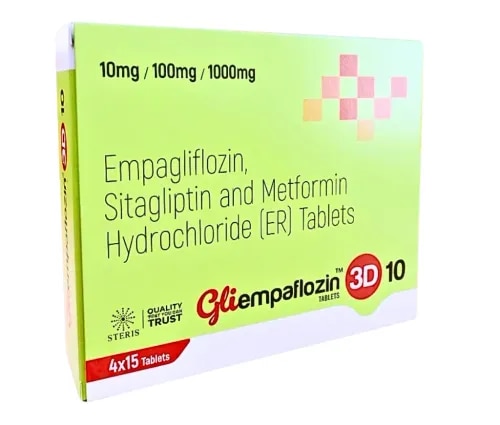
"name": "Empagliozin 10 mg, Sitagliptin 100 mg and Metformin hydrochloride 1000 mg ER Tablets",
"description": "GLIEMPAFLOZIN 3D 10 is a triple-combination antidiabetic tablet containing Empagliflozin 10 mg, Sitagliptin 100 mg, and Metformin Hydrochloride Extended Release (ER) 1000 mg. This combination is intended for the management of type 2 diabetes mellitus in appropriately selected patients under the supervision of a qualified healthcare professional.\n\nThe three active ingredients work through different mechanisms to help regulate blood glucose levels. Empagliflozin helps the kidneys eliminate glucose through urine, Sitagliptin supports glucose-dependent insulin regulation, and Metformin helps reduce glucose production in the liver while improving insulin sensitivity.\n\nBy combining these ingredients in one tablet, GLIEMPAFLOZIN 3D 10 provides a multi-mechanism approach to blood glucose management. Its suitability depends on the patient's clinical condition, kidney function, existing treatment, and the approved prescribing information.\n\nComposition of GLIEMPAFLOZIN 3D 10\nEach tablet contains the following stated active ingredients:\n\nEmpagliflozin 10 mg: A sodium-glucose cotransporter 2 (SGLT2) inhibitor that reduces glucose reabsorption by the kidneys and increases glucose excretion through urine.\nSitagliptin 100 mg: A dipeptidyl peptidase-4 (DPP-4) inhibitor that helps regulate insulin and glucagon responses according to blood glucose levels.\nMetformin Hydrochloride ER 1000 mg: An extended-release biguanide that primarily reduces glucose production in the liver and improves the body's response to insulin.\nThe exact formulation, excipients, approved indications, and administration instructions should be confirmed from the product packaging and official prescribing information.\n\nKey Features of GLIEMPAFLOZIN 3D 10 Tablets\nGLIEMPAFLOZIN 3D 10 combines three established antidiabetic medicines with complementary mechanisms of action.\n\nTriple-combination formulation: Contains Empagliflozin, Sitagliptin, and Metformin Hydrochloride ER.\nMultiple glucose-control pathways: Targets different processes involved in blood glucose regulation.\nExtended-release metformin: Provides a formulation designed to release Metformin gradually over time.\nOral tablet dosage form: Allows administration according to the prescribed regimen.\nIndividualized diabetes management: May be considered when a healthcare professional determines that all three ingredients are appropriate.\nThe combination is not suitable for every person with diabetes. Treatment decisions should be based on individual medical needs and the approved product information.\n\nUses of GLIEMPAFLOZIN 3D 10\nGLIEMPAFLOZIN 3D 10 is intended for the management of type 2 diabetes mellitus, subject to its approved indications and the prescribing healthcare professional's assessment.\n\nType 2 diabetes is a chronic metabolic condition characterized by impaired insulin action and, in many patients, insufficient insulin production. Persistently elevated blood glucose can increase the risk of complications affecting the eyes, kidneys, nerves, heart, and blood vessels.\n\nThe three active ingredients in GLIEMPAFLOZIN 3D 10 address different aspects of glucose regulation. A healthcare professional may consider this combination when multiple medicines are required to achieve an individual's treatment goals and when the combination is clinically appropriate.\n\nThe medicine should be used as part of a comprehensive diabetes-management plan that may include balanced nutrition, regular physical activity, blood glucose monitoring, and routine medical assessments. It is not intended for the treatment of type 1 diabetes or diabetic ketoacidosis.\n\nHow Does GLIEMPAFLOZIN 3D 10 Work?\n1. Empagliflozin 10 mg\nEmpagliflozin belongs to the SGLT2 inhibitor class. It blocks a protein responsible for reabsorbing glucose filtered by the kidneys. This allows more glucose to be eliminated through urine, helping reduce blood glucose levels.\n\nEmpagliflozin has also demonstrated cardiovascular and kidney benefits in certain eligible patient populations. Whether these benefits apply to an individual depends on their clinical condition and the applicable prescribing information.\n\n2. Sitagliptin 100 mg\nSitagliptin inhibits the DPP-4 enzyme, which breaks down incretin hormones. By increasing incretin activity, Sitagliptin supports insulin release when blood glucose is elevated and helps regulate glucagon secretion. These actions contribute to blood glucose control.\n\n3. Metformin Hydrochloride ER 1000 mg\nMetformin primarily reduces glucose production in the liver and improves insulin sensitivity. The extended-release formulation is designed to release the medicine gradually over time.\n\nTogether, these ingredients target several pathways involved in type 2 diabetes. Their combined effectiveness and safety depend on appropriate prescribing, correct administration, and regular monitoring.\n\nPotential Benefits of GLIEMPAFLOZIN 3D 10\nWhen prescribed for an appropriate patient, GLIEMPAFLOZIN 3D 10 may offer the following treatment advantages:\n\nMultiple mechanisms of action: Combines three medicines that influence different aspects of glucose regulation.\nBlood glucose management: Helps improve glycemic control in eligible adults with type 2 diabetes.\nCombination therapy: May simplify a treatment regimen compared with taking the same ingredients as separate tablets.\nExtended-release component: Includes Metformin Hydrochloride ER for gradual drug release.\nPersonalized treatment options: May be considered when a healthcare professional determines that triple therapy is appropriate.\nIndividual outcomes vary, and the medicine does not replace a suitable diet, physical activity, or routine diabetes care.\n\nDirections for Use\nTake GLIEMPAFLOZIN 3D 10 only as prescribed by your healthcare professional.\n\nFollow the prescribed dose and administration schedule.\nTake the tablet with food if directed by the product labeling or your prescriber.\nSwallow the extended-release tablet whole unless the specific product instructions state otherwise. Do not crush, chew, or split it without professional guidance.\nDo not change the dose or stop treatment without consulting your prescriber.\nAttend recommended appointments for kidney-function assessment and blood glucose monitoring.\nIf you miss a dose, follow the official patient information or ask your healthcare professional or pharmacist what to do. Do not take an extra dose to compensate for a missed dose unless specifically instructed.\n\nPrecautions and Safety Information\nGLIEMPAFLOZIN 3D 10 is a prescription medicine and may not be suitable for everyone.\n\nKidney function: Kidney function should be assessed before and during treatment as appropriate. Metformin and Empagliflozin have important kidney-related prescribing considerations.\n\nDehydration: Empagliflozin increases glucose excretion through urine and may increase urination. Patients at risk of dehydration or low blood pressure should discuss appropriate precautions with their healthcare professional.\n\nGenital and urinary infections: Empagliflozin may increase the risk of genital fungal infections and can be associated with urinary tract infections.\n\nLactic acidosis: Metformin can rarely cause a serious condition called lactic acidosis. Risk may increase with significant kidney impairment, severe dehydration, certain acute illnesses, or excessive alcohol intake.\n\nPancreatitis: Pancreatitis has been reported in patients taking Sitagliptin. Severe, persistent abdominal pain requires prompt medical assessment.\n\nHypoglycemia: Low blood glucose may occur, particularly when the combination is used with insulin or insulin secretagogues such as sulfonylureas.\n\nInform your healthcare professional about existing medical conditions, all medicines you take, pregnancy or breastfeeding, planned surgery, prolonged fasting, and upcoming procedures involving iodinated contrast. Follow professional instructions about temporary medicine interruption during acute illness or other high-risk situations.\n\nSeek urgent medical care for severe abdominal pain, difficulty breathing, persistent vomiting, severe dehydration, or other serious symptoms.\n\nWhy Choose GLIEMPAFLOZIN 3D 10?\nGLIEMPAFLOZIN 3D 10 brings together Empagliflozin 10 mg, Sitagliptin 100 mg, and Metformin Hydrochloride ER 1000 mg in a triple-combination tablet intended for selected patients with type 2 diabetes.\n\nFor pharmaceutical websites, pharmacies, distributors, and healthcare professionals, clear information about composition, mechanism of action, potential uses, and precautions supports responsible product awareness.\n\nAlways refer to the approved product label for the exact composition, indications, dosage, contraindications, storage requirements, and instructions for use.\n\nConclusion\nGLIEMPAFLOZIN 3D 10 Tablets combine Empagliflozin 10 mg, Sitagliptin 100 mg, and Metformin Hydrochloride ER 1000 mg to target multiple pathways involved in blood glucose regulation. The combination may be appropriate for selected adults with type 2 diabetes under medical supervision.\n\nFor complete information about dosage, contraindications, warnings, storage, and approved indications, consult the official product packaging and prescribing information. Use this medicine only under the direction of a qualified healthcare professional.\n\nFrequently Asked Questions (FAQs)\n1. What is GLIEMPAFLOZIN 3D 10?\n\nGLIEMPAFLOZIN 3D 10 is a combination tablet containing Empagliflozin 10 mg, Sitagliptin 100 mg, and Metformin Hydrochloride ER 1000 mg.\n\n2. What is GLIEMPAFLOZIN 3D 10 used for?\n\nIt is intended for the management of type 2 diabetes mellitus in patients for whom this combination is considered appropriate by a healthcare professional.\n\n3. How does GLIEMPAFLOZIN 3D 10 work?\n\nEmpagliflozin increases urinary glucose excretion, Sitagliptin supports glucose-dependent insulin regulation, and Metformin reduces glucose production in the liver and improves insulin sensitivity.\n\n4. Can GLIEMPAFLOZIN 3D 10 replace diet and exercise?\n\nNo. Medication should be combined with an individualized diet, physical activity, and monitoring plan recommended by a healthcare professional.\n\n5. Is GLIEMPAFLOZIN 3D 10 suitable for everyone with diabetes?\n\nNo. Suitability depends on the type of diabetes, kidney function, other medical conditions, concurrent medicines, and approved prescribing information.\n\n",
"price": 210.0,
"discountamount": 147.0,
"currencycode": "INR",
"priority": 1000000,
"isfreeshipmentavailable": false,
"shipmentduration": 1,
"_keywords": null,
"isarchived": false,
"isavailable": true,
"applicationid": null,
"productindex": 2505,
"imageuri": "https://productimages.withfloats.com/actual/6ad7470422551901df6e5493.png",
"tileimageuri": "https://productimages.withfloats.com/tile/6ad7470422551901df6e5493.png",
"images": null,
"totalqueries": 0,
"gpid": null,
"groupproductid": null,
"createdon": "2026-10-20T10:48:34.116Z",
"updatedon": "2026-10-20T10:48:34.116Z",
"buyonlinelink": null,
"producturl": "http://WWW.STERISINDIA.COM//empagliozin-10-mg-sitagliptin-100-mg-and-metformin-hydrochloride-1000-mg-er-tablets/2505",
"availableunits": -1.0,
"iscodavailable": false,
"isprepaidonlineavailable": false,
"maxcodorders": 0,
"maxprepaidonlineorders": 0,
"uniquepaymenturl": null,
"brandname": "GLIEMPAFLOZIN 3D 10",
"category": "DIABETIC RANGE",
"tags": [],
"variants": false,
"keyspecification": null,
"otherspecifications": null,
"pickupaddressreferenceid": null,
"paymenttype": "UniquePaymentUrl",
"producttype": "products",
"hsncode": null,
"gstslab": 0.0,
"isnotforsale": false
},
{
"_id": "6ad7442bf24c5a4bbccf4b10",
"fptag": "STERISHEALTHCARE",
"merchantname": null,
"customwidgets": null,
"externalsourceid": null,
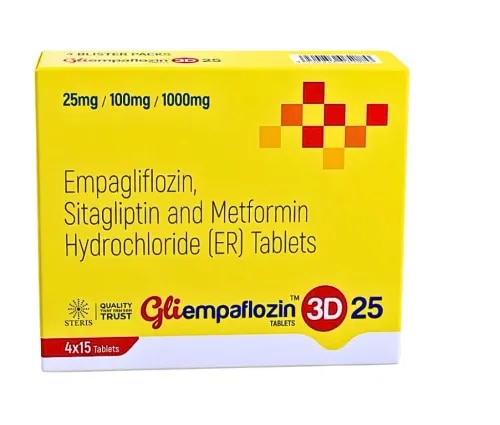
"name": "Empagliflozin,Sitagliptin And Metformin Hydrochloride (ER) Tablets",
"description": "GLIEMPAFLOZIN 3D 25 is a combination pharmaceutical product containing Empagliflozin 25 mg, Sitagliptin 100 mg, and Metformin Hydrochloride Extended Release (ER) 1000 mg. This triple-combination formulation is intended for the management of type 2 diabetes mellitus in appropriate patients, as determined by a qualified healthcare professional.\n\nThe three active ingredients work through different mechanisms to help control blood glucose levels. Empagliflozin belongs to the sodium-glucose cotransporter 2 (SGLT2) inhibitor class, Sitagliptin is a dipeptidyl peptidase-4 (DPP-4) inhibitor, and Metformin is a biguanide antidiabetic medicine. Together, these ingredients target different pathways involved in glucose regulation.\n\nGLIEMPAFLOZIN 3D 25 provides a combination of three established antidiabetic agents in a single tablet. Its suitability depends on the patient's blood glucose levels, kidney function, current diabetes treatment, medical history, and the approved prescribing information.\n\nComposition of GLIEMPAFLOZIN 3D 25\nEach tablet contains the following stated active ingredients:\n\nEmpagliflozin 25 mg: An SGLT2 inhibitor that helps the kidneys remove glucose from the bloodstream through urine.\nSitagliptin 100 mg: A DPP-4 inhibitor that increases the activity of incretin hormones involved in glucose-dependent insulin release and glucagon regulation.\nMetformin Hydrochloride ER 1000 mg: An extended-release biguanide that primarily reduces glucose production in the liver and improves the body's response to insulin.\nThe exact formulation, excipients, administration instructions, and approved indications should be verified against the product packaging and official prescribing information.\n\nKey Features of GLIEMPAFLOZIN 3D 25\nGLIEMPAFLOZIN 3D 25 combines three antidiabetic ingredients with complementary mechanisms of action.\n\nTriple-combination formulation: Contains Empagliflozin, Sitagliptin, and Metformin Hydrochloride ER.\nMultiple glucose-control pathways: The ingredients act through different mechanisms involved in blood glucose regulation.\nExtended-release metformin: The ER formulation is designed to release metformin over an extended period.\nOral tablet dosage form: Provides oral administration according to the prescribed regimen.\nIndividualized diabetes management: May be considered by a healthcare professional when combination therapy is appropriate.\nThe benefits of this combination depend on the patient's clinical needs and the suitability of all three ingredients.\n\nUses of GLIEMPAFLOZIN 3D 25 Tablets\nGLIEMPAFLOZIN 3D 25 is intended for the management of type 2 diabetes mellitus, subject to the product's approved indications and the prescribing healthcare professional's judgment.\n\nType 2 diabetes is a chronic metabolic condition in which the body does not use insulin effectively or does not produce enough insulin to maintain healthy blood glucose levels. Long-term elevated blood glucose can increase the risk of complications affecting the eyes, kidneys, nerves, heart, and blood vessels.\n\nThe three medicines in GLIEMPAFLOZIN 3D 25 target different aspects of glucose regulation. A healthcare professional may consider a combination regimen when an individual's treatment goals are not adequately achieved with a simpler regimen or when the combination is otherwise clinically appropriate.\n\nThe medicine should be used alongside an individualized diabetes-management plan that may include a balanced diet, physical activity, glucose monitoring, and regular medical follow-up. It is not intended for the treatment of type 1 diabetes or diabetic ketoacidosis.\n\nHow Does GLIEMPAFLOZIN 3D 25 Work?\nThe three active ingredients contribute to blood glucose management through distinct mechanisms.\n\n1. Empagliflozin 25 mg\nEmpagliflozin inhibits SGLT2, a protein responsible for reabsorbing much of the glucose filtered by the kidneys. By reducing glucose reabsorption, it increases glucose excretion through urine and helps lower blood glucose levels.\n\nEmpagliflozin has also demonstrated cardiovascular and kidney benefits in certain eligible patient populations. These benefits depend on the patient's condition and the applicable prescribing information and should not be assumed to apply identically to every patient.\n\n2. Sitagliptin 100 mg\nSitagliptin inhibits the DPP-4 enzyme, which breaks down incretin hormones. Increasing incretin activity helps stimulate insulin release when blood glucose is elevated and reduces glucagon secretion when appropriate. This helps regulate glucose levels, particularly after meals.\n\n3. Metformin Hydrochloride ER 1000 mg\nMetformin primarily decreases glucose production in the liver and improves insulin sensitivity. The extended-release formulation is designed to release the medicine gradually over time.\n\nBy combining these mechanisms, GLIEMPAFLOZIN 3D 25 targets several pathways involved in type 2 diabetes. Its overall effectiveness and safety depend on appropriate patient selection, dosing, and ongoing monitoring.\n\nPotential Benefits of GLIEMPAFLOZIN 3D 25\nWhen prescribed for an appropriate patient, this combination may offer the following treatment advantages:\n\nMultiple mechanisms of action: Addresses glucose regulation through three different pharmacological pathways.\nBlood glucose management: Helps improve glycemic control in eligible adults with type 2 diabetes.\nOral combination therapy: Combines three medicines in one tablet, which may simplify a prescribed regimen compared with taking each ingredient separately.\nExtended-release component: Includes Metformin Hydrochloride ER for gradual drug release.\nIndividualized treatment options: May be considered when a healthcare professional determines that all three ingredients are appropriate.\nThese potential advantages do not guarantee a particular result. Treatment effectiveness depends on adherence, diet, physical activity, individual health status, and medical supervision.\n\nDirections for Use\nGLIEMPAFLOZIN 3D 25 should be taken only as prescribed by a qualified healthcare professional.\n\nFollow the prescribed dose and administration schedule.\nTake the tablet with food if directed by the product labeling or prescriber.\nSwallow the extended-release tablet whole unless the specific product instructions state otherwise. Do not crush, chew, or split it without professional guidance.\nDo not change the dose or discontinue treatment without consulting your prescriber.\nAttend recommended appointments for blood glucose monitoring and kidney-function assessment.\nIf a dose is missed, follow the official patient information or ask your healthcare professional or pharmacist for advice. Do not take an extra dose to compensate for a missed dose unless specifically instructed.\n\nPrecautions and Safety Information\nGLIEMPAFLOZIN 3D 25 is a prescription medicine and is not suitable for everyone.\n\nKidney function: Kidney function should be assessed before and during treatment as appropriate. Metformin and Empagliflozin have important renal considerations, and the combination may be unsuitable at certain levels of kidney impairment.\n\nDehydration: Empagliflozin increases glucose excretion through urine and may increase urination. Patients should discuss dehydration risk, low blood pressure, and fluid intake with their healthcare professional.\n\nGenital and urinary infections: Empagliflozin can increase the risk of genital fungal infections and may be associated with urinary tract infections.\n\nLactic acidosis: Metformin can rarely cause a serious condition called lactic acidosis. Risk may increase with significant kidney impairment, severe dehydration, certain acute illnesses, excessive alcohol intake, or other predisposing conditions.\n\nPancreatitis: Pancreatitis has been reported in patients taking Sitagliptin. Severe, persistent abdominal pain requires prompt medical assessment.\n\nLow blood glucose: The risk of hypoglycemia may increase when this combination is used with insulin or insulin secretagogues, such as sulfonylureas.\n\nInform your healthcare professional about existing medical conditions, all medicines you take, pregnancy or breastfeeding, planned surgery, prolonged fasting, or an upcoming medical procedure involving iodinated contrast. Follow professional instructions about temporary medicine interruption during acute illness or other high-risk situations.\n\nSeek urgent medical care for severe abdominal pain, difficulty breathing, unusual weakness, persistent vomiting, severe dehydration, or other serious symptoms.\n\nWhy Choose GLIEMPAFLOZIN 3D 25?\nGLIEMPAFLOZIN 3D 25 brings together Empagliflozin, Sitagliptin, and Metformin Hydrochloride ER in a triple-combination tablet designed for the management of type 2 diabetes in appropriately selected patients.\n\nFor pharmaceutical product catalogues, distributors, pharmacies, and healthcare professionals, accurate information about the composition, mechanism of action, approved indications, and safety profile supports responsible product awareness.\n\nTreatment decisions should always be based on the patient's medical assessment and the approved product information.\n\nConclusion\nGLIEMPAFLOZIN 3D 25 Tablets combine Empagliflozin 25 mg, Sitagliptin 100 mg, and Metformin Hydrochloride ER 1000 mg to target multiple pathways involved in blood glucose regulation. This combination may be appropriate for selected adults with type 2 diabetes under medical supervision.\n\nFor complete information about dosage, contraindications, warnings, storage, and approved indications, consult the official product packaging and prescribing information. Use this medicine only under the direction of a qualified healthcare professional.\n\nFrequently Asked Questions (FAQs)\n1. What is GLIEMPAFLOZIN 3D 25?\n\nGLIEMPAFLOZIN 3D 25 is a combination tablet containing Empagliflozin 25 mg, Sitagliptin 100 mg, and Metformin Hydrochloride ER 1000 mg.\n\n2. What is GLIEMPAFLOZIN 3D 25 used for?\n\nIt is intended for the management of type 2 diabetes mellitus in patients for whom the combination is considered appropriate by a healthcare professional.\n\n3. How does GLIEMPAFLOZIN 3D 25 work?\n\nEmpagliflozin increases urinary glucose excretion, Sitagliptin supports glucose-dependent insulin regulation, and Metformin reduces glucose production in the liver and improves insulin sensitivity.\n\n4. Can GLIEMPAFLOZIN 3D 25 replace diet and exercise?\n\nNo. Medication should be combined with an individualized diet, physical activity, and monitoring plan as recommended by a healthcare professional.\n\n5. Is GLIEMPAFLOZIN 3D 25 suitable for everyone with diabetes?\n\nNo. Its suitability depends on the type of diabetes, kidney function, other medical conditions, concurrent medicines, and the approved prescribing information.",
"price": 230.0,
"discountamount": 69.0,
"currencycode": "INR",
"priority": 1000000,
"isfreeshipmentavailable": false,
"shipmentduration": 1,
"_keywords": null,
"isarchived": false,
"isavailable": true,
"applicationid": null,
"productindex": 2504,
"imageuri": "https://productimages.withfloats.com/actual/6ad7442d6e565c5fe6e5b7cb.png",
"tileimageuri": "https://productimages.withfloats.com/tile/6ad7442d6e565c5fe6e5b7cb.png",
"images": null,
"totalqueries": 0,
"gpid": null,
"groupproductid": null,
"createdon": "2026-10-20T10:36:27.325Z",
"updatedon": "2026-10-20T10:36:27.325Z",
"buyonlinelink": null,
"producturl": "http://WWW.STERISINDIA.COM//empagliflozin-sitagliptin-and-metformin-hydrochloride-er-tablets/2504",
"availableunits": -1.0,
"iscodavailable": false,
"isprepaidonlineavailable": false,
"maxcodorders": 0,
"maxprepaidonlineorders": 0,
"uniquepaymenturl": null,
"brandname": "GLIEMPAFLOZIN 3D 25",
"category": "DIABETIC RANGE",
"tags": [],
"variants": false,
"keyspecification": null,
"otherspecifications": null,
"pickupaddressreferenceid": null,
"paymenttype": "UniquePaymentUrl",
"producttype": "products",
"hsncode": null,
"gstslab": 0.0,
"isnotforsale": false
},
{
"_id": "6a86e496cc4491de1ed77dfd",
"fptag": "STERISHEALTHCARE",
"merchantname": null,
"customwidgets": null,
"externalsourceid": null,
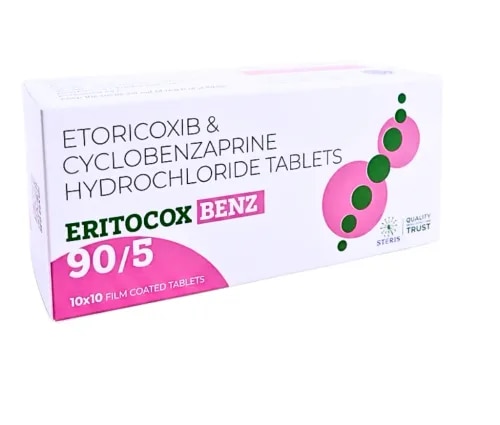
"name": "Etoricoxib & Cyclobenzaprine Hydrochloride Tablets",
"description": "ERITOCOX BENZ 90/5 is a fixed-dose combination tablet pairing Etoricoxib 90 mg, a selective COX-2 anti-inflammatory, with Cyclobenzaprine Hydrochloride 5 mg, a centrally acting muscle relaxant. It is prescribed for short-term relief of acute musculoskeletal problems where pain, swelling, and muscle tightness occur together — think a sudden low-back strain, a stiff neck, or a flare-up of arthritis where the surrounding muscles clamp down defensively. Rather than treating the inflammation alone or the spasm alone, this tablet addresses both mechanisms in one dose, which can mean fewer pills and a more complete response for short, acute episodes. It is a prescription-only (Schedule H) medicine, produced under WHO-GMP and ISO-certified manufacturing standards by Steris Healthcare Pvt. Ltd. Typical side effects include drowsiness, dry mouth, and mild stomach upset; because the combination carries cardiovascular, gastrointestinal, and kidney considerations, it should only be used under a doctor's supervision. This page walks through what the tablet does, how it works, correct usage, safety information, and answers to the questions people most often ask.\n\nWhat Is ERITOCOX BENZ 90/5?\n\nPain from an acute back injury, a wrenched neck, or an arthritis episode almost never travels alone — it tends to bring a tense, guarded muscle along with it that makes every movement feel worse. ERITOCOX BENZ 90/5 was formulated with that pattern in mind, folding two separate mechanisms into a single tablet rather than requiring two prescriptions.\n\nActive Ingredient\tStrength\tRole\nEtoricoxib\t90 mg\tSelective COX-2 inhibitor for inflammatory pain\nCyclobenzaprine Hydrochloride\t5 mg\tCentrally acting skeletal muscle relaxant\n\nEach tablet is manufactured by Steris Healthcare Pvt. Ltd., a WHO-GMP and ISO-certified pharmaceutical company, so every batch meets verified potency and quality benchmarks.\n\nWhy This Combination Makes Sense\n\nMusculoskeletal pain is rarely a single-track problem. When tissue is injured or irritated, inflammation flares up locally — and nearby muscles frequently respond by tightening protectively. That protective tightening, the spasm, often becomes a pain generator of its own. Treat only the inflammation and the spasm can linger; treat only the spasm and the underlying inflammation keeps driving discomfort.\n\nERITOCOX BENZ 90/5 is built to intervene on both fronts at once:\n\nEtoricoxib addresses the chemical cascade responsible for pain and swelling at the injured site.\nCyclobenzaprine works through the central nervous system to calm the muscle guarding that so often rides alongside that pain.\nMechanism of Action: How ERITOCOX BENZ 90/5 Works\n\nEtoricoxib selectively inhibits the COX-2 enzyme — the enzyme the body ramps up at sites of tissue damage or irritation to manufacture prostaglandins, the chemical messengers behind pain, swelling, and localized heat. Because it targets COX-2 specifically rather than blocking both COX-1 and COX-2 the way older, non-selective NSAIDs do, etoricoxib is designed to control inflammatory pain while leaving more of the COX-1 activity that protects the stomach lining relatively undisturbed.\n\nCyclobenzaprine Hydrochloride takes a different route entirely — its primary site of action is the brainstem, not the muscle fiber itself. By dampening excessive motor signaling sent to skeletal muscle, it reduces spasm and stiffness without producing the broad muscle weakness that a directly-acting muscle agent might cause.\n\nPut together, the tablet delivers a two-pronged effect: peripheral anti-inflammatory action from etoricoxib, layered with central muscle relaxation from cyclobenzaprine.\n\n[Reviewer placeholder: insert verified pharmacokinetic data (onset, half-life, bioavailability) once confirmed by medical/regulatory team — do not publish unverified figures.]\n\nClinical Uses of ERITOCOX BENZ 90/5\n\nA physician may prescribe this combination for short-term management of acute conditions where pain, inflammation, and spasm show up together, including:\n\nCondition\tTypical Presentation\nAcute lower back pain\tPain with associated muscle guarding/spasm\nNeck strain / cervical spasm\tStiff, restricted neck movement\nSprains, strains, overuse injuries\tMusculoskeletal trauma with inflammatory pain\nOsteoarthritis flare-ups\tJoint pain accompanied by surrounding muscle tightness\nPostural or occupational muscle pain\tWork- or posture-related inflammation and tension\nMovement restriction linked to spasm\tReduced range of motion driven by muscular guarding\n\nSuitability for any of the above must be confirmed by a doctor based on your specific diagnosis and medical history.\n\nKey Benefits of ERITOCOX BENZ 90/5\nOne tablet, two mechanisms — anti-inflammatory pain relief and muscle-spasm relief combined, simplifying an otherwise two-drug regimen.\nSite-focused inflammation control — etoricoxib's COX-2 selectivity is intended to concentrate its effect where inflammation is actually active.\nA comparatively gentler GI footprint — COX-2-selective action is generally linked to lower gastrointestinal irritation risk than older non-selective NSAIDs, though vigilance is still warranted.\nLoosens spasm-related stiffness — cyclobenzaprine's central action helps release tight, guarded muscles restricting movement.\nAids functional recovery — easing both pain and spasm can make it more realistic to resume light activity, stretching, or physiotherapy once your doctor clears you.\nStreamlined short-course dosing — a once-daily schedule (as prescribed) cuts down pill burden versus taking an NSAID and a muscle relaxant separately.\nDosage & Administration\n\nThe following is general reference information — your doctor's specific prescription always takes precedence.\n\nTake ERITOCOX BENZ 90/5 exactly as prescribed, generally once a day, with or without food.\nSwallow the tablet whole with water; avoid crushing or chewing unless your doctor tells you otherwise.\nTreatment is typically short — anywhere from a few days to roughly two weeks — reflecting the acute, self-limiting nature of most pain-and-spasm episodes.\nIf a dose is missed, take it as soon as you remember, but skip it entirely if the next dose is nearly due. Never double up to make up for a missed dose.\nDo not extend the treatment period or adjust your dose independently, even if symptoms haven't fully resolved.\nSide Effects of ERITOCOX BENZ 90/5\nCommon Side Effects\nDrowsiness or sleepiness\nDizziness\nDry mouth\nHeadache\nStomach discomfort or indigestion\nNausea\nFatigue\nMild elevation in blood pressure in some individuals\nSerious Side Effects — Seek Medical Help Promptly\nSigns of gastrointestinal bleeding, such as black stools or vomiting blood\nA severe allergic reaction — swelling of the face or throat, breathing difficulty, or widespread rash\nChest pain, irregular heartbeat, or other symptoms suggestive of a cardiovascular event\nYellowing of the skin or eyes, which may point to liver involvement\nA noticeable drop in urine output, which may suggest kidney impairment\nSevere dizziness, confusion, or fainting\n\nIf any of these serious symptoms appear, stop the medicine and get medical attention immediately.\n\nPrecautions & Warnings\nShare your full medical history with your doctor before starting, including any heart, kidney, or liver conditions.\nUse cautiously — or avoid altogether — if you have a history of stomach ulcers or gastrointestinal bleeding.\nGenerally not advised for people with uncontrolled high blood pressure, existing heart disease, or a prior stroke, unless a doctor specifically clears its use.\nSteer clear of alcohol, since it can amplify cyclobenzaprine's sedative effect and add to gastrointestinal risk.\nCyclobenzaprine may cause drowsiness or dizziness — hold off on driving or operating machinery until you know how the tablet affects you.\nDon't combine ERITOCOX BENZ 90/5 with other NSAIDs, painkillers, or sedating medicines without checking with your doctor first.\nAvoid the medicine if you have known hypersensitivity to etoricoxib, cyclobenzaprine, or related compounds.\nNot generally recommended during pregnancy or breastfeeding unless a doctor specifically advises otherwise.\nAvoid combining with MAO inhibitors, or using shortly after stopping them.\nDrug Interactions to Flag With Your Doctor\n\nDisclose every prescription medicine, over-the-counter product, and supplement you take. Extra caution is needed around medicines affecting:\n\nBlood pressure regulation\nKidney function\nBlood clotting\nCentral nervous system activity (sedatives, other muscle relaxants)\nLiver metabolism\nOther anti-inflammatory or pain-relief medicines\nConclusion\n\nERITOCOX BENZ 90/5 brings Etoricoxib 90 mg and Cyclobenzaprine Hydrochloride 5 mg together to tackle a problem that rarely presents as a single issue — pain, inflammation, and muscle spasm that reinforce one another in acute musculoskeletal conditions. By acting on both the inflammatory and muscular sides of that cycle, it offers a more rounded short-term response than either ingredient could provide alone.\n\nGiven the genuine cardiovascular, gastrointestinal, kidney, and central-nervous-system considerations involved, ERITOCOX BENZ 90/5 is meant strictly for short, doctor-supervised courses — not casual or extended self-treatment. Always check with your doctor to confirm whether this combination is right for your condition, medical history, and current medications.\n\nPrescription only – consult your doctor.\n\nFrequently Asked Questions (Google & AI Mode / Voice Search Optimized)\n\n1. What is ERITOCOX BENZ 90/5 used for? It's typically prescribed for short-term relief of acute musculoskeletal issues — such as back pain, neck strain, or an arthritis flare-up — where pain, inflammation, and muscle spasm show up together.\n\n2. Is ERITOCOX BENZ 90/5 a muscle relaxant? It's a combination tablet: the muscle-relaxing effect comes from its Cyclobenzaprine Hydrochloride component, while Etoricoxib supplies the pain-relieving, anti-inflammatory action.\n\n3. Is Etoricoxib a strong painkiller? Etoricoxib is an effective selective COX-2 inhibitor typically used for moderate inflammation-related pain, such as arthritis or an acute musculoskeletal injury. Its appropriateness for your level of pain should be assessed by a doctor.\n\n4. Is Etoricoxib safe for the kidneys? As with other NSAIDs, etoricoxib can influence kidney function, particularly with extended use, higher doses, dehydration, or existing kidney disease. It should be used carefully and only under medical guidance if kidney health is a concern.\n\n5. Should ERITOCOX BENZ 90/5 be taken in the morning or at night? It's usually taken once a day at a time your doctor sets. Since cyclobenzaprine can cause drowsiness, many doctors lean toward an evening dose — but always stick to your specific prescription.\n\n6. What are the common side effects of ERITOCOX BENZ 90/5? Frequently reported effects include drowsiness, dizziness, dry mouth, headache, stomach discomfort, and mild fatigue. Most fade on their own, but persistent symptoms should be reported to your doctor.\n\n7. How fast does ERITOCOX BENZ 90/5 start working? Etoricoxib tends to absorb fairly quickly, and many people feel pain relief within roughly an hour, though onset can vary by individual and whether the tablet is taken with food.\n\n8. What should be avoided while on ERITOCOX BENZ 90/5? Skip alcohol, avoid taking other NSAIDs or painkillers without medical advice, and hold off on driving or operating machinery if you're feeling drowsy or dizzy.\n\n9. How many days can ERITOCOX BENZ 90/5 be taken? It's usually prescribed for a short stretch — a few days up to around two weeks — matching how acute conditions typically resolve. Anything longer needs your doctor's review.\n\n10. What are the benefits of ERITOCOX BENZ 90/5? It delivers combined relief from pain, inflammation, and muscle spasm in one tablet, which can make it easier to move normally and get back to daily activity sooner when used as directed.\n\n11. How safe is ERITOCOX BENZ 90/5? Taken exactly as prescribed and for the recommended duration, it's generally considered safe for most adults. It does carry cardiovascular, gastrointestinal, kidney, and liver-related risks that call for medical supervision, especially if you already have related conditions.\n\n12. Can ERITOCOX BENZ 90/5 be used for knee pain? Yes — its etoricoxib component is commonly used for joint pain tied to osteoarthritis or an acute injury, including the knee, by reducing the underlying inflammation. A doctor should confirm suitability first.\n\n13. Does ERITOCOX BENZ 90/5 cause drowsiness? Yes — drowsiness and dizziness are known effects linked to its cyclobenzaprine component. Avoid driving or tasks requiring full alertness until you know how it affects you.\n\n14. Can ERITOCOX BENZ 90/5 be bought without a prescription? No. This is a prescription-only medicine meant to be taken solely under a qualified doctor's supervision — it isn't meant for self-prescribing or extended use without medical oversight.\n\n15. Can ERITOCOX BENZ 90/5 be taken with food? It can generally be taken with or without food, though taking it with food may ease stomach discomfort for some people. Follow your doctor's specific instructions.\n\n16. Is ERITOCOX BENZ 90/5 habit-forming? Cyclobenzaprine isn't considered addictive with typical short-term use, but the tablet should still be taken only for the prescribed duration and not restarted on your own without medical advice.\n\n17. Who should avoid taking ERITOCOX BENZ 90/5? People with active stomach ulcers, significant heart, kidney, or liver disease, known hypersensitivity to NSAIDs, or those who are pregnant or breastfeeding should avoid it unless a doctor specifically clears its use.",
"price": 222.0,
"discountamount": 67.0,
"currencycode": "INR",
"priority": 1000000,
"isfreeshipmentavailable": false,
"shipmentduration": 1,
"_keywords": null,
"isarchived": false,
"isavailable": true,
"applicationid": null,
"productindex": 2495,
"imageuri": "https://productimages.withfloats.com/actual/6a86e4990f089c4695c57658.png",
"tileimageuri": "https://productimages.withfloats.com/tile/6a86e4990f089c4695c57658.png",
"images": null,
"totalqueries": 0,
"gpid": null,
"groupproductid": null,
"createdon": "2026-08-20T11:27:18.403Z",
"updatedon": "2026-08-20T11:27:18.403Z",
"buyonlinelink": null,
"producturl": "http://WWW.STERISINDIA.COM//etoricoxib-cyclobenzaprine-hydrochloride-tablets/2495",
"availableunits": -1.0,
"iscodavailable": false,
"isprepaidonlineavailable": false,
"maxcodorders": 0,
"maxprepaidonlineorders": 0,
"uniquepaymenturl": null,
"brandname": "ERITOCOX BENZ 90/5",
"category": "",
"tags": [],
"variants": false,
"keyspecification": null,
"otherspecifications": null,
"pickupaddressreferenceid": null,
"paymenttype": "UniquePaymentUrl",
"producttype": "products",
"hsncode": null,
"gstslab": 0.0,
"isnotforsale": false
},
{
"_id": "6a68501b7848bdec5254a606",
"fptag": "STERISHEALTHCARE",
"merchantname": null,
"customwidgets": null,
"externalsourceid": null,
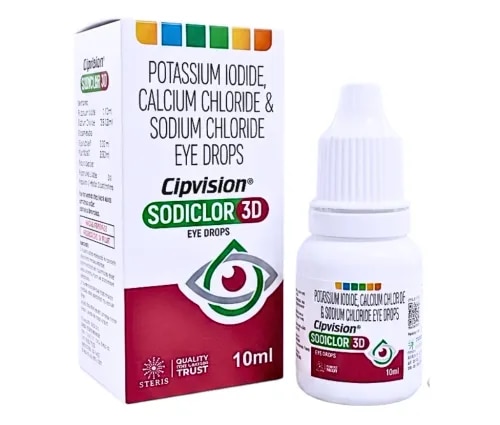
"name": "Potassium Iodide,Calcium Chloride & Sodium Chloride Eye Drops",
"description": "Potassium Iodide, Calcium Chloride & Sodium Chloride Eye Drops are specially formulated ophthalmic drops used to support eye health and help manage certain corneal conditions under medical supervision. This unique combination works by improving the natural healing process of the cornea while helping reduce corneal opacity and assisting in the absorption of abnormal calcium deposits in selected eye disorders. Ophthalmologists may prescribe these eye drops for patients experiencing corneal degeneration, corneal scars, or other conditions affecting the transparency of the cornea.\n\nIf you are looking for an effective eye care solution recommended by eye specialists, Potassium Iodide, Calcium Chloride & Sodium Chloride Eye Drops offer a clinically trusted option. Before purchasing, it is essential to understand their uses, benefits, dosage, precautions, and possible side effects to ensure safe and effective treatment.\n\nWhat are Potassium Iodide, Calcium Chloride & Sodium Chloride Eye Drops?\n\nPotassium Iodide, Calcium Chloride & Sodium Chloride Eye Drops are prescription ophthalmic drops formulated to improve corneal health and support recovery from specific eye conditions involving corneal opacity or calcium deposition.\n\nEach ingredient plays an important role:\n\nPotassium Iodide helps promote the absorption of abnormal corneal deposits and supports corneal healing.\nCalcium Chloride maintains electrolyte balance necessary for healthy eye tissues.\nSodium Chloride helps maintain proper osmotic pressure and provides hydration to the ocular surface.\n\nTogether, these ingredients help preserve corneal clarity, improve comfort, and support better visual function when used as directed by an ophthalmologist.\n\nUses of Potassium Iodide, Calcium Chloride & Sodium Chloride Eye Drops\n\nDoctors may prescribe these eye drops for several ophthalmic conditions, including:\n\nTreatment of corneal opacity\nManagement of superficial corneal scars\nCorneal degeneration\nSupportive treatment in corneal calcium deposits\nPost-corneal injury recovery\nCertain chronic corneal disorders\nImproving corneal transparency\nSupporting healing after eye surgery (when advised)\nAdjunct therapy in selected ophthalmic conditions\n\nThese eye drops should always be used according to an eye specialist's recommendation.\n\nBenefits of Potassium Iodide, Calcium Chloride & Sodium Chloride Eye Drops\n\nUsing these eye drops as prescribed offers several advantages:\n\nHelps reduce corneal opacity\nSupports natural corneal healing\nAssists in dissolving abnormal calcium deposits\nMaintains healthy electrolyte balance in eye tissues\nHelps preserve corneal transparency\nImproves ocular lubrication\nReduces eye discomfort associated with corneal disorders\nSupports better visual clarity\nSuitable for long-term ophthalmic management when recommended\nEasy-to-use sterile eye drop formulation\nHow Do Potassium Iodide, Calcium Chloride & Sodium Chloride Eye Drops Work?\n\nThe effectiveness of this ophthalmic formulation comes from the combined action of its active ingredients.\n\nPotassium Iodide is believed to facilitate the gradual absorption of certain corneal deposits and support tissue repair. It has traditionally been used in ophthalmology to manage corneal opacities and related disorders.\n\nCalcium Chloride contributes to maintaining normal cellular function and electrolyte balance within ocular tissues, supporting healthy corneal physiology.\n\nSodium Chloride helps regulate osmotic balance, reduces excess fluid accumulation, and keeps the eye surface adequately hydrated.\n\nTogether, these ingredients help restore a healthier corneal environment and improve overall eye comfort.\n\nHow to Use Potassium Iodide, Calcium Chloride & Sodium Chloride Eye Drops\n\nFor the best results:\n\nWash your hands thoroughly.\nShake the bottle if instructed.\nTilt your head backward.\nPull the lower eyelid downward.\nInstill the prescribed number of drops.\nClose your eyes gently for 1–2 minutes.\nAvoid touching the dropper tip.\nReplace the cap tightly after each use.\n\nAlways follow your ophthalmologist's dosage instructions.\n\nRecommended Dosage\n\nThe dosage depends on:\n\nAge\nEye condition\nSeverity of disease\nMedical history\nResponse to treatment\n\nMost patients are advised to use the drops 2–4 times daily, but only your ophthalmologist can determine the correct dosage.\n\nDo not increase or decrease the frequency without medical advice.\n\nPossible Side Effects\n\nLike all medications, these eye drops may cause mild side effects.\n\nCommon side effects include:\n\nMild burning sensation\nTemporary eye irritation\nWatery eyes\nRedness\nMild itching\nTemporary blurred vision after instillation\n\nRare side effects include:\n\nAllergic reaction\nPersistent eye pain\nSevere redness\nSwelling around the eyes\nVision changes\n\nSeek immediate medical attention if severe symptoms occur.\n\nPrecautions Before Using These Eye Drops\n\nBefore using Potassium Iodide, Calcium Chloride & Sodium Chloride Eye Drops, inform your doctor if you have:\n\nAllergy to iodine or any ingredient\nThyroid disorders\nRecent eye surgery\nEye infection\nContact lens use\nPregnancy\nBreastfeeding\nOther ongoing eye medications\n\nAvoid sharing your eye drops with others.\n\nDrug Interactions\n\nInform your doctor if you are using:\n\nOther prescription eye drops\nAntibiotic eye medications\nSteroid eye drops\nLubricating eye drops\nAnti-glaucoma medications\nEye ointments\n\nMaintain a gap of at least 10–15 minutes between different eye medications unless instructed otherwise.\n\nWho Should Buy Potassium Iodide, Calcium Chloride & Sodium Chloride Eye Drops?\n\nThese eye drops may be suitable for:\n\nPatients with corneal opacity\nIndividuals recovering from corneal injury\nPeople with chronic corneal degeneration\nPatients requiring supportive corneal therapy\nIndividuals advised by ophthalmologists for corneal calcium deposits\n\nThey are not meant for self-medication and should only be purchased after medical consultation.\n\nStorage Instructions\n\nStore the bottle:\n\nBelow 25°C\nAway from sunlight\nKeep tightly closed\nDo not freeze\nKeep away from children\nDiscard within the recommended period after opening, as advised on the label\nWhy Choose Potassium Iodide, Calcium Chloride & Sodium Chloride Eye Drops?\n\nPatients and healthcare professionals prefer this ophthalmic formulation because it:\n\nSupports corneal recovery\nHelps maintain eye tissue health\nOffers a balanced electrolyte formulation\nIs easy to administer\nComes in a sterile ophthalmic solution\nIs prescribed by ophthalmologists for selected corneal disorders\nSupports long-term eye care under medical supervision\nBuying Guide\n\nWhen purchasing Potassium Iodide, Calcium Chloride & Sodium Chloride Eye Drops, make sure you:\n\nBuy from a trusted pharmacy or authorized online medical store.\nVerify the manufacturing and expiry dates.\nEnsure the bottle is properly sealed.\nUse only on the advice of an ophthalmologist.\nRead the patient information leaflet before use.\nStore the bottle correctly after opening.\nFrequently Asked Questions (FAQs)\n1. What are Potassium Iodide, Calcium Chloride & Sodium Chloride Eye Drops used for?\n\nThese eye drops are mainly prescribed to support the treatment of corneal opacity, corneal degeneration, and certain corneal calcium deposits under an ophthalmologist's supervision.\n\n2. Can these eye drops improve vision?\n\nThey do not directly improve eyesight but may help improve corneal clarity in suitable patients, which can contribute to better vision depending on the underlying condition.\n\n3. Are these eye drops safe for long-term use?\n\nThey may be used for extended periods only if recommended and regularly monitored by your eye specialist.\n\n4. Can I wear contact lenses while using these eye drops?\n\nIt is generally advisable to remove contact lenses before application and reinsert them only after the time recommended by your doctor or the product instructions.\n\n5. How many times should I use these eye drops daily?\n\nUse them exactly as prescribed by your ophthalmologist. Do not change the dosing schedule without medical advice.\n\n6. Can children use Potassium Iodide, Calcium Chloride & Sodium Chloride Eye Drops?\n\nChildren should use these eye drops only when prescribed by a qualified ophthalmologist.\n\n7. What should I do if I miss a dose?\n\nApply the missed dose as soon as you remember unless it is almost time for your next scheduled dose. Do not use extra drops to make up for a missed dose.\n\n8. Can these eye drops cause blurred vision?\n\nTemporary blurred vision may occur immediately after instillation. Avoid driving or operating machinery until your vision becomes clear.\n\n9. Are these eye drops available without a prescription?\n\nAvailability depends on local regulations, but they should only be used under medical supervision due to their specialized ophthalmic indications.\n\n10. Can these eye drops be used with other eye medications?\n\nYes, but keep a gap of at least 10–15 minutes between different eye medications unless your ophthalmologist advises otherwise.\n\n11. How long does one bottle last?\n\nThe duration depends on the prescribed dosage. Always discard the bottle according to the manufacturer's instructions after opening.\n\n12. Who should avoid using these eye drops?\n\nPeople with known allergies to iodine or any ingredient, untreated eye infections, or specific medical conditions should consult their doctor before use.\n\nConclusion\n\nPotassium Iodide, Calcium Chloride & Sodium Chloride Eye Drops are a specialized ophthalmic formulation designed to support corneal health, reduce corneal opacity, and assist in the management of selected corneal disorders. When used under the guidance of an ophthalmologist, these eye drops can contribute to healthier corneal tissue, improved ocular comfort, and better visual outcomes. Always follow the prescribed dosage, maintain proper eye hygiene, and attend regular follow-up appointments to achieve the best treatment results. This balanced formulation remains a trusted option for patients seeking effective support for corneal care and long-term eye health.",
"price": 105.0,
"discountamount": 32.0,
"currencycode": "INR",
"priority": 1000000,
"isfreeshipmentavailable": false,
"shipmentduration": 1,
"_keywords": null,
"isarchived": false,
"isavailable": true,
"applicationid": null,
"productindex": 2483,
"imageuri": "https://productimages.withfloats.com/actual/6a68501e9f60f1b86cca589e.png",
"tileimageuri": "https://productimages.withfloats.com/tile/6a68501e9f60f1b86cca589e.png",
"images": null,
"totalqueries": 0,
"gpid": null,
"groupproductid": null,
"createdon": "2026-07-28T06:45:47.031Z",
"updatedon": "2026-07-28T06:45:47.031Z",
"buyonlinelink": null,
"producturl": "http://WWW.STERISINDIA.COM//potassium-iodide-calcium-chloride-sodium-chloride-eye-drops/2483",
"availableunits": -1.0,
"iscodavailable": false,
"isprepaidonlineavailable": false,
"maxcodorders": 0,
"maxprepaidonlineorders": 0,
"uniquepaymenturl": null,
"brandname": "CIPVISION SODICLOR 3D",
"category": "Opthalmology Range",
"tags": [],
"variants": false,
"keyspecification": null,
"otherspecifications": null,
"pickupaddressreferenceid": null,
"paymenttype": "UniquePaymentUrl",
"producttype": "products",
"hsncode": null,
"gstslab": 0.0,
"isnotforsale": false
},
{
"_id": "6a5df8cd5046d247bd5a48c2",
"fptag": "STERISHEALTHCARE",
"merchantname": null,
"customwidgets": null,
"externalsourceid": null,
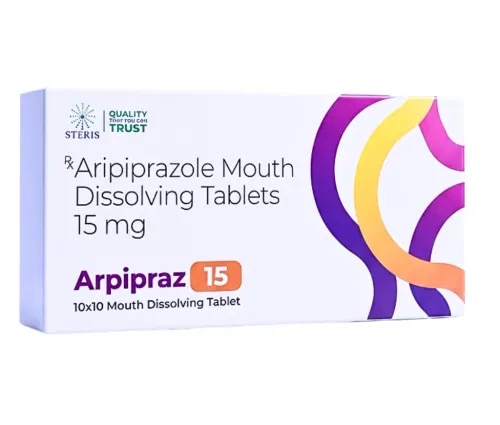
"name": "Arpiprazole Mouth Dissolving Tablets 15 mg",
"description": "ARPIPRAZ 15 is a mouth-dissolving tablet containing Aripiprazole 15 mg, prescribed for schizophrenia, bipolar disorder, autism-related irritability, Tourette's disorder, and as an add-on to antidepressants for major depressive disorder. Unlike many antipsychotics that fully block dopamine, Aripiprazole acts as a partial dopamine agonist, fine-tuning rather than shutting down dopamine activity — which can mean fewer movement-related side effects for some patients. The tablet dissolves on the tongue without water, helping patients who struggle with swallowing. It's not considered habit-forming but must be taken exactly as prescribed and never stopped abruptly. Prescription only – consult your doctor.\n\nMeta Title Options (50–60 characters)\nARPIPRAZ 15 Price – Aripiprazole MD Tablet | Steris (Recommended)\nARPIPRAZ 15 – Aripiprazole Mouth Dissolving Tablet\nARPIPRAZ 15 Price – Schizophrenia & Bipolar Care\nAripiprazole 15mg MD Tablet – ARPIPRAZ Price\nARPIPRAZ 15 – Antipsychotic for Multiple Conditions\n\nRationale: Option 1 leads with the “Price” anchor required for this Schedule H drug, keeps the brand searchable alongside the generic name, and fits within the 50–60 character band.\n\nMeta Description (140–160 characters)\n\nARPIPRAZ 15 (Aripiprazole 15mg MD) treats schizophrenia, bipolar disorder & more. Check price online. Prescription only – consult your doctor first.\n\nFull CMS Article\nARPIPRAZ 15: Aripiprazole Mouth Dissolving Tablet for Schizophrenia, Bipolar Disorder, and Related Conditions\nTL;DR / AI Mode Summary\n\nARPIPRAZ 15 supplies Aripiprazole 15 mg in a mouth-dissolving format, used across a broader range of conditions than many antipsychotics — schizophrenia, bipolar disorder, autism-related irritability, Tourette's disorder, and as an adjunct to antidepressant therapy in major depressive disorder. Its defining feature is a partial dopamine agonist mechanism: rather than fully blocking dopamine like older antipsychotics, it modulates it, which is associated with a comparatively lower risk of certain movement side effects. The dissolving tablet skips the need for water, supporting patients who find conventional tablets hard to swallow.\n\nWhat Sets ARPIPRAZ 15 Apart?\n\nMost antipsychotic medicines work by blocking dopamine receptors outright. Aripiprazole takes a different approach — it acts as a partial agonist, meaning it can either boost or dampen dopamine activity depending on what the brain's current chemical state calls for. This “smart stabilizer” action is one reason Aripiprazole is prescribed across such a wide span of psychiatric conditions, from psychotic disorders to mood conditions to certain neurodevelopmental and tic-related presentations.\n\nComposition at a Glance\nAttribute\tDetail\nBrand Name\tARPIPRAZ 15\nActive Ingredient\tAripiprazole\nStrength\t15 mg\nForm\tMouth Dissolving Tablet (MD)\nDrug Class\tAtypical Antipsychotic — Partial Dopamine Agonist\nSchedule Status\tSchedule H – Prescription Only\nConditions ARPIPRAZ 15 Is Prescribed For\n\nSchizophrenia — helps ease hallucinations, delusions, disorganized thought, social withdrawal, and reduced motivation, supporting better day-to-day and social functioning.\n\nBipolar I Disorder — used for acute manic and mixed episodes, as well as maintenance therapy aimed at reducing relapse.\n\nMajor Depressive Disorder (adjunct) — added alongside antidepressants when depression hasn't responded fully to antidepressant treatment alone.\n\nIrritability Linked to Autism Spectrum Disorder — may reduce aggression, irritability, outbursts, and self-injurious behavior in eligible patients.\n\nTourette's Disorder — can reduce the frequency and intensity of motor and vocal tics for some patients.\n\nMechanism of Action\n\nAripiprazole works on three key receptor systems:\n\nDopamine D2 receptors — partially activated rather than fully blocked, helping normalize rather than suppress dopamine signaling\nSerotonin 5-HT1A receptors — contributing to mood stabilization and reduced anxiety\nSerotonin 5-HT2A receptors — supporting the reduction of psychotic symptoms\n\nTogether, this receptor profile helps ease hallucinations and delusions, stabilize mood swings, reduce anxiety, and support clearer cognitive functioning — while the partial-agonist approach is associated with a comparatively lower likelihood of certain movement-related side effects compared to older-generation antipsychotics.\n\nDirections for Use\nTake ARPIPRAZ 15 strictly as your doctor prescribes.\nPlace the tablet on the tongue and let it dissolve fully — no water is typically needed.\nDon't chew or crush it unless your doctor specifically advises otherwise.\nTake it at a consistent time each day.\nContinue the full course even once you start feeling better, unless your doctor says otherwise.\nNever discontinue suddenly on your own — stopping abruptly can bring symptoms back.\nPossible Side Effects\n\nCommonly reported:\n\nHeadache\nDizziness\nNausea or vomiting\nConstipation\nDry mouth\nRestlessness\nAnxiety\nInsomnia\nFatigue\nIncreased appetite\nWeight changes\n\nSerious — seek immediate medical attention for:\n\nSevere allergic reactions\nHigh fever combined with muscle stiffness\nSeizures\nDifficulty swallowing\nUncontrolled body movements\nFainting\nIrregular heartbeat\nSuicidal thoughts or sudden behavioral changes\n\nPlaceholder: incidence rates and comparative trial data pending qualified clinical reviewer sign-off before publication.\n\nTalk to your doctor promptly if any side effect feels severe or doesn't improve.\n\nWho Should Be Cautious\n\nLet your doctor know before starting if you have any of the following:\n\nDiabetes\nHeart disease, or high or low blood pressure\nLiver or kidney impairment\nSeizure disorders\nParkinson's disease\nDementia\nA history of stroke\nA history of substance use\n\nLong-term treatment often includes periodic checks of blood sugar, body weight, and general health.\n\nPregnancy & Breastfeeding\n\nAripiprazole should be used in pregnancy or while breastfeeding only if a doctor determines the benefits outweigh the potential risks. This decision should always be made in consultation with your healthcare provider.\n\nDrug Interactions to Flag for Your Doctor\n\nARPIPRAZ 15 can interact with:\n\nAntidepressants and anti-anxiety medicines\nAntiepileptic drugs\nBlood pressure medications\nCertain antifungal medicines and antibiotics\nHIV medications\nSleeping pills\nAlcohol\n\nShare a complete list of everything you're taking — prescription drugs, over-the-counter products, vitamins, and herbal supplements — with your prescriber before starting treatment.\n\nPrecautions & Storage\nTake only as prescribed; don't adjust the dose independently.\nAvoid alcohol during treatment.\nStore below 25°C, in the original packaging, away from moisture and direct sunlight.\nKeep out of reach of children.\nDon't use beyond the printed expiry date.\nHow ARPIPRAZ 15 Compares to Other Antipsychotics\nFeature\tOlder-Generation Antipsychotics\tARPIPRAZ 15 (Aripiprazole)\nDopamine Action\tFull receptor blockade\tPartial agonist — modulates rather than blocks\nMovement-Related Side Effect Risk\tComparatively higher\tComparatively lower for many patients\nRange of Approved Uses\tTypically narrower\tBroader — includes autism-related irritability and Tourette's\nAdministration\tUsually standard tablets\tAvailable in swallow-free MD format\n\nNote: The right antipsychotic and formulation is a clinical decision made by a psychiatrist based on individual patient factors.\n\nWhy Choose ARPIPRAZ 15?\n\nBeyond its versatility across several psychiatric and neurodevelopmental conditions, ARPIPRAZ 15's mouth-dissolving format removes a real practical hurdle for patients who struggle with regular tablets. It isn't considered habit-forming, and its partial-agonist mechanism offers a distinct option for psychiatrists balancing symptom control against side-effect tolerability. Manufactured to consistent quality standards, it's built for dependable day-to-day use under medical supervision.\n\nConclusion\n\nWhether the goal is easing psychotic symptoms, stabilizing mood in bipolar disorder, supporting antidepressant therapy, or reducing irritability and tics in specific conditions, ARPIPRAZ 15 offers a versatile treatment option built on Aripiprazole's distinctive dopamine-modulating action. Its dissolving tablet format simplifies daily dosing, and with consistent use under a psychiatrist's care, it supports steadier symptom management over time. Prescription only – consult your doctor.\n\nFrequently Asked Questions\nWhat is ARPIPRAZ 15 used for? It treats schizophrenia, bipolar disorder, autism-related irritability, and Tourette's disorder, and is used as an add-on treatment for major depressive disorder.\nCan it be taken without water? Yes, it's a mouth-dissolving tablet designed to break down on the tongue without needing water.\nIs ARPIPRAZ 15 habit-forming? No, Aripiprazole isn't considered habit-forming, though it should always be used under medical supervision.\nCan I stop taking it once I feel better? No — stopping without medical guidance can cause symptoms to return; any discontinuation should be doctor-directed.\nDoes it cause weight gain? Some patients notice weight changes during treatment; a balanced diet and regular activity can help manage this.\nHow is ARPIPRAZ 15 different from other antipsychotics? It works as a partial dopamine agonist rather than fully blocking dopamine, which is linked to a lower risk of certain movement-related side effects for many patients.\nCan this medicine be used for depression? Yes, it's sometimes added alongside antidepressants when depression hasn't responded fully to antidepressant treatment alone.\nIs it suitable for autism-related irritability? It's prescribed for irritability associated with autism spectrum disorder in eligible patients, under a specialist's guidance.\nDoes ARPIPRAZ 15 interact with alcohol? Yes, alcohol should generally be avoided during treatment, as it may affect the medicine's tolerability.\nWhat serious symptoms require urgent medical attention? Severe allergic reactions, high fever with muscle stiffness, seizures, uncontrolled movements, fainting, irregular heartbeat, or sudden behavioral changes need immediate care.\nWhat health conditions should I mention to my doctor beforehand? Diabetes, heart disease, blood pressure issues, liver or kidney impairment, seizure disorders, Parkinson's disease, dementia, stroke history, and substance use history should all be disclosed.\nCan ARPIPRAZ 15 be used in pregnancy? Only if your doctor determines the benefits outweigh potential risks — this should always be discussed directly with your healthcare provider.\nDoes this medicine interact with other drugs I'm taking? It can interact with several medicine classes, including antidepressants, antiepileptics, blood pressure drugs, and certain antibiotics or antifungals — share your full medication list with your doctor.\nIs a prescription required to purchase ARPIPRAZ 15? Yes, it's a Schedule H medicine dispensed only against a valid doctor's prescription.\nHow long does it take to see results? Response time varies by condition and individual; your psychiatrist will track progress through follow-up visits.\n\n[Steris Healthcare Footer] Manufactured and marketed by Steris Healthcare Pvt. Ltd. — a WHO-GMP and ISO-certified pharmaceutical manufacturer. For queries, reach us at contact@sterispharma.com or +91 8824175417. This content is for informational purposes only and does not replace professional medical advice. Prescription only – consult your doctor.",
"price": 210.0,
"discountamount": 63.0,
"currencycode": "INR",
"priority": 1000000,
"isfreeshipmentavailable": false,
"shipmentduration": 1,
"_keywords": null,
"isarchived": false,
"isavailable": true,
"applicationid": null,
"productindex": 2480,
"imageuri": "https://productimages.withfloats.com/actual/6a5df8cfa4709fd448b5e572.png",
"tileimageuri": "https://productimages.withfloats.com/tile/6a5df8cfa4709fd448b5e572.png",
"images": null,
"totalqueries": 0,
"gpid": null,
"groupproductid": null,
"createdon": "2026-07-20T10:30:37.014Z",
"updatedon": "2026-07-20T10:30:37.014Z",
"buyonlinelink": null,
"producturl": "http://WWW.STERISINDIA.COM//arpiprazole-mouth-dissolving-tablets-15-mg/2480",
"availableunits": -1.0,
"iscodavailable": false,
"isprepaidonlineavailable": false,
"maxcodorders": 0,
"maxprepaidonlineorders": 0,
"uniquepaymenturl": null,
"brandname": "ARPIPRAZ 15",
"category": "NEUROLOGYRANGE",
"tags": [],
"variants": false,
"keyspecification": null,
"otherspecifications": null,
"pickupaddressreferenceid": null,
"paymenttype": "UniquePaymentUrl",
"producttype": "products",
"hsncode": null,
"gstslab": 0.0,
"isnotforsale": false
},
{
"_id": "6a50a30c9e1ef0fb4df551b0",
"fptag": "STERISHEALTHCARE",
"merchantname": null,
"customwidgets": null,
"externalsourceid": null,
"name": "dorzolamide eye drops ip",
"description": "Dorzolamide eye drops IP are a prescription ophthalmic solution used to lower elevated intraocular pressure (IOP) in patients with open-angle glaucoma or ocular hypertension. Dorzolamide belongs to a class of drugs called carbonic anhydrase inhibitors, which work by reducing the production of aqueous humor (the fluid inside the eye), thereby lowering pressure within the eye. It is typically used two to three times daily and begins measurably lowering eye pressure within about 2 hours, though consistent long-term use is essential for sustained control. Common side effects include a temporary bitter or unusual taste in the mouth, burning or stinging on instillation, and blurred vision. Because dorzolamide is chemically a sulfonamide derivative, it should be used cautiously in patients with known sulfa allergies or significant kidney impairment, and only under an ophthalmologist's supervision. It is a Schedule H prescription-only medicine in India.\n\nWhat Is Dorzolamide Eye Drops IP?\nDorzolamide Eye Drops IP is a topical prescription medication used primarily to manage glaucoma and ocular hypertension — conditions characterized by abnormally elevated pressure inside the eye that, if left uncontrolled, can damage the optic nerve and lead to progressive, irreversible vision loss.\nThe “IP” designation indicates the formulation conforms to standards set out in the Indian Pharmacopoeia, ensuring consistent quality, purity, and potency.\nDorzolamide belongs to the carbonic anhydrase inhibitor (CAI) class of anti-glaucoma medications. Unlike oral carbonic anhydrase inhibitors (such as acetazolamide), which act systemically and often cause more pronounced side effects, topical dorzolamide is designed to act locally within the eye, offering effective IOP reduction with comparatively lower systemic exposure — though some systemic absorption can still occur.\nIt is frequently prescribed either as a standalone treatment or in combination with other IOP-lowering agents, such as beta-blockers (e.g., timolol) or prostaglandin analogues, when a single agent does not achieve adequate pressure control.\n\nHow Does Dorzolamide Work? (Mechanism of Action)\n\nAqueous humor production – The ciliary body inside the eye continuously produces aqueous humor, the clear fluid that maintains intraocular pressure and nourishes ocular tissues.\nCarbonic anhydrase enzyme – This enzyme, found in the ciliary body, plays a key role in the chemical reactions that generate bicarbonate ions, which drive fluid secretion into the eye.\nEnzyme inhibition – Dorzolamide inhibits carbonic anhydrase (specifically the II isoenzyme) within the ciliary processes.\nReduced fluid production – With the enzyme inhibited, bicarbonate-dependent fluid transport slows down, resulting in decreased aqueous humor formation.\nLowered intraocular pressure – Less fluid production means less pressure buildup inside the eye, helping protect the optic nerve from pressure-related damage over time.\n\n\nClinical Indications\nIndicationDetailsOpen-angle glaucomaPrimary indication; helps control chronic elevated IOPOcular hypertensionUsed to reduce elevated eye pressure even before glaucoma-related damage occursAdjunct therapyCombined with beta-blockers or prostaglandin analogues when monotherapy is insufficientPost-laser or post-surgical IOP spikesSometimes used short-term under specialist guidance\n\nDosage & Administration\nParameterRecommendationStandard dose (monotherapy)One drop in the affected eye(s), three times dailyStandard dose (with other IOP-lowering drops)Often reduced to twice daily when combined, per doctor's instructionsOnset of actionMeasurable IOP reduction typically begins within about 2 hoursPeak effectGenerally within a few hours of instillationIf using multiple eye dropsSpace different eye medications at least 10 minutes apartMissed doseApply as soon as remembered; skip if near the next scheduled dose — do not double upDuration of useLong-term, ongoing therapy as glaucoma is a chronic condition requiring continuous management\nNote: Consistency is critical — missed doses can allow intraocular pressure to rise, increasing the risk of progressive optic nerve damage.\n\nKey Benefits\n\nEffectively lowers intraocular pressure in both glaucoma and ocular hypertension\nActs locally in the eye, generally producing lower systemic side effects compared to oral carbonic anhydrase inhibitors\nCan be used as monotherapy or in combination with other classes of glaucoma medication for enhanced pressure control\nHelps protect the optic nerve from pressure-related damage with consistent long-term use\nAvailable in a well-established, pharmacopoeia-standardized formulation (IP grade)\nSuitable for long-term, chronic disease management in glaucoma patients\n\n\nPrecautions\n\nUse strictly as prescribed and do not adjust dosing without consulting your ophthalmologist\nInform your doctor if you have a known sulfonamide (sulfa) allergy, since dorzolamide is chemically related to sulfa drugs\nUse with caution in patients with significant kidney (renal) impairment, due to potential for systemic absorption\nNot typically recommended in patients with severe corneal disease without specialist evaluation\nIf using contact lenses, remove before instillation and reinsert only after the interval advised by your doctor\nRegular eye pressure monitoring and follow-up visits are essential during treatment\nInform your doctor of all other eye medications and systemic drugs you are using\nAvoid touching the dropper tip to the eye or any surface to prevent contamination\n\n\nSide Effects\nCommon (Usually Mild and Temporary)\n\nTemporary bitter or unusual taste in the mouth after application\nBurning or stinging sensation on instillation\nBlurred vision immediately after use\nEye redness or itching\nMild eye discomfort\n\nLess Common / Serious (Consult Your Doctor Promptly)\n\nSigns of an allergic reaction (rash, swelling, severe itching)\nPersistent eye pain or significant vision changes\nSigns of corneal problems (persistent redness, discharge, sensitivity to light)\nSystemic effects related to sulfonamide sensitivity, in rare cases\n\nIf any serious or persistent symptom occurs, discontinue use and contact your ophthalmologist immediately.\n\nComparison: Dorzolamide vs. Other Anti-Glaucoma Therapies\nTreatmentClassMechanismKey ConsiderationDorzolamide eye dropsCarbonic anhydrase inhibitorReduces aqueous humor productionSulfa-related caution; often used as adjunct therapyTimolol eye dropsBeta-blockerReduces aqueous humor production via a different pathwayCaution in asthma, heart conditionsLatanoprost / prostaglandin analoguesProstaglandin analogueIncreases aqueous humor outflowOnce-daily dosing; may darken iris/eyelash growthBrimonidineAlpha-2 agonistReduces production and increases outflowCan cause drowsiness, dry mouthOral acetazolamideSystemic carbonic anhydrase inhibitorReduces aqueous humor production systemicallyMore pronounced systemic side effects than topical dorzolamide\n\nKey Statistics (Placeholder — Pending Clinical Reviewer Verification)\nMetricValueAverage IOP reduction achieved with dorzolamide monotherapy[Placeholder – insert verified clinical trial statistic]Prevalence of open-angle glaucoma in adults over 40[Placeholder – insert epidemiological reference]Proportion of patients requiring combination glaucoma therapy[Placeholder – insert verified reference]\nAll statistics above are placeholders and must be verified and populated by a qualified clinical reviewer prior to publication.\n\nExpert Insight\n\n[Placeholder — Expert quote pending. To be added only after review and approval by a licensed ophthalmologist/medical reviewer associated with Steris Healthcare. Do not fabricate or publish without sign-off.]\n\n\nPrice of Dorzolamide Eye Drops IP\nThe price of dorzolamide eye drops IP varies depending on pack size, brand, and region. For current pricing, availability, and prescription verification, please consult your ophthalmologist or an authorized pharmacy.\nPrescription only – consult your doctor.\n\nConclusion\nDorzolamide Eye Drops IP play a well-established role in the long-term management of glaucoma and ocular hypertension, offering targeted, localized reduction of intraocular pressure through carbonic anhydrase inhibition. Whether used alone or alongside other classes of IOP-lowering medication, consistent, correctly timed use is essential to protect the optic nerve from progressive, irreversible damage. Because dorzolamide is a sulfonamide derivative with potential for systemic absorption, patients with sulfa allergies or kidney impairment should discuss suitability carefully with their ophthalmologist. As with all glaucoma therapy, regular monitoring and adherence to the prescribed regimen — rather than occasional or as-needed use — are what ultimately safeguard long-term vision.\n\nFrequently Asked Questions\n\n1. What is dorzolamide eye drops used for?\nDorzolamide eye drops are used to lower elevated intraocular pressure in patients with open-angle glaucoma or ocular hypertension, helping protect the optic nerve from pressure-related damage.\n\n2. How long does it take dorzolamide to lower eye pressure?\nDorzolamide typically begins measurably lowering intraocular pressure within about 2 hours of application, though consistent, long-term use is needed to maintain stable pressure control over time.\n\n3. What are the side effects of dorzolamide?\nCommon side effects include a temporary bitter or unusual taste in the mouth, burning or stinging upon application, blurred vision, and mild eye redness or discomfort. Less commonly, allergic reactions or persistent eye irritation can occur and should be reported to a doctor.\n4. Does dorzolamide affect the kidneys?\nDorzolamide is a sulfonamide derivative, and although it is applied topically with generally low systemic absorption, caution is advised in patients with significant kidney impairment. Patients with known kidney disease or sulfa allergies should inform their doctor before starting treatment.\n\n5. How often should dorzolamide eye drops be used?\nDorzolamide is typically used three times daily as monotherapy, or twice daily when combined with other glaucoma medications, exactly as directed by your ophthalmologist.\n\n6. Can dorzolamide be used with other glaucoma eye drops?\nYes, dorzolamide is commonly combined with beta-blockers, prostaglandin analogues, or other IOP-lowering agents when a single medication does not achieve adequate pressure control. Different eye drops should be spaced at least 10 minutes apart.\n\n7. Is dorzolamide safe for long-term use?\nYes, dorzolamide is designed for long-term, ongoing use in chronic glaucoma management, provided it is used under regular ophthalmologist supervision with periodic eye pressure monitoring.\n\n8. Who should not use dorzolamide eye drops?\nPatients with known hypersensitivity to sulfonamides, significant kidney impairment, or specific contraindications identified by their doctor should use dorzolamide only under close medical supervision, if at all.\n\n9. Does dorzolamide cause blurred vision?\nTemporary blurred vision can occur immediately after applying dorzolamide. This is usually short-lived, but if it persists, you should consult your ophthalmologist.\n\n10. Can dorzolamide eye drops be used with contact lenses?\nIt's generally recommended to remove contact lenses before applying dorzolamide and reinsert them only after the interval advised by your doctor, as certain preservatives in eye drops can affect contact lens materials.\n\n11. What happens if I miss a dose of dorzolamide?\nApply the missed dose as soon as you remember, unless it is almost time for your next scheduled dose — in that case, skip the missed dose and continue your regular schedule. Do not double up doses.\n\n12. Why does dorzolamide cause a bitter taste?\nThe bitter taste occurs because a small amount of the eye drop drains through the tear duct into the nasal passage and throat, where it can be tasted. This is a recognized, generally harmless effect of topical carbonic anhydrase inhibitors.\n13. Is dorzolamide the same as timolol eye drops?\nNo. Dorzolamide is a carbonic anhydrase inhibitor, while timolol is a beta-blocker. Both lower eye pressure but through different mechanisms, and they are sometimes prescribed together for enhanced effect.\n\n14. Can dorzolamide be used during pregnancy?\nUse during pregnancy or breastfeeding should only occur under direct medical supervision. Inform your doctor if you are pregnant, planning pregnancy, or breastfeeding before starting dorzolamide.\n\n15. How is dorzolamide different from oral glaucoma medications?\nTopical dorzolamide acts locally in the eye and generally causes fewer systemic side effects than oral carbonic anhydrase inhibitors like acetazolamide, which act throughout the body and can cause more pronounced systemic effects.\n16. Can stopping dorzolamide suddenly cause problems?\nStopping dorzolamide abruptly can allow intraocular pressure to rise again, increasing the risk of progressive optic nerve damage. Always consult your ophthalmologist before discontinuing treatment.\n\n17. Does dorzolamide need to be refrigerated?\nStorage requirements can vary by brand and formulation; always follow the storage instructions printed on your specific product's packaging or as advised by your pharmacist.",
"price": 350.0,
"discountamount": 105.0,
"currencycode": "INR",
"priority": 1000000,
"isfreeshipmentavailable": false,
"shipmentduration": 1,
"_keywords": null,
"isarchived": false,
"isavailable": true,
"applicationid": null,
"productindex": 2470,
"imageuri": "https://productimages.withfloats.com/actual/6a50a30e9569e07de66607f4.png",
"tileimageuri": "https://productimages.withfloats.com/tile/6a50a30e9569e07de66607f4.png",
"images": null,
"totalqueries": 0,
"gpid": null,
"groupproductid": null,
"createdon": "2026-07-10T07:45:16.262Z",
"updatedon": "2026-07-10T07:45:16.262Z",
"buyonlinelink": null,
"producturl": "http://WWW.STERISINDIA.COM//dorzolamide-eye-drops-ip/2470",
"availableunits": -1.0,
"iscodavailable": false,
"isprepaidonlineavailable": false,
"maxcodorders": 0,
"maxprepaidonlineorders": 0,
"uniquepaymenturl": null,
"brandname": "CIPVISION DORZONIX 2%",
"category": "Opthalmology Range",
"tags": [
"dorzolamide eye drops ip",
"dorzolamide eye drops",
"dorzolamide eye drops uses",
"dorzolamide eye drops uses in hindi",
"dorzolamide eye drops price",
"dorzolamide eye drops ip",
"dorzolamide eye drops brand name",
"dorzolamide eye drops brands"
],
"variants": false,
"keyspecification": null,
"otherspecifications": null,
"pickupaddressreferenceid": null,
"paymenttype": "UniquePaymentUrl",
"producttype": "products",
"hsncode": null,
"gstslab": 0.0,
"isnotforsale": false
},
{
"_id": "6a4cf84af44be73628317db4",
"fptag": "STERISHEALTHCARE",
"merchantname": null,
"customwidgets": null,
"externalsourceid": null,
"name": "ketorolac tromethamine ofloxacin eye drops",
"description": "Ketorolac tromethamine ofloxacin eye drops are a prescription combination formulation that pairs an NSAID (ketorolac tromethamine) with a fluoroquinolone antibiotic (ofloxacin) in a single ophthalmic solution. Ketorolac reduces pain, inflammation, and irritation, while ofloxacin treats or prevents bacterial eye infections — making this combination especially useful after eye surgery, such as cataract or corneal refractive procedures, when both inflammation control and infection prevention are needed at the same time. It's generally well tolerated, with mild stinging or burning being the most common effect, and should only be used exactly as prescribed by an eye care professional.\nWhat Is Ketorolac Tromethamine Ofloxacin Eye Drops?\nThis is a fixed-dose combination ophthalmic solution bringing together two distinct classes of medication:\n\nKetorolac tromethamine — a nonsteroidal anti-inflammatory drug (NSAID) that blocks prostaglandin synthesis in the eye, reducing pain, inflammation, and irritation\nOfloxacin — a fluoroquinolone antibiotic that treats bacterial infections of the eye, including conjunctivitis and corneal ulcers, by inhibiting bacterial DNA replication\n\nCombining the two addresses two separate clinical needs at once: controlling post-operative or allergy-related inflammation, and reducing the risk of bacterial infection during the eye's vulnerable healing period. This combination is commonly prescribed following cataract surgery, corneal refractive surgery, and other ocular procedures where both inflammation and infection risk need to be managed together.\nHow This Combination Works (Mechanism of Action)\n\nKetorolac's anti-inflammatory action — Blocks the cyclooxygenase (COX) enzyme pathway, reducing the production of prostaglandins, the chemical messengers responsible for pain, redness, and swelling in the eye.\nReduced pain and irritation — With prostaglandin production suppressed, patients experience less post-surgical discomfort, itching, and burning.\nOfloxacin's antibacterial action — Inhibits bacterial DNA gyrase and topoisomerase IV, enzymes bacteria need to replicate their DNA, effectively stopping bacterial growth.\nInfection prevention/control — By suppressing bacterial replication, ofloxacin helps prevent or treat infections that could otherwise complicate the eye's healing process after surgery or injury.\nCombined post-operative support — Together, the two components address both major risks during ocular recovery: uncontrolled inflammation and secondary bacterial infection.\n\nClinical Indications\nUse CaseRole of the CombinationPost-cataract surgery careControls inflammation and pain while preventing bacterial infection during healingPost-corneal refractive surgery (e.g., LASIK)Reduces post-operative discomfort and infection riskBacterial conjunctivitis with inflammationTreats the underlying infection while easing associated redness and irritationCorneal injury or minor trauma (as directed)Supports healing by addressing both inflammation and infection riskSeasonal allergic conjunctivitis (ketorolac component)Relieves itching associated with seasonal eye allergies\nThis combination is intended for short-term, doctor-directed use — not for long-term or repeated self-administration.\nDosage Guidelines\nParameterTypical GuidanceStandard doseOne drop in the affected eye(s), frequency as prescribed by your doctorCommon frequencyOften 2 to 4 times daily, depending on the condition being treated and product-specific labelingPost-surgical useUsually started shortly after surgery and continued for a defined post-operative period, as directedAdministration techniqueTilt head back, pull down the lower eyelid, instill the drop without touching the dropper tip to the eye, then close the eye gently for a minute or twoContact lens useAvoid wearing contact lenses during treatment unless your doctor says otherwiseDurationComplete the full prescribed course, even if symptoms improve early, to reduce the risk of antibiotic resistance or incomplete healing\nExact dosing frequency and treatment duration vary by brand formulation and the specific condition being treated — always follow your prescribing doctor's exact instructions rather than a generic schedule.\nKey Benefits\n\nAddresses two major post-surgical risks — inflammation/pain and bacterial infection — in a single combination product\nReduces the need for two separate eye drop bottles, simplifying the post-operative care routine\nKetorolac's anti-inflammatory action helps improve comfort during the critical early healing window after eye surgery\nOfloxacin's broad-spectrum antibacterial activity covers many common eye pathogens\nUseful for both surgical recovery and certain inflammatory/infectious conditions like allergic or bacterial conjunctivitis with associated discomfort\n\nPrecautions\n\nShould be used strictly under the guidance of an ophthalmologist — not for self-directed or prolonged use\nDo not use alongside other NSAID eye drops, as this can increase the risk of bleeding and delayed healing\nUse with caution alongside steroid-containing eye drops, as combined use may increase infection risk\nUse with caution in patients who bleed easily or are on blood-thinning medication, due to ketorolac's NSAID effects\nIf symptoms do not improve within the expected timeframe, or worsen, contact your doctor rather than continuing use independently\nAvoid contact lens wear during treatment unless specifically advised otherwise\nDiscontinue immediately and contact your doctor at the first sign of a rash or allergic reaction\nNot recommended for infants under 1 year old (based on the ofloxacin component's approved age range)\n\nSide Effects\nCommon side effects:\n\nStinging or burning on application\nTemporary blurred vision\nEye redness or irritation\nDryness or excess tearing\nSensitivity to light (photophobia)\n\nLess common side effects:\n\nItching or foreign body sensation in the eye\nEyelid swelling\nMild headache\n\nRare but serious side effects — seek immediate medical attention:\n\nSigns of an allergic reaction: hives, difficulty breathing, swelling of the face, lips, tongue, or throat\nSevere skin reaction: fever, sore throat, facial or tongue swelling, skin pain followed by a spreading red or purple rash with blistering\nCorneal problems: persistent eye pain, corneal thinning, erosion, or non-healing of the eye surface\nWorsening infection symptoms despite treatment\n\nMost side effects are mild and temporary; however, any signs of a serious allergic or corneal reaction require prompt medical attention.\nComparison with Alternatives\nFeatureKetorolac + Ofloxacin CombinationSteroid + Antibiotic Combination (e.g., Dexamethasone + Tobramycin)Anti-inflammatory mechanismNSAID (COX inhibition)Corticosteroid (broader immune suppression)Infection risk with prolonged useLower relative infection-masking riskHigher risk of masking infection with prolonged steroid useTypical use casePost-operative pain/inflammation with infection preventionBroader inflammatory eye conditions requiring stronger anti-inflammatory controlIntraocular pressure effectMinimal IOP effect from ketorolacSteroids can raise intraocular pressure with prolonged use\nYour ophthalmologist will select the combination best suited to your specific procedure, condition, and risk factors.\nKey Statistics\n[Placeholder — pending clinical/regulatory team verification. Do not publish without confirmed source citation for post-operative infection rate reduction data, comparative efficacy figures, or incidence rates of reported adverse effects for this specific combination product.]\nExpert Insight\n[Placeholder — reserved for a quote from a qualified ophthalmologist or clinical reviewer. Do not publish without a verified, attributable expert quote.]\nFrequently Asked Questions\n1. What is ketorolac and ofloxacin eye drops used for?\nThis combination is used to control pain, inflammation, and irritation while also preventing or treating bacterial infection in the eye — most commonly after cataract or corneal refractive surgery, and sometimes for infected, inflamed conditions like bacterial conjunctivitis.\n2. Is ketorolac eye drops safe to use?\nKetorolac eye drops are generally safe when used as prescribed by a doctor for approved indications like post-surgical inflammation or allergic conjunctivitis. As with any NSAID, it should be used with caution in people who bleed easily or take blood thinners, and not combined with other NSAID eye drops.\n3. Is ofloxacin safe for eyes?\nYes, ofloxacin eye drops are considered safe and are widely prescribed for bacterial eye infections when used as directed. Common effects are mild and temporary, such as stinging or light sensitivity; serious reactions are rare but should be reported to a doctor immediately if they occur.\n4. Is ketorolac safe for eyes?\nKetorolac eye drops are safe for ophthalmic use when prescribed appropriately and used according to your doctor's instructions. It's an established NSAID with a long history of use for post-surgical pain and allergic conjunctivitis, though it requires caution in certain patients, such as those with bleeding disorders.\n5. How many times a day can you use ketorolac eye drops?\nThis depends on the condition being treated and your doctor's specific prescription — commonly this is 2 to 4 times daily. Always follow your doctor's exact dosing instructions rather than a generic schedule, since frequency varies by indication and product.\n6. Does ketorolac reduce eye pressure?\nNo, ketorolac is not used to reduce intraocular eye pressure. It works as an anti-inflammatory pain reliever by blocking prostaglandin production, not as a pressure-lowering agent. Medications specifically designed to reduce eye pressure, such as those used in glaucoma, work through different mechanisms and are a separate category of treatment.\nConclusion\nKetorolac tromethamine ofloxacin eye drops offer a practical, combined solution for two of the most important concerns during eye recovery: controlling inflammation and pain, and preventing bacterial infection. By pairing an established NSAID with a trusted fluoroquinolone antibiotic, this combination simplifies post-operative care, particularly after cataract or corneal refractive surgery, while addressing allergic and infectious inflammatory conditions when appropriate. Most side effects are mild and temporary, though the combination should always be used exactly as prescribed, with attention to precautions around other eye medications, bleeding risk, and contact lens use. As with any prescription ophthalmic treatment, ongoing follow-up with your ophthalmologist ensures the medication is working as intended and any concerns are addressed early.",
"price": 90.0,
"discountamount": 27.0,
"currencycode": "INR",
"priority": 1000000,
"isfreeshipmentavailable": false,
"shipmentduration": 1,
"_keywords": null,
"isarchived": false,
"isavailable": true,
"applicationid": null,
"productindex": 2467,
"imageuri": "https://productimages.withfloats.com/actual/6a4cf84ca50a3eb7ed21b13b.png",
"tileimageuri": "https://productimages.withfloats.com/tile/6a4cf84ca50a3eb7ed21b13b.png",
"images": null,
"totalqueries": 0,
"gpid": null,
"groupproductid": null,
"createdon": "2026-07-07T12:59:54.142Z",
"updatedon": "2026-07-07T12:59:54.142Z",
"buyonlinelink": null,
"producturl": "http://WWW.STERISINDIA.COM//ketorolac-tromethamine-ofloxacin-eye-drops/2467",
"availableunits": -1.0,
"iscodavailable": false,
"isprepaidonlineavailable": false,
"maxcodorders": 0,
"maxprepaidonlineorders": 0,
"uniquepaymenturl": null,
"brandname": "CIPVISION KEYPROFEN OFLA",
"category": "Opthalmology Range",
"tags": [
"ketorolac tromethamine ofloxacin eye drops",
"ketorolac tromethamine",
"ketorolac tromethamine uses",
"ketorolac tromethamine uses in hindi",
"ketorolac tromethamine dispersible tablets uses in hindi",
"ketorolac tromethamine tablet uses in hindi",
"ketorolac tromethamine use in hindi",
"ketorolac tromethamine use"
],
"variants": false,
"keyspecification": null,
"otherspecifications": null,
"pickupaddressreferenceid": null,
"paymenttype": "UniquePaymentUrl",
"producttype": "products",
"hsncode": null,
"gstslab": 0.0,
"isnotforsale": false
},
{
"_id": "6a43bee2d208c802be053f9d",
"fptag": "STERISHEALTHCARE",
"merchantname": null,
"customwidgets": null,
"externalsourceid": null,
"name": "Sitagliptin 100mg Metformin Hydrochloride 1000mg Sustained Release Pioglitazone 15 mg",
"description": "Managing type 2 diabetes often requires more than a single medication to achieve long-term blood sugar control. Sitagliptin 100mg Metformin Hydrochloride 1000mg Sustained Release Pioglitazone 15 mg is a triple-combination prescription medicine formulated to help adults with type 2 diabetes maintain healthy glucose levels when diet, exercise, and single-drug therapy are not enough.\n\nThis advanced combination works through three different mechanisms to improve insulin sensitivity, reduce glucose production by the liver, and enhance the body's natural insulin response after meals. Because of its multi-action approach, it is frequently prescribed by healthcare professionals for patients requiring comprehensive glycemic control.\n\nIf you are searching for Sitagliptin 100mg Metformin Hydrochloride 1000mg Sustained Release Pioglitazone 15 mg, this guide covers everything you need to know—including how it works, benefits, dosage information, side effects, precautions, storage, and frequently asked questions.\n\nWhat is Sitagliptin 100mg Metformin Hydrochloride 1000mg Sustained Release Pioglitazone 15 mg?\n\nSitagliptin 100mg Metformin Hydrochloride 1000mg Sustained Release Pioglitazone 15 mg is a prescription oral anti-diabetic medicine used to manage Type 2 Diabetes Mellitus. It combines three clinically proven medicines into one convenient tablet to provide better blood sugar management throughout the day.\n\nThe formulation contains:\n\nSitagliptin 100 mg – A DPP-4 inhibitor that increases incretin hormones to improve insulin secretion.\nMetformin Hydrochloride 1000 mg Sustained Release – A biguanide that lowers glucose production by the liver and improves insulin sensitivity.\nPioglitazone 15 mg – A thiazolidinedione that enhances the body's response to insulin.\n\nTogether, these ingredients target multiple causes of high blood sugar, helping patients achieve better diabetes control while reducing the need for multiple separate medications.\n\nHow Does Sitagliptin 100mg Metformin Hydrochloride 1000mg Sustained Release Pioglitazone 15 mg Work?\n\nThis triple-combination tablet works through complementary mechanisms:\n\n1. Sitagliptin\n\nSitagliptin inhibits the DPP-4 enzyme, allowing incretin hormones to remain active longer. These hormones increase insulin release after meals and reduce excess glucagon production.\n\n2. Metformin SR\n\nMetformin Sustained Release decreases glucose production in the liver, reduces intestinal glucose absorption, and improves insulin sensitivity without causing excessive insulin release.\n\n3. Pioglitazone\n\nPioglitazone improves insulin sensitivity in muscle and fat tissues, enabling cells to utilize glucose more effectively.\n\nThe combination helps maintain consistent blood sugar levels throughout the day while lowering both fasting and post-meal glucose.\n\nWhy is This Triple Combination Important?\n\nType 2 diabetes progresses over time, making it difficult for many patients to control blood sugar using a single medication. A triple therapy offers several advantages:\n\nBetter HbA1c reduction\nMultiple mechanisms of action\nReduced insulin resistance\nImproved post-meal glucose control\nLower fasting blood sugar\nSimplified treatment with one tablet\nImproved medication adherence\nReduced need for additional medications\n\nHealthcare providers often prescribe this combination when dual therapy no longer provides adequate glucose control.\n\nKey Benefits of Sitagliptin 100mg Metformin Hydrochloride 1000mg Sustained Release Pioglitazone 15 mg\nExcellent Blood Sugar Control\n\nThe medicine helps reduce both fasting and postprandial blood glucose levels effectively.\n\nTriple Mechanism of Action\n\nEach ingredient targets a different pathway involved in diabetes, resulting in more comprehensive glycemic control.\n\nImproved Insulin Sensitivity\n\nPioglitazone increases insulin responsiveness, helping the body utilize glucose more efficiently.\n\nReduced Liver Glucose Production\n\nMetformin decreases glucose release from the liver, preventing unnecessary increases in blood sugar.\n\nSupports Long-Term Diabetes Management\n\nRegular use, alongside lifestyle modifications, contributes to improved HbA1c levels and reduced diabetes-related complications.\n\nConvenient Once-Daily Regimen\n\nCombining three medicines into a single tablet improves treatment convenience and supports better compliance.\n\nWho May Benefit from This Medicine?\n\nHealthcare professionals may prescribe this medication for adults with Type 2 Diabetes who:\n\nHave uncontrolled blood sugar despite dual therapy\nRequire triple oral anti-diabetic therapy\nHave elevated HbA1c levels\nNeed improved insulin sensitivity\nPrefer fewer tablets in their treatment plan\nAre following dietary and exercise recommendations but require additional glucose control\n\nThis medicine is not intended for Type 1 Diabetes or diabetic ketoacidosis.\n\nHow to Take Sitagliptin 100mg Metformin Hydrochloride 1000mg Sustained Release Pioglitazone 15 mg\n\nAlways follow your physician's instructions.\n\nGeneral recommendations include:\n\nTake once daily or as prescribed.\nSwallow the tablet whole.\nDo not crush, split, or chew the sustained-release tablet.\nTake with food to reduce stomach discomfort.\nTake it at the same time each day.\nContinue exercising and following a diabetic meal plan.\n\nNever stop treatment without consulting your healthcare provider.\n\nPossible Side Effects\n\nLike all prescription medicines, this combination may cause side effects, although not everyone experiences them.\n\nCommon side effects include:\n\nNausea\nStomach discomfort\nDiarrhea\nHeadache\nUpper respiratory infection\nWeight gain\nSwelling of feet or ankles\nMuscle aches\nDizziness\n\nSeek immediate medical attention if you experience:\n\nSevere allergic reaction\nPersistent vomiting\nDifficulty breathing\nSevere abdominal pain\nUnusual fatigue\nYellowing of skin or eyes\nSymptoms of lactic acidosis\nSigns of heart failure, such as rapid weight gain or shortness of breath\nPrecautions Before Using This Medicine\n\nInform your healthcare provider if you have:\n\nKidney disease\nLiver disease\nHeart failure\nBladder cancer history\nPancreatitis\nSevere dehydration\nAlcohol dependence\nVitamin B12 deficiency\nPlanned surgery or imaging with contrast dye\n\nWomen who are pregnant or breastfeeding should use this medicine only under medical supervision.\n\nDrug Interactions\n\nTell your doctor about all medicines you take, including:\n\nInsulin\nSulfonylureas\nDiuretics\nCorticosteroids\nThyroid medicines\nBlood pressure medicines\nRifampicin\nAlcohol\nCimetidine\nCertain antifungal medicines\n\nProper medication review helps minimize interaction risks.\n\nLifestyle Tips for Better Diabetes Control\n\nMedicine works best when combined with healthy lifestyle habits.\n\nRecommended practices include:\n\nFollow a balanced diabetic diet.\nExercise for at least 30 minutes most days.\nMonitor blood sugar regularly.\nMaintain a healthy body weight.\nStay hydrated.\nAvoid smoking.\nLimit alcohol intake.\nGet regular HbA1c tests.\nManage stress effectively.\nAttend routine medical check-ups.\nStorage Instructions\n\nStore the tablets:\n\nBelow 25°C\nIn a cool, dry place\nAway from moisture and direct sunlight\nIn the original packaging\nOut of reach of children and pets\n\nDo not use expired medicine.\n\nWhy Healthcare Professionals Choose This Triple Combination\n\nDoctors frequently recommend Sitagliptin 100mg Metformin Hydrochloride 1000mg Sustained Release Pioglitazone 15 mg because it addresses multiple aspects of diabetes management in a single formulation. By improving insulin secretion, reducing hepatic glucose production, and enhancing insulin sensitivity, it provides comprehensive glycemic control while simplifying treatment. When combined with a healthy lifestyle and regular medical follow-up, it can support long-term diabetes management and help reduce the risk of complications associated with uncontrolled blood sugar.\n\nConclusion\n\nSitagliptin 100mg Metformin Hydrochloride 1000mg Sustained Release Pioglitazone 15 mg is an effective prescription medication designed for adults with Type 2 Diabetes Mellitus who require stronger blood sugar management than single or dual therapy can provide. Its triple-action formula offers improved glycemic control, better insulin utilization, and convenient once-daily dosing. While highly effective, it should always be used under the guidance of a qualified healthcare professional, together with a balanced diet, regular physical activity, and routine blood sugar monitoring for the best long-term outcomes.\n\nHigh-Ranking FAQs (Google Search & Voice Search Optimized)\n1. What is Sitagliptin 100mg Metformin Hydrochloride 1000mg Sustained Release Pioglitazone 15 mg used for?\n\nIt is prescribed to help adults with Type 2 Diabetes Mellitus control blood sugar when lifestyle changes and other oral medicines do not provide adequate glycemic control.\n\n2. How does this triple-combination tablet work?\n\nIt combines three medicines that increase insulin release after meals, reduce glucose production by the liver, and improve the body's sensitivity to insulin, resulting in better overall blood sugar control.\n\n3. Can this medicine be taken once daily?\n\nYes. Many patients take it once daily, but the exact dosage and timing should always follow the prescribing doctor's instructions.\n\n4. Should I take this tablet with food?\n\nYes. Taking it with meals helps reduce stomach-related side effects associated with metformin and improves tolerability.\n\n5. Can this medicine cure diabetes?\n\nNo. It helps control blood sugar levels but does not cure Type 2 Diabetes. Long-term treatment, healthy eating, exercise, and regular monitoring remain essential.\n\n6. What should I do if I miss a dose?\n\nTake the missed dose as soon as you remember unless it is nearly time for your next scheduled dose. Do not take two doses together to make up for a missed dose.\n\n7. Can this medicine cause low blood sugar?\n\nOn its own, the risk is relatively low. However, the likelihood increases when it is used with insulin or sulfonylurea medicines, or if meals are skipped.\n\n8. Is this medicine safe for patients with kidney disease?\n\nPatients with kidney impairment require medical evaluation before using this medicine, particularly because metformin may not be suitable in severe kidney dysfunction.\n\n9. Can I drink alcohol while taking this medication?\n\nAlcohol intake should be limited or avoided, as excessive consumption may increase the risk of serious side effects, including lactic acidosis.\n\n10. Who should not use Sitagliptin 100mg Metformin Hydrochloride 1000mg Sustained Release Pioglitazone 15 mg?\n\nIt should not be used without medical advice by individuals with Type 1 Diabetes, diabetic ketoacidosis, severe kidney disease, certain liver conditions, or a history of serious hypersensitivity to any of its ingredients. Always consult your healthcare provider before starting treatment.",
"price": 243.0,
"discountamount": 73.0,
"currencycode": "INR",
"priority": 1000000,
"isfreeshipmentavailable": false,
"shipmentduration": 1,
"_keywords": null,
"isarchived": false,
"isavailable": true,
"applicationid": null,
"productindex": 2462,
"imageuri": "https://productimages.withfloats.com/actual/6a43bee3de301bd6de277db2.png",
"tileimageuri": "https://productimages.withfloats.com/tile/6a43bee3de301bd6de277db2.png",
"images": null,
"totalqueries": 0,
"gpid": null,
"groupproductid": null,
"createdon": "2026-06-30T13:04:34Z",
"updatedon": "2026-06-30T13:04:34Z",
"buyonlinelink": null,
"producturl": "http://WWW.STERISINDIA.COM//sitagliptin-100mg-metformin-hydrochloride-1000mg-sustained-release-pioglitazone-15-mg/2462",
"availableunits": -1.0,
"iscodavailable": false,
"isprepaidonlineavailable": false,
"maxcodorders": 0,
"maxprepaidonlineorders": 0,
"uniquepaymenturl": null,
"brandname": "ST GLIPTIN 3D 1000",
"category": "DIABETIC RANGE",
"tags": [],
"variants": false,
"keyspecification": null,
"otherspecifications": null,
"pickupaddressreferenceid": null,
"paymenttype": "UniquePaymentUrl",
"producttype": "products",
"hsncode": null,
"gstslab": 0.0,
"isnotforsale": false
}
],
"hasmoreitems": false,
"isapirequest": false,
"totalresults": 27,
"query": null,
"floatingpoint": null
}